Yes, Midland is the second-weatlhiest metro area in the country (measuring personal income per capita in 2011), according to new data from the Bureau of Economic Analysis.
Over on the East Coast, though, that ranking raised some eyebrows. That’s where The Atlantic‘s Derek Thompson was at first surprised to see Midland ahead of Washington, DC and San Francisco.
But for Texans, this news may not come as that big of a surprise.
Midland has been home to several oil booms, one of which went bust in a big way in the mid-eighties. This latest boom, thanks in large part to hydraulic fracturing (“fracking”) drilling technology, is well under way. In Odessa, personal income rose 14.8 percent last year. As we reported earlier this year, there aren’t enough homes to house all the oilfield workers. Midland has the lowest unemployment rate in the state, and sales at the local BMW dealership are up 50 percent from two years ago. Continue Reading →
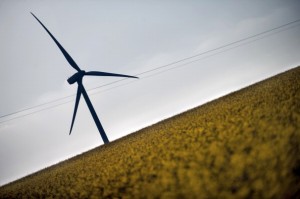
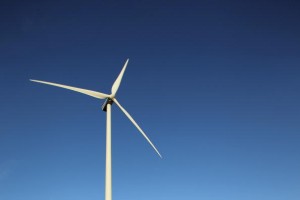
Wind turbines like this one in France are popping up in parts of Texas, but the loss of a tax credit could stall the green energy growth.
Many Texans woke up to a breezy, cool morning today, and when they turn their lights on and start doing their laundry or nuke a breakfast taco, many of them will be doing so with the help of that breeze: wind power.
Texas leads the country for installed wind power, and is one of the largest wind energy producers in the world, with more wind capacity than France, Italy or Great Britain as of the beginning of this year. A few weeks ago, the state set a new record for generation. Nearly 26 percent of the state’s power on the morning of November 10 came from Texas wind power, beating the previous record set in June.
The amount of power generated by wind that morning was 8,521 megawatts, or enough to power some 4.3 million Texas homes during times of average electricity use, according to the Electric Reliability Council of Texas (ERCOT), which manages the grid that supplies much of the state.
“We have surpassed previous wind power records several times this year,” Kent Saathoff, ERCOT’s vice president of Grid Operations and System Planning, said in a statement. “While added capacity is one reason for this growth, experience and improved tools also are enabling ERCOT to integrate this resource into the grid more effectively than ever before.” Continue Reading →
Loblolly pine seedlings take root in the shadow of destroyed trees in Bastrop.
During the Labor Day Wildfires of 2011, tens of thousands of acres burned in Central Texas, destroying over 1,600 homes and killing 1.5 million trees. Some of those trees were true Texas treasures: the Lost Pines of Bastrop State Park, a unique forest nearly a hundred miles apart from the Piney Woods of East Texas. Ninety five percent of the forest was turned to ashes during the fire.
And now they’re on their way back.
This week, nearly a half a million loblolly seedlings will make their way back to the soil of Bastrop State Park, with plans to plant 1.5 million next year and another million in the year following.
But those loblolly pine seedlings, which are now beginning to rebuild the Lost Pines, were close to almost being lost themselves.
Barry Smitherman is the Chair of the Railroad Commission of Texas.
“What does the Texas Railroad Commission oversee?” If it was a question on Who Wants to Be A Millionaire?, a lot of Texans would lose their spot in the hot seat.
Here’s a hint: the answer is not “railroads.” In fact, the commission regulates Texas’ booming oil and gas industry.
So the first suggestion in the recently released Sunset Report (a review of state agencies) is a name change. Apparently, the agency still receives complaints about train noise.
Commission Chairman Barry Smitherman says changing their name is a good idea. “With the increase of oil and gas activity I think we would be well-served to have a name that is easy for the public to understand,” he told StateImpact Texas.
Though the Railroad Commission does raise concerns over the proposal in its official response to the Sunset report, saying that a name change without an amendment to references to the “Railroad Commission” in the state constitution could lead to legal trouble for the agency.
Whether or not the Railroad Commission becomes the “Texas Energy Resources Commission” (the suggested new name) will be up to state lawmakers in the upcoming legislative session.
‘For Rent’ and ‘For Sale’ signs are a common sight Spicewood Beach. The community had been without its own source of water since January 2012.
Wanda and Jim Watson retired to Spicewood Beach. They worry what lower lake levels will mean for the community’s future.
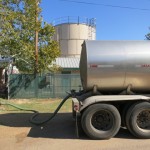
The LCRA trucks water into Spicewood Beach. The Agency came under fire for selling Spicewood Beaches water in the runup to the well failure early this year.
Now residents worry what will happen if the Agency sends water to rice farmers downstream, further lowering the lake levels.
One of the LCRA’s tanker trucks got into an accident recently on the road into town.
Glass is still visible from the accident.
Lakes in Spicewood Beach a sign reminds residents of wetter times.
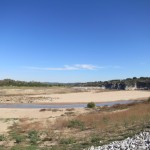
Low reservoir levels, like here at the North end of Lake Travis, have some advocating for storing more water underground, where it won’t evaporate.
Lake levels are related to the levels of the water table in the area. If the lake goes down, more wells could go dry.
‘For Rent’ and ‘For Sale’ signs are a common sight Spicewood Beach. The community had been without its own source of water since January 2012.
Slide show compiled by Filipa Rodrigues
The first indication that things are still not right in Spicewood Beach comes as you reach town. You’re greeted with a welcome sign and a notice that stage four water restrictions remain in effect. It’s been nearly a year since the small Highland Lakes community earned the distinction of being the first town in Texas to run dry during the great drought. The situation remains much the same. In some ways it’s gotten worse.
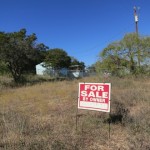
For one thing, there are a lot more ‘For Sale’ signs in front of a lot more houses.
“There’s vacancies all through here and unbelievably low prices, but there’s not takers. Who wants a house with no water?” asks Jim Watson, sitting next to his wife Wanda in their two story home.
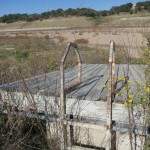
Standing in the construction site formerly known as Waterloo Park, you can get a sense for the enormity of a project to tunnel underneath downtown. It’s the northern entrance to the Waller Creek Tunnel, which is designed to prevent the usually slow-moving stream from flooding in a storm. When complete, it will be 30 feet round – nearly big enough to fit two trains.
Gary Jackson, the city’s public works project manager, says that the Waller Creek Tunnel is nearly identical to what would be built for a subway tunnel. In fact, Austin’s foundation rock is the perfect material for digging. The Austin Chalk, as it’s called, is a native limestone that cuts easily underground but is strong enough to support buildings above.
The Waller Creek project is digging up an old question: Why not a subway for Austin? Continue Reading →
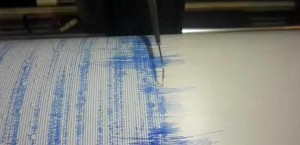
Another small earthquake struck outside of Fort Worth last night according to the US Geological Survey. The quake was centered near Mansfield Texas, about 20 miles Southeast of Fort Worth.
While it’s difficult to link any individual quake to a specific cause, North Texas has seen a significant uptick in seismic events since hydraulic fracturing technology opened up the area to widespread oil and gas drilling. Many scientific studies have linked earthquakes to disposal wells used to store drilling liquid, including one out of UT Austin, that StateImpact Texas reported on this summer.
Coal exports are on the rise, largely due to demand in Europe.
Coal is on the decline in the United States. As a domestic drilling boom has opened up vast supplies of natural gas and coal has become more expensive to mine, coal power plants have become less and less viable. New environmental regulations that require coal plants to upgrade their equipment are also a factor. There are very few new coal plants being proposed in the country right now as a result.
But that doesn’t mean that the country’s coal is staying underground. It continues to be mined, and will continue to be burned for power, just not as much domestically. Rather, our coal is being sent abroad. Surprisingly, to Europe. And coal exports are on track to reach record highs, according to the Energy Information Administration (EIA).
“Despite growing demand in Asia, the United States exports slightly more coal to Europe than it sends the rest of the world combined,” the EIA says in a new report on coal exports. Continue Reading →
The latest U.S. Drought Monitor Map shows worse conditions for the state.
While many lawns in Texas might have recovered since last year’s record drought, the lakes and reservoirs that supply water to the state have not. According to recent data from the Texas Water Development Board, just 66 percent of the state’s water supply reservoirs are full.
And judging by the latest U.S. Drought Monitor Map and agricultural reports, a very dry October is beginning to take a toll on the state. A week ago, 60 percent of the state was in some stage of drought. Now that’s climbed to 70 percent, with nearly twenty percent of Texas in the two worst stages, ‘extreme’ and ‘exceptional.’
“Higher temperatures and winds dried out soils,” reads the latest report on crop and weather conditions in North Texas from Texas A&M Agrilife. “Soil-moisture levels were very short to adequate.”
Texas is awash in green energy potential. Problem is, we don't have anywhere to store the renewable energy we produce.
Texas may be rich in fossil fuels like oil and gas, but it’s also awash in clean, renewable energy.
Well, at least it could be. With the most renewable energy potential in the United States, Texas is a formidable candidate to up their renewable energy usage. Wind power now supplies 8 percent of energy to the grid in Texas and it’s cheaper than ever. However, the Energy Institute’s Raymond Orbach at the University of Texas at Austin says there’s still one major roadblock. “If someone could lick the storage problem,” Orbach says, “we would really have a remarkable resource.”
The ‘storage problem’ boils down to how energy works. “You can’t turn the sun off, and you can’t tell the wind to blow,” says Orbach. It’s simply unreliable.And you have to use the energy while it’s there. Right now turbine energy created from early afternoon winds has to be used immediately, in the early afternoon. But the demand for energy peaks later in the afternoon during the hot Texas summers, when the winds have died down. Solar could fill that gap, but efforts to incentivize it’s construction haven’t gone anywhere yet in Texas, and there’s always the question of what happens when a bunch of clouds pass over.
So creating something that can store and save renewable energy like wind and solar for later would change the game entirely. Continue Reading →
About StateImpact
StateImpact seeks to inform and engage local communities with broadcast and online news focused on how state government decisions affect your lives. Learn More »