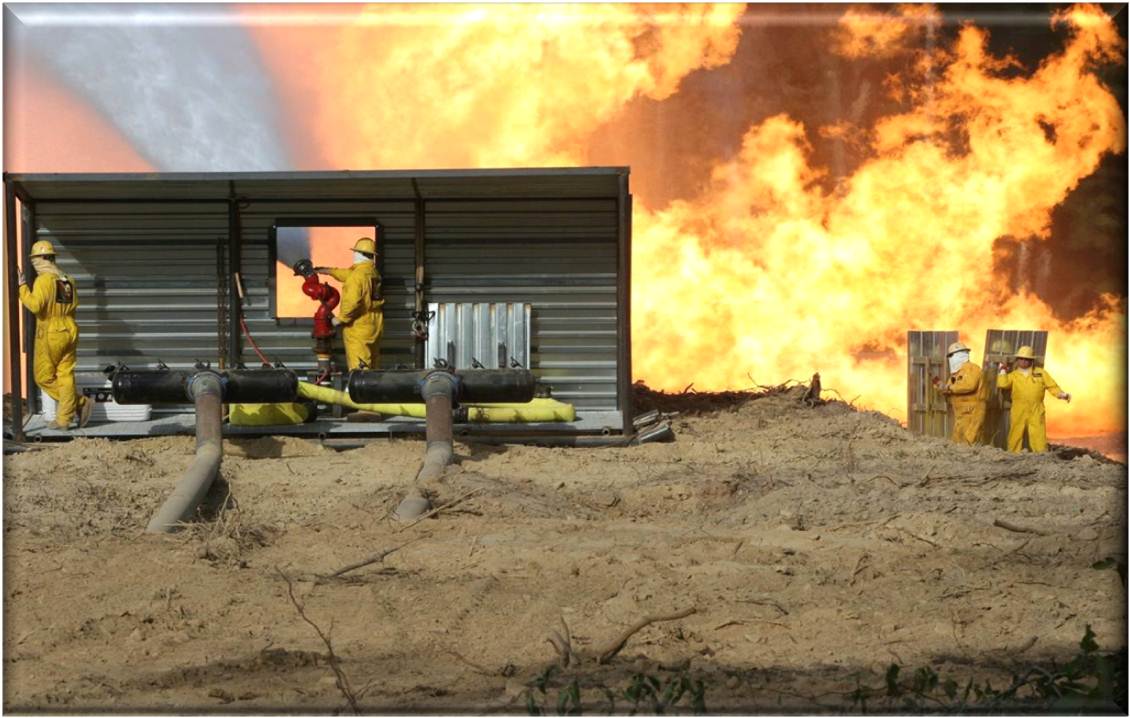
And last night in Oklahoma, a fracking well caught fire. Here’s the video from the website Drilling Ahead:
A report from the website says the rig, owned by Nomac, a subsidiary of the fracking giant Chesapeake, “drilled into a shallow gas pocket soon after spudding in at a drilling depth of 900′ northwest of Sweetwater, Oklahoma” around 6 p.m. on January 5. There are no reported injuries. Continue Reading →
Photo Courtesy of Jim Gossen, Louisiana Foods - Global Seafood Source
An Asian Tiger Prawn caught last September near Little Lake in Larose, LA
The Asian Tiger Prawn can grow over a foot long. It’s a species from the Western Pacific Ocean that first showed up off the coast of Alabama in 2006, when a single, solitary prawn was reported. If the story ended there, we wouldn’t have much to talk about.
But it doesn’t.
“The next year in 2007, you had some pop up in Louisiana just one or two, in 2008, three or four, [and in] 2009 a couple,” Leslie Hartman, the Matagorda Bay Ecosystem leader with Texas Parks and Wildlife, told Stateimpact Texas.
Do you ever enjoy the cool breezes on the beaches of the Gulf Coast? Well, those winds could one day be cooling you down in your own home.
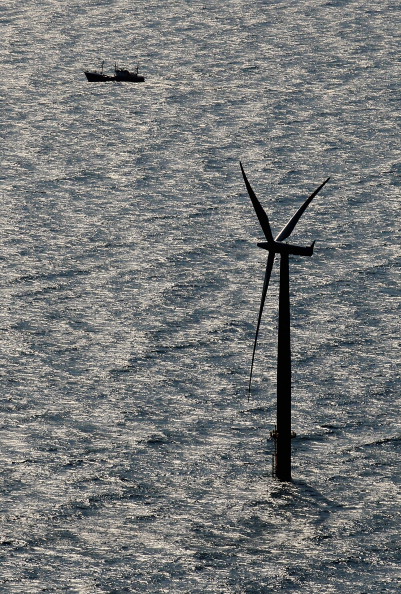
A few years from now, you might stand on the shore and see miles and miles of massive three-pointed stars rotating along the surface of the sea. They’re offshore wind turbines, and hundreds of them may one day dot the horizon.
Mention “offshore wind” to Mark Leyland, and he becomes almost wistful. “Ahh, offshore wind,” the Senior Vice President for Wind Energy Projects at Baryonyx says. “Even though a lot of people in Texas have seen onshore wind, I always say that offshore wind and onshore wind are only similar in one respect: they [both] have the word “wind” in their title.”
Even though he grew up in Britain, or as he likes to call it, “East Texas,” Leyland has spent the last few decades building offshore oil rigs in the gulf. He now wants to bring that drilling expertise to wind, and so his company has leased 67,000 acres of land off the coast of Texas to build hundreds of giant wind turbines. Continue Reading →
Stop me if you’ve heard this one before: Government forecasters today reported that the drought will not be over before Spring.
La Niña, the dry weather pattern that has been in part responsible for the drought this past year, is going to stick around a little longer, say scientists with the National Oceanic and Atmospheric Administration (NOAA). That means “drier-than-average” conditions throughout the South and Texas.
La Niña is a weather pattern where the surface temperatures are cooler in the Pacific, which creates drier, warmer weather in the southern U.S. (You may also know her counterpart, El Niño, which generally has the opposite effect.) La Niña sticks around for a year, sometimes longer, and tends to return once every few years. The last La Niña occurred in 1995.
But a majority of the NOAA models of La Niña predict that it will dissipate from March to May. Continue Reading →
Tuesday we told you about the man who paid for (and charges) his Chevy Volt with solar panels on the roof of his house. Today comes news he’s going to have to do with a loaner for a little while.
In what the Associated Press is calling a “move similar to a recall,” General Motors is going to ask owners of the plug-in vehicle to bring their cars in, so that the casing around the battery can be strengthened.
This rig uses hydraulic fracturing to obtain gas from Texas' Barnett Shale formation. Photo courtesy of KUT News.
After a 4.0 earthquake struck Youngstown, Ohio Saturday, some people were scratching their heads and asking, did hydraulic fracturing (aka “fracking”) cause this? After all, it was the eleventh quake since March, and the most intense. On top of that, all of the quakes have been centered around a deep well used to dispose of hydraulic fracturing fluid used to drill for natural gas.
A few days have passed, and we now have some more answers about the quake and how it is related to drilling. The disposal wells in Ohio are similar to ones used in Texas, where we had our own 4.8 magnitude earthquake near drilling and disposal sites in the Eagle Ford Shale in October. The seismic activity in Texas, Ohio and elsewhere may indicate a link between fracking fluid disposal wells and earthquakes.
Governor Rick Perry will continue campaigning for president despite his fifth-place loss in Iowa. But with his presidential prospects diminished, the governor might start wondering what challenges await him in Texas if he doesn’t end up in the White House.
His underwhelming campaign performance also has political analysts wondering whether the governor will be equipped to face those challenges.
“Perry’s absence doesn’t do him good politically in the state,” University of Texas at Austin professor Bruce Buchanan told StateImpact Texas.”People want the Governor on the scene when there are problems and crisis and he has not been, and his critics will call that to his attention.” Continue Reading →
Gas and oil well blowouts are the stuff of legend in Texas. But in Pennsylvania, a state with little modern experience with wells, a surge in drilling has some residents on edge. The thought of a geyser of fire erupting in an otherwise peaceful pasture can sound like a nightmare.
“(A blowout) scares the heck out of me,” said Skip Roupp , the Deputy Emergency Management Director of Bradford County in Northeastern Pennsylvania. Experts told him to expect one major blowout for every thousand wells drilled. The well count in Pennsylvania is already at 3,000.
“We’re due for a major blowout at some point,” Roupp said. Continue Reading →
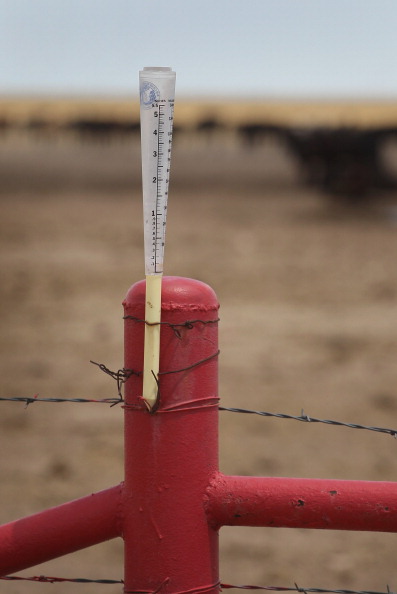
Texas just capped a year drier than a week-old kolache, with record heat and rainfall totals a good foot or more below where they should have been. Some towns have actually come close to running out of water. And while above-average December rains helped much of the state, they didn’t do enough to restore water levels in lakes, rivers and reservoirs. The main lakes that supply Central Texas with water are at a combined 37% of capacity. If rains don’t come in the spring, the situation could become far worse.
But one desert city suffering through the drought has plenty of water left.
El Paso has, by its own estimates, enough water underground to last it at least a hundred years. Tonight Interior Secretary Ken Salazar will visit El Paso to highlight how the city has found innovative ways to source and conserve water. El Paso could stop getting water from the Rio Grande tomorrow and still be okay well into the next century.
So how did this desert city end up with an abundance of water, and what lessons can be applied from El Paso to the rest of the state? I spoke with Congressman Silvestre Reyes, who will be hosting the visit, today to find out. He was part of a group that led the city’s efforts to secure a potable future:
Amid the ruins of Bastrop, many new homes have already been built.
If you are one of the thousands of people in dozens of counties in Texas affected by the Labor Day wildfires last year, time is short to register for disaster relief assistance from the Federal Emergency Management Agency. The deadline is Friday.
“We urge Texans who sustained any damage or property loss to register with FEMA, even if you have insurance or think you won’t qualify for assistance,” Federal Coordinating Officer Kevin L. Hannes of FEMA said in a release. “Let us review your case to see whether FEMA can help.”
Friday is also the deadline to apply for low-interest disaster loans for property damage from the U.S. Small Business Administration. Continue Reading →
About StateImpact
StateImpact seeks to inform and engage local communities with broadcast and online news focused on how state government decisions affect your lives. Learn More »