Terrence Henry reports on energy and the environment for StateImpact Texas. His radio, print and television work has appeared in the New York Times, The Washington Post, The Atlantic, NPR, The Texas Tribune, The History Channel and other outlets.
He has previously worked at The Washington Post and The Atlantic. He earned a Bachelor’s Degree in International Relations from Brigham Young University.
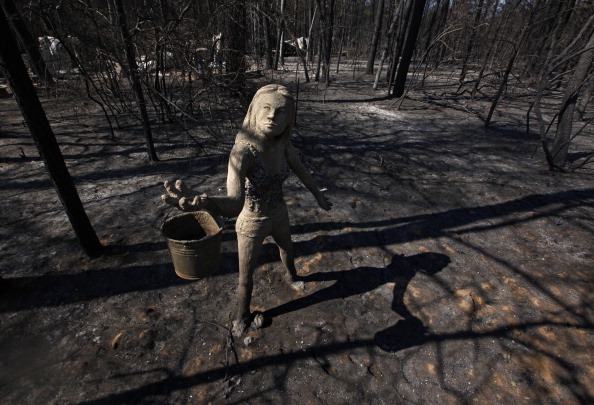
A statue stands in front of the remnants of a burned down home outside Bastrop, Texas.
It seems counter-intuitive, but victims of wildfires in Texas should be thinking about the possibilities of flood, according to a new report by the Texas Division of Emergency Management and the Federal Emergency Management Agency.
While rain is a much-needed commodity in Texas these days, too much of it could have destructive consequences. Because of the wildfires that burned thousands of acres this year in Texas, “flood risk is higher,” the agencies say. “When fire burned away trees and other vegetation, healthy roots that soak up rainwater were lost,” the report says. “Storm runoff can cause severe erosion, mudslides and flooding.” Continue Reading →
This rig uses hydraulic fracturing to obtain gas from Texas' Barnett Shale formation. Photo courtesy of KUT News.
The Railroad Commission of Texas, which oversees drilling in the state, passed new rules requiring the disclosure of chemicals used in hydraulic fracturing (“fracking”) today. The rules were proposed by the state legislature earlier this year and signed into law by Governor Rick Perry this summer. Companies will have to disclose on the website FracFocus what chemicals they use for fracking in Texas.
Any wells that have an initial drilling permit from February 1, 2012 on will have to make the disclosure. The commission notes in a release that “before the rule passed, Texas operators conducting hydraulic fracturing were voluntarily entering chemical data into the public website FracFocus for about half of all wells in Texas undergoing hydraulic fracturing,” the commission said in a statement.
A natural gas well drilling rig in Sublette County, WY
It’s been only a few days since the EPA released draft findings of contamination by hydraulic fracturing (“fracking”) drilling operations in Wyoming, and already the industry is attempting to drill holes in the EPA’s findings. Residents near the drilling sites in Pavillion, Wyoming asked the EPA three years ago to investigate possible contamination after noticing water from their wells started tasting and looking off. So what has been the industry’s response?
Question the evidence. The company behind the alleged contamination, Encana, clearly hopes to discredit the EPA’s findings. In a lengthy press release Monday, the company said the EPA’s findings are “irresponsible” and full of discrepancies. The EPA’s “conclusions do not stand up to the rigor of a non-partisan, scientific-based review,” the company said, but Encana doesn’t say if that scientific review has been performed or not. (The EPA released the findings in draft form to allow public input and scientific review, which they say is standard practice.) And while attempting to discredit many of the EPA’s discoveries, Encana also points to other EPA evidence as vindicating. “The EPA’s reported results of all four phases of its domestic water well tests do not exceed federal or state drinking water quality standards for any constituent related to oil and gas development,” the Encana release states. Continue Reading →
Schools Out: Kids at the End of The Day at Kruse Elementary in Pasadena, Texas
A spokesperson for Pasadena Refining System has issued an updated statement today on the fire at their Houston-area refinery Saturday that injured one:
“Pasadena Refining (PRSI) reports that the fire which broke out at approximately 7:00 p.m. Saturday, December 10, 2011 at the coker unit was extinguished a few hours later.
All personell [sic] were accounted for and the non-essential personnel safely evacuated the facility as a precautionary measure. One minor injury was reported. The employee was evaluated and released after being transferred to a local hospital. Continue Reading →
The La Boite shipping container-cum-coffeehouse in South Austin.
Would you like a manifest with your soy latte? Starbucks is getting into the coffeehouse-inside-a-shipping-container game, the New York Timesreports, with plans to open a store in Seattle constructed out of four used shipping containers.
But for Texas, shipping container coffehouses aren’t an innovation. There are two in Austin, one of them just steps from the Texas capital. La Boite (french for “The Box”) is the company behind the twenty foot-long coffee-tainers, which were designed and built by the firm designSTUDIOmodern. “The concept was borne from the desire to re-use existing materials and to provide a clean, functional space,” La Boite says on their website. Continue Reading →
Photo by Dave Fehling/StateImpact Texas / StateImpact Texas
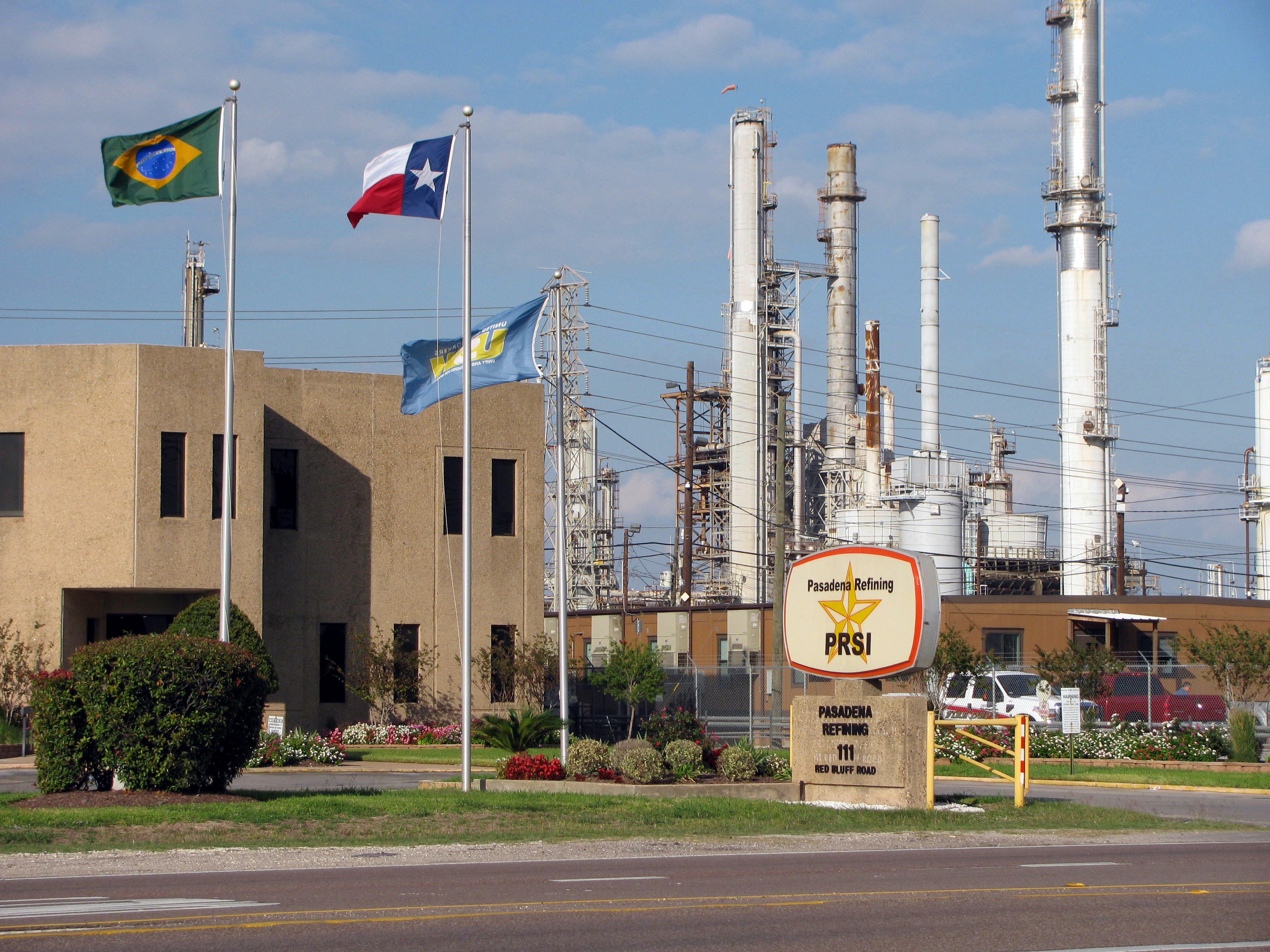
The Pasadena Refining System Inc. refinery in Pasadena, Texas
Blasts followed by a fire were reported at the Pasadena Refining System refinery in a suburb of Houston Saturday evening. The Associated Press says two were injured in the explosion, one of them with burns on his arm. The fire ignited in the refinery’s coker unit after “sludge at the bottom of a tank ignited, unleashing a fireball,” according to the report. The fire has been extinguished.
This is the second fire recently at the refinery. On September 30, a fire ignited at the plant’s crude unit, sending “thick black smoke” that could “be seen for miles,” according to local news reports. It wasn’t until November that the refinery fully returned to normal operations.
StateImpact Texas reported on the refinery last month. The Harris County Attorney said it planned to sue the plant over pollution. Several schools are near the refinery, most of them less than a mile away. Continue Reading →
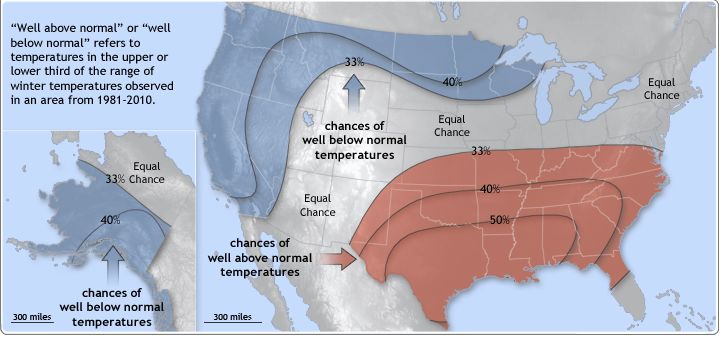
Earlier this week, we took a look back at the awful year of weather that Texas had in 2011. Now it’s time to look forward, and new winter weather predictions from the National Oceanic and Atsmopheric Administration do not bode well for a possible end to the drought.
First, this winter’s weather doesn’t look like it will buck the trend of higher temperatures:
Map by NOAA Climate Program
Winter temperature outlook
Much of the state has a fifty percent chance of temperatures well above normal this winter. And it doesn’t look like this there’s going to be much rain, either. Continue Reading →
Shoppers select a Christmas tree in December 2010.
It’s a debate you’ve probably had at holiday parties over eggnog and tea cookies. Which type of Christmas tree is better for the environment, real or plastic?
The question is as old as the advent of fake plastic trees themselves. And as with any argument, there are pros and cons. But there is a clear environmental advantage to one type of tree. First, let’s look at the debate between real vs. plastic: Continue Reading →
The Environmental Protection Agency (EPA) released draft findings of its investigation of contaminated water in Pavillion, Wyoming today. The agency investigated allegations against a drilling company, Encana, which uses a process called hydraulic fracturing, or “fracking,” (where a mixture of water, chemicals and sand is pressure-blasted deep underground to create fissures that release oil and gas deposits). This is the first time a federal investigation has made a connection between fracking and contaminated water supplies.
The EPA bored two deep wells to monitor water in the aquifer, and found “compounds likely associated with gas production practices, including hydraulic fracturing,” the agency said. They found “synthetic chemicals, like glycols and alcohols consistent with gas production and hydraulic fracturing fluids, benzene concentrations well above Safe Drinking Water Act standards and high methane levels.” The EPA noted that because of the geology of the area and how close the wells are to ground water, contaminating the aquifer and water supply over time is a concern. Continue Reading →
About StateImpact
StateImpact seeks to inform and engage local communities with broadcast and online news focused on how state government decisions affect your lives. Learn More »