Terrence Henry reports on energy and the environment for StateImpact Texas. His radio, print and television work has appeared in the New York Times, The Washington Post, The Atlantic, NPR, The Texas Tribune, The History Channel and other outlets.
He has previously worked at The Washington Post and The Atlantic. He earned a Bachelor’s Degree in International Relations from Brigham Young University.
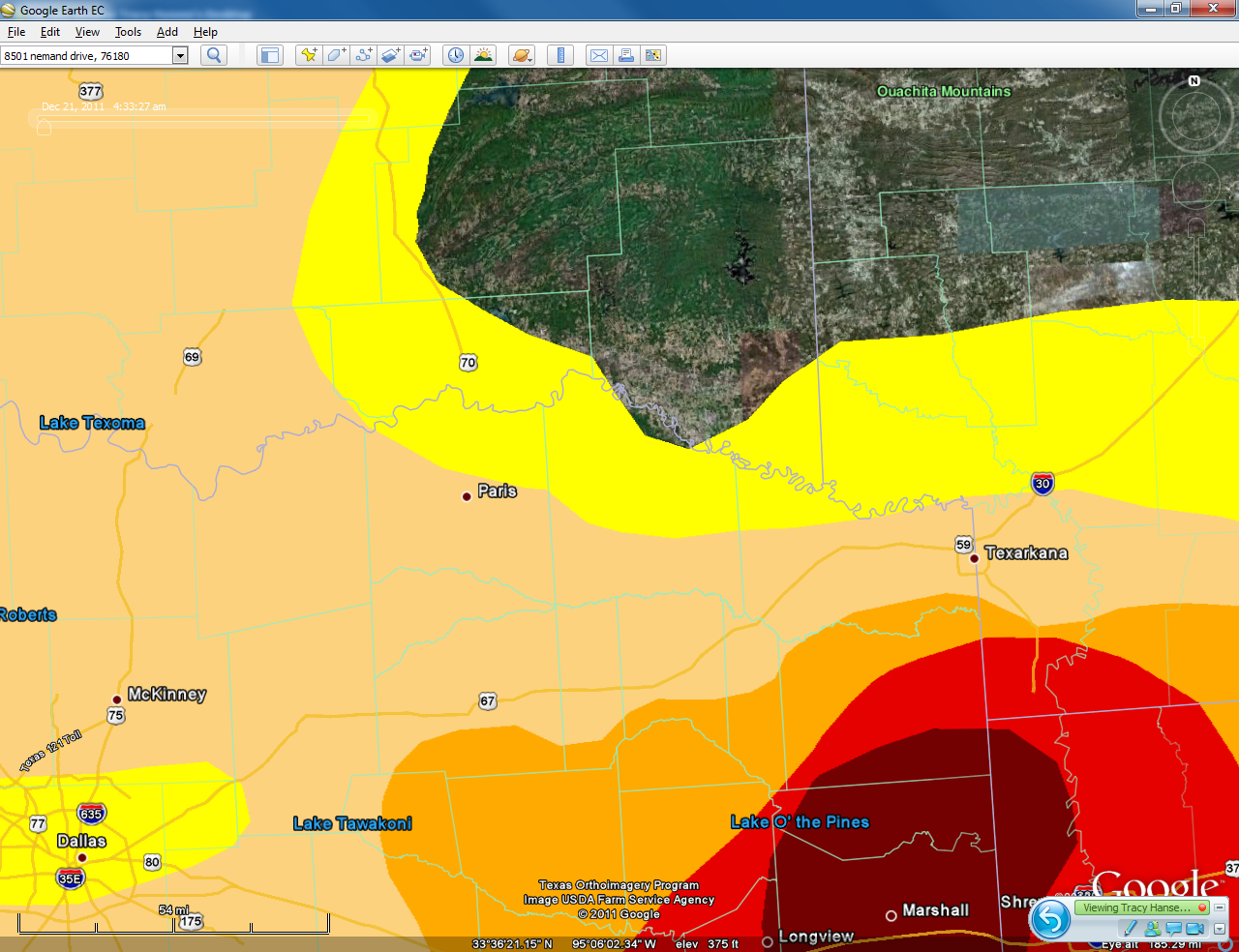
A map shows the 0.01 percent of Texas no longer in drought.
Christmas came a little early for a small slice of Texas this year. We can now say that part of Texas is no longer in drought. A small part, to be sure, only 0.01 percent, but it’s happy news nonetheless.
According to new data from the National Drought Mitigation Center at the University of Nebraska (with a grateful hat tip to Kate Galbraith of the Texas Tribune), a sliver of Texas along the Texas-Oklahoma border is officially drought-free. Just east of Paris, Texas, 3.7 percent of Red River County is no longer in drought, representing 0.01 percent of the entire state. Continue Reading →
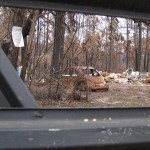
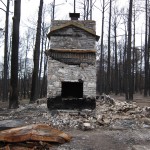
Amid the ruins of Bastrop, many new homes have already been built.
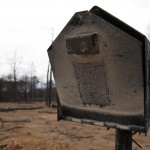
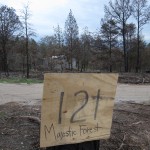
Some families have taken to making their own road signs
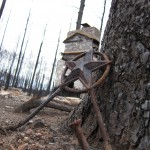
A Texas flag sits on a sign advertising a construction company.
This story was co-reported with Andy Uhler of KUT News.
On the Sunday of Labor Day weekend in Bastrop County, Kasey Tausch had just woken up from an afternoon nap. She heard her son come into their house yelling. “Mom! There’s a fire!” her son called out. She opened the front door and saw a sea of pitch black smoke. “It seemed like the fire was right there, but it was really miles away,” she remembers.
The family quickly grabbed some things and left their home. It would be gone when they came back. “We were literally driving through fire,” Kasey says. “We were just watching in amazement.”
For Kasey and her family and thousands of others in Bastrop this year, it won’t be Christmas as usual. After fires that destroyed 34,000 acres, more than 1,600 homes and claimed two lives, the holiday is going to be markedly different. Continue Reading →
In October, word got out of a scuffle between scientists and the Texas government. On one side, Rice University oceanographer John Anderson, who submitted an article on rising sea levels for a report to be published by the Texas Commission on Environmental Quality (TCEQ) on Galveston Bay. On the other, the TCEQ itself, which didn’t like some of what Anderson had to say, and excised his references to climate change and human impacts.
An agreement has now been reached between the two parties that will result in Anderson’s article being published in the commission’s report. Continue Reading →
What are the carbon emissions of Santa's operation?
Yes, someone actually took the time to calculate Santa’s impact on the atmosphere. While we all know he brings plenty of cheer, a new infographic by the environmentally-friendly shopping website Ethical Ocean shows his operation has a carbon footprint much bigger than a lump of coal.
The group estimates that Santa’s sleigh trip alone involves over 69 million metric tons of carbon emissions. They actually crunched the numbers on the height of Santa’s reindeer, the weight of Santa himself (300 pounds), and the payload of his sleigh (nearly 321,000 tons of toys, the top contributor). Over his 122 million-mile journey delivering cheer across the world, Santa’s guilty of emitting in one night the equivalent of the annual carbon footprint of the entire country of Qatar. Continue Reading →
The Fayette Power Project coal plant in La Grange, Texas. The plant will need to make upgrades to comply with new EPA rules.
In a move the Environmental Protection Agency (EPA) is calling “historic,” new rules were approved today that mandate reduced emissions of mercury and other pollutants from U.S. coal power plants. In a statement released today, the agency says that these are the first national standards that “will slash emissions of these dangerous pollutants by relying on widely available, proven pollution controls that are already in use at more than half of the nation’s coal-fired power plants.”
The agency estimates that the new rules “will prevent as many as 11,000 premature deaths and 4,700 heart attacks a year.” It also says that the rules will reduce childhood asthma symptoms and result in less acute bronchitis in children.
“Power plants are the largest remaining source of several toxic air pollutants, including mercury, arsenic, cyanide, and a range of other dangerous pollutants,” the agency says. They “are responsible for half of the mercury and over 75 percent of the acid gas emissions in the United States.” Continue Reading →
A woman protests against the proposed tax exemptions for Valero Energy Corporation in November.
A request for a tax refund by the Valero Energy Corporation, one of the world’s largest oil refiners, has been rejected by the Texas Commission on Environmental Quality (TCEQ), the Associated Press reports. Valero asked for the money under a state law that says companies don’t have to pay taxes on equipment that reduces on-site pollution.
The request was originally made in 2007, when Valero bought the equipment. The money, potentially as much as $92 million, would have come from property tax refunds in appraisal districts. Which means it would have been taken back from cities and schools that are already struggling.
The Associated Press obtained a letter dated December 14 from the executive director of the TCEQ, Mark Vickery, to Valero’s six refineries in Texas. Vickery wrote that the company “does not demonstrate that the hydrotreating equipment provides a partial environmental benefit at the site.” Continue Reading →
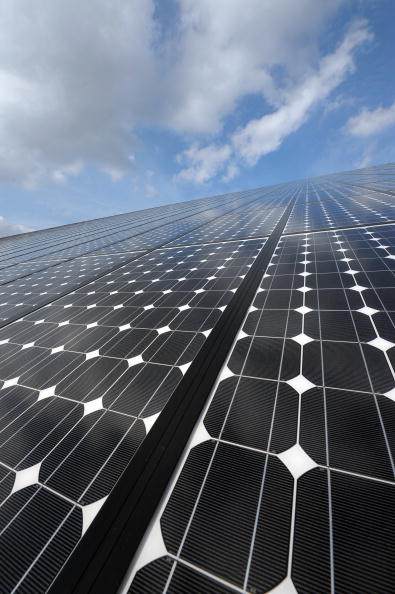
The British oil company, BP, is shutting down its solar power operation BP Solar, Bloomberg reported today. BP is the second-largest oil company in Europe.
The company said it was closing down its solar division after 40 years because it has become unprofitable. BP Solar’s end will affect about 100 employees, the company said in an internal letter to employees. More from Bloomberg:
BP Solar is the latest victim in a solar market that is facing oversupply and price pressures since Asian manufacturers started ramping up. Crashing module prices helped tip three U.S. makers including Solyndra LLC into bankruptcy this year, and Solon SE, Germany’s first listed solar company, filed for insolvency last week.
The company’s solar division hasn’t manufactured much in the way of solar panels since 2009, Bloomberg says. Then it closed several factories in Spain and eliminated 480 jobs when the Spanish stock market nosedived, “triggering the industry’s first period of strong oversupply.” BP decided in July to stop manufacturing solar projects. The company said in the internal memo that its other renewable projects will remain, among them wind and biofuel.
Photo by Abrahm Lustgarten/ProPublica (Creative Commons)
Louis Meeks’ well water contains methane gas, hydrocarbons, lead and copper, according to the EPA’s test results.
The company behind a fracking well in Wyoming that the Environmental Protection Agency (EPA) says may have contaminated water sources held a conference call today. Encana, the company that owns the drilling operation, faulted the EPA’s methodology and objectives. The call provided a good indication of how the company, and perhaps the fracking industry at large, is going on the offensive.
The EPA’s report is receiving so much attention because it is the first report from the federal government that links hydraulic fracturing (or “fracking”) to contamination of water. Chances are if you didn’t know what fracking was before, you do now. The process of drilling horizontal wells deep underground and pressure-blasting a mix of water, sand and chemicals into rock shale formations to release deposits of oil and gas is a relatively new innovation in the drilling world, and has only begun to be used widely in the last decade. And now fracking is in turns being pilloried, defended, questioned and lauded. With the agency’s new report, the debate over fracking has reached a new volume. Continue Reading →
Photo by flickr dj @ oxherder arts/Creative Commons
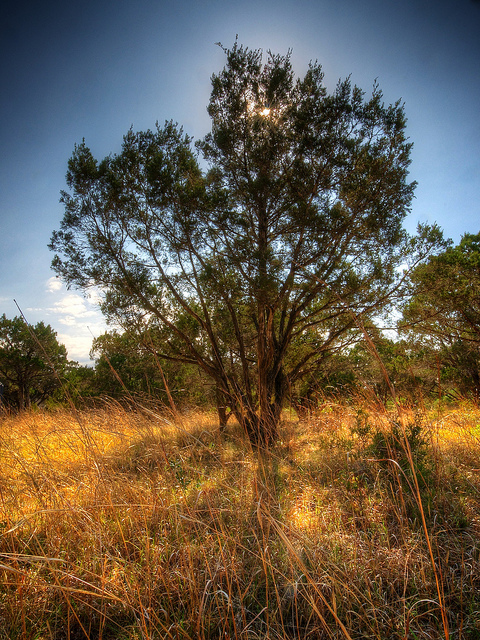
An Ashe Juniper tree.
A new estimate by the Texas Forest Service says that as many as 500 million trees have died this year because of the drought. Using data from foresters, the group estimated that “100 million to 500 million trees with a diameter of 5 inches or larger on forestland were estimated to have succumbed to the drought.” That’s anywhere from two to ten percent of the 4.9 billion trees in Texas.
The extreme drought, sustained high winds and record heat this year wrought havoc on Texas’ trees. “Large numbers of trees in both urban communities and rural forests have died or are struggling to survive,” Burl Carraway, department head of Sustainable Forestry at the service said in a statement.
Three areas were hit the hardest: south of San Angelo towards west Texas, several counties “saw extensive mortality among Ashe junipers,” the service says. The Houston area lost lobolly pines, and Bastrop county and surrounding areas had “extensive mortality” of cedars and post oaks. Continue Reading →
Recently we’ve looked at how the drought is affecting livestock, farming and even fishing. But it is also taking a toll on roads.
As Lucia Duncan reports for KUT, “the dry spell has sucked all the moisture out of Central Texas’s topsoil. And that’s caused cracks to form and bumps to pop up.”
What’s happening is that highways are contracting and compacting as they dry out, a normal process that’s become much worse during the drought.
Recent rains could potentially help alleviate some of this cracking, but the roads likely won’t be repaired until the cracks have reached their full size, KUT reports.
A potentially dangerous spot? The point where a bridge meets the road can make for a rough bump. Continue Reading →
About StateImpact
StateImpact seeks to inform and engage local communities with broadcast and online news focused on how state government decisions affect your lives. Learn More »