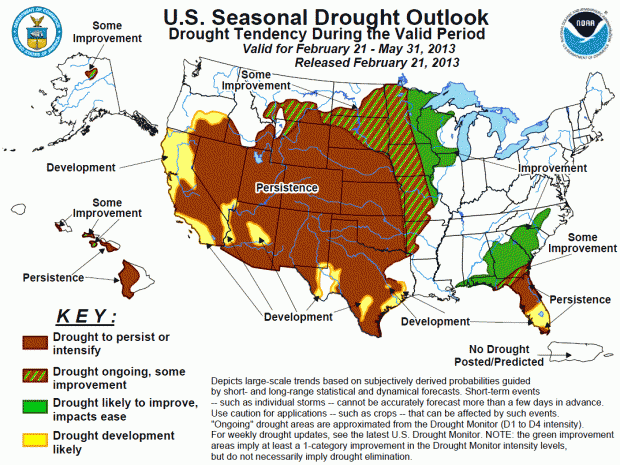
The latest NOAA forecast predicts the drought will "persist or intensify" in much of the state over the next three months.
While conditions have improved since the inferno that was the summer of 2011, much of Texas remains in serious drought. According the latest U.S. Drought Monitor Map, 88 percent of the state is in some level of drought conditions, with over a quarter of Texas in “extreme” or “exceptional” drought.
And the situation isn’t likely to improve in the near future, according to the latest three-month drought outlook released today by the National Oceanic and Atmospheric Administration (NOAA). That forecast, pictured above, calls for the drought to “persist or intensify” through the end of May, with drought developing in other parts of the state. Continue Reading →
A new federal analysis shows that oil inventories at Gulf Coast refineries typically decline in December, as companies have to pay their taxes.
Despite a drilling bonanza in Texas and other parts of the country leading to high levels of domestic oil and gas production, gasoline prices have been on the rise lately. Since mid-January, average prices at the pump went up from $3.37 to $3.81. It’s a bit of a head-scratcher: if we’re producing more and more of our own oil, why are we paying more for it?
Common answers to that puzzling question have pointed to more demand in China, conflict in the Middle East and shutdowns at some refineries. And, of course, the reality is that no matter how much oil we produce, it’s traded on a global market that’s out of our control.
And a new federal analysis possibly points out another small, temporary piece of the puzzle: oil refiners on the Gulf Coast that are trying to pay less in taxes.
Photo courtesy of Texas A&M University/Forest Service
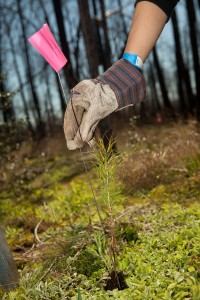
A Texas A&M Aggie plants a Loblolly Pine seedling in Bastrop State Park after the 2011 wildfires. New legislation could expand the supply of native Texas seeds.
In the mid-1500s, Comanche Indians roamed what would eventually become Central Texas, Karankawa Indians fished where Galveston would one day sit and hardly an invasive or exotic plant existed in the state. But since then, many of Texas’ native plants have taken a beating.
Legislation introduced by a Texas lawmaker could help reseed Texas with the hardy native plants and grasses of that bygone era, and return the landscape along Texas’ highways and construction sites to a native state.
“I would describe this agenda as one [of] trying to protect our natural heritage,” Rep. Mike Villarreal, D-San Antonio, who has filed two native seed bills, tells StateImpact Texas.
The problem right now, Villarreal says, is that road construction projects and energy exploration leave a muddy mess in their wake. That torn-up land must be reseeded, but that is oftentimes done with non-native species. Continue Reading →
A new bill by several Republican state lawmakers would make it easier to buy and sell raw milk in Texas.
If a group of Texas lawmakers gets their way, buying and selling raw milk in the Lone Star Stare could become easier to digest.
A bill introduced by Rep. Dan Flynn, R-Canton, would allow raw milk producers to sell in farmers markets or fairs. The bill also permits the delivery of raw milk directly to the consumer.
Movements toward natural, organic and locally-produced foods led to the recent increase in popularity of raw milk. Raw milk is not pasteurized, not homogenized and currently not available for sale anywhere except on the farms that produce it.
Flynn proposed HB 46 because he recognized the difficulty of traveling to dairy farms to purchase milk, especially in a rural areas such as his District 2, according to his office. Seven of the bill’s eight authors and co-authors are Republican.
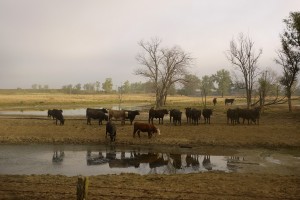
The drought has affected cattle herds across Texas and the Midwest. Texas lawmakers are considering funding a water plan that could protect the state's water supplies.
“Whiskey is for drinking and water is for fighting,” said John Cook, Mayor of El Paso, echoing Mark Twain at the House Natural Resources Committee meeting that began early this morning.
Mark Twain may have changed his tune, though, if he saw the Capitol meeting room tightly packed with mayors from Texas’ largest cities, lawmakers and water authority officials, all unified in their support of using billions of state dollars to finance water projects across the state.
Whiskey is for drinking, and water is for funding, Twain might have said. (If in fact he ever said the original quote, which is doubtful.)
Texas State Climatologist Dr. John Nielsen-Gammon.
As record drought and heat in Texas have garnered more and more attention over the last few years, so did Dr. John Nielsen-Gammon, State Climatologist.
Nielsen-Gammon says his position is part researcher, part adviser. “Basically, the job is to make sure the state makes the best use of weather and climate information,” he tells StateImpact Texas.
Nielsen-Gammon is also a professor of Atmospheric Sciences at Texas A&M University, so he has additional duties teaching and researching for the school.
A&M is now requesting $284,000 from the state legislature to fully fund and expand the operations of the Office of the State Climatologist. Until now, the majority of the office’s funding came from the university and various research grants. Continue Reading →
Generations of Plainview residents worked at the plant. Aubrey Rivera, Aliva’s daughter, told her her mom she wanted to work there when she grew up.
Criselda Avila lost her job at the Cargill Beef Processing Plant in Plainview. Now she’s unsure what she’ll do and what will happen to the Southern Plains town she calls home.
Jose Amaya and his wife Zuzema have relatives who have already moved away.
Images of cows can be found on the street signs of downtown Plainview
Ruben and Riene Olivas worry what will happen to their business now that the plant has closed.
The streets of Plainview.
Statues of cattle can be found throughout town. A nod to the local importance of the industry.
Johnny Ray Muniz leaves his last shift at the Cargill Beef Processing Plant.
As Mayor Wendell Dunlap plans for the city’s recovery, “your prayers are appreciated,” he said.
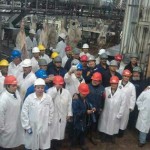
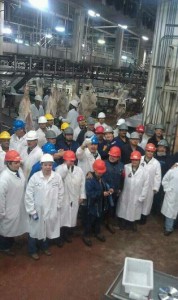
A group picture taken the day the last cow came through the Cargill Plant.
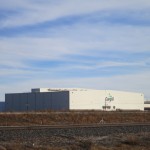
The Cargill Excel Beef Processing plant in Plainview, Texas.
Irene and Ruben Olivas say the ripple effect of the plant closure threatens the bakery where they work.
By the time the cows arrived at Criselda Avila’s work station at the Cargill Excel Beef Processing Plant in Plainview, they had already been slaughtered, skinned and gutted. The carcasses came in hanging from a long chain that ran over the plant floor. They were divided up and divided again. Avila worked on skirt steaks.
“You gotta spread it open and then cut the little skirt off, and then throw that on the table and then peeling and just trimming the fat off is what it was,” she remembered recently, sitting in her living room. “You know, fajitas.”
It was numbingly repetitive work. More than 4,500 cows went through the plant every day. So when Avila was done with one, there was always another behind it. Then, on the last day of January, she saw something she never expected to see.
Photo courtesy of Criselda Avila
A group picture taken the day the last cow came through the Cargill Plant.
“There were the last few cows, then the last cow was coming down the chain, and people there were just banging our hooks,” she said. “People started crying, like ‘oh my god this is the end of it.’”
That was how the city of Plainview lost over 2,000 jobs. After years of drought, the U.S. cattle herd is at its lowest level since 1952. Cargill Meat Solutions, the company that owns the plant, says there are simply not enough cows in existence to keep the plant running. For years ranchers across Texas have been cutting back their herds in response to the historically dry weather, but this is the first time those cuts have reached up the supply chain, to hit the industrial heart of a Texas city. The plant closure could have wide sweeping ramifications across the region. Continue Reading →
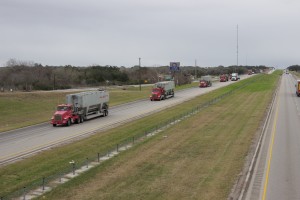
If you drive west from Houston out Interstate 10, about the time you’ve gone 100 miles and reached the edge of the Eagle Ford Shale, you’ll begin noticing them: Big rigs and other assorted trucks. They’re heading to the oil and gas fields of South and West Texas. Some are loaded with tons of steel pipe, others with tanks and contraptions for mixing the concoctions used to drill and “frack” wells. Still others are full of high tech seismic devices.
The equipment is unique and expensive. And the crooks have noticed. Continue Reading →
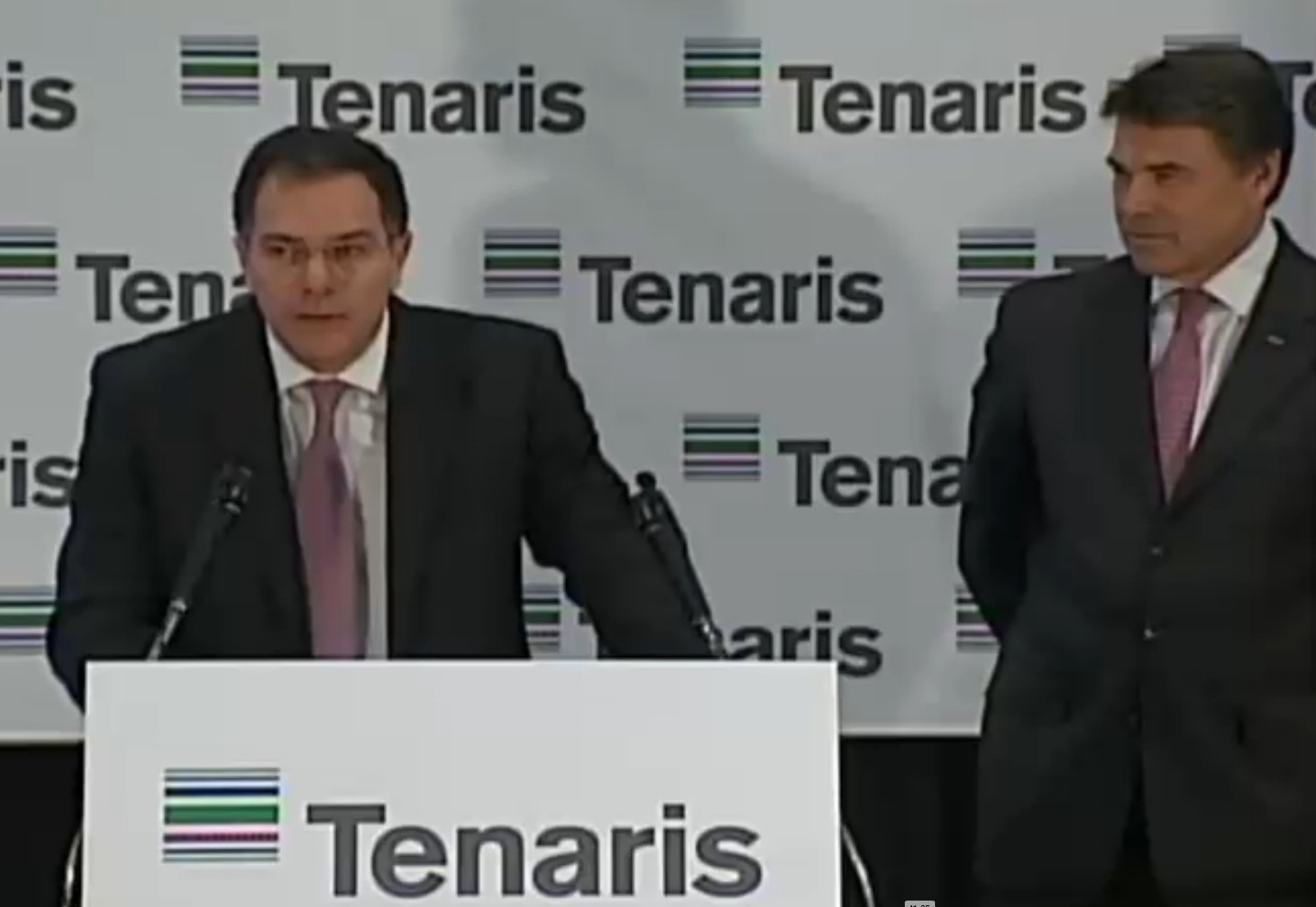
Germán Curá, President of Tenaris North America, watched by Texas Gov. Rick Perry as he gives details on the new pipeline facility.
In response to the boom in oil and gas drilling in Texas and throughout the U.S., the world’s largest manufacturer of steel pipes for the oil and gas industry announced today that it plans to invest up to $1.5 billion dollars in a new manufacturing facility in Bay City, Texas.
“This will be a state of the art facility, devoted to the production of steel pipes” Germán Curá, President of Tenaris North America said in a press conference late this morning. “It will help meet the growing demands of the domestic energy industry particularly given the state of development of the shales, oil and gas, the resumption of deep water drilling in the gulf of Mexico.”
Texas Governor Rick Perry used the announcement as a opportunity to defend the Texas Enterprise Fund. That is a state fund used to attract business to Texas that has been singled out for cuts by state lawmakers. Perry said the offer of $6 million dollars from the fund had helped convince Tanaris to build the plant in Texas.
The company behind what would have been the last new coal power plant in Texas, called White Stallion, is no longer pursuing the project, the company announced Thursday.
The news marks a victory for opponents of coal in Texas, notably the Environmental Defense Fund and the Sierra Club, who have worked for years to oppose the White Stallion and other coal power projects in the state. At this point, there are no longer any major new traditional coal power plants planned in Texas. All of the new projects are primarily natural gas and wind power, with some solar.
In a Thursday morning press release and email announcing the coal project would not move forward, Randy Bird, Chief Operating Officer for White Stallion, said that the plant is being suspended because of litigation costs, potential federal regulations and the low prices of natural gas.
StateImpact seeks to inform and engage local communities with broadcast and online news focused on how state government decisions affect your lives. Learn More »