Leslie Hartman is the Matagorda Bay Ecosystem Leader for the Texas Parks and Wildlife Department.
Drought looks different along the Texas coast. When you hear the cries of seagulls and the roll of the surf you might be forgiven for thinking that nothing is wrong at all. But as last year’s drought pushed through the summer, the Colorado River brought less and less fresh water into the Gulf of Mexico and the state bay systems suffered. In Matagorda Bay, where the river empties into the sea oyster harvesting was shut down and fishermen reported fewer crabs and fish.
As part of StateImpact Texas’ reporting for Life By the Drop: Drought, Water and the Future of Texas, StateImpact’s Mose Buchele sat down with Leslie Hartman, the Matagorda Bay Ecosystem Leader for Texas Parks and Wildlife Department to talk drought and water issues along the coast. Continue Reading →
Al Armendariz was the regional administrator for the EPA.
Al Armendariz, the former EPA Region Six administrator who resigned after controversy erupted over remarks he made about EPA enforcement, will join the Sierra Club’s “Beyond Coal” campaign, according to a statement released by the Sierra Club this afternoon.
Armendariz oversaw the EPA in Texas during a tense era in the state’s relationship with the federal agency. He became a lighting rod for criticism from state industry, while attracting kudos from environmentalists for going after polluters in Texas.
His opponents found a powerful weapon against him when a video was unearthed of him equating his strategies for enforcing environmental regulations to the tactics of the ancient roman empire.
Armendariz resigned, he said, to save the EPA from controversy stemming from those remarks.
photo courtesy of Show Us Your Togwatee via Flikr http://www.flickr.com/photos/showusyourtogwotee/4426981301/
Texas population is booming in large part because of internal migration. As people from around the country come to the state in search of jobs.
Texas schoolchildren learn the legend surrounding the letters “GTT.” This abbreviation for “Gone to Texas” allegedly became a common sight on the doors of people who had left their homes in search of opportunity in Texas during the mid-nineteenth century.
People may no longer be posting the signs, but the sentiment couldn’t be more timely. A new report from the U.S. Census Bureau this week shows that the Texas population boom continues. The report ranks the top U.S. cities for population growth from April 2010 to June 2011. Of the top 15 fastest growing big cities, eight are in Texas.
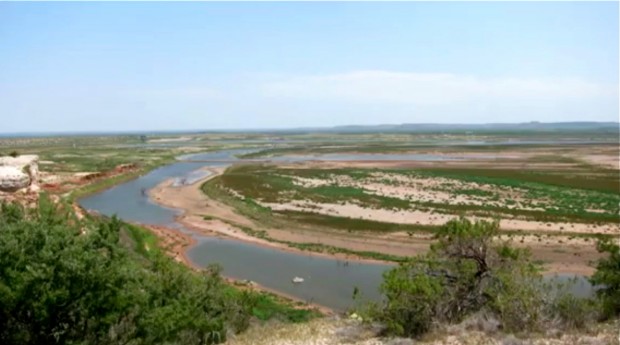
The Colorado River winds it's way near the town of Robert Lee. The town's reservoir dried up last year and water is now pumped in by pipeline.
Running from headwaters near New Mexico, the Colorado cuts southeast through Texas, feeding cities, farms, power plants and ecosystems before flowing into the Gulf of Mexico. It’s the longest river to start and end all within the state of Texas.
In good years, its water is enough to sustain communities at every point as it cuts its course through the state. 2011 was not a good year.
To hear the voices of people who depend on the Colorado for their lives and livelihoods is not just to hear about the drought of 2011. It teaches us about the looming water crisis that faces Texas. If trends continue, our state will keep growing but our water supplies will stay the same, or even diminish. Continue Reading →
The news this week is not quite as good. The drought has returned to some previously drought-free parts of Texas.
A greater amount of the state – seven percent, – has been added to the area experiencing drought since last week’s release of the US Drought Monitor Map.
The 737 area code will be introduced to the area in July of 2013 because the supply of 512 numbers is running out.
“Out of the top ten fastest growing large cities six of them are in Texas, including Austin,” remarked PUC Chair Donna Nelson before the vote. “With growth comes all sorts of unique opportunities and one of those is to have anew area code for Austin.”
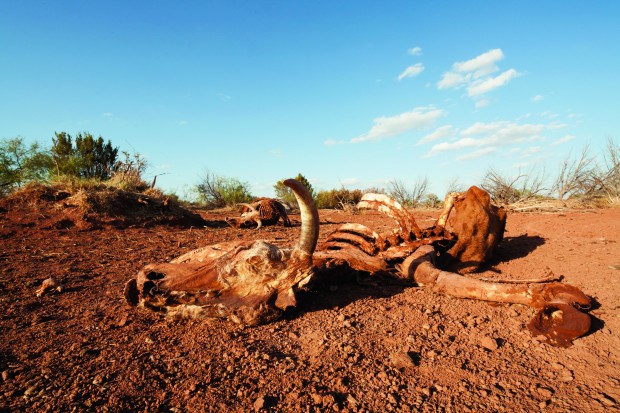
The carcasses of two Hereford cows that perished on the Patterson Ranch.
Wyman Meinzer, the state photographer of Texas, is used to finding beauty across the Lone Star State. But during the great drought, Meinzer was faced with the question of how to document devastation and destruction. In an interview with Jake Silverstein, editor of Texas Monthly, Meinzer talks about his work putting a lens to the drought.
Q: Let’s talk about last year’s drought project. As someone raised in West Texas, you’ve lived through many droughts, including the 1950s drought when you were just a boy. When did you start to realize that last year’s drought was unusually bad?
A: Being an outdoorsman and a photographer not only are you a visual person, but also from my research background and my education as a biologist, you notice patterns. And I noticed in May and June things weren’t right. High winds. Just ever-present high winds, just incessant, wouldn’t end. Twenty, thirty, forty miles an hour. Temperatures way more than normal. Continue Reading →
This morning Public Utility Commission Chair Donna Nelson and Commissioner Rolando Pablos voted to approve an increase in the price cap for wholesale electricity in Texas. Commissioner Kenneth Anderson, Jr. abstained.
Before today’s vote, the wholesale price of electricity had been capped at $3,000 per megawatt hour. Under the new rule that will rise to $4,500. It’s meant to make the business of selling power in Texas more profitable. Supporters say that’s necessary to encourage investment in new power plants.
“We don’t require the building of generation in Texas. We set up the market forces so that generators want to come to Texas,” PUC Chair Donna Nelson told StateImpact Texas after the vote.
Commissioner Anderson, the one abstaining vote, had long been skeptical of raising the cap this year. Before the vote he argued again that the price hike would not impact power plant construction by the end of the summer.
“The drought was abysmal,” Meinzer says. “I felt it was my duty to document it in all of its ugliness.”
On the 6666 Ranch, in King County, earthmoving equipment is used to clean out dry stock tanks in anticipation of potential rain.
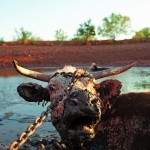
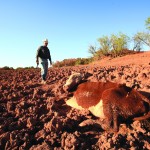
With stock tanks at historic lows, cattle, such as this steer on the Patterson Ranch, in Knox County, are driven by desperation to wade into the quagmire that surrounds each remaining water source, where they become stuck.
On the Patterson Ranch, a cow, paralyzed after a prolonged struggle to free itself from the mud, is about to be dispatched by Kynn Patterson.
Rancher Kynn Patterson and his partner, Pate Meinzer (Wyman’s son), use an old mixer to produce their own cattle feed in order to avoid the high feed prices brought on by the drought.
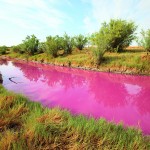
The bacteria Chromatiaceae, which grows in oxygen-deprived water, turns Croton Creek, a tributary of the Brazos, eerily red during the 2011 drought.
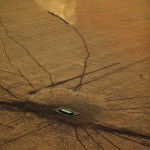
Heel dust marks the path of cattle leaving a man-made water source on the Williamson Ranch, in Knox County.
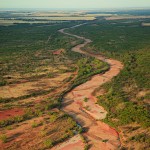
A parched Brazos River wends its way through Knox County.
A coyote and a young whitetail, usually adversaries, eye each other cautiously near a dwindling water source in Baylor County.
The carcasses of two Hereford cows that perished on the Patterson Ranch.
Last year, Wyman Meinzer got an unsettling feeling. Meinzer was raised on a ranch in West Texas and has weathered many dry spells, including the drought of record, when he was just a boy. But last spring, he started to notice unusual patterns. High winds for days on end. Temperatures much hotter than normal. Waterholes shrinking and filming over.
Meinzer is the official state photographer of Texas. He’s known for capturing images that show the state’s beauty. But as the drought set in, he decided to document it in all its ugliness.
You can listen to Meinzer’s story and see some of his images in the slideshow above. And you can read Meinzer’s story in the new Texas Monthly.
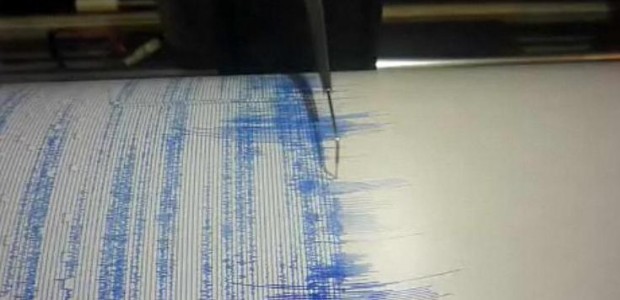
Still image taken from video posted to Flikr Creative Commons by Waifer X. http://www.flickr.com/photos/waiferx/2658307394/
A seismograph measures feet stomping nearby at the Thomas A. Jaggar Museum in Hawaii
Three earthquakes in six days. Those were the surprising numbers that greeted Texans on Monday morning. What’s becoming less surprising is the notion that they could have been man-made. All three of the quakes (two near Dallas, one around San Antonio) happened near areas with extensive oil and gas excavation.
A scientific consensus is forming around the notion that wastewater disposal wells, a common byproduct of oil and gas drilling, are causing quakes. As that understanding grows, the debate has moved from what is causing the quakes to what policymakers should do about it. Continue Reading →
About StateImpact
StateImpact seeks to inform and engage local communities with broadcast and online news focused on how state government decisions affect your lives. Learn More »