Schools Out: Kids at the End of The Day at Kruse Elementary in Pasadena, Texas
A spokesperson for Pasadena Refining System has issued an updated statement today on the fire at their Houston-area refinery Saturday that injured one:
“Pasadena Refining (PRSI) reports that the fire which broke out at approximately 7:00 p.m. Saturday, December 10, 2011 at the coker unit was extinguished a few hours later.
All personell [sic] were accounted for and the non-essential personnel safely evacuated the facility as a precautionary measure. One minor injury was reported. The employee was evaluated and released after being transferred to a local hospital. Continue Reading →
The La Boite shipping container-cum-coffeehouse in South Austin.
Would you like a manifest with your soy latte? Starbucks is getting into the coffeehouse-inside-a-shipping-container game, the New York Timesreports, with plans to open a store in Seattle constructed out of four used shipping containers.
But for Texas, shipping container coffehouses aren’t an innovation. There are two in Austin, one of them just steps from the Texas capital. La Boite (french for “The Box”) is the company behind the twenty foot-long coffee-tainers, which were designed and built by the firm designSTUDIOmodern. “The concept was borne from the desire to re-use existing materials and to provide a clean, functional space,” La Boite says on their website. Continue Reading →
Photo by Dave Fehling/StateImpact Texas / StateImpact Texas
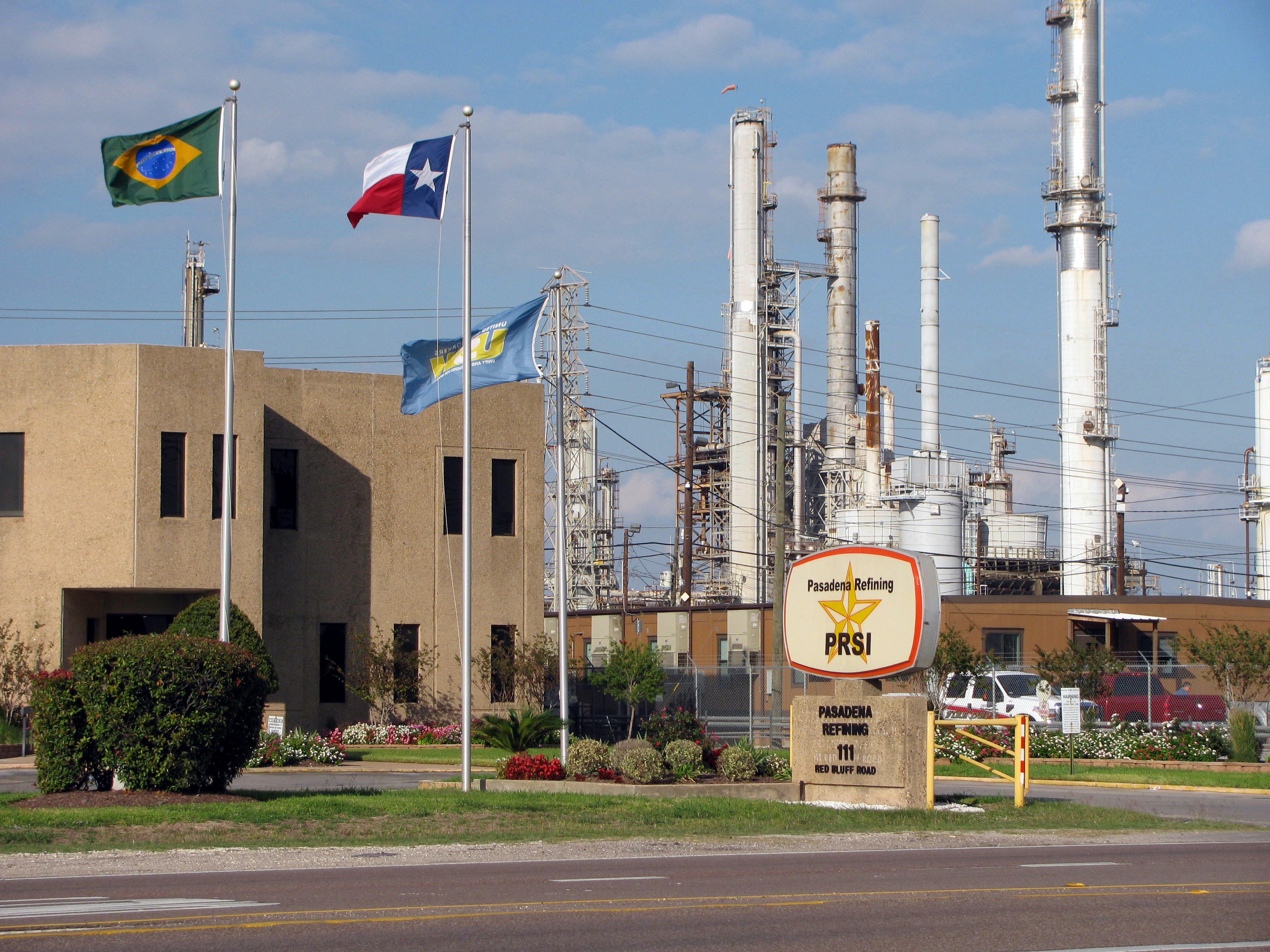
The Pasadena Refining System Inc. refinery in Pasadena, Texas
Blasts followed by a fire were reported at the Pasadena Refining System refinery in a suburb of Houston Saturday evening. The Associated Press says two were injured in the explosion, one of them with burns on his arm. The fire ignited in the refinery’s coker unit after “sludge at the bottom of a tank ignited, unleashing a fireball,” according to the report. The fire has been extinguished.
This is the second fire recently at the refinery. On September 30, a fire ignited at the plant’s crude unit, sending “thick black smoke” that could “be seen for miles,” according to local news reports. It wasn’t until November that the refinery fully returned to normal operations.
StateImpact Texas reported on the refinery last month. The Harris County Attorney said it planned to sue the plant over pollution. Several schools are near the refinery, most of them less than a mile away. Continue Reading →
Earlier this week, we took a look back at the awful year of weather that Texas had in 2011. Now it’s time to look forward, and new winter weather predictions from the National Oceanic and Atsmopheric Administration do not bode well for a possible end to the drought.
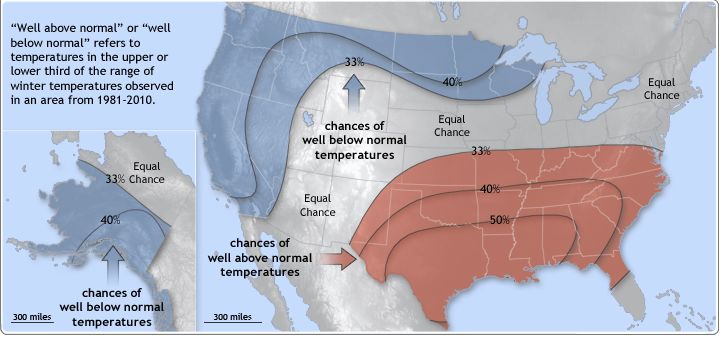
First, this winter’s weather doesn’t look like it will buck the trend of higher temperatures:
Map by NOAA Climate Program
Winter temperature outlook
Much of the state has a fifty percent chance of temperatures well above normal this winter. And it doesn’t look like this there’s going to be much rain, either. Continue Reading →
Shoppers select a Christmas tree in December 2010.
It’s a debate you’ve probably had at holiday parties over eggnog and tea cookies. Which type of Christmas tree is better for the environment, real or plastic?
The question is as old as the advent of fake plastic trees themselves. And as with any argument, there are pros and cons. But there is a clear environmental advantage to one type of tree. First, let’s look at the debate between real vs. plastic: Continue Reading →
Dr. Jerry Brand direct UT’s Algae Culture Center. Photo by Mose Buchele
The Biology Building at the University of Texas at Austin houses one of the University’s most exceptional collections. Not books or art or dinosaurs. This is the Algae Culture Collection.
Think of it as a living library. Shelves line the walls stacked with beakers, each a different shade of green. The hallways are lined with green jars, each of them containing a different strain of algae, around 3,000 in all. Continue Reading →
One member of the Public Utility Commission of Texas, concerned that electricity generators need more incentives to build additional power plants, suggested eliminating the cap on prices charged during peak times.
Texas PUC
PUC commissioner Kenneth Anderson
“I’m not prejudging it. I’ve got no particular problem raising the system wide offer cap, or eliminating the cap or adjusting the cap on peak or net margin,” said PUC commissioner Kenneth Anderson at the commission’s meeting Thursday in Austin.
The PUC has been concerned over recent forecasts that the power grid would be struggling to keep up with demand if this coming summer is as hot as 2011. The current price cap is $3000 per megawatt hour for the wholesale electricity market. The PUC has discussed raising the cap, but eliminating it?
“That’s a pretty big opening,” said PUC spokesperson Terry Hadley. He told StateImpact Texas that determining how much the cap will be raised, if at all, will be decided with ERCOT (Electric Reliability Council of Texas) which is the marketplace for distributing electricity in the state.
The Environmental Protection Agency (EPA) released draft findings of its investigation of contaminated water in Pavillion, Wyoming today. The agency investigated allegations against a drilling company, Encana, which uses a process called hydraulic fracturing, or “fracking,” (where a mixture of water, chemicals and sand is pressure-blasted deep underground to create fissures that release oil and gas deposits). This is the first time a federal investigation has made a connection between fracking and contaminated water supplies.
The EPA bored two deep wells to monitor water in the aquifer, and found “compounds likely associated with gas production practices, including hydraulic fracturing,” the agency said. They found “synthetic chemicals, like glycols and alcohols consistent with gas production and hydraulic fracturing fluids, benzene concentrations well above Safe Drinking Water Act standards and high methane levels.” The EPA noted that because of the geology of the area and how close the wells are to ground water, contaminating the aquifer and water supply over time is a concern. Continue Reading →
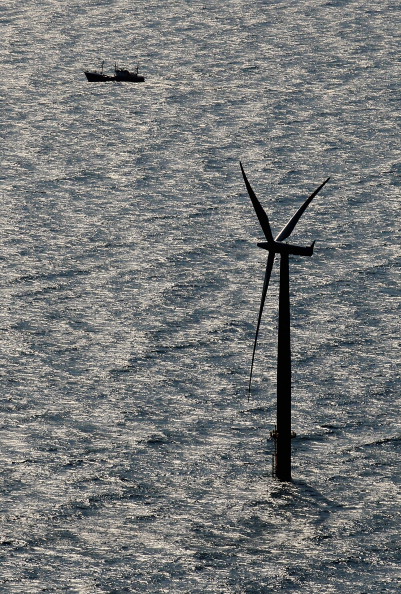
Offshore wind has made its way to the Atlantic. Over 200 miles from the shore of Agucadoura, Portugal, a two-megawatt turbine is currently floating on the sea and will soon generate power. The project is expected to be up and running after a few weeks of testing. The turbine is a joint project between Seattle-based wind developer Principle Power and a Portuguese utility.
The turbine and floating platform were assembled onshore, then towed out to the open Atlantic. So how exactly does a tall wind turbine with a wide wingspan float in the ocean? The company behind the turbine says they have come up with a technology that reduces wave and wind movement on the platform, “which allows a large turbine to be placed in waters with depths of more that 164 feet, where it is able to capture stronger winds,” Renewable Energy World reported today. The company says that any wind turbine can be used with the platform.
StateImpact seeks to inform and engage local communities with broadcast and online news focused on how state government decisions affect your lives. Learn More »