Background

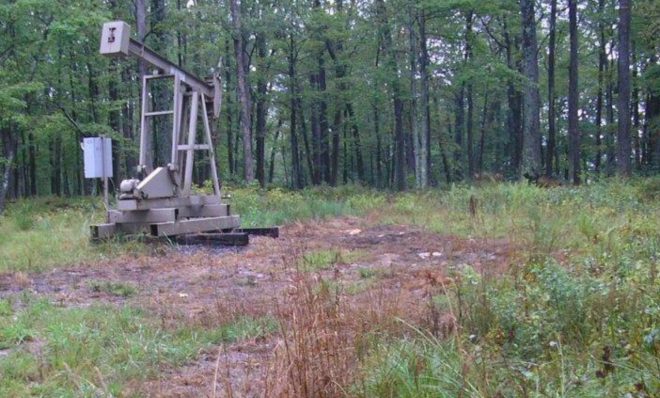
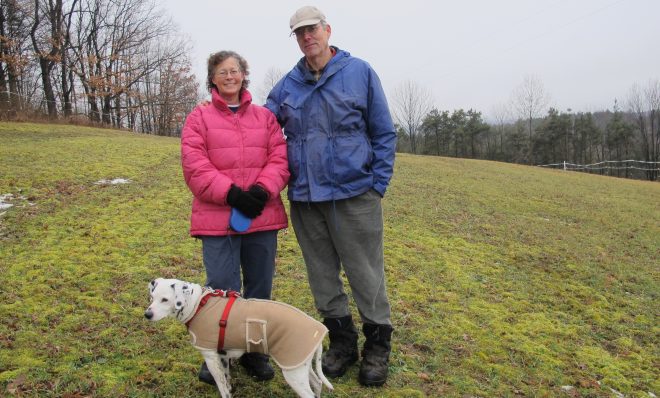
Courtesy of Marianne Atkinson
The Irvin deep injection well in Clearfield County is operated by Exco Resources.
Deep injection wells are also called brine disposal wells, and are officially known as class II underground injection wells. They can take any fluid related to oil and gas drilling, including frack waste water. In Pennsylvania, the wells are regulated by the Environmental Protection Agency through the Underground Injection Control Program (UIC). The EPA took over the task of permits, inspections and enforcement from state regulators in 1985. Currently there are eight permitted injection wells in Pennsylvania, but one was recently plugged, and another is temporarily suspended from disposing waste water. Two newly permitted wells in Warren County have been challenged by residents and are under review. In the meantime, those wells are not operating. The EPA is also looking at four new proposals in Pennsylvania, including one in Bradford Township, Clearfield County.
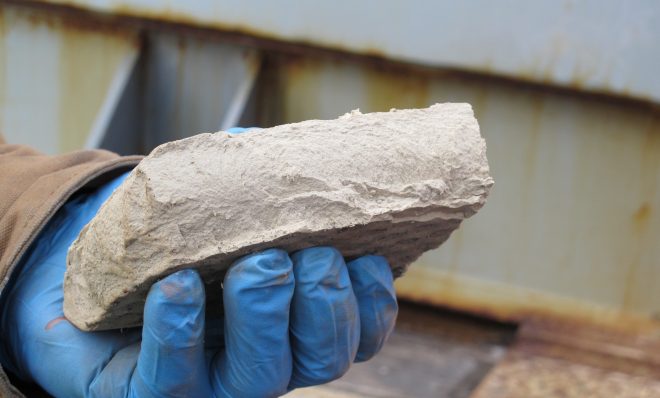
The oil and gas industry uses injection wells to dispose of waste water, which has a high salt content, as well as chemicals, heavy metals, and radioactive material. Much of the frack water produced in Pennsylvania gets trucked to Ohio, which has more disposal wells. Water can also be treated at private treatment facilities. The process cleans most of the water, but at least some smaller amount of fluid, or solid “cake,” still needs to be injected back into the ground, or taken to a landfill. Prior to 1985, operators were allowed to dispose of brine in the state’s waterways.
Three of Pennsylvania’s deep injection wells are commercial, which means they can take water from any energy company. The others are permitted only to dispose of their own frack water. Some take as low as 4200 barrels per month, but most of them can take about 30,000 barrels a month. EXCO Resources operates two in Clearfield County. One of those wells recently failed a mechanical integrity test, and a decision by the EPA on restarting the well is pending. EXCO failed to report leakage at that well for four months in 2010, and was fined by the EPA.
Other operators include Columbia Gas, Cottonwood and CNX Gas. Those wells are in Beaver, and Somerset counties. When it comes to pressure, the wells are permitted to take between 1300 to about 3200 pounds per square inch. The two newest permitted wells will be operated by Bear Lake Properties in Warren County. But local officials and residents have challenged those permits and they’re currently under review. All eight permitted deep injection wells are in the western part of the state.
Lately, these types of deep injection wells have been linked to earthquakes in Texas, Arkansas and Ohio.