Terrence Henry reports on energy and the environment for StateImpact Texas. His radio, print and television work has appeared in the New York Times, The Washington Post, The Atlantic, NPR, The Texas Tribune, The History Channel and other outlets.
He has previously worked at The Washington Post and The Atlantic. He earned a Bachelor’s Degree in International Relations from Brigham Young University.
Last week’s new stories on StateImpact Texas looked at fracking, the drought and a fire at a Houston refinery:
Fracking Report Reverberates in Texas: A report on fracking and water contamination from the Environmental Protection Agency sent shockwaves through the industry. What does it mean for drilling in Texas?
Rick Perry campaigns at a coffee shop in Iowa on December 16, 2011
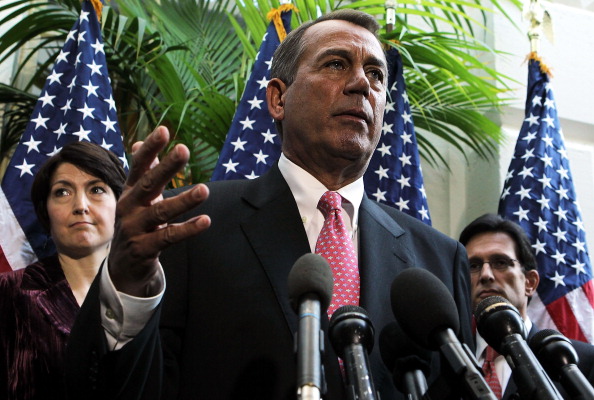
A few weeks after the Environmental Protection Agency released a draft report that found a link between hydraulic fracturing (“fracking”) and water contamination in Wyoming, the Texas governor is weighing in on the topic.
Not that he necessarily intended to do so. As KUT’s Ben Philpott reports, at the final stop of the day on his bus tour of Iowa Sunday, an Obama supporter asked Perry about links between fracking and water pollution.
“We can have this conversation, but you cannot show me one place where there is a proven — not one — where there is proven pollution of groundwater by hydraulic fracturing,” Perry said. “Bring me the paper, bring me the paper — show me the paper, I’m just telling you.” Continue Reading →
It’s been a busy weekend for the proposed Keystone XL pipeline and you might be wondering where things stand. The answer: chaos.
First, a little history. The pipeline is a 1,700-mile behemoth that is currently in the planning stages. It would take crude oil from Canada (harvested from the country’s tar sands) to refineries in Texas. The original route would have taken the pipeline through sensitive aquifer and prairie lands in Nebraska. Local opposition there was partly responsible for the Obama administration’s decision, in October, to delay the pipeline until after the Presidential election. It was seen as a victory for environmental groups and a defeat for the industry, and everyone pretty much considered the delay a done deal.
Our partners at StateImpact Pennsylvania have developed a new app that allows you to explore the rapidly growing world of drilling there. The interactive map shows who’s drilling where and allows you to see if drillers have been cited for violations of state environmental laws and regulations.
The data from the app shows that there are 52 companies drilling in the state, with 1,608 active wells. With all of that drilling there’s been a fair amount of violations found: there have been 1,532 citations with fines of $2.8 million. The data was obtained from the Pennsylvania Department of Environmental Protection.
The National Weather Service has new data on temperatures and rainfall out, and several Texas cities are either on track to or have already broken existing records for heat and drought:
Houston tied for its hottest year ever, and has had its second driest year ever, with only 21.6 inches of rain.
Austin had its hottest year ever, with an average temperature of 73 degrees. (The previous hottest year was in 2006 at 72.4 degrees.) Abilene also had its hottest year ever, at 68.7 degrees Fahrenheit for the year. (The previous hottest year was in 1933.)
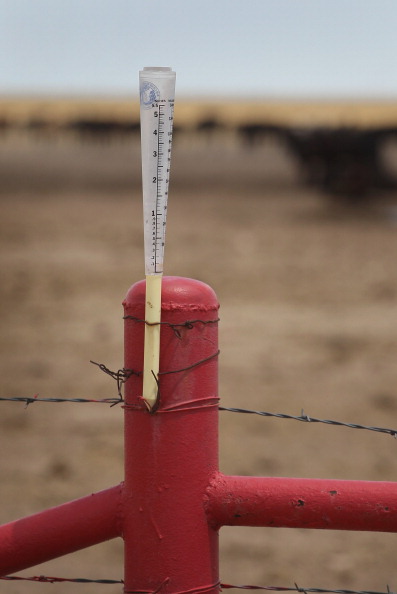
Midland and Lubbock are both breaking or tying records for hottest and driest years ever. Midland had only 4.5 inches of rain so far this year (the normal level is around 14 inches of rain), and an average temperature of 67.9 degrees. All of West Texas is 9-10 inches below normal or worse, and Midland has had only 24 days of rain over the last 444 days. Continue Reading →
With heat, tornadoes, drought, fires, extreme weather and flooding, the climate has certainly caught the world’s attention in 2011. While scientists debate just how much the world is warming and how much of that has to do with human impact, others are taking it upon themselves to reverse the changes through technology. Here are five schemes that may seem pie-in-the-sky at first, but could soon have a big impact on our planet:
Make it rain. What would China be without a five-year plan? The country recently announced a new one that will certainly get the attention of Texas: seeding the skies to grow more crops. “China will begin four regional programs to artificially increase precipitation across the country before 2015,” the state paper China Dailyreports. Sound fanciful? It’s not. Continue Reading →
The latest drought data from the National Drought Mitigation Center was released today. The numbers haven’t moved much since last week, and while they give cause for some hope, they also show just how far we have left to go:
41 percent of the state is in the “exceptional” stage of drought, the highest level. The good news is that those levels are down from nearly 88 percent just three months ago.
76 percent of Texas remains at the second highest level of drought, “extreme.” Those numbers have also improved somewhat, down from almost 97 percent three months ago.
The entire state — 100 percent of it — is still in a drought, 90 percent of it at a “severe” level or worse.
Look backwards and you can see just how intense this drought has been. A year ago today, none of the state was at the “exceptional” level and 85 percent of Texas was at the lowest level, “abnormally dry.”
The City of San Antonio cut the ribbon on six electric vehicle charging stations today. There are about 50 electric vehicles currently in use in the city,according to the San Antonio Express-News. The city covered the $10,000 total cost for the project through a Department of Energy grant. It takes about four hours to recharge a plug-in hybrid like the Chevy Volt.
There are already two solar charging stations at the airport, the Express reports, bringing the number of city charging stations to eight. The stations are free to use.
The Grinch promotes his movie in Universal City, California.
And the hits keep coming. There will be no oysters this year in Texas, USA Todayreports: “a monstrous bloom of toxic algae looming across the Texas coast has shut down oyster season.” Because of the drought, the paper reports, “the algae could cause nausea, vomiting and diarrhea in humans and is harmful to fish but not fatal to people.”
The ongoing Texas drought is responsible for billions of dollars in losses and counting. Here are just some of the things that we’ve lost in the drought:
Burgers. Beef prices are set to rise dramatically after a massive sell-off of cattle in Texas last year because of the drought, we reported recently. There are far fewer calves as a result, and what cattle is left has to be fed with grain that is also more expensive than before. This means higher prices at the market in the future. Continue Reading →
How do you convince people climate change is real? The answer until now has largely been one of science, data and facts. But an emerging voice in the scientific community is taking a different tack: emphasizing religious stewardship over statistics, and advocating awareness of climate change as a spiritual responsibility.
One emerging voice of the faith-inclined climate change community is climatologist Katharine Hayhoe, who also happens to be an evangelical Christian. Hers is a fascinating tactic, especially considering that only slightly more than half of white evangelicals believe in climate change, less than other denominations, according to a recent poll by the Public Religion Research Institute. Continue Reading →
About StateImpact
StateImpact seeks to inform and engage local communities with broadcast and online news focused on how state government decisions affect your lives. Learn More »