Terrence Henry reports on energy and the environment for StateImpact Texas. His radio, print and television work has appeared in the New York Times, The Washington Post, The Atlantic, NPR, The Texas Tribune, The History Channel and other outlets.
He has previously worked at The Washington Post and The Atlantic. He earned a Bachelor’s Degree in International Relations from Brigham Young University.
The drought in the South has taken an enormous toll on the states of Texas, Oklahoma, Louisiana and New Mexico. In Texas alone, the state has lost billions of dollars and counting. The drought has affected many parts of everyday life: burgers, peanut butter, even Christmas trees were hurt.
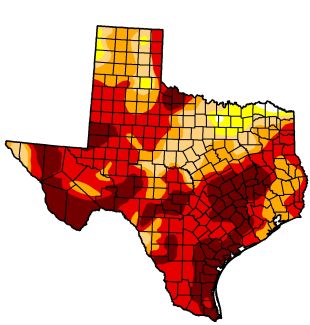
Where is that land of normalcy, you ask? They’re those specks of white on the map to the the right. Along the Red River at the Northeast border between Texas and Oklahoma, and also in parts of Wise and Denton counties, some Texans are actually living drought-free.
The Environmental Protection Agency has released a new interactive map today that allows you to explore greenhouse gas emissions throughout the country for 2010. Here’s a snapshot of Texas that links to the map:
Clusters of Greenhouse Gas Emitters in Texas (Map by EPA)
The largest emitter of greenhouse gases in the state for that year? The Luminant Martin Lake power plant, which mostly burns lignite. It released 18.7 million metric tons of greenhouse gases into the atmosphere last year and is the fourth largest emitter of greenhouse gases in the country.
Texas has 673 facilities reporting greenhouse gas emissions to the EPA, more than any other state. (California, in second, has 456.)Continue Reading →
New year-end data and maps from the government show what a year 2011 was for heat and drought in Texas. Records were broken across the state, as extreme weather reached levels never seen before.
First, Texas was truly a red state last year, winning the distinction of being the driest state in the nation. States in the northeast, however, had their wettest years ever:
Map by NOAA
Some more detailed data gives a sense of how intense the drought was for all of Texas and portions of surrounding states: Continue Reading →
The Texas Senate Business and Commerce committee heard testimony from state agencies, scientists, environmental groups and others Tuesday about how an extended drought might affect the state’s power grid. There was talk of cloud seeding, demand response, and even input from the ambassador to Australia on how to best generate power during a drought.
The meeting went for hours, and while it didn’t yield any direct results, there were plenty of ideas for dealing with the drought. It will be interesting to see which of them the committee picks to present before the next session of the state legislature in 2013.
Rays of Hope
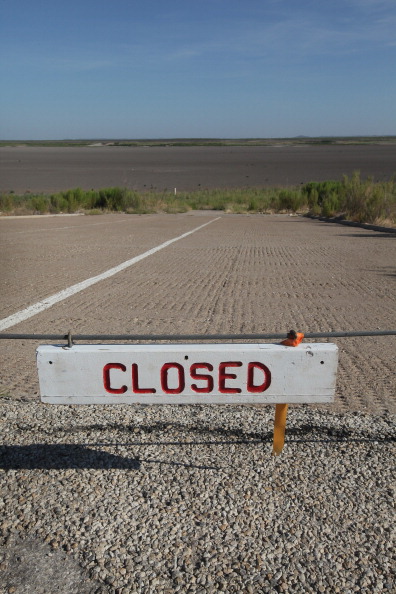
State meteorologist George Bomar testified on where things may be headed, saying that “we have just come through the worst one-year drought in Texas history and it’s not over.” He said the current drought is a “once in a lifetime experience” and that lakes and reservoirs have reached alarmingly low levels. His testimony hit notes of both pessimism and hope: Continue Reading →
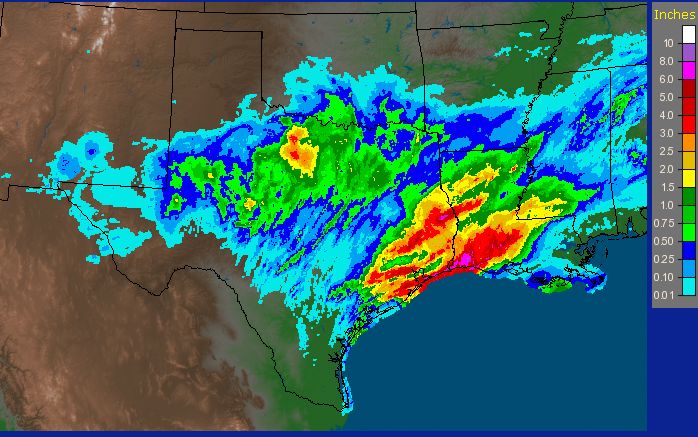
So we’re happy today to share a map of a different color. Here’s the rainfall in Texas from Monday, according to the National Oceanic and Atmospheric Administration (NOAA):
Map by NOAA
Rainfall in Texas over the last 24 hours
But the rain isn’t necessarily all-around great news. Continue Reading →
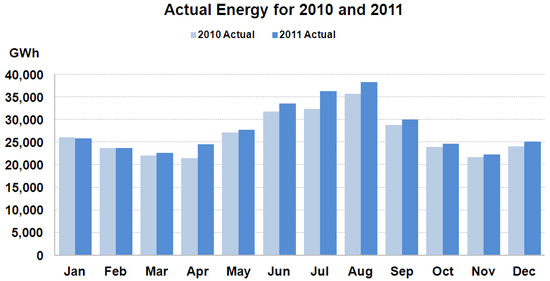
The numbers are in for electricity use for Texas in 2011 (more specifically, the 85 percent of the state in the Electric Reliability Council of Texas grid), and there are some interesting takeaways. It’s not surprising that with extreme heat and drought, energy demand increased in 2011:
Energy use was up 5 percent over last year.
The grid used less coal last year, and more natural gas and wind. Coal was down 0.5 percent, natural gas use was up 2.2 percent and wind use was up almost 1 percent.
Nuclear power as a percentage of the grid was down 1.2 percent.
Wind has shown the greatest gains over the last five years, going from 2.9 percent of the grid in 2007 to 8.5 percent in 2011. The only other energy source that has increased as part of the grid’s energy makeup during the last five years is coal, which increased a total of 1.6 percent.
Surprisingly, given the boom in shale drilling, natural gas use as a percentage of the grid has decreased since 2007, going from 45.5 percent of the grid to 40.4 percent last year.
While we’ve taken to calling it the Texas drought, it’s important to remember that the drought knows no borders. In Mexico, some 600,000 households “suffered property damage or crop losses due to an unusual combination of floods, drought and freezing weather in 2011,” according to the Associated Press.
The agency spoke with Heriberto Felix Guerra, Mexico’s social development secretary. He told them that “the drought has been so bad that about 2.6 million people in about 1,650 villages and towns in northern Mexico do not even have drinking water.” His agency has had to truck in water to those people.
Guerra blamed the extreme temperatures and weather on climate change, the Associated Press says, “and predicted that such natural disasters will become worse in coming years.”
The 380-acre Webberville Solar Farm outside of Austin will power 5,000 homes.
Earthquakes, fracking and solar power are all hot topics on StateImpact Texas these days. In case you missed any of them, here are our top five stories published in the last week:
A Look to the Future at Texas’ Largest Solar Farm: Politicians, green energy advocates and industry representatives are hoping a new solar farm will showcase the promise of renewable energy after a turbulent year for the solar industry.
And last night in Oklahoma, a fracking well caught fire. Here’s the video from the website Drilling Ahead:
A report from the website says the rig, owned by Nomac, a subsidiary of the fracking giant Chesapeake, “drilled into a shallow gas pocket soon after spudding in at a drilling depth of 900′ northwest of Sweetwater, Oklahoma” around 6 p.m. on January 5. There are no reported injuries. Continue Reading →
About StateImpact
StateImpact seeks to inform and engage local communities with broadcast and online news focused on how state government decisions affect your lives. Learn More »