Terrence Henry reports on energy and the environment for StateImpact Texas. His radio, print and television work has appeared in the New York Times, The Washington Post, The Atlantic, NPR, The Texas Tribune, The History Channel and other outlets.
He has previously worked at The Washington Post and The Atlantic. He earned a Bachelor’s Degree in International Relations from Brigham Young University.
Photo Courtesy of Flickr user boboroshi/Creative Commons
Silencers make hunting easier on the ears, but some control control groups worry about safety.
Earlier this month we told you about a proposed rule change that would allow hunters to use silencers when going after game, birds and even alligators. Today the Texas Parks and Wildlife Department (TPWD) announced it has adopted that rule, so Texans can now hunt in relative silence. (Provided they submit an application to the Bureau of Alcohol, Tobacco, Firearms and Explosives (ATF), pay $200 and get a criminal background check.)
“These devices are already legal for hunting exotic animals, including feral hogs, and there is no resource or enforcement-related reason to prohibit these devices for hunting alligators, game animals or game birds,” Scott Vaca, TPWD Assistant Chief of Wildlife Enforcement, said in a statement.
Opponents of the rule change had argued that a bullet is exactly the sort of thing that people should able to hear.
“I think there should be concerns across the spectrum, from people who are engaging in legitimate hunting activity and who are not able to hear the report of rifle fire from a hunter, or hunters who are not in their group and who don’t have that warning,” Ladd Everitt, a spokesperson with the Coalition to Stop Gun Violence, told StateImpact Texas earlier. Continue Reading →
Climate scientists Katharine Hayhoe says the drought was exacerbated by climate change.
We’ve been posting videos and reports recently from a series on the drought by PBS NewsHour done in collaboration with StateImpact Texas. The series is part of a larger project by PBS NewsHour in partnership with local public media, Coping With Climate Change, that looks at how a transforming climate affects everyday life. Today’s piece is an interview with Katharine Hayhoe, director of the Climate Science Center at Texas Tech University, about what role climate change played in the drought.
Q: So Texas is still in the middle of this drought and it’s pretty extreme. Does this relate to climate change, and if so, how?
A: Whenever something happens, there is always the temptation to try to pigeonhole it either [as] an entirely natural event or [as a result of] climate change. But the reality is that every event that occurs right now is probably a little bit of both. Like in our case, with our drought, there is no question that it was initiated by La Nina. But on the other hand, our temperatures this summer were really extreme. We set all kinds of records, so there is a very strong possibility that climate change also played a role. In that sense, we have a little bit of both going on. We always have natural variability, but now we’ve gotten to the point where we’ve altered the background conditions of our atmosphere to such an extent that … climate change has a little bit to do with everything that happens around us. Here in West Texas we’re already really dry… so drought is almost the norm for us. But with climate change, what we see is through increasing temperatures and through increasing variability in our precipitation rainfall patterns, we have the potential for even more impacts on water in the future … It’s as if we have two dice and we always have a chance of rolling that double six, which would be that extreme event. But with many of our events – including very high temperature days, extreme heat, and heavy rainfall – climate change has been kind of coming in and removing some of those other numbers off the dice and putting in more sixes … increasing our risk of having one of those [extreme] events.
Q: So you’ve said that climate change exasperates preexisting problems. What are some of the specific things that you see being affected now?
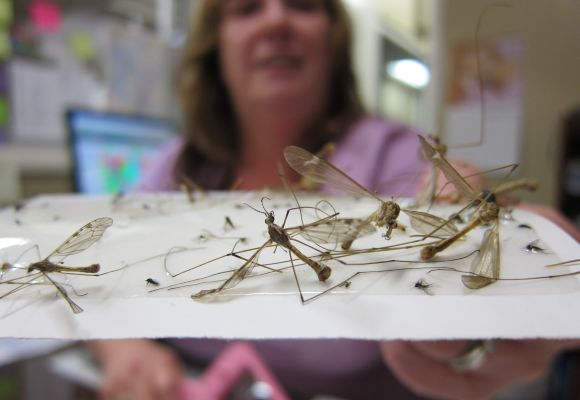
Monica Malone, general manager at J&J Pest Control, holds a sticky strip covered in dead crane flies.
You’ve probably seen them hovering at your windows or waiting at your door. A few may have even flown into your house. They look like giant mosquitoes, and they appear to be everywhere this season. Say hello to the Crane Fly.
As Texas A&M University points out on its site devoted to the fly, “large numbers of adult crane flies can be a nuisance indoors” but they are “medically harmless.”
So why are there so many flying around this year? For StateImpact Texas partner KUT News, Nathan Bernier looks at how a dry year followed by a wetter-than-usual winter has led to a proliferation of the bug:
The explosion of crane flies is a direct product of two things: the drought killed a bunch of plants, and recent rains helped those dead plants rot. There’s nothing that crane fly larvae love more than rotting plant matter.
Crane flies aren’t the only insect that benefited from the 13 inches to 16 inches of rain Austin has received since January. Fire ants are making a comeback too, says Wizzie Brown, an entomologist with the Texas Agrilife Extension Service. She tries to lure them out of their holes with hot dogs by placing a slice of the meat into a clear pill bottle and waiting about an hour.
Andrew Sansom is the Executive Director of the River Systems Institute at Texas State University.
We’ve been posting videos and reports recently from a series on the drought by PBS Newshour done in collaboration with StateImpact Texas. The series is part of a larger project by PBS Newshour in partnership with local public media, Coping With Climate Change, that looks at how a transforming climate affect’s everyday life. Today’s piece is an interview with Andrew Sansom, executive director of the River Systems Institute at Texas State University, about current water policy and where the state can go from here.
Q: We’ve been telling a kind of “tale of two cities” for Robert Lee and Spicewood Beach. Can you explain to us why this is happening in Texas?
A: Well, it’s happening because Texas is one of the most rapidly urbanizing states in the United States. We expect that we will have twice as many people here in the next 40 or 50 years, and we have already given permission for more water to be withdrawn from many of our rivers than is actually in them today. So we’re reaching a crisis that’s brought on by declining water supplies and a rapidly growing population. Essentially, we’ve got more straws in the ground, which causes situations like Spicewood [Beach] and Robert Lee to occur.
Q: Considering the drastic measures that these two towns have had to take, like building a pipeline for a million and half dollars and trucking in water on a day-to-day basis, do you think the situation is likely to get worse?
A: I believe that it will get worse. I think it will get worse until we begin to make some fundamental changes in terms of how we view water, how we price it, and how we use it particularly. Continue Reading →
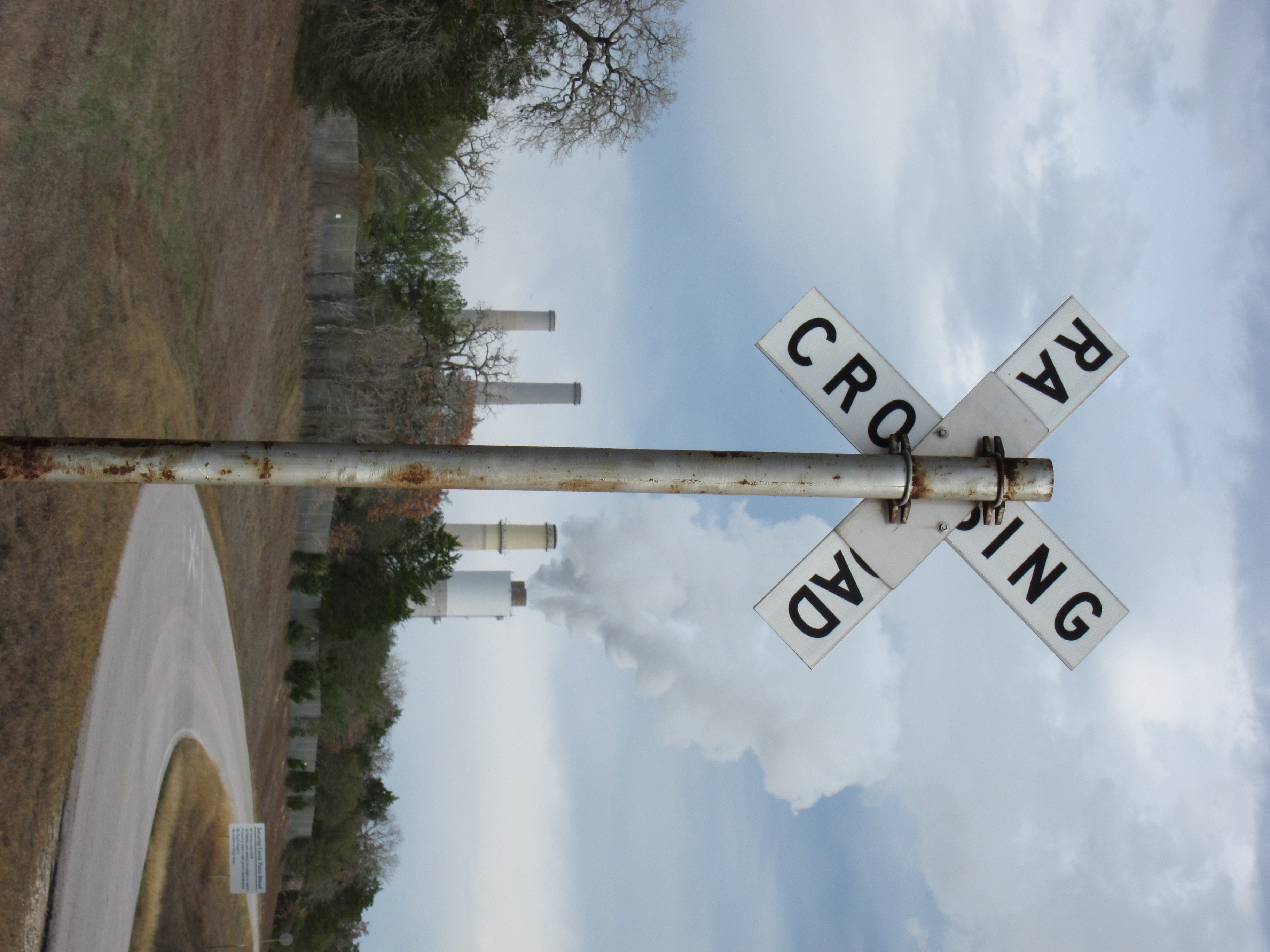
A new EPA rule puts future coal power plants at a crossroads.
The Environmental Protection Agency issued the first standard on greenhouse gas emissions under the Clean Air Act today for future power plants. The agency also says the rule “does not apply to plants currently operating or new permitted plants that begin construction over the next 12 months.” The bottom line: building a coal power plant is going to be a very unattractive option.
Under the new rule, which you can read in the embedded EPA fact sheet below, new fossil-fuel based power plants generating 25 megawatts or more of energy would be limited to emissions of 1,000 pounds of CO2 per megawatt-hour. Essentially, the rule favors natural gas power plants over coal. The EPA estimates that “95 percent of natural gas plants built since 2005 would meet the requirement.”
But for coal plants it’s another story. Drawing the line at 1,000 pounds of carbon emissions per megawatt-hour would eliminate most new coal power plants. According to the Washington Post, “coal plants emit an average of 1,768 pounds of carbon dioxide per megawatt.” Natural gas, on the other hand, “emits between 800 to 850 pounds.” Continue Reading →
Photo by Conservation History Association of Texas/Courtesy of Ken Kramer
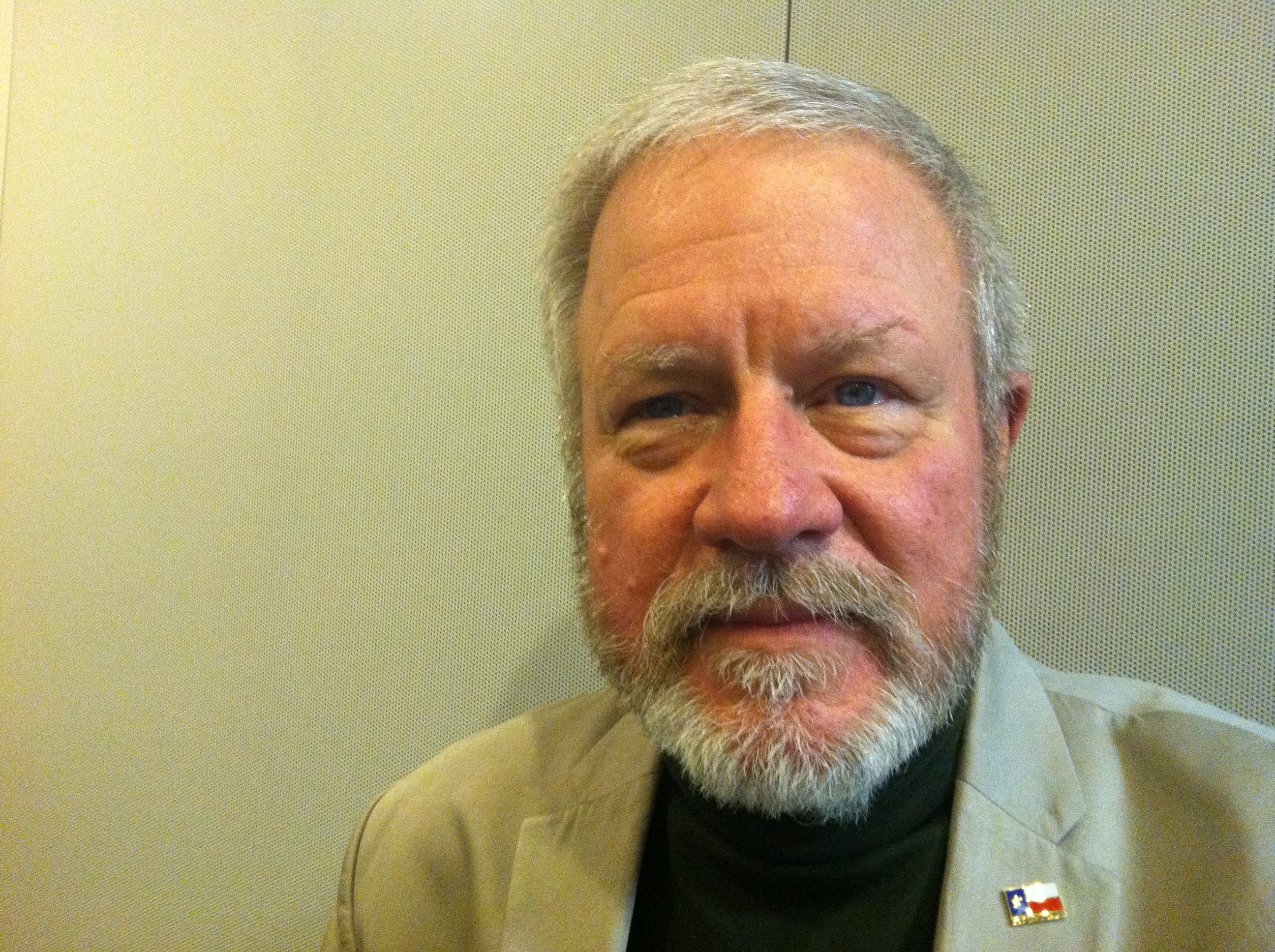
Sierra Club Lone Star Chapter Director Ken Kramer
Ken Kramer, director of the Sierra Club in Texas, announced today that he will be retiring this summer, according to a release from the group. He is the first director of the Lone Star Chapter of the Sierra Club, a position he’s held since 1989.
The group says that Kramer “will remain active with the organization in various volunteer capacities, especially playing a leading role on water issues as Water Resources Chair for the state-level Lone Star Chapter of the Sierra Club.”
More from the Sierra Club:
“I’m extremely grateful for the opportunity that I’ve had to work as a professional on state environmental issues in Texas over such a long period of time,” said Kramer. “Moreover, I’ve been fortunate to have had the support of numerous colleagues who have a passionate commitment to protecting public health and the environment. The enviable position that I’m in now is that because the Sierra Club has built such a strong cadre of staff and volunteers in Texas I’m free to retire and focus as a volunteer on the issues I care about the most while also spending more time with my wife and enjoying the outdoors that I’ve tried to protect.”
“The management of our water resources is perhaps the most critical environmental issue facing Texas in the 21st century,” Kramer continued, “and I look forward to concentrating most of my volunteer time for the Sierra Club on that issue. We must protect and manage our state’s water as efficiently and effectively as possible to meet the needs of both people and the environment. I’m dedicated to achieving that goal.”
The shorelines of Buchanan Lake recede during a record year of drought
If you’ve spent much time on the Highland Lakes in Central Texas (Buchanan, Inks, LBJ, Marble Falls, Travis and Austin) you’ve likely seen pipes running from residences down into the lakes. Some of those homes now sit over a hundred feet above the lake, thanks to drastically low lake levels over the last year. (Even after heavy rains this week, Lakes Buchanan and Travis are still less than half full.)
In February, the Lower Colorado River Authority (LCRA), which manages the lakes, warned residents to stop sucking water out without a permit, which is against state law. At the time, an estimated 5,000 residents were doing so, 2,000 of them without a permit. (That number was even lower in 2009, when fewer than 60 had a permit.)
Now the LCRA says that an additional 1,200 people have signed up and contracted to draw water from the lake, bringing the total number of contracts to nearly 3,200. That leaves an estimated 1,800 people that still need to permit up, but the LCRA is happy with their progress.
“The response has been tremendous,” LCRA General Manager Becky Motal said in a news release. “The Highland Lakes are vital to the entire region, and it’s only fair that everyone pay for the water they use. We’re very impressed by the number of people who have decided to do the right thing.” Continue Reading →
This article was reported by PBS Newshour in collaboration with StateImpact Texas.
All this week we’ve been posting videos and reports from a series on the drought by PBS Newshour done in collaboration with StateImpact Texas. (And a ten-minute television segment aired Thursday night on PBS, which you can watch here.) The series is part of a larger project by PBS Newshour in partnership with local public media, Coping With Climate Change, that looks at how a transforming climate affect’s everyday life. Today’s story focuses on Robert Lee in West Texas, a town of a little over a thousand people that nearly ran dry during the drought.
John Jacobs is the proud mayor of Robert Lee, where his family has lived since the Civil War. And he’ll tell you that he’s never seen anything like this.
“We started to get concerned about 2 years ago that it was going to turn into something,” Jacobs says. “Of course, like everyone else, we thought it was going to rain.”
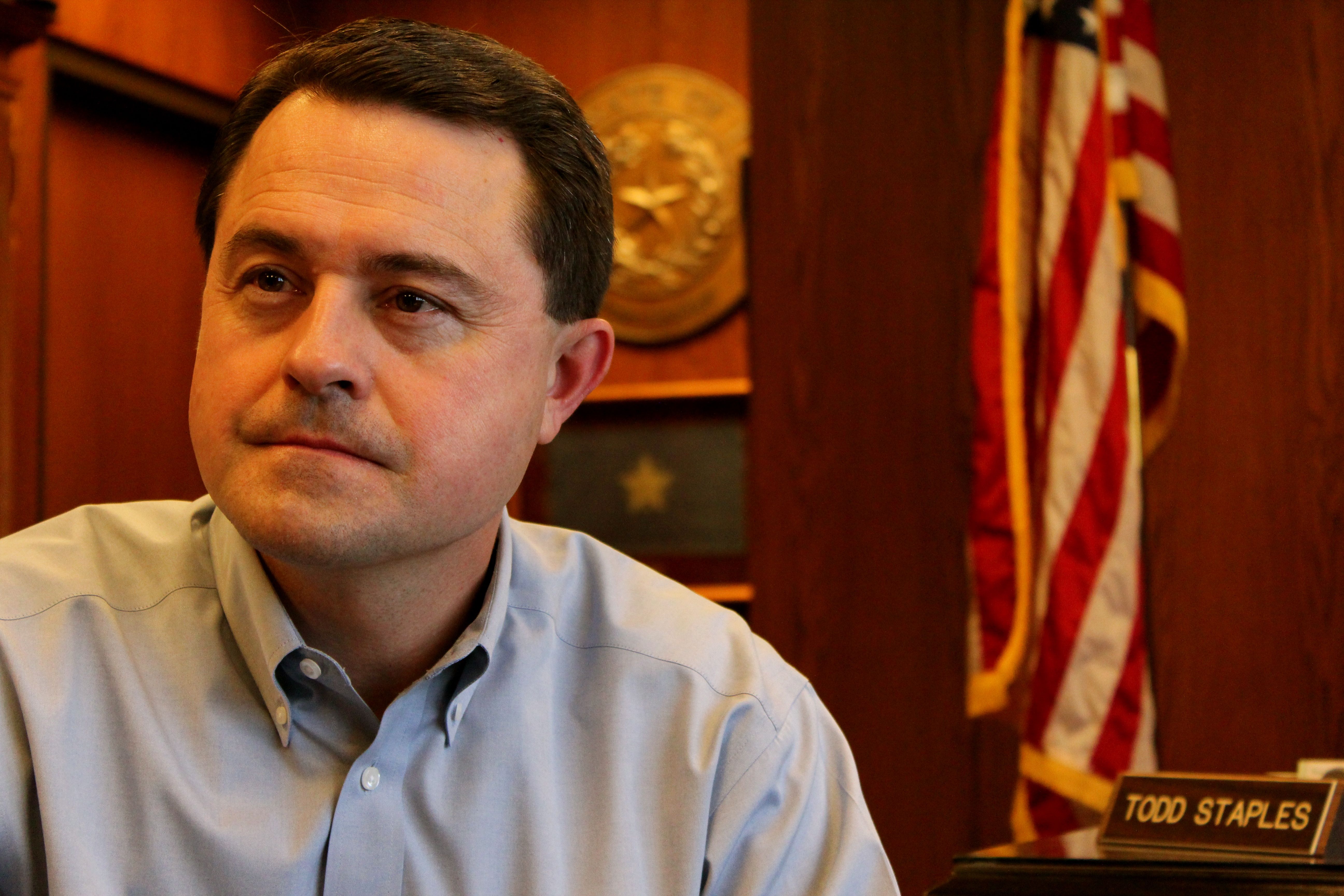
Texas Agriculture Commissioner Todd Staples says losses from the drought are "unprecedented."
The drought has taken a toll on every Texan, and some of the worst hit have been the state’s ranchers and farmers. New numbers from the state this week provide some grim statistics on their losses. For some context, StateImpact Texas sat down with Texas Agriculture Commissioner Todd Staples.
A: These monumental numbers have confirmed what agricultural producers have known all along. That when you are as large a state as Texas, and you have a monumental drought event, you’re going to have enormous financial losses. And these losses have been crippling for many operations: 58 percent of the cotton acreage in Texas was abandoned; and we’ve had the largest liquidation of our cattle herd since the great depression. So the $7.62 billion number for agricultural losses, combine that with about $600 million dollars in loss from timber, that’s a big number of over $8 billion in losses. That’s a huge cut in the gross domestic product of the state of Texas.
Q: Have we ever seen anything even approaching this kind of loss before? Continue Reading →
Pipe is stacked at the southern site of the Keystone XL pipeline on March 22, 2012 in Cushing, Oklahoma.
Speaking in Oklahoma today, President Obama endorsed the southern leg of the Keystone XL pipeline, which would take heavy crude harvested from the oil sands of Alberta to refineries on the Gulf Coast of Texas.
And as you might expect, that’s music to TransCanada’s ears. It’s the company behind the pipeline. “We appreciate his support for the Gulf Coast project,” TransCanada representative James Prescott tells StateImpact Texas today. “Our plan is to continue our efforts to secure the permits that are necessary, so we’ve already begun that process. So we appreciate his support for expediting that.”
The entire Keystone XL pipeline was denied a permit by President Obama in January. The President cited concerns brought up by the mostly-Republican legislature in Nebraska that the pipeline crossed sensitive aquifer and prairie regions in the state and would need to be re-routed. Today he emphasized his support for starting construction on the lower leg of the pipeline while TransCanada works to find an alternate route for the proposed upper leg.
StateImpact seeks to inform and engage local communities with broadcast and online news focused on how state government decisions affect your lives. Learn More »