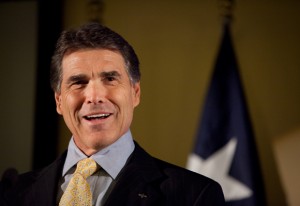
Mose Buchele is the Austin-based broadcast reporter for StateImpact. He has been on staff at KUT 90.5 in Austin since 2009, covering local and state issues. Mose has also worked as a blogger on politics and an education reporter at his hometown paper in Western Massachusetts. He holds masters degrees in Latin American Studies and Journalism from UT Austin.
The U.S. Environmental Protection Agency has granted its first greenhouse gas emission permit to a Texas facility since the Federal Agency took over the permitting program from the state.
The Lower Colorado River Authority’s Thomas C. Ferguson Power Plant in Llano County is the first Texas site to be awarded a permit to emit under the new system. The power plant will run on natural gas. Continue Reading →
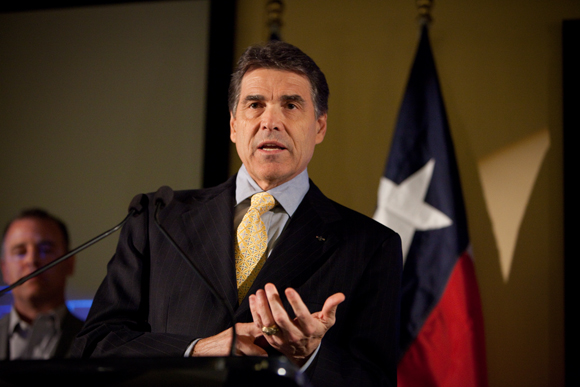
Texas Governor Rick Perry’s memory lapse at the GOP debate last night ( the now infamous moment when he couldn’t remember the third Federal Agency he would dismantle if he were president) was especially surprising considering the nature of his candidacy.
With about 2,760 employees, 16 regional offices, and an operating budget of $354 million this year, the Texas Commission on Environmental Quality is the second largest state environmental regulation agency in the U.S.
The man in charge of Compliance and Enforcement at TCEQ is Richard Hyde.
Richard Hyde is Deputy Director of TCEQ's Office of Compliance and Enforcement. Photo courtesy of TCEQ.
Hyde sat down with reporter Mose Buchele as part of StateImpact Texas’ coverage of recently released EPA watch lists of Clean Air Act violators. Those lists showed many repeat polluters are located in Texas.
While the TCEQ said it wouldn’t comment on EPA data, Hyde and spokesperson Terry Clawson did field questions about a range of other subjects. Below are some excerpts from that 20 minute interview touching on TCEQ’s defense of its enforcement record, the Sunset Committee recommended reforms at the Agency, and the impact of state budget cuts on enforcement.
Enforcement and Flexibility
Mose Buchele: Alright, could I open up with a general question about the Commission’s approach towards enforcement?
Richard Hyde: Sure, the Commission takes enforcement very seriously. It’s one of the tools in the toolbox we use. We want all companies to comply with their permits and the rules — that’s our genuine goal — and we’ll use all the tools in the toolbox to make that happen. If we have to use enforcement we use it, and it’s swift and just. Continue Reading →
A refinery along the Texas Coast. Photo by Teresa Vierira.
NPR reporters, working with the Center for Public Integrity, reviewed never-before published lists compiled by the U.S. Environmental Protection Agency to track polluters. Roughly one in 10 factories on the most recent list is in Texas. Some of those facilities have been on the watch list for years.
Kelly Haragan runs the Environmental Law Clinic at the University of Texas Austin. She is a great source, but interviews with her are likely to be interrupted. You see, Haragan gets a notification on her phone every time factories emit more pollution than normal. Continue Reading →
SunPower, a company that benefited from Gov. Perry's Texas Enterprise Fund, has announced cut backs.
Last November, the California-based solar power giant SunPower announced it was moving to Austin. Taking advantage of $2.5 million from Governor Perry’s Texas Enterprise Fund, the company promised to create 450 jobs in the Texas capital and make Texas its third largest office location.
Fast forward about a year: SunPower is downsizing.
In a statement, Thursday the company says it will cut operating costs by up to ten percent in the face of slowing demand for solar panels and competition from China. Continue Reading →
Protesters against a proposed tax break for Valero gathered outside the Texas Commission on Environmental Quality today.
Groups arrived in large buses from Houston and surrounding areas like Pasadena.
Parker, from Houston, said “Rick Perry oughta be ashamed. We need children to have a vibrant education without big interests in their pocket.”
Juan and Emilia Portia, their son Miguel, and daughter Jennifer Lopez were very vocal at the protest.
“Just Say No to Valero!” was a popular chant at the protest.
“There are too many dropouts right now,” Chad and Crystal’s mother, Leila Mikel, said. “Kids need to go to school to get a diploma. Without that piece of paper, they can’t make a living.”
A woman protests against the proposed tax exemptions for Valero Energy Corporation
The daughter of Marta Corona, a Houston area parent, looks up at Alain Cisneros, a protest organizer
A protester speaks to members of the TCEQ to oppose the proposed tax break
Gonzales, a 13-year old student in the Pasadena Independent School District in Houston, testified in front of the TCEQ. She spoke of her asthma, which she believes is caused by emissions from nearby refineries.
Texas Governor Rick Perry appointed the three members of the TCEQ board, who will decide on the proposed Valero tax exemption
Early Wednesday morning, a caravan of buses set out from the Houston area, headed for Austin and the headquarters of the Texas Commission on Environmental Quality. Their goal? To protest a request from Valero Energy Corp. for tax breaks for some of its oil refineries through a system that could give millions of dollars back to one of Texas’s most profitable corporations.
So far this year Valero has earned more than $2 billion. That makes the possible millions Valero wants in tax exemptions kind of seem like small potatoes.
But that, in turn, might be what has the 150 community activists and environmentalists chanting “Say ‘no’ to Valero” in front of TCEQ headquarters on Wednesday so angry. Continue Reading →
It was hammer time this week at a joint meeting of the Texas Senate Committee of Agricultural and Rural Affairs and the Committee on Natural Resources.
Lawmakers were there to hear about the impact of the ongoing drought on the state. It’s already the worst single-year drought in Texas history, and could become a new drought of record if the dry weather continues.That prompted state Senator Troy Fraser (R-Horseshoe Bay), who chairs the panel, to wonder how the state can enforce water conservation if it needs to. Continue Reading →
The Eagle Ford Shale formation in South Texas has made headlines for its abundance of natural gas, but the formation doesn’t end at the Rio Grande. That fact is not lost on the Mexican government.
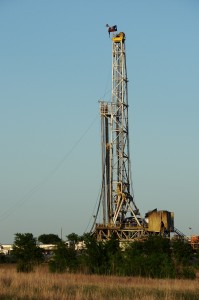
This rig uses hydraulic fracturing to obtain gas from Texas' Barnett Shale formation. Photo courtesy of KUT News.
Last week, the Mexican Minister of Energy proposed ramping up hydraulic fracturing operations in Northern Mexico. The announcement wasn’t especially newsworthy for many this side of the border, but down South?
“It’s huge! It’s huge!” said Jaime Williams, president of the energy and climate change commission of CONCAMIN in Monterrey, which is akin to Mexico’s industrial chamber of commerce.
“We are the interested party! The industrial sector, the private sector is the interested party in it,” Williams told KUT News.
Williams said the maquilas (factories) in Mexican border states use a lot of electricity. They’ve been importing more and more natural gas from Texas just to keep the lights on in recent years.
Take a look at this satellite image of the Caribbean island of Hispaniola. Haiti’s on the western side, the Dominican Republic is on the east. Now look at the border dividing those counties and you notice a troubling detail. In many places, the forests on the Haitian side disappear:
“Ninety-five percent of Haiti’s virgin forests, which used to be 100 percent forested and was one of the richest, most verdant forests in the face of the earth, is gone,” Lewis Lucke, former U.S. ambassador to Haiti, told StateImpact Texas. “And the reason it’s gone is because of the manufacture of charcoal.”
Gov. Rick Perry is set to unveil his jobs plan Friday, and the campaign says it will be strongly tied to U.S. energy production.
Photo courtesy of KUT News
Some observers see a little bit of Green under Rick Perry's Red State politics.
Perry had energy at the front of his mind several times at the most recent GOP debate. In New Hampshire this week, talking about how he would get the U.S. economy back on track, he advocated “opening up a lot of the areas of our domestic energy area.”
Answering a question on political gridlock in Washington, he said, “It’s time for energy independence.”
On how to insure uninsured Americans: “That’s why I lay out, without having any congressional impact at all, how to get our energy industry back to work.”
And on dealing with Chinese currency manipulation: “We’re sitting on this absolute treasure trove of energy in this country.”
It’s no surprise that Perry sees domestic oil drilling and energy development as central to America’s economic recovery. After all, says David Spence at the University of Texas’ Energy Management and Innovation Center, it’s worked pretty well in Texas. Continue Reading →
About StateImpact
StateImpact seeks to inform and engage local communities with broadcast and online news focused on how state government decisions affect your lives. Learn More »