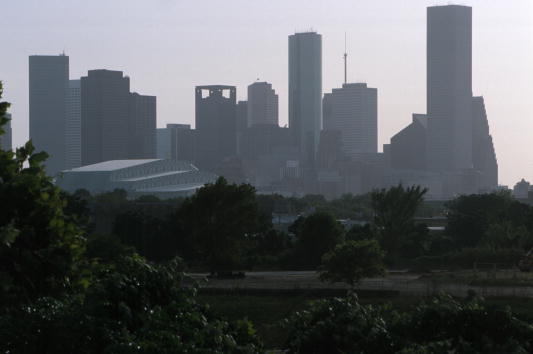
Houston's proposal to throw everything in one bin -- trash and recycling -- is meeting opposition from environmental groups.
The City of Houston hopes to eventually do away with curbside recycling and allow residents to throw all of their trash and recycleables into one bin. The items would then be sorted and separated at a processing facility and city leaders claim they can divert 75 percent of the waste from landfills using this method.
But a group of environmentalists have formed a coalition against the plan. Texas Campaign for the Environment Program Director Melissa Scruggs says it will be a boondoggle for the city.
“There’s no way that they’re going to be able to divert 75 percent of waste from landfills with this type of technology. Our report shows that no facility that claims to separate recycling from trash has ever exceeded 30 percent recycling,” Scruggs said.
Proponents of the city’s plan says that information is outdated. Continue Reading →
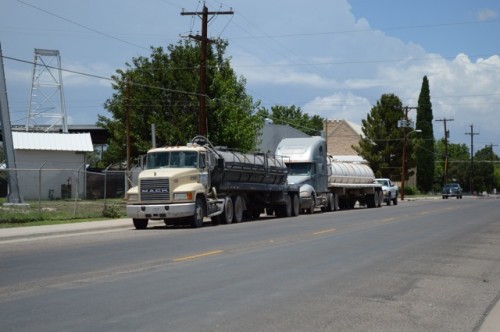
With reports of drilling activity approaching the Big Bend region, some residents of Marfa are concerned about the city’s practice of selling its water supply in bulk, sometimes to drilling companies.
On Thursday, protesters parked and left their cars in front of city fire hydrants, hoping to block trucks from accessing the water supply.
Marfa resident Buck Johnston spearheaded the effort. She feels it’s a short-sighted move to sell city water in bulk, especially in a drought-stricken desert region.
“Ask any rancher, and they’ll tell you their wells are dropping and going dry,” she says. “I don’t really care what anyone’s feelings are about fracking or oil exploration, my concern is water.” Continue Reading →
The world is warming, and there’s heated debate over what to do about it, or if it’s even warming at all. (Hint: It is.) Amidst this debate, some opponents of government regulations and environmental policy have taken up protest by retrofitting their diesel trucks to spew billowing clouds of black, noxious smoke. When the soot gets blasted, it’s called “rolling coal.” Some save the move for those special moments when they’re in front of a Prius, then post the video online.
“[Diesel engines] will smoke during acceleration, gear changes, some travel conditions, vehicle loading, and those exceptions are covered under the law,” Vinger said.
There are several ways to make your truck “roll coal,” ranging from removing factory-installed emissions regulators to reprograming the small computer that coordinates fuel injection.
But according to the Environmental Protection Agency’s Clean Air Act, it is illegal “to manufacture, sell, or install a part for a motor vehicle that bypasses, defeats, or renders inoperative any emission control device.” Continue Reading →
The House of Representatives has passed a bill to extend anti-terrorism protections for chemical plants through 2017. The bill’s lead sponsors included two Houston congressmen – Republican Rep. Michael McCaul and Democratic Rep. Gene Green.
The rules governing security for high-risk chemical facilities have been in place since 2007. But under current legislation, they must be renewed annually, along with appropriations for the Department of Homeland Security. That’s led to some problems.
“Last year, because of the budget problems, when we shut down the government for thirteen days, this law was not into effect,” says Rep. Green. “We want to give it its own freestanding law, so there can be some certainty.” Continue Reading →
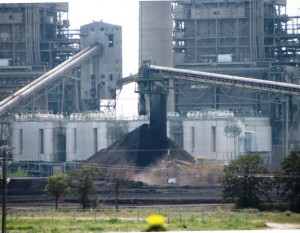
Coal is the dirtiest fossil fuel and the most widely used for power generation.
El Paso’s public utility announced plans to run the city coal-free in two years. It’s a bold proposal since no major U.S. city can run without coal power yet, but it seems possible, and it puts El Paso ahead among Texas cities that have sought to end their dependence on coal.
The announcement mirrors an initiative in Austin. But El Paso, with less investment in coal plants, less dependence on coal power and substantial recent development of other energy sources may find it easier to get out of the coal game completely.
“Our overall portfolio for generation has a very small percentage of coal,” said Eddie Gutierrez, spokesman for El Paso Electric Company. “In our region we have the right kind of sun for the optimal type of solar energy, so moving forward solar energy and cost effective forms of technology is what were going to go with.”
El Paso Electric Company services about 400,000 customers and has doubled its solar power production capacity in the last year. The utility signed a 20-year contract to get power from Macho Springs, a New Mexico solar farm as big as 300 football fields, which started operation in May. They have also started construction on a new natural gas plant.
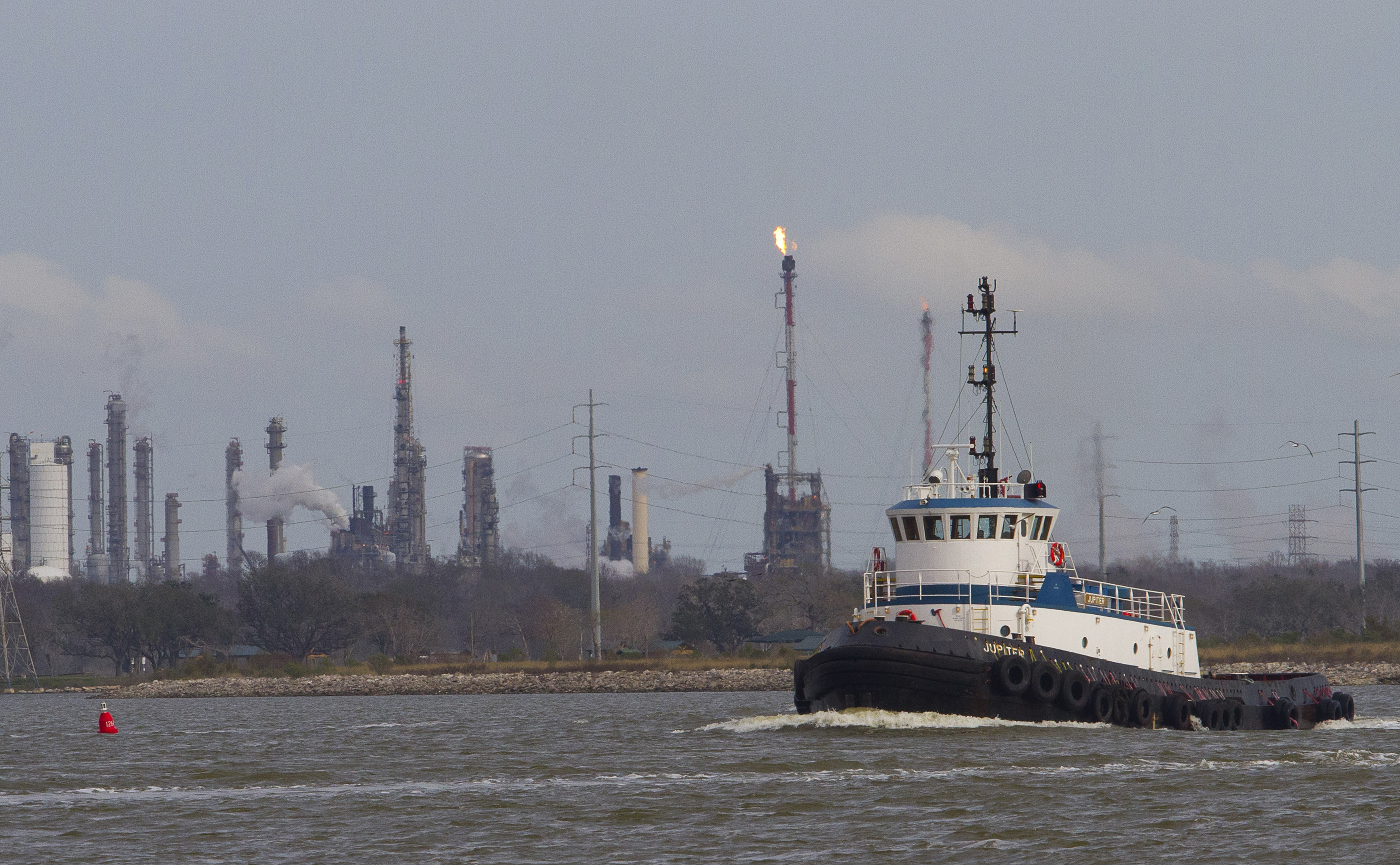
A tug boat navigates the Houston ship channel with a flare from an oil refinery and storage facility in the background south of downtown Houston
The city of Galena Park is on the north side of the Ship Channel, surrounded by highways, freight rail lines and heavy industry.
It has about 10,000 residents.
The city’s main road, Clinton Drive, is a major artery for the Port of Houston and Ship Channel industries, according to Bel Vasquez-St. John, community outreach director for the environmental group Air Alliance Houston.
Vasquez-St. John says thousands of tractor trailers pass through Galena Park every day.
“There’s just so many going and coming that it makes it very unsafe, for even the drivers coming in to Galena Park,” she said. Continue Reading →
Texas is getting more oil out of the ground than it has since the great boom of the 1970s. And it’s not alone: the oil fields of North Dakota are, for the first time ever, producing over one million barrels a day. Across the country, the boom has lead to predictions that the U.S. will overtake even Saudi Arabia in oil production by the end of the year. But is all that drilling helping American consumers at the pump?
A quick look at the numbers before the long weekend would indicate not. Prices were about 20 cents per gallon higher than this time last year, according to the U.S. Energy Information Administration.
There’s a lot more to what you pay when you fill up your car than how much oil is out there. Market speculation can inflate prices. Then there’s how much it costs to move oil around. You can drill for all the crude you want, but it’s another thing to bring it to a refinery. Add to that the role played by OPEC in setting prices, and it’s clear that what you’re paying is not dictated by simple supply and demand.
Nonetheless, some analysts say consumers are benefiting from the boom. They just might not notice it.
Taken by astronauts on International Space Station mission STS065 on July 11, 1994 / JSC Astromaterials Research & Exploration Science Directorate, NASA, The International Space Station
This image, taken by astronauts in the International Space Station from 160 above Earth, shows a Saharan dust cloud floating across the Caribbean. The camera is pointed southwest and the land in the upper right is Haiti.
Some Texans have been able to enjoy exceptional sunsets this week as billions of tiny grains of dust from afar traverses our skies. A dusty drifter from 6,500 miles away — a giant mass of super-fine sediment and dry air from the Sahara Desert — is visiting Central Texas this week.
Saharan dust blows across the Caribbean and passes through Texas most summers, says meteorologist Jason Dunion with the National Oceanic & Atmospheric Administration. The dust is blown out of Africa in giant windstorms.
“What makes these things so incredible is how big they are. They’re the size of the lower 48 states, so you’re basically stirring up this continent-sized land mass and blasting it out into the Atlantic,” says Dunion, who was the principle investigator in the Saharan Air Layer Group.
New EPA regulations would place new restrictions on coal-burning power plants, a major source in Texas for greenhouse gases
When the U.S. Supreme Court ruled last week on a lawsuit over how much latitude the federal government has to regulate facilities that emit greenhouse gases, victory was claimed both by environmentalists who want more regulation and by Texas state officials who wants less.
Texas and 16 other states brought the action.
The Texas Attorney General’s office proclaimed after the ruling that the Supreme Court had “overturn(ed) EPA’s Illegal greenhouse gas permitting scheme.” The Court had “delivered a stern rebuke to the President” said Greg Abbott, the Texas attorney general and candidate for governor.
Clean air advocates wondered what Abbott was thinking.
“Oh my gosh, when you lose one suit after another you’re desperate to claim a victory anywhere, and I guess that’s what Attorney General Abbott did,” said James Marston, Vice President for U.S. Climate and Energy at the Environmental Defense Fund.
The Texas Ag Commissioner's role is about much more than just farming.
Every time a cow is sold in Texas, a dollar of that sale goes to industry groups that use it to promote and research beef. It’s part of a national program called the “beef checkoff,” and that charge will now rise to two dollars in Texas after a statewide vote by cattle owners.
The vote to raise the fee passed by nearly 67 percent. The results were announced Wednesday and hailed by agriculture and cattle industry groups, who say the money is needed to keep beef competitive.
“The beef checkoff program was initiated (at one dollar per sale) back in the 1980s; we’re down to about 40 cents on the dollar for that value today,” says Jay Evans, Chair of the Natural Resource and Environment Committee of the Texas and Southwestern Cattle Raisers Association. The association has received support from the beef checkoff program and nominates members to the board that distributes money from the program.
The existing program splits the dollar charge between national and state groups. The new charge approved by the recent vote will stay in Texas and be controlled by the Texas Beef Council.
StateImpact seeks to inform and engage local communities with broadcast and online news focused on how state government decisions affect your lives. Learn More »