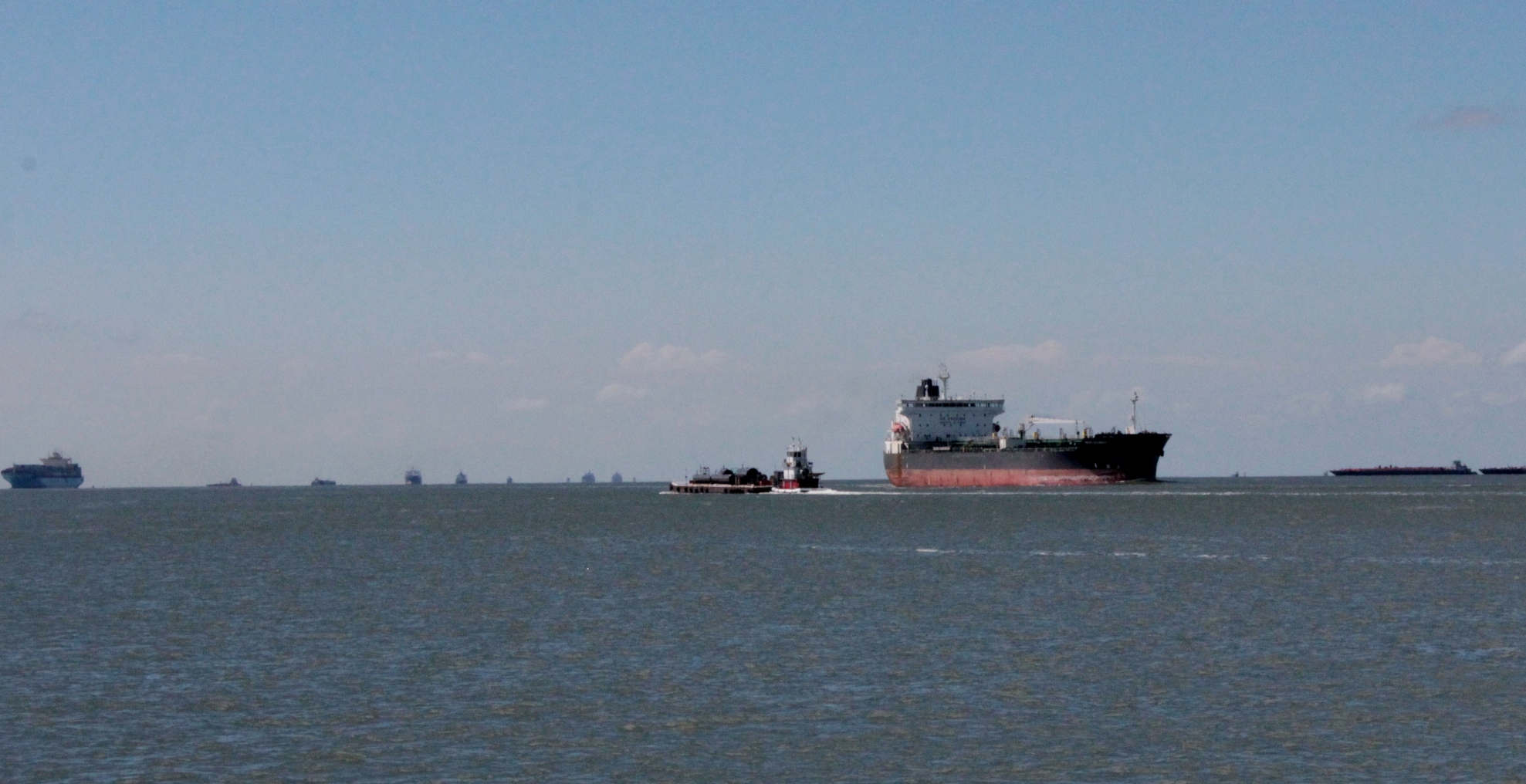
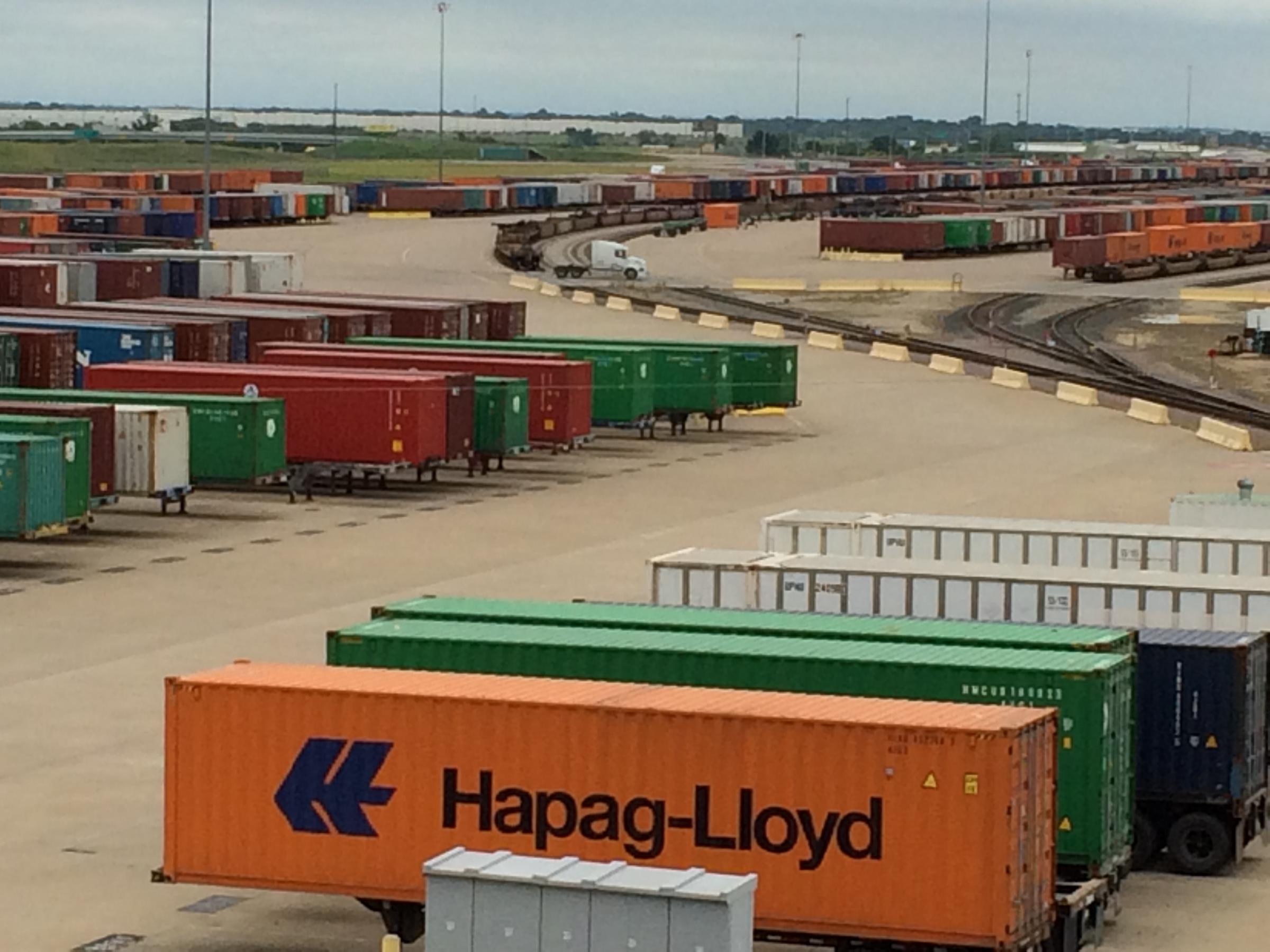
Big freighters and small barges in the Houston Ship Channel.
Tensions between the government of Iraq and Kurds in the northern part of the country have once again reached a boiling point. Now, Baghdad is cutting off payments to Kurdistan because of a controversy involving an oil tanker off the coast of Texas.
The semi-autonomous region of Kurdistan has successfully exported several shipments of oil this year. Baghdad opposed those exports, claiming that the oil belongs to the Iraqi people, and the use of its natural resources should be decided by the central government. Most recently, Baghdad successfully filed for a court order to keep one million barrels of crude oil from being unloaded in Galveston.
The Texas Standard’s David Brown recently spoke with Terry Wade, Houston Bureau Chief for Reuters, about how the tanker came to be there in the first place. Continue Reading →
Commercial wind turbines stand more than a hundred feet tall, with blades nearly as long. The wind turbines developed by engineers at the University of Texas at Arlington are a bit smaller… just half than the size of an ant.
In a cold lab room at UT Arlington electrical engineering professor J.C. Chiao shows off a windmill. It’s mounted on a grain of white rice. The micro windmill is a tiny speck of metal with a rectangular base and three shiny blades the size of ant antenna.
“Just think about it this way,” Chiao says, “My interest and research focus is to shrink things.”
The windmills aren’t for a science fiction project. They’re meant to harvest wind energy and deliver small bursts of energy to compact devices like remote sensors or cell phones. Continue Reading →
The beer menu sits on the bar in Luckenbach, Texas.
The drought has tested industries across Texas in the last few years — and it’s even had an impact on beer.
One of MillerCoors’ mega-breweries is in south Fort Worth, and last year it produced 9 million barrels of beer. Environmental and sustainability engineer Lairy Johnson says the plant cut its water use by 9 percent.
Highlights from the Interview with Lairy Johnson:
On how much water the Fort Worth plant uses a year:
“In a year we use about 750 million gallons, but what we like to do is talk about how many barrels of water does it take to make a barrel of beer. In this past month we were about 3.18 barrels per barrel, 3.27 I think was our number last year for the average, and 3.21 is the year to date.” Continue Reading →
Earlier this year, the earth hit a frightening milestone: carbon dioxide in the atmosphere reached its highest level since humans have inhabited the earth. The last time there was this much carbon on the planet was nearly a million years ago.
As the heat-trapping gas proliferates, the world warms, and the climate effects domino: droughts intensify, floods increase, ice melts and seas rise. The question now isn’t whether human activity is changing the global climate; the question is what to do about it.
The Obama administration proposed new rules last month that would take a first step in curbing carbon emissions from power plants in the U.S. Their target? Coal power plants. The response to the rules from Republican leaders in Texas was predictable: Gov. Rick Perry said the regulations “will only further stifle our economy’s sluggish recovery and increase energy costs.” And Attorney General (and candidate for Governor) Greg “I go into work to sue the Obama Administration” Abbott vowed to fight the “job-killing” rules just as he’s fought other rules from the EPA.
But Texas may want to sit the fight over the new carbon rules out: because they could be an economic windfall for the state, to the tune of billions of dollars a year.
Video shown to Denton City Council by citizens concerned that flares at drilling sites threatened neighborhoods
In Texas, a government official has warned that groups opposed to fracking might be acting on behalf of Russia.
In Colorado, a TV ad portrays fracking opponents as goofy idiots who believe the moon may be made of cheese.
The attacks on drilling opponents may reflect how deeply concerned the industry has become over citizen-led efforts to curb fracking, the now widely-used drilling technique that’s dramatically increasing oil & gas production from shale rock formations.
Texas law also officially promotes oil & gas drilling. The state’s Natural Resources Code says the “mineral resources of this state should be fully and effectively exploited.” But the code also says local governments have the right to regulate drilling.
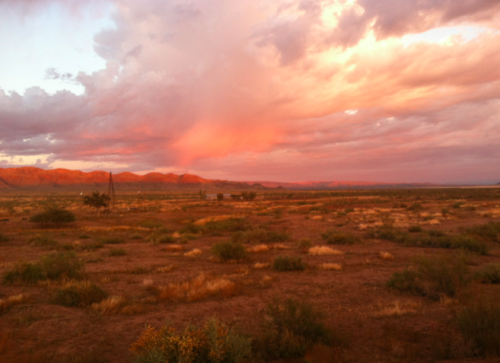
Dawn in the Big Bend of Texas; it shares some tectonic and geographic characteristics with the Permian Basin, home of the country's highest-producing oil field.
The Big Bend of Texas, so named for the way the region hugs a massive bend in the Rio Grande, is renown for its desert landscapes, open spaces and tranquility.
But parts of it lie within the oil-rich Permian Basin, the nation’s highest producing oil field thanks in large measure to fracking technology.
And now, Mexico is drilling at least 29 exploratory wells across the border from the Big Bend, a saying it wants to jumpstart fracking operations there.
Of course, fracking requires water. And in the Big Bend, some landowners are selling water for fracking, pitting some conservationists against private property holders, who also consider themselves to be good stewards of the land.
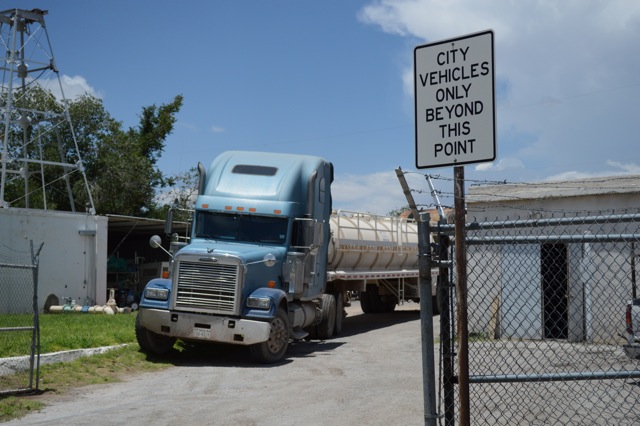
Tanker trucks lined up inside the City of Marfa’s water treatment plant after a group of residents blocked the trucks’ access to city fire hydrants.
Two weeks ago, a small group of citizens vocalized concerns over Marfa’s practice of selling bulk water to clients outside the city.
“Our water is too cheap. It needs to be expensive. We need water conservation. We need to think about that,” said Buck Johnston.
Two weeks ago the Marfa resident formed a small protest to block tanker trucks using city water for their oil and gas speculation. The protest worked briefly but soon the trucks were rerouted to other spigots.
Later, it was announced that no oil or gas was found. And though the trucks disappeared from Marfa city streets, the concern about water use in Presidio County hasn’t. Continue Reading →
Goods from around the world arrive at Union Pacifics Intermodal Terminal in the Inland Port.
Could South Dallas County become home to one of the world’s largest factories? Developers and local officials recently learned electric-car manufacturer Tesla is checking out an area known as the Inland Port as it considers where to build its battery plant.
The industrial development, 20 minutes south of downtown Dallas, can feel like a world away.
Less than a mile from Interstate 45, corn ripples in the hot summer breeze. Hay fields grow green with recent rain. Small homes — some of them vacant — dot the landscape.
Developer Mike Rader turns his Chevy SUV onto Pleasant Run Road, as he surveys property near the towns of Wilmer and Hutchins he began buying up 30 years ago. Continue Reading →
The EPA's ECHO website uses data from state pollution regulators to compare compliance and enforcement
Compared to other states, Texas has a consistently higher percentage of major industrial plants with “high priority violations” of air pollution laws. Yet, compared to other states, Texas does far fewer comprehensive inspections of polluting facilities.
Not surprisingly, Texas, with a history of fighting the EPA at every turn, says the website has “tremendous potential” for being misleading, deceiving, and inaccurate.
The site is called ECHO for Enforcement and Compliance History Online. The EPA launched it in 2002. The goal was to give the public access to data on how state and federal regulators were enforcing pollution laws. The site not only allows access to detailed compliance reports for specific facilities, it also allows a comparison of enforcement action by state.
In Central Texas, where water reservoirs sit at under 40 percent capacity, all eyes are on watch for El Niño, a global weather phenomenon that generally brings generous rain to the area. The National Weather Service predicts an 80 percent chance of a weak to moderate El Niño this fall, dampening hopes for a season of strong rains to alleviate drought across much of the southwest US.
But some scientists have warned that El Niño, itself poorly understood, cannot be well forecast amidst the effects of man-made climate change. As the global climate changes in reaction to increased manmade carbon emissions, forecasting global weather patterns can be difficult.
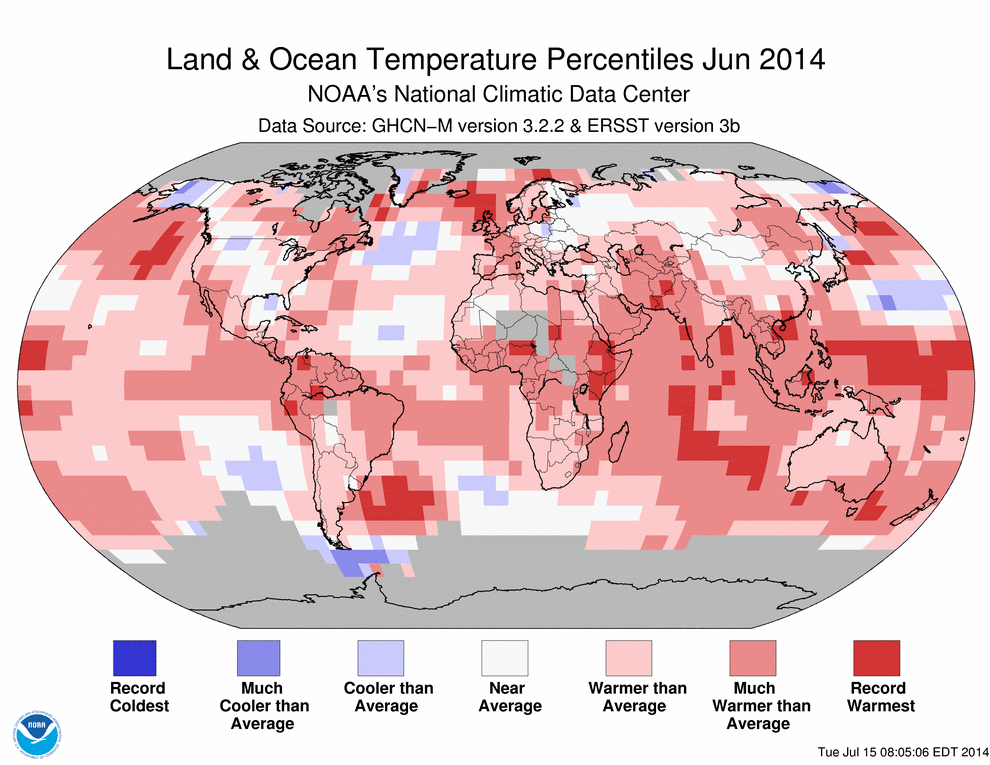
National Oceanic and Atmospheric Association / National Climate Data Center
This map shows a very warm year with most measured temperatures well above average.
In June, worldwide sea surface temperatures were higher than the 20th Century average by a greater margin than ever before. On land and sea, the month was the hottest June ever recorded, according to the most recent monthly climate analysis by the National Oceanic and Atmospheric Administration (NOAA).
StateImpact seeks to inform and engage local communities with broadcast and online news focused on how state government decisions affect your lives. Learn More »