Background
How Long Has the Current Drought Been Going On?
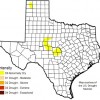
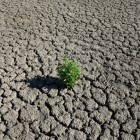
The majority of Texas is currently experiencing in drought that started in October 2010. Most of the state has been under drought conditions for over three years.
State Climatologist John-Nielsen Gammon has warned that Texas could be in the midst of a drought worse than the drought of record in the 1950s. 2011 was the driest year ever for Texas, with an average of only 14.8 inches of rain. 2011 also set new records for low rainfall from March through May, and again from June through August. The high summer temperatures increased evaporation, further lowering river and lake levels.
The state experienced a short and rainy respite in the winter and spring of 2012, but by the fall of 2012 dry conditions had returned to much of the state. Those persisted until late in the summer of 2013, when a sustained rainy period lowered the percentage of the state experiencing drought.
That doesn’t mean that the drought is over. As of June, 2014, 70 percent of Texas is still in drought conditions, while 21 percent is in the worst two stages of drought, either extreme or exceptional drought. The state’s reservoirs are 67 percent full.
What Is Causing the Drought?
The main culprit of the intense 2011 dryness was La Niña, a weather pattern where the surface temperatures are cooler in the Pacific. This in turn creates drier, warmer weather in the southern U.S. (You may also know her counterpart, El Niño, which generally has the opposite effect.) La Niña sticks around for a year, sometimes longer, and tends to return once every few years. (The last La Niña was in 2007, but it was a much lighter one.)
An El Niño weather patten was predicted to bring some relief to the state in the winter of 2012-2013, but it failed to appear. The state climatologist predicted abnormally dry weather and higher than average temperatures through summer 2013, which could make the drought worse than the drought of record in the 1950s.
In February 2013, the state climatologist told the Texas Legislature that high temperatures related to climate change have exacerbated the drought. He said that the state’s average temperature has increased by an average of about 2 degrees Fahrenheit since the 1970s.
If El Niño predictions for late 2014 prove correct, winter rainfall in Texas could be substantial. A study from Stanford University gives the El Niño weather pattern a 76 percent chance of returning in 2014.
“It tends to cause the jetstream to be farther south than normal, which means we may get more rain events, generally cool temperatures and lots of run-off, which would be good for reservoir levels,” John Nielsen-Gammen, Texas State Climatologist, said.
Has This Happened Before?
Drought is nothing new for Texas. In the 1950’s a seven-year dry spell “so momentous that it kicked off the modern era of water planning in Texas” struck hard, destroying nearly 100,000 Texas farms and ranches. In response the legislature founded the Texas Water Development Board and local river authorities that constructed 62 new dams and reservoirs over the next two decades.
In 1984, The New York Times reported that heavy Texas rains had brought a “merciful end to the worst drought in a generation.”
The state fared well with over a decade of adequate rains, but in 1996 drought dealt a heavy blow to statewide ranching and agriculture. In May of that year, Agriculture Commissioner Rick Perry said, “this drought has the economic potential to be the worse natural disaster in the 20th century.” The CBS Evening News featured Texas ranchers who were losing their herds to drought.
In response, the state legislature passed comprehensive water policy reform with Senate Bill 1 in 1997.
Rains returned but soon abated and in 1998 the Associated Press (AP) reported that “the second drought to hit Texas in three years is leaving farmers in dire straights and taxing the state economy.” The dry spell deepened through 1999, when the New York Times reported “Worse Drought Than in ’98 Appears Possible in Texas.”
In 2000 Texas Department of Agriculture spokesman Allan Spelce told the New York Times, “we are in the midst of an unmitigated disaster and it has been accumulating in magnitude over the last five years,” after strains on water supply since 1996 caused $5 billion in losses to Texas agriculture.
Tropical storms hit the state in early 2001, rains picked up in 2002 and 2004 became one of the state’s wettest years on record, bringing an end to the drought.
Drought returned in 2005. In August of 2006, the Austin American-Statesman reported that 77 percent of the state’s hay crop for cattle feed had been lost that summer.
Extremely heavy rains in 2007 lifted Texas once again from drought and State Climatologist John Nielsen-Gammon told the AP, “we’ve gotten so much rain this year we’ve pretty much made up for the past few years’ drought conditions in several areas of the state.”
Then in 2008 Nielsen-Gammon said, “less than a year after rains finally brought an end to the 2005-2006 drought in Texas, many parts of the state are again suffering drought conditions.”
Drought intensified through 2009, putting the most Texas counties in the deepest stage of drought since 2000 and from September 2008 to September 2009 became the driest one-year period yet for Texas, costing the state’s cattle industry over $1 billion.
In January 2010, the New York Times reported an end to “the worst drought to strike Texas in the last 50 years,” but by May the State Climatologist said that “areas of Texas facing drought conditions again.” The drought that began in the fall of that year resulted in the single driest year in recorded Texas history and still hasn’t abated.
What Are the Effects of the Drought?
The drought has helped drain reservoirs, fuel wildfires, ruin crops, and put a real strain on the state’s electric grid.
Dry conditions fueled a series of wildfires across the state in early September 2011. The most devastating, the Bastrop Complex Fire in Bastrop County, scorched over 34,000 acres and destroyed more than 1,300 homes.
The situation reached a new level of urgency in late January of 2012 when wells in the town of Spicewood Beach, Texas officially ran out of water. Some 1,100 residents now depend on tanker trucks to deliver water to the town’s storage tank. The Lower Colorado River Authority (LCRA) owns the water system and is overseeing the emergency water operation. The agency is still trucking water into the town and will continue to do so until a surface water treatment plant can supply water from Lake Travis. The plant was scheduled to be finished in the summer of 2013, but Corix, the company that is building the plant, instead expects it to be finished in late February.
The low water levels in Central Texas took their toll on rice farmers near the coast. They rely heavily on water flowing out of the Highland Lakes on the Colorado River. In March, the combined lake levels remained below 850,000 acre feet, prompting the LCRA to cut off water supplies to farmers in Matagorda, Wharton and Colorado counties for the second year in a row. A third year of cutoffs for rice farmers is on the horizon. The Texas Commission on Environmental Quality is currently deciding whether or not to cut off water again.
The drought has also affected a wide range of industries in Texas. Economists estimate that the drought has cost farmers and ranchers upwards of $8 billion. Some farmers and ranchers have rented or leased parts of their properties to recreational hunters in an attempt to make up some of their lost profits.
The price of hay increased by 200 percent during the drought. Since the price of feeding cattle has skyrocketed, ranchers are culling their herds, selling off large numbers of cattle in auctions to out-of-state buyers. Crops also suffered, as corn outputs fell by 40% in 2011 and peanut production is down as well. The lack of crops has created conditions for severe dust storms across the western part of the state. Rains in 2013 improved the outlook somewhat for agriculture, but drought remained severe in much of the Texas Panhandle, an important agricultural region.
Officials from ERCOT, Texas’ electric grid operator, are also concerned. Nuclear, coal, and natural gas energy production all require large amounts of fresh water to cool equipment. High energy usage and scorching temperatures caused ERCOT to close one factory overnight during the height of the summer’s heat. Officials worry that another spring and summer with low rainfall could mean the closure of some power plants.
Texas officials predicted the reserve margin (the amount of excess power available to the grid on top of what is already generated) will be healthy through the summer of 2014.
When Will the Drought End?
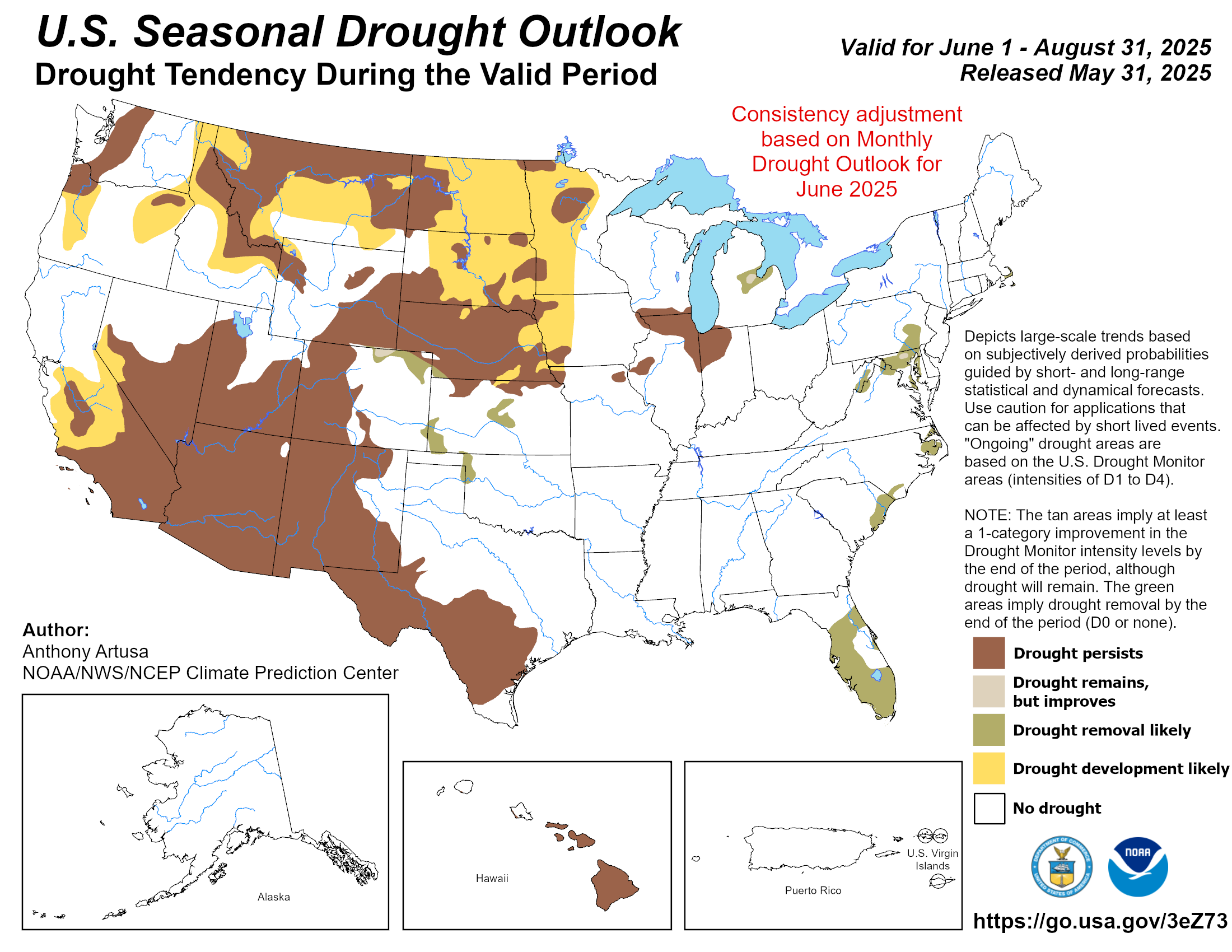
As far as long term prospects, meteorologists are now forecasting that it will have to get a little worse before it gets better. Since “summer rains are unpredictable,” as state climatologist John Nielsen-Gammon mentioned in an earlier interview, it is hard to tell what will happen next. The latest NOAA outlook predicts a mixed bag for Texas. While the central and eastern parts of the state will likely keep their current status, the drought might intensify from the Hill Country to the Panhandle and in much of West Texas.
The return of El Niño in 2014 could, however, be a salvation for much of drought-stricken Texas. A new study from Stanford University gives the El Niño weather pattern a 76 percent chance of returning this year.
What to Expect in the Future
With no definitive end to the state’s water woes in sight, the 83rd Texas Legislature voted to hold a referendum to decide whether the state will allocate $2 billion from the Rainy Day Fund to fund projects in the State Water Plan. Proposition 6 passed with an overwhelming majority, meaning that the $2 billion will launch a rotating loan program to fund conservation, pipelines, reservoirs, and other water projects that are approved by the Texas Water Development Board. Twenty percent of the fund is earmarked for conservation projects, and another 10 percent is set aside for rural water projects.
The drought, the extreme heat and the fires that came with it have made these historic years for Texas. And it will leave a mark that will be felt long after the drought is over: trees will continue to die from stress, roads will continue to break apart, and food prices will continue to fluctuate.