Efforts to overhaul the system have failed in the past.
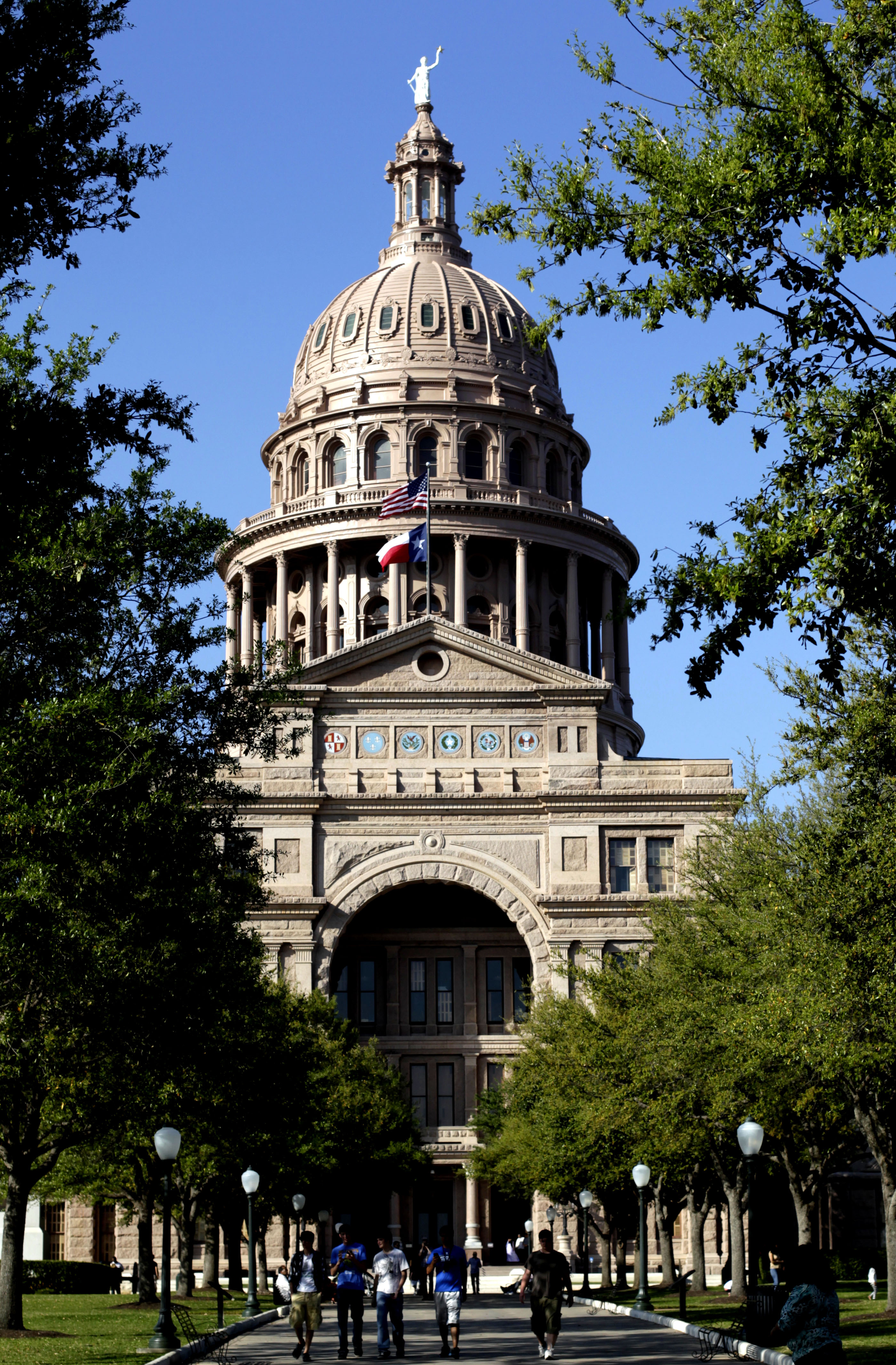
It’s a familiar story. A factory, a power plant, or maybe a landfill wants to open in Texas. People who live nearby worry about pollution, and protest the project. Their challenge goes to the State Office of Administrative Hearings and, eventually, to the Texas Commission on Environmental Quality.
Business groups have wanted to overhaul that process for a long time. It’s come up during almost every recent legislative session. And tomorrow, it will come up again at an interim meeting of the House Environmental Regulation Committee. The committee has been charged with looking at the process of “contested case hearings” ahead of next year’s legislative session.
Here’s how contested case hearings work: to operate a business that pollutes in Texas, you need permits from the TCEQ. Contested cases happen when citizens or environmental groups challenge those permits. In some cases those challenges turn into hearings, not unlike court cases, with the companies and their opponents giving testimony and presenting evidence.
Business groups say the system is used as a blunt instrument to delay or block new development. But supporters say it’s the best check against improper permitting in a state as industry-friendly as Texas.
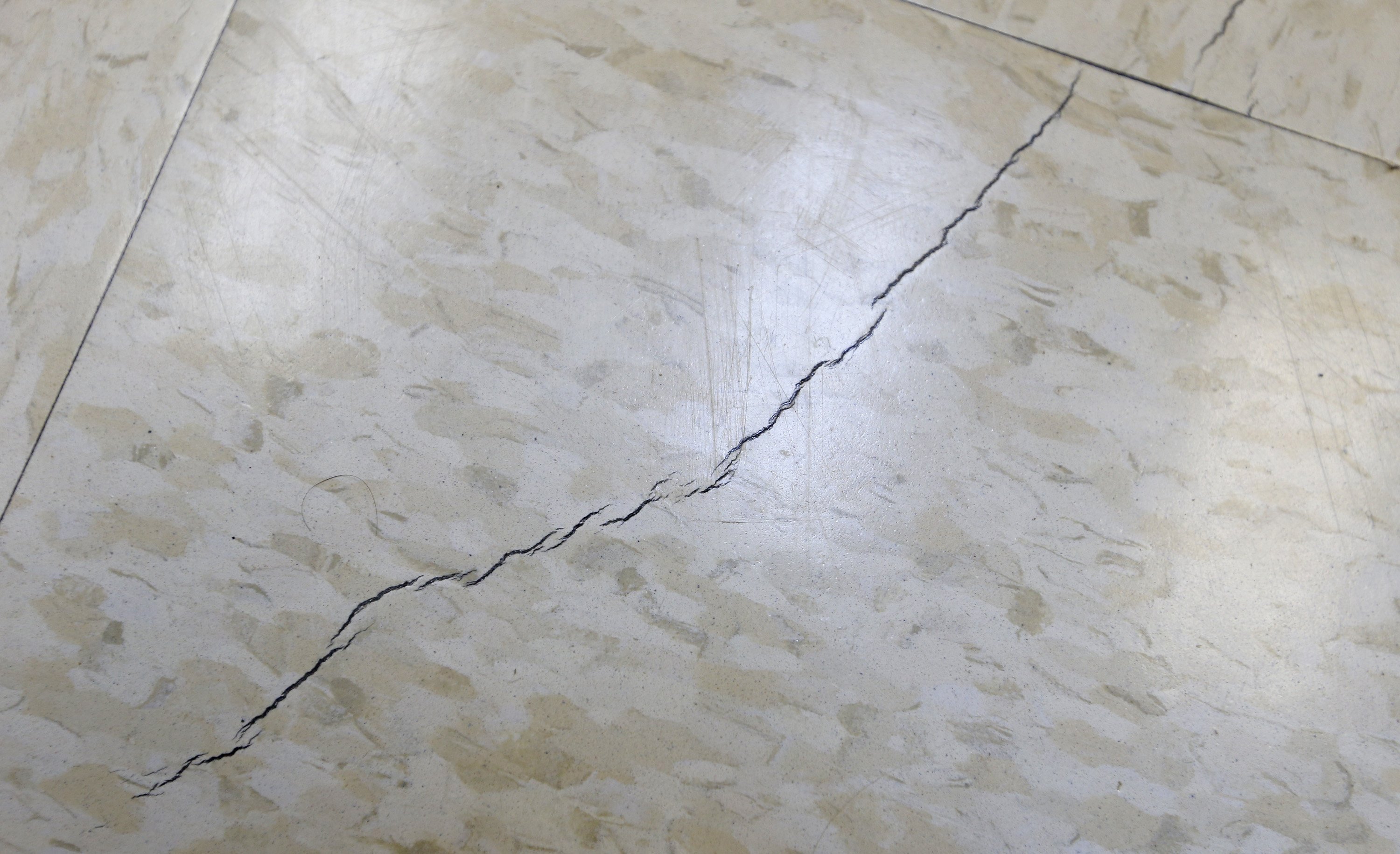
Cracks have developed in the floor and wall of the municipal courtroom in Reno, Texas, as seen Feb. 21, 2014, and some people believe it is related to the rash of earthquakes in the area.
These can be shaky times for Texas. The number of recorded earthquakes (most larger than 3.0) has increased tenfold since a drilling boom began several years ago. The Lone Star State is now one of the shakiest in the country, coming in sixth in the continuous U.S. for having larger quakes last year, according to EnergyWire.
Today, lawmakers will hold a meeting at the Capitol to look into the onset of quakes and their possible connection to oil and gas drilling. (It starts at 1 p.m. Central, and you can watch it online.)
The agenda says the House Energy Resources Subcommittee on Seismic Activity, which was formed after a swarm of quakes in North Texas that began last November, will “review the possibility that increased [oil and gas] exploration and disposal well activity could impact seismic activity.”
To see the evidence that there’s a link between that oil and gas activity and the rapid increase in earthquakes in Texas, you don’t have to look far. There’s plenty of peer-reviewed scientific studies already making a link between quakes and certain drilling activities, including wastewater disposal, oil and gas extraction, and enhanced oil recovery. While the Railroad Commission of Texas, which regulates the oil and gas industry in the state, maintains that these links are hypothetical, the number of scientific studies showing that link continue to grow.
Here’s a list of nine recent studies demonstrating a link between quakes and oil and gas activity in Texas: Continue Reading →
A small pool of water is all that remains in a portion of Bridgeport Lake, which is over thirty feet (9 meters) below normal levels, in Bridgeport, Texas, USA, 04 September 2013.
A massive new report on climate change got a lot of attention this past week. It’s message? Climate change is already happening and having an impact, and it’s going to get worse. The section of the report on Texas found that droughts, heat waves and flooding are all set to become even more extreme as greenhouse gases pile up in the atmosphere and change the climate.
The report was the work of hundreds of scientists and experts, the most extensive look at climate change’s impacts on the country to date. But that wasn’t good enough for the state agency in charge of protecting Texas’ environment.
A statement from the Texas Commission on Environmental Quality (TCEQ), which is in charge of guarding the state’s air and water, said all this science on man-made climate change (which at this points totals thousands of studies and the consensus of 97 percent of the scientific literature) is … wait for it … “far from settled:” Continue Reading →
From the SMU progress report: “Preliminary earthquakes locations near Reno-Azle using the current seismic network. Events are scaled by magnitude and color coded by time of event. Two Salt Water Disposal Wells (SWD wells) that occur within a few kms of the earthquake sequence are shown.”
North Texas is no longer a place you can expect to live earthquake-free. That’s the big takeaway from a progress report out this week from Southern Methodist University on their study of tremors around the towns of Reno and Azle that began last fall.
“This sequence, with the first felt event [earthquake] occurring in November 2013, follows several other earthquakes sequences of earthquakes occurring in Tarrant and Johnson Counties since 2008,” the report says. A team of scientists from SMU, with help from the U.S. Geological Survey (USGS), installed monitors to better measure the quakes in region.
While the larger quakes have stopped, with the most recent occurring in late January, smaller earthquakes continue, the report says. There’s been hundreds of them large enough to be recorded by multiple monitoring stations since December, with “thousands of very small events during periods of swarm activity.”
And the scientists aren’t sure when they’re going to happen. “Swarms of 100s of events can occur in a day, but weeks with few to no earthquakes have also occurred,” the report says. Continue Reading →
Imagine a blimp, like the one you might have looked up at in awe when you were a kid. Now, imagine that blimp cut into a cylindrical shape, with a wind turbine in the middle.
It’s called the Buoyant Airborne Turbine (BAT), and it’s what Altaeros Energies imagines will be the future of wind energy. By wrapping a helium-filled shell around a conventional three-blade turbine and letting the device into the air with strong tethers, the company says in a press video that the turbine can reach altitudes up to two thousand feet above the ground.
CEO Ben Glass says in the video this means the turbine can capture winds that “are on average five to eight times as powerful as what you get near the ground.”
In addition to producing higher yields of energy, these turbines have environmental advantages over conventional land turbines. Altaeros’ turbine is mobile, limiting its footprint on the landscape. Also unlike land turbines, the airborne turbine’s design limits its threat to birds.
Altaeros is a startup formed by the Massachusetts Institute of Technology in 2010, and they’re working with the Alaska Energy Authority to launch the turbine in Alaska for 18 months, at a cost of 1.3 million dollars. Altaeros isn’t the only company looking to develop and introduce a version of an airborne wind turbine, but they will be first, with the world’s first commercial airborne wind turbine. Continue Reading →
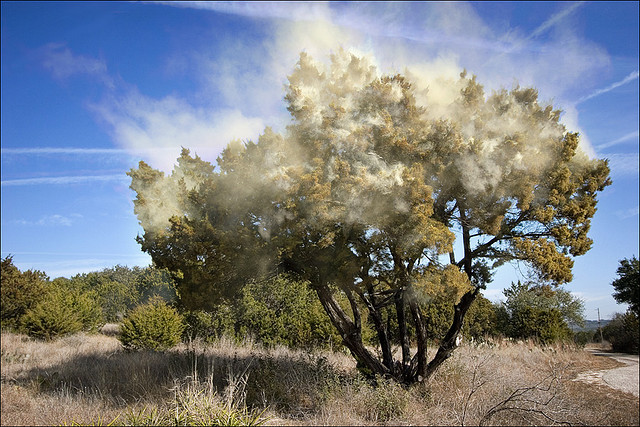
In Texas, many people suffer from "cedar fever," a winter allergy caused by the Ashe Juniper.
Thanks to all the pollen in the air, I spent the last few weeks coughing, wheezing and blowing my nose. Austin is infamous for bad allergy seasons. We have three of them: fall, winter, and spring. In the summer, it’s too hot for pollen (but the heat gives me something else to complain about).
An little-noticed part of the National Climate Assessment, released yesterday by the U.S. Global Change Research Program, explains how: climate change results in “more frost-free days and warmer seasonal air temperatures,” according to the report. That can mean longer pollen seasons.
An exploratory well drills for oil in the Monterey Shale, California, April 29, 2013. Voters in Denton, Texas could decide whether or not to outlaw fracking within their city's limits through a ballot initiative.
Nearly as many people signed a petition to outlaw fracking within the city limits of Denton as voted in the last municipal election.
Denton’s Drilling Awareness Group (DAG) will formally file its petition with the City Secretary this afternoon. The petition has 1,871 signatures, though just 596 (25 percent of the last election’s 2,385 votes) were enough.
“A lot of the work really begins now to make sure we turn out people to the polls,” DAG Vice President Adam Briggle said.
The City Secretary has 20 days to verify that the signatures on the petition are registered Denton voters, after which it will move on to the City Council. Denton’s City Council must then vote on the initiative within 60 days, and can pass the initiative directly into law. Continue Reading →
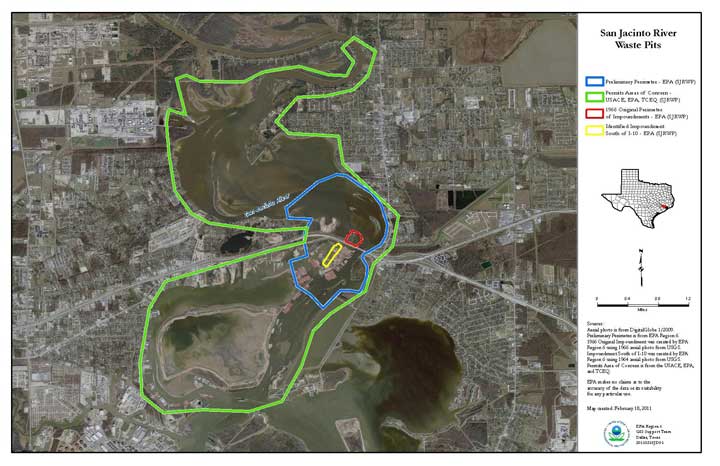
The Harris County Attorney is urging the Environmental Protection Agency (EPA) to order the cleanup of a local Superfund site.
Tuesday, Vince Ryan formally made the request for the agency to force the companies responsible for pulling the San Jacinto River to remove the worst-contaminated soil.
If you’ve ever driven across the San Jacinto River on I-10, you’ve passed through one of the most polluted parts of the country. That’s where International Paper, along with Waste Management, dumped tons of dioxin – a byproduct of paper production.
“The pits themselves are only twelve acres. But the area around it is several hundred acres that’s got contamination, and the dioxin itself has spread to all of Galveston Bay,” said special assistant Harris County Attorney Terrence O’Rourke. Continue Reading →
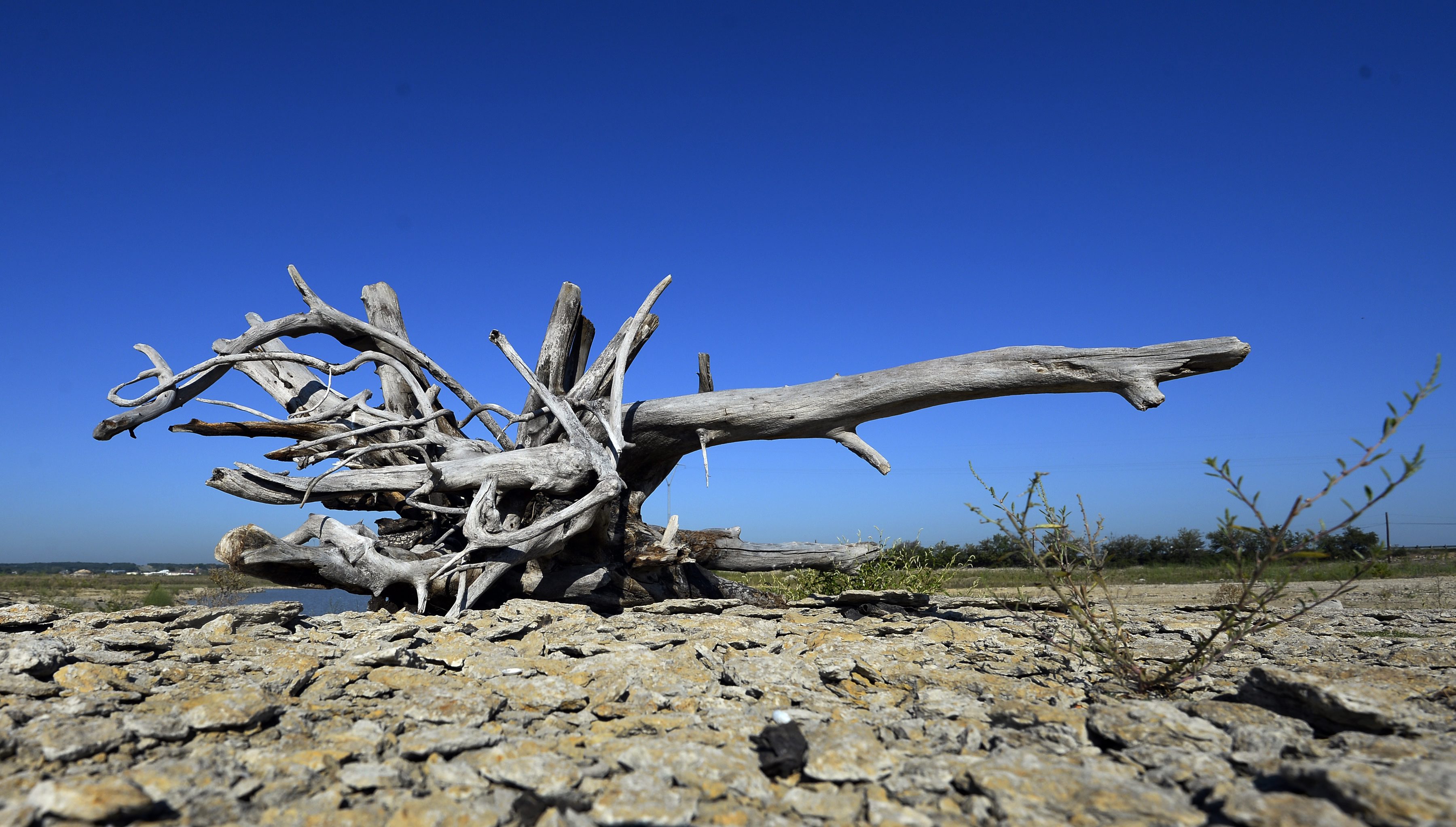
A tree trunk is exposed where water used to be in Bridgeport Lake, which was over thirty feet (9 meters) below normal levels, in Bridgeport, Texas, in September 2013.
A new federal report out today from offers a stark warning about our changing climate. As carbon dioxide reaches levels never before seen during human history, we’re already feeling the effects of climate change, and it’s likely to get worse.
The National Climate Assessment is the product of hundreds of experts and scientists, organized by the U.S. Global Change Research Program. They claim it’s “the most comprehensive, authoritative, transparent scientific report on U.S. climate change impacts ever generated.”
The report focuses on current and future climate change impacts to the U.S. For Texas and the Great Plains region, climate change caused by carbon emissions will exacerbate the issues the region has long faced: droughts, heat waves, storms and flooding. Agriculture will suffer, water wars will increase, and it’s going to get even hotter.
Climate scientists liken the impacts of climate change on weather to steroids: take a place like Texas already known for extreme weather, and then imagine if it started juicing. Our region is already known for “floods, droughts, severe storms, tornadoes, hurricanes, and winter storms,” the report says. It’s a dry region that needs more water than nature provides. “These variable conditions in the Great Plains already stress communities and cause billions of dollars in damage; climate change will add to both stress and costs,” the report says. Continue Reading →
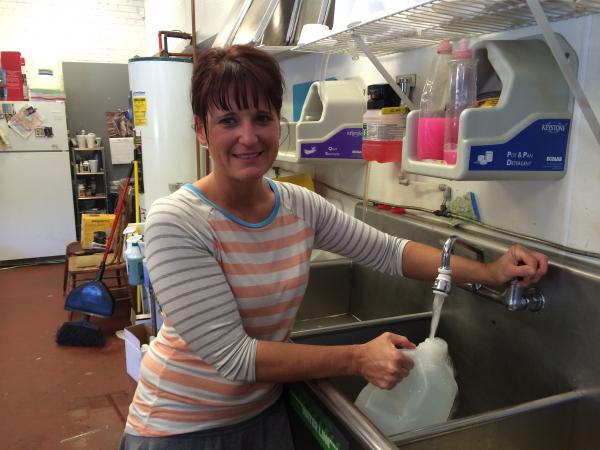
Wichita Falls could soon become the first in the country where half of the drinking water comes directly from wastewater.
Yes, that includes water from toilets. For some citizens, that’s a little tough to swallow.
Mayor Glenn Barham says three years of extreme drought have changed life for 104,000 people living in Wichita Falls, which is about 140 miles northwest of Dallas.
“(There’s) no outside irrigation whatsoever with potable water. Car washes are closed one day a week. If you drain your pool to do maintenance you aren’t allowed to fill it,” he explained.
The mayor says citizens are pitching in and have cut their city’s water use by more than one-third. Still, water supplies are still expected to run out in two years, which is why the city has built a 13-mile pipeline that connects its wastewater plant to the plant where water is purified for drinking.
That’s right: What residents flush down the toilet will be part of what’s cleaned up and sent back to them through the tap. Continue Reading →
About StateImpact
StateImpact seeks to inform and engage local communities with broadcast and online news focused on how state government decisions affect your lives. Learn More »