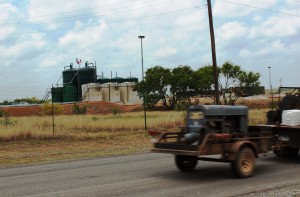
The growing presence of methane in the water wells of a suburban Dallas community cannot be linked to nearby drilling activity even though methane levels have risen in several wells in the area since drilling began, according to a report released by the state’s oil and gas regulator. But other scientists who study the issue are not so sure there is no link to drilling.
The report released last week by the Railroad Commission of Texas says it found no evidence that elevated levels of methane in the water or the Parker county housing development ‘Silverado on the Brazos’ is caused by gas drilling operations. The report also says further investigation into a potential link “is not planned at this time.”
“I was surprised that the commission isn’t planning to do some more testing,” Rob Jackson, professor of Earth Sciences at Stanford University who is also studying the issue, says. “Their own data found that five of eight water wells had increasing methane concentration through time. That alone seems like enough reason to follow up.”
Jackson is planning to publish his own findings on the region’s water. Another study by former EPA scientist Geoffrey Thyne indicates the methane is linked to drilling, though Range Resources, the drilling company that owns nearby drilling wells has dismissed the scientists findings, and says the methane is naturally occurring.
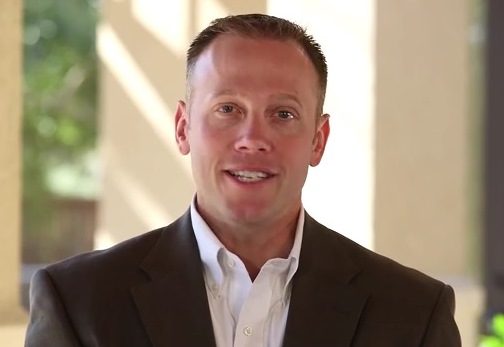
Ryan Sitton and Wayne Christian faced off to become the GOP nominee for Railroad Commissioner.
Tuesday night’s runoff elections exhibited a clear pattern: the candidate who most convincingly wore the mantel of Tea Party conservatism won the night on the Republican side. But in the race for a seat on the Railroad Commission, the agency that regulates the oil and gas industry, the outcome was not so simple.
Wayne Christian, a former state lawmaker, lost that race even though he ran a campaign trying to “out-conservative” his opponent. Ryan Sitton, who owns an oil and gas engineering consulting firm, won.
That left many political reporters and pundits scratching their heads. Texas Observer politics writer Christopher Hooks summed it up in nicely when he tweeted: “Wonder why Wayne Christian is getting crushed tonight.”
Construction on the community’s new well system and treatment facility began only about a month ago.
Most Spicewood Beach residents came here to retire with modest savings. Now they feel stuck in depreciated homes with a strained water supply.
In recent months, the community has received some winter rain. Come summertime though, resident Steve Duich says his front lawn will look “like a parking lot.”
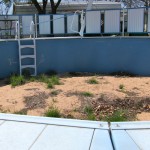
An empty above-ground pool sits in Duich’s front yard. Under Stage 4 emergency water restrictions, LCRA bans outdoor watering and urges for only essential water use.
LCRA trucks water into this neighborhood five to six times a day. This began in early 2012 as a temporary solution.
Kim Clifton, a cashier, says her business has managed to keep busy as the only general store in Spicewood Beach. Other businesses can’t stay afloat in this small, tourist driven economy.
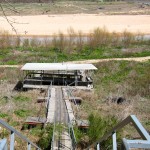
Boat docks that once drifted along the shores of Lake Travis now rest on a dry bed of grass and rocks..
Along Lake Travis’ rocky shoreline, plant life is sparse.
Duich points high above the stream of Lake Travis to show where the water have dropped from in recent years.
Tony Castillo, like many residents here, has resigned himself to a constantly unstable water supply.
Behind the counter of a general store just off Highway 71, Kim Clifton, the cashier, shrugs her shoulders and shakes her head when asked about the lingering drought. “We just need more rain,” she says. She rolls her head back to let out an exasperated laugh, “Bring the rain! Bring it!”
It’s something you hear all the time these days across Texas, but chances are you’ll hear it the most in Spicewood Beach, Texas, a Lake Travis community about 40 miles from Austin. Just a little over two years ago, it made headlines as the first community in Texas to run out of water during the current drought.
In early 2012, the Lower Colorado River Authority (LCRA), which owns and manages the community’s water system, announced that groundwater levels were falling, leaving its well useless.
Those levels got so low LCRA began trucking in water five to six times a day as a temporary solution. Each load costs LCRA about 200 dollars.
Now, over two years later, LCRA plans to put the finishing touches on a new well system costing over a million dollars. The system was supposed to be completed last summer, but construction began just last month.
Ryan Sitton was chosen as the Republican nominee for Reailroad Commissioner.
When former State Rep. Wayne Christian entered the GOP primary runoff for Railroad Commission 12 points ahead of his opponent, he had the backing of numerous Tea Party groups and Republican clubs. He looked very much like the favorite in his race against relative political newcomer Ryan Sitton.
Tuesday GOP voters upended those expectations, nominating Sitton to run in the general election for a seat on the Commission, which regulates the Texas oil and gas industry.
Sitton owns an oil and gas engineering consulting firm. He faced numerous questions in the primary and runoff over whether he could ethically regulate an industry to which he belongs. He initially said he would stay involved with his company if elected, a position from which he later backtracked. He also came under criticism for refusing to divulge his client list.
Little appeared to differentiate Christian and Sitton on policy issues. Both candidates stuck close to conservative positions on regulation, decrying what they describe as federal overreach and burdensome environmental rules. They also shared similar views on social issues unrelated to oil and gas, and reminded voters of their anti-abortion and pro-gun rights positions.
With oil and gas drilling booming, so are the number of wells used for wastewater, growing by about a thousand a year since 2009. There are now over 35,000 disposal and injection wells in Texas according to the Railroad Commission.
The wells are used to get rid of the millions of gallons of chemically-tainted wastewater and produced water from oil & gas drilling. The waste is pumped deep underground, far below the aquifers holding water used by cities and ranches.
Cyclists pass beneath the downtown skyline on the hike and bike trail on Lady Bird Lake in Austin, Texas September 18, 2012. While traditionally an aesthetic pleasure, the lake could be used to help treat water.
The Highland Lakes, the main reservoirs for over a million people in and around Austin, are only a third full. They could reach their lowest levels in history this summer.
As the shores of those lakes receded during the Texas drought, businesses dried up and water quality declined. If you take a trip out to Lake Travis today, you’ll notice the most popular shorebird is the vulture. With the lake 46 feet below where it should be, there’s plenty of shoreline for them.
If the main water supply of a million people is at risk, what’s the ‘Plan B?’
“Unfortunately, there is no ‘Plan B,'” says state Sen. Troy Fraser (R-Horseshoe Bay). “We are totally dependent on Mother Nature in this area. It’s really a problem.”
But it’s a problem that finally seems to have gotten the attention of Austin’s city leaders. Continue Reading →
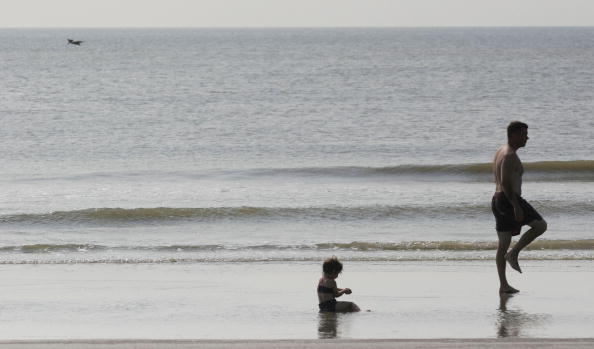
A father and daughter play on the beach in Galveston in 2005. A red tide in Galveston Bay is causing dead fish to wash up on shore this week.
Researchers suspect drought is the cause of a massive fish die off in the Galveston Bay where millions of shad, also known as skipjack, have washed ashore there in recent days. They’ve been found primarily around the communities of Kemah and Seabrook.
“We’ve never seen one to this scale in this location,” Texas Parks and Wildlife Biologist Heather Biggs told KUT’s Nathan Bernier. Though she said that it’s “very common to have fish kills within tributaries throughout the bay system due to low dissolved oxygen.”
Biggs says the cause is apparently the drought. Researchers suspect a lack of rainwater runoff into Galveston Bay resulted in oxygen-depleted waters, which caused the fish to die.
“When you have more runoff, you have more turbidity in the water, and you have more mixing in the water and so you have more oxygen,” Biggs said.
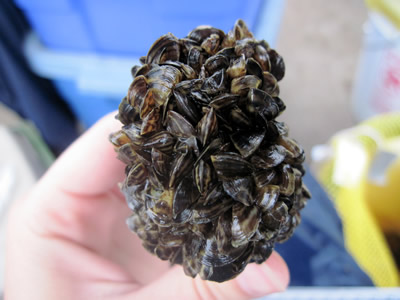
Update: Fishing and boating enthusiasts take note: you’re probably going to need a little extra time as you head out on the lake this year. Rules to prevent the spread of the invasive zebra mussel will be going into effect statewide.
“All boats operating on public fresh water anywhere in Texas be drained before leaving or approaching a lake or river,” according to the Texas Parks and Wildlife Department (TWDB).
The mussels have spread rapidly since 2009, and now “the Highland Lakes are in the cross hairs, as are many of the public waters in Central Texas,” says Brian Van Zee, Parks and Wildlife Inland Fisheries Division regional director, in a statement.
As invasive zebra mussels were found in yet another Texas lake this week, state regulators are expanding rules urging boaters to completely drain their vessels after using public waters. The rules also place restrictions on transporting live fish and bait. The Texas Parks and Wildlife Department voted unanimously Thursday to require to extend the rules to an additional 30 counties in North and Central Texas, including the Austin area. Continue Reading →
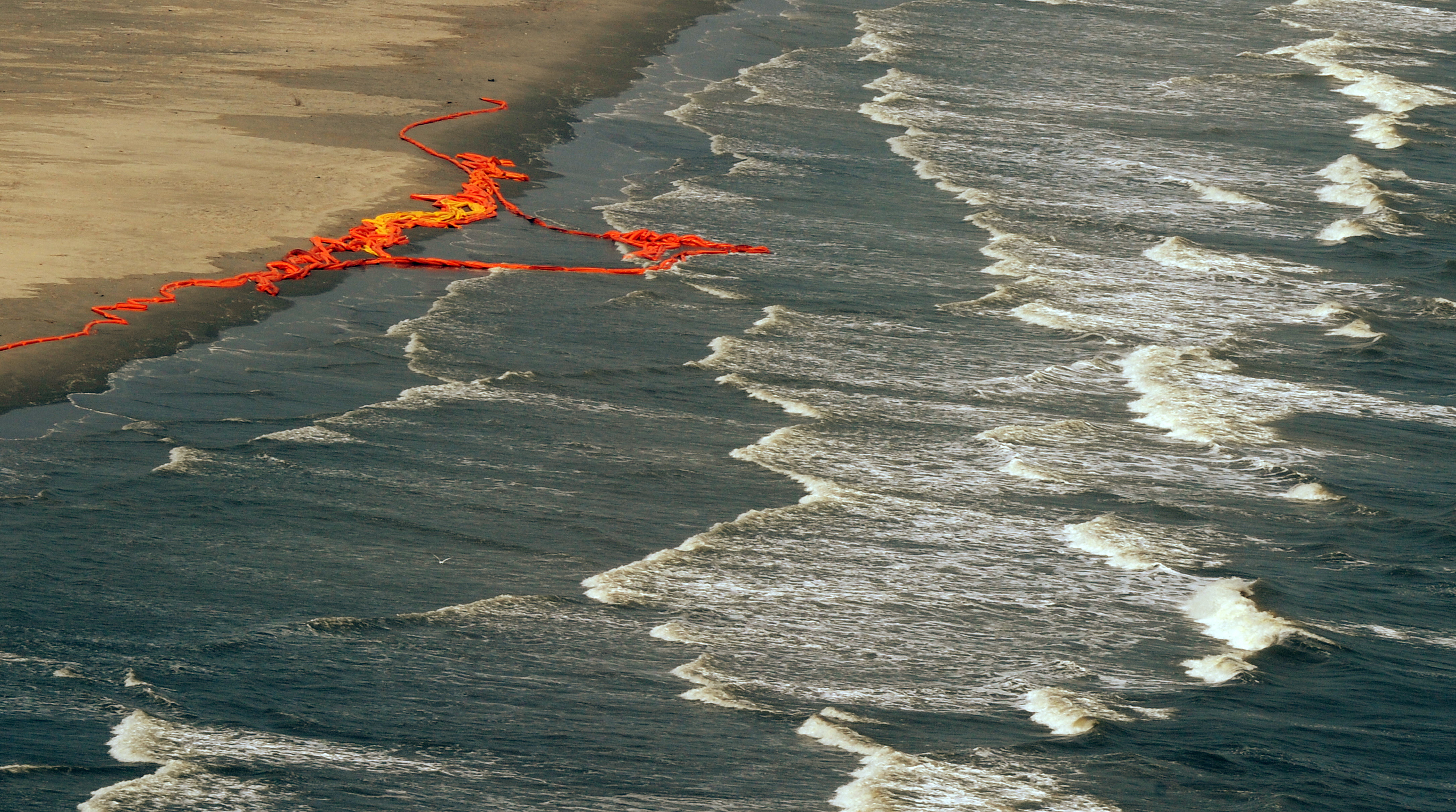
Oil boom barriers that were expected to stop the spread of oil lie washed up on the beach after heavy swells and winds hit the coast of Louisiana on April 30, 2010.
If $5 million falls into Texas’ lap in the wake of a massive oil spill, does it make a sound? That question was on the minds of lawmakers at the Capitol this week as they held a hearing to look into how the state will manage funds from the 2010 BP oil spill in the Gulf of Mexico, the worst accidental oil spill in history.
Turns out that a few months after the spill, in September 2010, BP gave $5 million to Texas Governor Rick Perry’s office to cover damage from the spill. State lawmakers say they didn’t know about it until this week, and none of the money has been spent. In fact, the state’s made a cool $20,000 in interest while sitting on the funds.
Last year, Perry allocated $1 million of the money to the Texas Commission on Environmental Quality (TCEQ). “It was a gift given to the state of Texas by BP to the Governor’s office after the spill,” TCEQ commissioner Toby Baker told lawmakers.
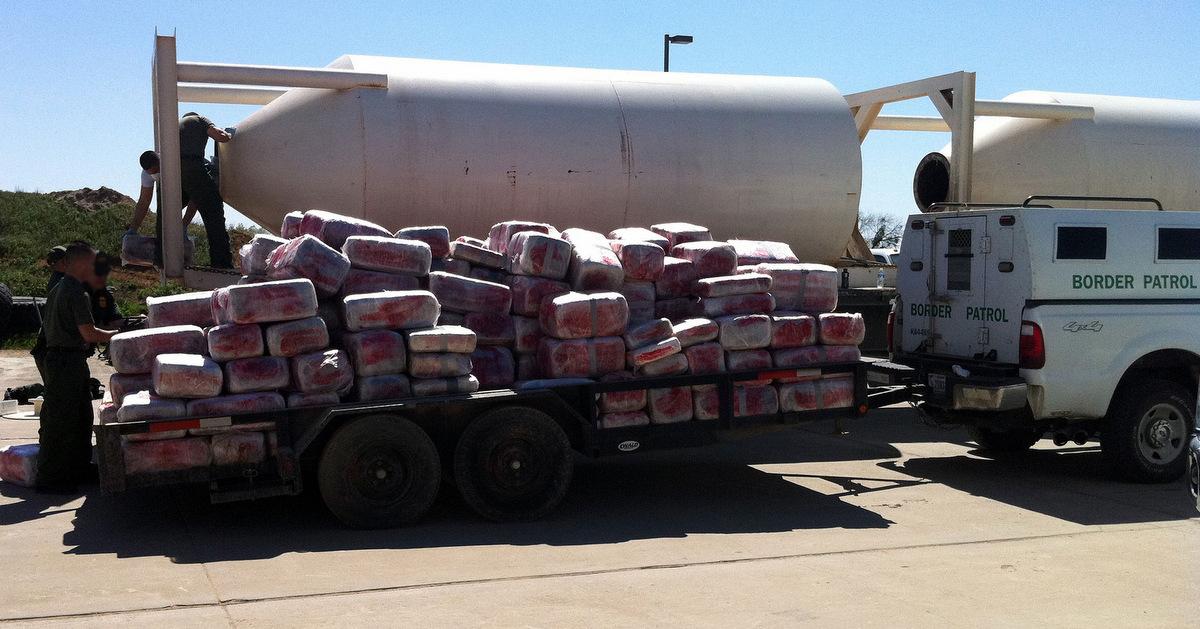
While fracking for oil along the Texas border has become a big business for petrol companies, a new entity seeks to tap into the lucrative market – drug smugglers.
As infrastructure and activity increases to meet the demand of the booming industry, drug smugglers are starting to take advantage of the new roads and increased traffic, much of which is located on private ranch lands.
“Because there are so many different companies, and so many different trucks going through that area, it provides a sort of way to blend in if you will,” National Journal writer Ben Geman tells The Texas Standard’s David Brown. “Essentially what’s happening is you’ve got smugglers who are stashing marijuana, or other drugs, in trucks that are either ‘cloned’ to look like one of the industry trucks, or some type of truck that seems to fit right in driving around on these ranch lands.”
The situation has fomented a new partnership between law enforcement and oil and gas companies as they seek to monitor the oil fields’ vast expanse. While smugglers may be able to use the fracking boom to their advantage now, that might not be the case for long. Continue Reading →
About StateImpact
StateImpact seeks to inform and engage local communities with broadcast and online news focused on how state government decisions affect your lives. Learn More »