In the decidedly common pastime of river tubing, what could be better for floating your cosmopolitan cred than the Mediterranean-inspired wineskin?
You may be used to seeing this on the sidelines of football games, but its utility goes much further — it can serve a hoard of tubers at once.
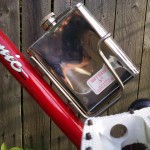
There are few more classic examples of taking spirits on the road than the good, old-fashioned flask. As long as the flask holds at least five ounces, you can swig away while floating.
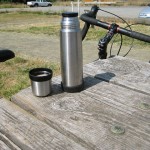
You might wince when its labor-inspired aesthetic reminds you of what your float was supposed to be an escape from. But at least its thick layer of insulation will keep your drinks nice and cold.
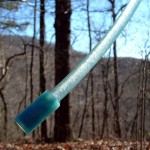
Humps aren’t just for camels anymore. No hands needed, either! Just don’t let the drinking tube fall out of your mouth.
Under the city’s “Can Ban,” several traditional methods of imbibing on the river have been outlawed in the name of conservation. But take note: alcohol itself is not banned. It’s just that all items consumed on the river, both food and beverage, must be held in non-disposable containers.
As our lead station KUT reports today, the ban has had a negative impact on businesses that rely on tubers. Scott Gromacki, assistant manager at Greune River Co, tells KUT that his business is down 40 to 50 percent for this time of year. “We’re hoping it picks up,” he says. “If we get more rain that would help. But, the main factor that we’re down is the city ordinances.”
So what’s allowed on the river? It might be easier to start with what isn’t : No glass or Styrofoam. Containers cannot be smaller than five fluid ounces. People may bring along coolers but no more than one per person and no larger than 16 quarts. And no “volume drinking devices,” like beer bongs, are allowed.
With these (not-so-clear) rules in mind, we’ve compiled a list of five ways to get out on the river, cerveza in hand, keeping in mind that safe floating and responsible drinking are the best way to enjoy any river:
Coffee Thermos: You might wince when its labor-inspired aesthetic reminds you of what your float was supposed to be an escape from. But at least its thick layer of insulation will keep your drinks nice and cold. Continue Reading →
An upcoming workshop will teach West Texas residents how to have healthy, drought-resistant landscapes.
Curious how you can have a healthy landscape in West Texas, a land besieged by drought and heat? Well, the Agrilife Extension Service wants to help. They’re holding a Landscape Drought Management Workshop on June 23. Speaking will be Dr. Dotty Woodson, AgriLife Extension water resources specialist at Dallas.
“The purpose of this program is to help homeowners develop a healthy, beautiful landscape that won’t wither under our blistering summer heat and limited water,” Allison Watkins, AgriLife Extension horticulture agent in Tom Green County, said in a release. “We’ll demonstrate ways to keep a landscape healthy in heat and drought without wasting water.”
The workshop will be held from 9 a.m.-12:30 p.m. June 23 at the Tom Green 4-H Center, located at 3168 North U.S. Highway 67, San Angelo.
The U.S. Fish & Wildlife Service’s decision to not list the Dunes Sagebrush Lizard as an endangered or threatened species has everyone buzzing. Here’s a roundup of reactions from groups across the state.
PHOTO COURTESY OF THE SIERRA CLUB, LONE STAR CHAPTER
Ken Kramer, Director of Sierra Club's Lone Star Chapter
“Let’s be clear that these agreements are voluntary,” Kramer said in a statement. “That means that the U.S. Fish & Wildlife Service will have to be active in seeing that these agreements are carried out and have the desired results, but the agency will not have the power to enforce the agreements. That’s the real difference between listing or not listing a species as endangered – not the specific actions to protect a species, which may well be the same in a voluntary agreement or an agency mandate, but the ability to make sure those actions take place. Basing the fate of the dunes sagebrush lizard solely on voluntary actions puts the species at greater risk.”
PHOTO COURTESY OF THE TEXAS GENERAL LAND OFFICE
Jerry Patterson, Texas Land Commissioner
But not everyone found fault with the decision. Texas Land Commissioner Jerry Patterson weighed in on the issue, too, lauding the defeat of “federal reptile dysfunction:”
“Texans stood up and were heard,” Patterson said in a press release. “The drive to list this lizard wasn’t based on science, but was in response to abusive lawsuits filed against the federal government by a radical environmental group – and Texans showed that we don’t get intimidated so easily.”
“We have determined that the lizard is no longer in danger of extinction and is not likely to become endangered in the foreseeable future,” said Dan Ashe, director of U.S. Fish and Wildlife Service said in a conference call to reporters. Continue Reading →
Representatives for environmental groups walked away disappointed from a meeting of the Texas Commission on Environmental Quality this morning, after TCEQ made it clear that it would not pull its air permit for the White Stallion Energy Center.
This time, the Environmental Defense Fund (EDF) brought White Stallion representatives before the TCEQ over the existence of a second site plan for the proposed coal plant.
The EDF asked TCEQ to reconsider the air permit issued in October 2011 because White Stallion submitted a new site plan to the Army Corps of Engineers as part of an application for a wetlands permit just days after receiving an air permit from TCEQ. Continue Reading →
TCEQ plans to release a total of $5.7 million to businesses hoping to replace their diesel-powered fleets with either hybrid or electric vehicles or vehicles powered by compressed natural gas, liquified natural gas, hydrogen, propane, or fuels containing 85% methanol by volume.
To be eligible, businesses must own or lease a fleet of 75 vehicles and plan to convert at least twenty of them. The TCEQ says they will require reductions of nitrogen oxide emissions of at least 25 percent. The grants will be competitive, given to the conversions that will have the least cost per ton of nitrogen oxide reduced.
This means small businesses and individuals will have a hard time being eligible for the grants, but Joe Walton, who manages grant implementation at the TCEQ, says there are other programs available to smaller parties. Continue Reading →
The Juniper and Mesquite trees now covering more than sixty million acres of brushland could be converted to biofuel by a process called biomass gassification. Biomass gassification produces syngas – a natural gas substitute consisting of carbon monoxide, ethane and hydrogen. Tar is also formed from biomass gassification and may be used as a fuel source.
“Right now, they are perceived as noxious plants that are detrimental to rangeland ecosystems,” said Ansley, “Their removal and use as a bioenergy feedstock would improve ecosystem quality as well as services from these lands, such as increased income from livestock grazing.” Ansley and his colleagues conducted a study to determine the basic properties of Juniper and Mesquite wood chips when used as fuel.
Mesquite and Juniper woods proved to be better quality fuel than cattle manure biomass. You can visit our topic page on the Non-Wind and Non-Solar Renewable Resources of Texas to learn more about Texas biofuels.
The Authority manages the groundwater district of the Edwards Aquifer, which includes San Antonio and many of the surrounding counties, producing drinking water for more than 2 million people in Central Texas.
At a board meeting Tuesday, the EAA appointed Roland Ruiz to serve as interim general manager. The board said Ruiz will be in that position until they decide on a “permanent successor.”
Ruiz handles communications for the EAA, and has been with the authority since May 2006. “He will assume the responsibilities of the general manager on an interim basis effective immediately,” the EAA said in a release late Tuesday.
It still isn’t clear why Dreher was placed on administrative leave. He was appointed general manger of the Authority in early 2010. Previously he was a director of water resources for Idaho and consulted on groundwater disputes in the Republican River Basin.
Update: The San Antonio Express-News reports that the board voted 8 to 6 to terminate its contract with Dreher. The paper writes that Chairwoman Luana Buckner said that ““Karl actually did a very good job for our agency. But he lacked the management skills to reach the goals of the board.”
We’re excited to announce today that our lead radio station, KUT Austin, has received a National Edward R. Murrow Award for continuing coverage of the Texas drought. One of our StateImpact Texas reports on how hunters have fared during the drought is part of the award. So a shout-out is in order to our own Mose Buchele for that story, and another to StateImpact Texas editor Emily Donahue for her piece on a rancher going hungry to keep her horses fed during the drought. And congrats to all our colleagues at KUT.
You can listen to all of the radio reports that won the award for best ‘Audio Continuing Coverage’ in the embedded player above.
And it goes without saying that such stories wouldn’t exist in the first place without you, our readers and listeners, especially the many of you that have shared your stories of the drought with us.
Texas has a Revolving Door law but critics say it's ineffective
There’s a flow of talent leaving Texas environmental regulation agencies, often for better-paying jobs in the private sector. In some cases, the former state employees are hired by the very companies they used to regulate.
The revolving door is obvious by looking at resumes posted on job-hunting websites by people whose experience includes stints at the Texas Railroad Commission (RRC) or at the Texas Commission on Environmental Quality (TCEQ), the big state agencies that regulate refineries, oil and gas drilling, pipelines and power plants.
StateImpact seeks to inform and engage local communities with broadcast and online news focused on how state government decisions affect your lives. Learn More »