Then, there’s the slow burn. It’s the news story that doesn’t initially inspire much interest, but gradually attracts a steady amount of traffic. It’s the tortoise in the race.
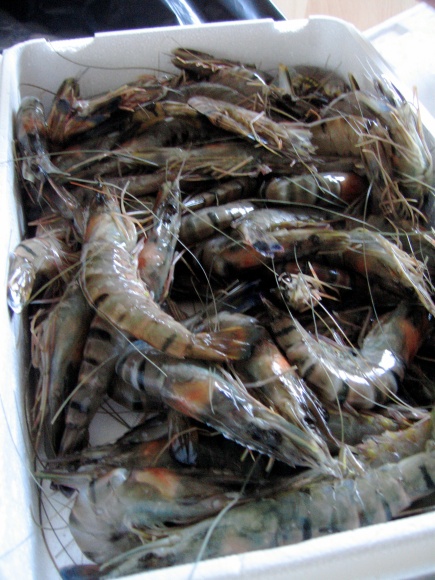
Recently, the tortoise has been a Tiger Prawn.
When I first reported on the arrival of foot-long Asian Tiger Prawns in the Gulf of Mexico, fewer readers took noticed than I had hoped. But over time, the piece has provoked some comments and continued to attract visitors. For all of you concerned or curious about this invasive species and it’s impact on the Gulf ecosystem, here are several theories of how the prawn first established itself in the Gulf of Mexico:
Thanks, South Carolina. In 1988, an accident at an fish farming facility in South Carolina inadvertently released pond-raised tiger prawns into the ocean where they were caught off shore for years afterward. “Like a lot of introduced species, they got out, everybody was concerned, but nature took its course and we never saw them after 91,” says Texas Parks and Wildlife Leslie Hartman, “until again after 2006.” Hartman is participating in genetic testing to see if the Tiger Prawns that are now showing up in shrimping nets in the Gulf could be related to those South Carolinian escapees. Continue Reading →
“A Railroad Commission inspector responded around 5:30 p.m. Thursday, Jan. 19, to a storage tank fire at a saltwater disposal facility operated by High Roller Well, LLC, south of Pearsall on State Highway 581, south of Pearsall. Preliminary information provided to the inspector indicates that while a truck was unloading saltwater with a skim of condensate (liquid hydrocarbons) into a collection tank, welders were working nearby and sparks from the welding may have ignited vapors around the storage tank, causing the explosion. A firewall around the storage tank site contained spilled fluids, which were picked up with by a vacuum truck.
No violations of RRC rules were found, and the High Roller Well LLC lease is in compliance with Commission rules. As injuries were reported in this incident, the lead investigating agency for this incident would be the federal agency, OSHA, which needs to be contacted for further information.”
Photo by Abrahm Lustgarten/ProPublica (Creative Commons)
Louis Meeks’ well water contains methane gas, hydrocarbons, lead and copper, according to the EPA’s test results.
Today the Environmental Protection Agency (EPA) announced that it is extending the period for public comment on its investigation of water contamination linked to fracking in Wyoming. The report was released in draft form in December and drew attention across the country, especially in Texas. It was the first time the EPA had linked fracking to water contamination. While the initial public comment period for the report was going to close at the end of January, that deadline has now been extended until March 12.
Earlier this week the EPA began accepting nominations for scientists to peer review the water contamination study. That process will be open until February 17.
The EPA is also “investigating potential impacts from oil and gas drilling at a number of places across the U.S.,” an agency spokesperson told StateImpact Texas in December. They are looking at seven other case studies as part of an ongoing scientific investigation. One of those case studies is on the Barnett Shale in Denton, Texas. The EPA is investigating the possibility of well contamination and spills and runoff there.
April 25, 2012 UPDATE: This week OSHA issued ten citations for “serious violations” by High Roller Wells, which operates the disposal well. You can read more about those citations here.
Three people have been injured after an explosion and fire at a disposal well in Pearsall, Texas Thursday night. The site is used for disposal of fracking fluids from the Eagle Ford Shale in South Texas, about 50 miles from San Antonio.* The fire burned for several hours and was put out by 9 p.m. last night. It isn’t clear yet what caused the explosion. (The Railroad Commision of Texas, which oversees drilling in the state, later released a statement explaining the explosion. You can read it below.)
Update: StateImpact Texas spoke with Pearsall Volunteer Fire Department Chief Placido Aguilar today about the fire. He said that at about 5:30 p.m. Thursday an oil tank exploded and caught fire. It took about an hour and a half to get under control once firefighters arrived. “There were four departments from around here, twelve trucks, and 33 guys that helped with the fire,” he told StateImpact Texas. He said that the fire department had to cool down three tanks holding oil so they wouldn’t reignite.
Aguilar says the site uses hydraulic fracturing to drill for oil.* “There was a well running when we got there that had to be shut down,” Aguilar said. “I know it’s producing, [because] they had three tanks full of oil. That one that exploded lost its top and was on fire.” (Update: These earlier reports appear to be wrong. The site is used for disposal of wastewater from fracking and drilling, according to the Railroad Commission of Texas. Read the statement from the Railroad Commission of Texas on the explosion here.)
With drilling taking off in the Eagle Ford Shale, is Aguilar concerned that his all-volunteer department will have to respond to more fires like these? “Yes, probably in the last six months we’ve had two other incidents. And they [drillers] say they’re gonna be here for a while.” Continue Reading →
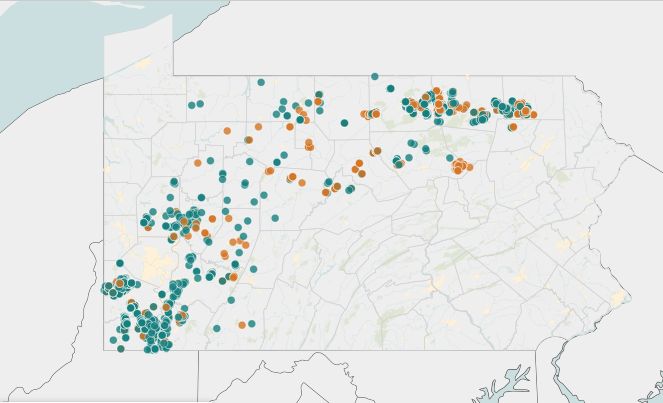
While the chemicals were not “definitively linked to recent gas drilling,” they write, the EPA says they do pose “a chronic health risk.” Now the EPA is going to truck in water to the four families. There’s quite a bit of background to the story, which you can read at StateImpact Pennsylvania. (They also have a fantastic interactive map of the many wells in the state.)
The company behind the well in question is Cabot Oil and Gas, which is based in Houston and has a major presence drilling the Eagle Ford Shale in Texas.
In a separate case, a couple in Parker County, outside of Fort Worth, are currently suing a drilling company, Range Resources, for contaminating their water well. Continue Reading →
““They share the same name, but that’s where the connection ends,” Coors spokesman Colin Wheeler said in an e-mail to National Journal. “As for potential impact on the brand, it’s highly unlikely.”
The jury is still out on whether a shorter pipeline that doesn’t cross an international border could be called Keystone Light—which is also a beer that has roughly 15 fewer calories than the original Keystone.”
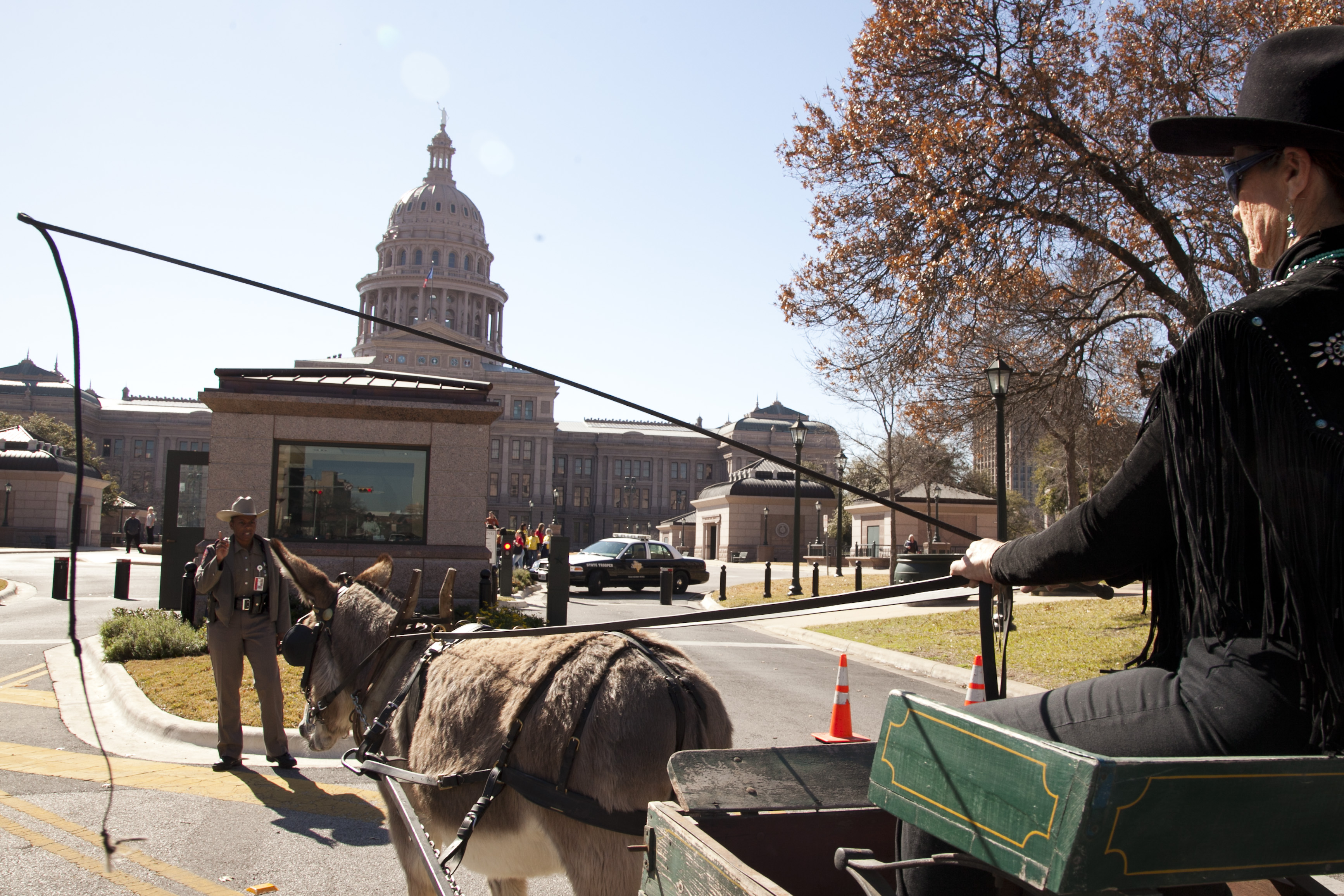
Marjorie Farabee was stopped from bringing her wagon to the steps of the capitol. But she did deliver around 100,000 signatures collected online to protest the burro killings.
Words matter in life. And the case of the the wild donkeys of West Texas is no exception.
If you call them “Wild Burros” you could be inclined to see them as scrappy survivors, emblems of the Old West. If you call them “Feral Donkeys,” well, then they sound like pests that need to be exterminated.
In Texas, what we have here is a failure to communicate.
If you were near the State Capitol Wednesday, you got a first-hand glimpse of the fight heating up between the two camps. Six donkeys (including “Miss Abby,” a Donkey with her own blog), and about a dozen protesters were there to deliver a message to the Texas Governor: “Stop killing the wild burros of Texas.” Continue Reading →
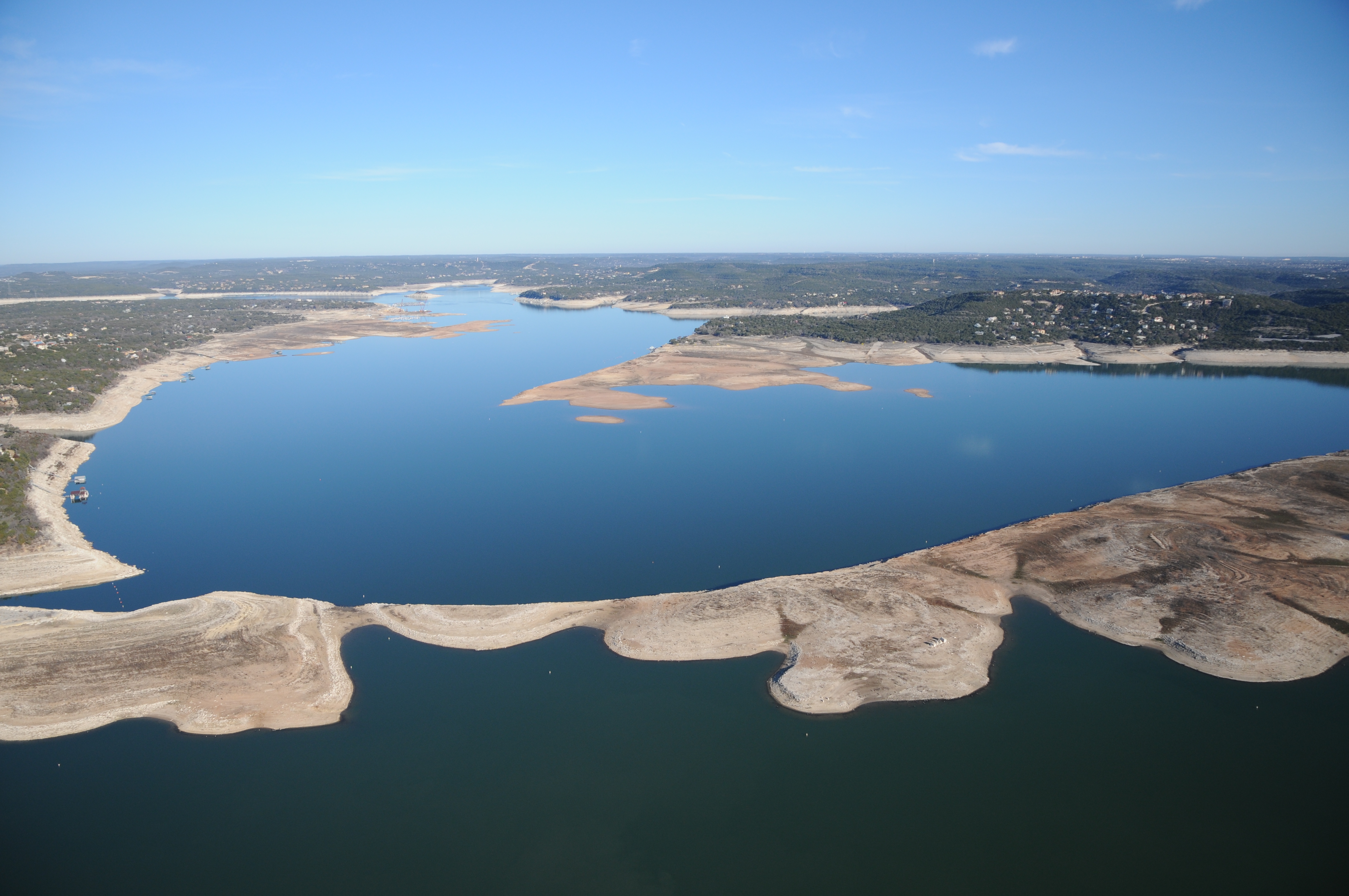
The extreme drought has lowered levels in Lake Travis, exposing formations not seen for some time.
The Lower Colorado River Authority (LCRA), the state entity that handles water for Central Texas, has announced their New Year’s resolution for 2012. And instead of losing weight, they want to gain some: A whopping 272 billion pounds (of water).
In a news release today, the LCRA says that it’s set a major goal of increasing its water supply by at least 100,000 acre-feet (equal to 32.5 billion gallons), the equivalent of roughly one-eleventh of the water in Lake Travis when it’s full. That’s enough water for some 400,000 to 500,000 people a year.
The two lakes that provide much of Central Texas with water, Travis and Buchanan, are currently at a combined 37 percent of their full capacity in the midst of a record single-year drought. The LCRA says that inflows into the lakes are at “historic lows” while water demand is at an all-time high. (Only half a percent of Texas is currently drought-free.)
The president said in a statement that his decision was “not a judgment” on the merits of the Keystone XL pipeline, rather it was based on the “arbitrary nature of the deadline.”
But after making that statement the administration also sent a report to Congress detailing why they decided against the pipeline, and there are more reasons than just the deadline. The report is short, just five pages, and it’s actually readable (we’ve embedded it below), but here are a few quick takeaways:
Many estimates of the potential jobs created by the pipeline are way off. “Regarding employment,” the report says, “the construction of the Keystone XL pipeline would likely create several thousand temporary jobs associated with construction; however, the project would not have a significant impact on long-term employment in the United States.” It goes on to note that while some have projected hundreds of thousands of jobs as a result of the pipeline, “this inflated number appears to be a misinterpretation of one of the economic analyses prepared on the pipeline.” Continue Reading →
As expected, the Obama administration announced today that they are rejecting the proposed Keystone XL pipeline, which would take oil from Canada to refineries in Texas. The president said his decision was “not a judgment” on the merits of the pipeline, but on the “arbitrary nature of the deadline.”
Here’s the president’s statement via the White House press office:
“This announcement is not a judgment on the merits of the pipeline, but the arbitrary nature of a deadline that prevented the State Department from gathering the information necessary to approve the project and protect the American people. I’m disappointed that Republicans in Congress forced this decision, but it does not change my Administration’s commitment to American-made energy that creates jobs and reduces our dependence on oil. Under my Administration, domestic oil and natural gas production is up, while imports of foreign oil are down. In the months ahead, we will continue to look for new ways to partner with the oil and gas industry to increase our energy security –including the potential development of an oil pipeline from Cushing, Oklahoma to the Gulf of Mexico – even as we set higher efficiency standards for cars and trucks and invest in alternatives like biofuels and natural gas. And we will do so in a way that benefits American workers and businesses without risking the health and safety of the American people and the environment.”
About StateImpact
StateImpact seeks to inform and engage local communities with broadcast and online news focused on how state government decisions affect your lives. Learn More »