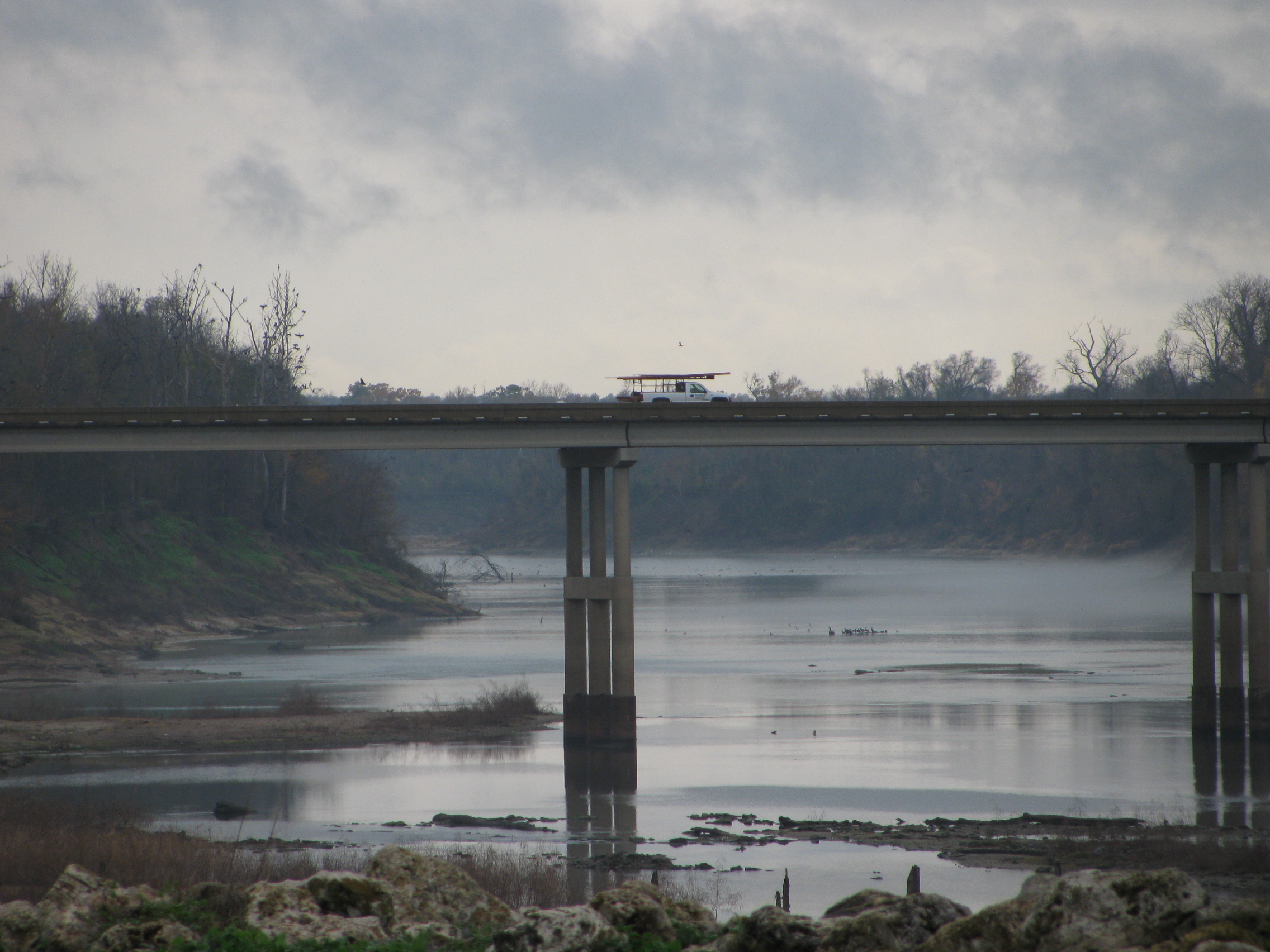
FM 3278 crosses the Trinity River just downstream from the Lake Livingston Dam
Once called the “River of Death” because it was so polluted with sewage and waste from slaughterhouses, the Trinity River has defied the great drought and helped maintain one of Houston’s critical supplies of water. And much of the credit goes to what a century ago made the river so polluted: the wastewater from Dallas-Fort Worth.
The Trinity flows past Dallas and goes south 200 miles to Lake Livingston. Even after the long summer of record drought and heat,
Map courtesy TRA
Click on the image above to trace the Trinity River Basin's route.
thousands of gallons of water still cascade every second down the lake’s spillway. From there, the flow again takes the form of a river and 80 miles later, the Trinity ends at Trinity Bay on the Gulf of Mexico.
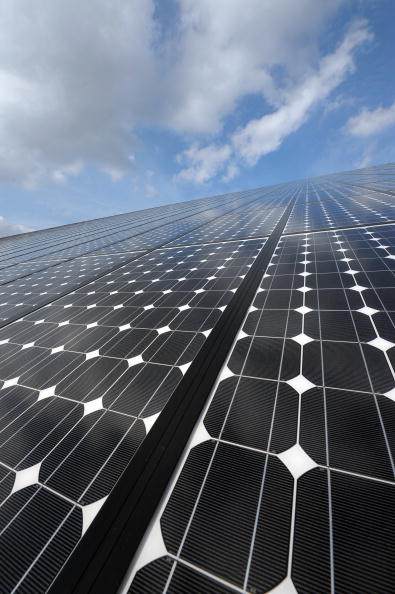
The British oil company, BP, is shutting down its solar power operation BP Solar, Bloomberg reported today. BP is the second-largest oil company in Europe.
The company said it was closing down its solar division after 40 years because it has become unprofitable. BP Solar’s end will affect about 100 employees, the company said in an internal letter to employees. More from Bloomberg:
BP Solar is the latest victim in a solar market that is facing oversupply and price pressures since Asian manufacturers started ramping up. Crashing module prices helped tip three U.S. makers including Solyndra LLC into bankruptcy this year, and Solon SE, Germany’s first listed solar company, filed for insolvency last week.
The company’s solar division hasn’t manufactured much in the way of solar panels since 2009, Bloomberg says. Then it closed several factories in Spain and eliminated 480 jobs when the Spanish stock market nosedived, “triggering the industry’s first period of strong oversupply.” BP decided in July to stop manufacturing solar projects. The company said in the internal memo that its other renewable projects will remain, among them wind and biofuel.
Photo by Abrahm Lustgarten/ProPublica (Creative Commons)
Louis Meeks’ well water contains methane gas, hydrocarbons, lead and copper, according to the EPA’s test results.
The company behind a fracking well in Wyoming that the Environmental Protection Agency (EPA) says may have contaminated water sources held a conference call today. Encana, the company that owns the drilling operation, faulted the EPA’s methodology and objectives. The call provided a good indication of how the company, and perhaps the fracking industry at large, is going on the offensive.
The EPA’s report is receiving so much attention because it is the first report from the federal government that links hydraulic fracturing (or “fracking”) to contamination of water. Chances are if you didn’t know what fracking was before, you do now. The process of drilling horizontal wells deep underground and pressure-blasting a mix of water, sand and chemicals into rock shale formations to release deposits of oil and gas is a relatively new innovation in the drilling world, and has only begun to be used widely in the last decade. And now fracking is in turns being pilloried, defended, questioned and lauded. With the agency’s new report, the debate over fracking has reached a new volume. Continue Reading →
Photo by flickr dj @ oxherder arts/Creative Commons
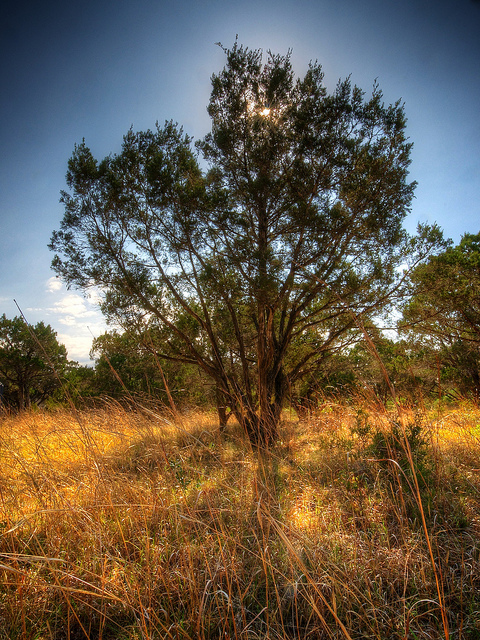
An Ashe Juniper tree.
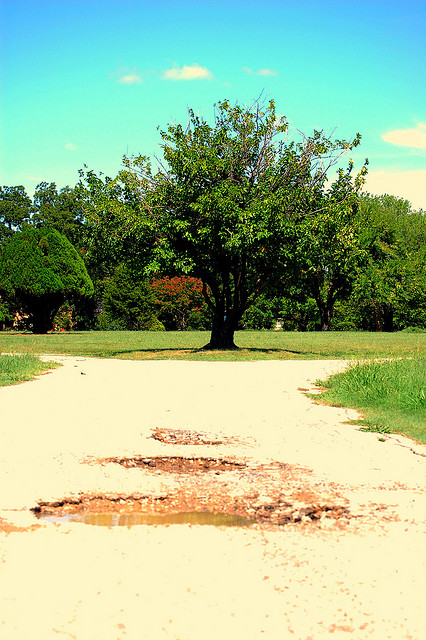
A new estimate by the Texas Forest Service says that as many as 500 million trees have died this year because of the drought. Using data from foresters, the group estimated that “100 million to 500 million trees with a diameter of 5 inches or larger on forestland were estimated to have succumbed to the drought.” That’s anywhere from two to ten percent of the 4.9 billion trees in Texas.
The extreme drought, sustained high winds and record heat this year wrought havoc on Texas’ trees. “Large numbers of trees in both urban communities and rural forests have died or are struggling to survive,” Burl Carraway, department head of Sustainable Forestry at the service said in a statement.
Three areas were hit the hardest: south of San Angelo towards west Texas, several counties “saw extensive mortality among Ashe junipers,” the service says. The Houston area lost lobolly pines, and Bastrop county and surrounding areas had “extensive mortality” of cedars and post oaks. Continue Reading →
Recently we’ve looked at how the drought is affecting livestock, farming and even fishing. But it is also taking a toll on roads.
As Lucia Duncan reports for KUT, “the dry spell has sucked all the moisture out of Central Texas’s topsoil. And that’s caused cracks to form and bumps to pop up.”
What’s happening is that highways are contracting and compacting as they dry out, a normal process that’s become much worse during the drought.
Recent rains could potentially help alleviate some of this cracking, but the roads likely won’t be repaired until the cracks have reached their full size, KUT reports.
A potentially dangerous spot? The point where a bridge meets the road can make for a rough bump. Continue Reading →
Last week’s new stories on StateImpact Texas looked at fracking, the drought and a fire at a Houston refinery:
Fracking Report Reverberates in Texas: A report on fracking and water contamination from the Environmental Protection Agency sent shockwaves through the industry. What does it mean for drilling in Texas?
Rick Perry campaigns at a coffee shop in Iowa on December 16, 2011
A few weeks after the Environmental Protection Agency released a draft report that found a link between hydraulic fracturing (“fracking”) and water contamination in Wyoming, the Texas governor is weighing in on the topic.
Not that he necessarily intended to do so. As KUT’s Ben Philpott reports, at the final stop of the day on his bus tour of Iowa Sunday, an Obama supporter asked Perry about links between fracking and water pollution.
“We can have this conversation, but you cannot show me one place where there is a proven — not one — where there is proven pollution of groundwater by hydraulic fracturing,” Perry said. “Bring me the paper, bring me the paper — show me the paper, I’m just telling you.” Continue Reading →
It’s been a busy weekend for the proposed Keystone XL pipeline and you might be wondering where things stand. The answer: chaos.
First, a little history. The pipeline is a 1,700-mile behemoth that is currently in the planning stages. It would take crude oil from Canada (harvested from the country’s tar sands) to refineries in Texas. The original route would have taken the pipeline through sensitive aquifer and prairie lands in Nebraska. Local opposition there was partly responsible for the Obama administration’s decision, in October, to delay the pipeline until after the Presidential election. It was seen as a victory for environmental groups and a defeat for the industry, and everyone pretty much considered the delay a done deal.
Our partners at StateImpact Pennsylvania have developed a new app that allows you to explore the rapidly growing world of drilling there. The interactive map shows who’s drilling where and allows you to see if drillers have been cited for violations of state environmental laws and regulations.
The data from the app shows that there are 52 companies drilling in the state, with 1,608 active wells. With all of that drilling there’s been a fair amount of violations found: there have been 1,532 citations with fines of $2.8 million. The data was obtained from the Pennsylvania Department of Environmental Protection.
A draft report from the Environmental Protection Agency sent shockwaves through the industry this week. The report showed that the technique of oil and gas drilling called hydraulic fracturing lead to water contamination in Pavillion, Wyoming.
Railroad Comissioner David J. Porter believes the report is flawed, but says more research should be done.
The EPA continues to research the impacts of fracking. But this study came at the request of residents of Pavillion, Wyoming. They asked the agency to investigate drinking water they suspected was tainted from nearby wells. It took three years, but this month, the EPA announced it had found chemicals associated with Hydraulic fracturing in the water.
The news comes at a time of growing acrimony between Texas’ overwhelmingly Republican state government and the Obama administration’s Environmental Protection Agency. So it came as little surprise when the results came under fire from some state policymakers.
StateImpact seeks to inform and engage local communities with broadcast and online news focused on how state government decisions affect your lives. Learn More »