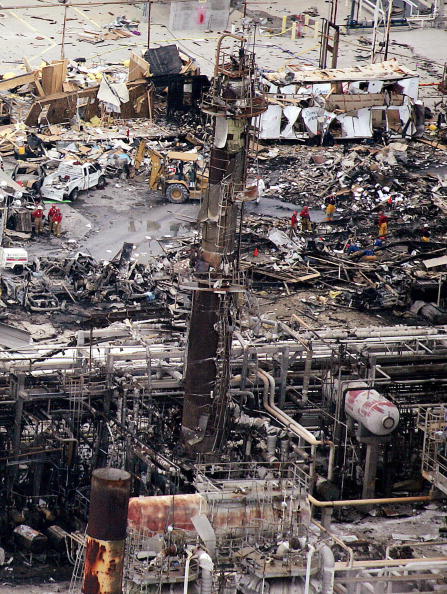
Workers sift through debris at the BP facility in Texas City 55 kilometers (35 miles) south of Houston, 24 March 2005, after an explosion that killed 15.
Earlier this week there were reports of a leak at the BP refinery in Texas City, Texas, just outside of Galveston. Sulfur dioxide (a pollutant regulated by the EPA and linked to respiratory issues) reportedly escaped the plant.
A caller reported the sulfur dioxide leak Monday to the National Response Center, the federal division for reporting oil and chemical spills. “Caller is concerned about the health of the residents located near the refinery,” the incident report logging the call says. (You can read the report below.) Under a category for “Environmental Impact,” the report says “UNKNOWN.” The field for “Community Impact due to Material” is simply left blank, and under the category of “Media Interest” it states: “NONE.”
It could be that the report was submitted by someone working at the refinery itself, as it says that the caller encouraged “agencies to call him to direct them where exactly the leak is at the refinery.” [UPDATE: BP says the report was not made by anyone at the company and that no sulfur dioxide leaked from the plant. Read the full response from BP.] Continue Reading →
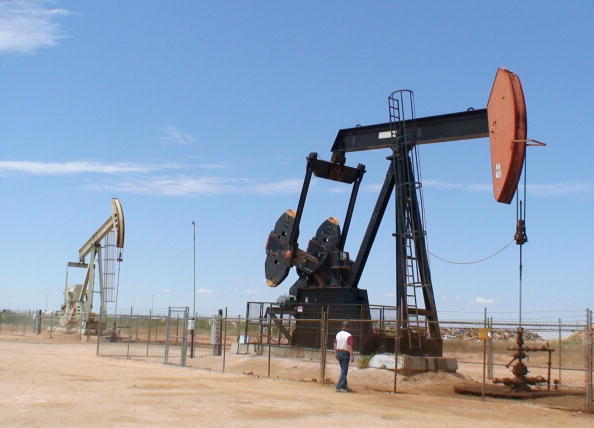
Oil and gas exploration is up in the state of Texas. Over 100,000 new wells were drilled in the last five years, some of them hydraulic fracturing operations looking for “tight oil” and shale gas trapped in layers of rock far below the surface. So while business booms and holes are being drilled into the ground left and right, who’s regulating the industry?
Oil and gas drilling in Texas is under the watch of the Railroad Commission of Texas, an elected panel of three commissioners. They monitor and permit wells, and are charged with enforcing violations. A report today by Greenwire analyzes the Railroad Commission’s enforcement and regulation of drilling, and finds it “unfocused and lax”. Continue Reading →
A dead fish decays on the dry bed of O.C. Fisher Lake in San Angelo, Texas.
There’s been a whole slew of reporting on the drought in Texas over the last few days. What’s new here that you didn’t know already? Check out this list of five things you may not have known from a series on the drought by Jeannie Kever and Matthew Tresaugue of the Houston Chronicle:
Water supplies are so low, people are drinking their own wastewater. Grossed out? Perhaps you shouldn’t be. Using treated, recycled wastewater (the water washed down your shower, sink and yes, toilets) is already the norm in California and Florida, and the current water plan predicts that its use “will grow by about 50 percent by 2060, to 614,000 acre-feet per year, or more than 20 million gallons,” according to the paper. “One thing attractive about this water, as long as people are taking showers and flushing toilets, there’s a source of supply,” Robert Mace, deputy executive administrator at the Texas Water Development Board told the newspaper. Continue Reading →
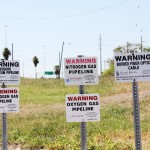
Several pipelines run underneath the Dona Park neighborhood in Corpus Christi.
What’s it like growing up surrounded by refineries in Corpus Christi?
A commenter on one of our stories about Refinery Row, Iris Gonzales Hinojosa, writes about her childhood among the refinery stacks:
“I grew up in Dona park, specifically on Vernon Drive, and many of my childhood memories include Mom and Dad, closing our home’s windows to run the air conditions because breathing the air was so unbearable. Continue Reading →
Dr. John Nielsen-Gammon, Texas State Climatologist
Curious about what state climatologist John Nielsen-Gammon has to say about some towns in Texas running out of water? StateImpact Texas put in a call:
Q: StateImpact Texas: There’s this list by the Texas Commission on Environmental Quality (TCEQ) of towns that are running out of water. Some of them even have a date of a few weeks from now when they’ll run out. Is that possible?
A: John Nielsen-Gammon, State Climatologist: The deadline is a worst case scenario, because the odds of zero rainfall are near zero. The specific dates are pretty good for attention-grabbing, but they’re not realistic projections of when they’ll actually run out of water.
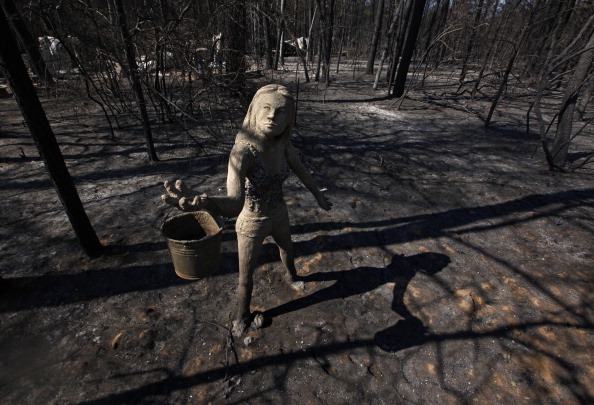
A statue stands in front of the remnants of a burned down home outside Bastrop, Texas.
They are numbers familiar to us by now: billions in losses, millions of acres burned, record high temperatures, and record low rainfall during our current drought.
Some towns in Texas are now asking the big question: How long do we have until we run out of water?
“We haven’t had that situation yet,” says Andrea Morrow, a spokesperson for the Texas Commission on Environmental Quality (TCEQ). “There hasn’t been a scenario yet where someone’s completely run out.”
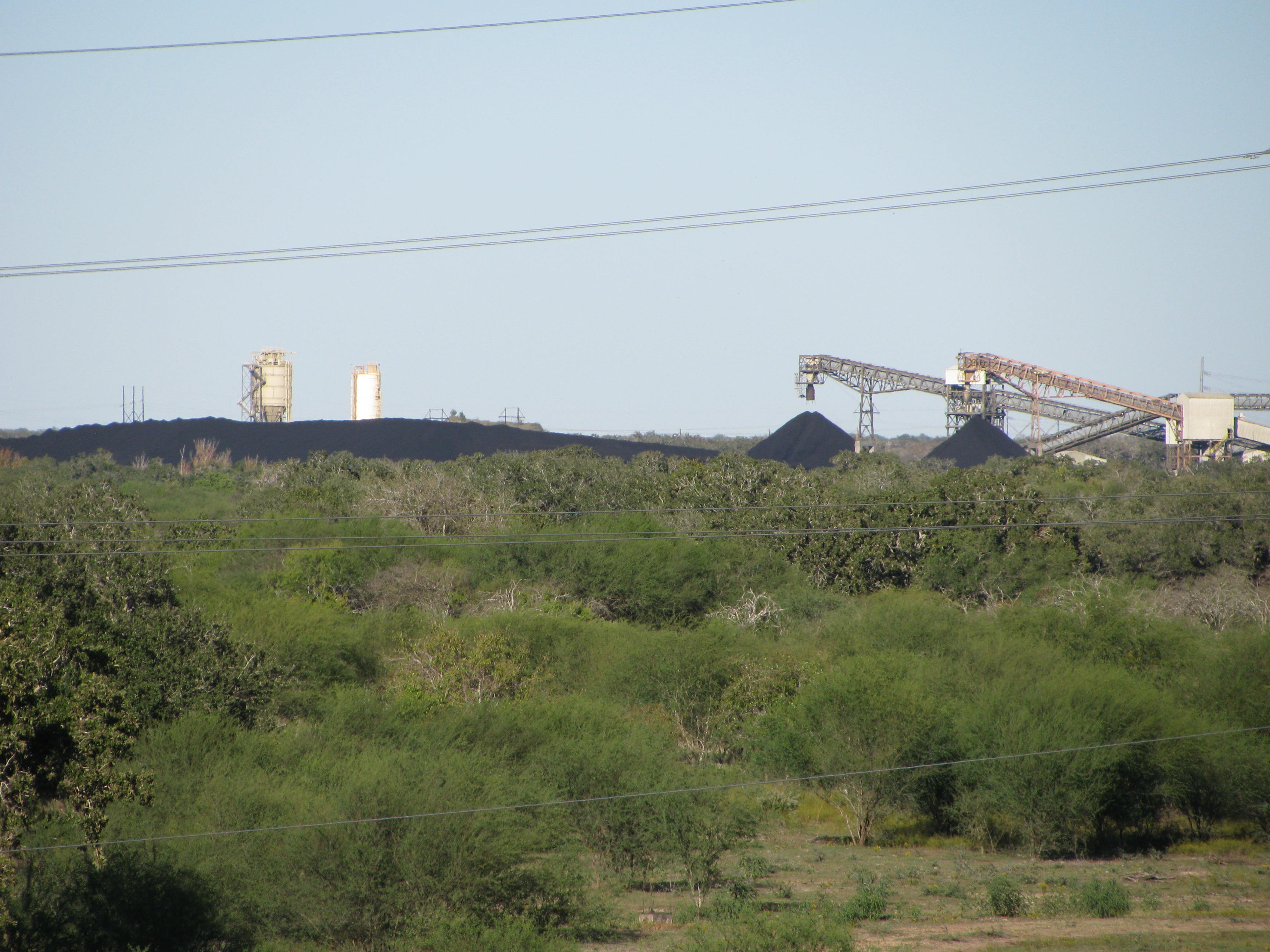
Mounds of coal at the Coleto Creek power plant in Fannin, Texas
When it comes to using coal to make electricity in Texas, groups opposed to what they call “dirty coal” say they almost always lose when they try to convince state regulators to deny proposed plants permission to operate. But while they’ve lost some battles, are they actually winning the war? Continue Reading →
Demonstrators protest the Keystone XL pipeline in front of the White House on November 6, 2011
Environmental groups that have opposed the Keystone XL pipeline won something of a victory yesterday, when the Obama administration announced that it would delay a decision on the project.
But that announcement raised more questions than it answered. Will the pipeline’s delay ultimately kill the project altogether? Will other sections of the pipeline (like the Oklahoma-to-Gulf Coast section) be able to go forward separately? Will another company, like Enbridge, pick up where TransCanada left off, but build a pipeline that bypasses the U.S. altogether?
Add to that list a new question: Is the pipeline delay actually a setback for green energy?: Continue Reading →
A view of the Flint Hills East Refinery from the Hillcrest Neighborhood in Corpus Christi
Tammy Foster is leading a group of residents trying to leave the neighborhood.
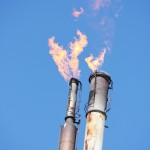
A flare erupts from a refinery stack in Corpus Christi
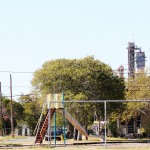
An Abandoned Playground in the Hillcrest Neighborhood
One of many boarded-up houses in the Hillcrest neighborhood, which sits next to the Citgo and Flint Hills refineries.
How do you get eminent domain in Texas? Just check a box.
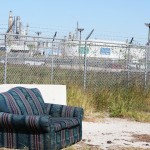
A sofa sits outside the Citgo East refinery in what was once the Oak Park Triangle neighborhood. 288 homes here were bought out by oil companies in the late nineties.
Holding tanks on refinery row
There are Of the six major refiThere are six major refineries in the area. The EPA has flagged five of them for serious or repeated violations of the Clean Air Act
Tammy Foster is a lifetime resident of Refinery Row in Corpus Christi. After years of living surrounded by refineries and smoke stacks, she says many of the families there are sick. Now she’s leading a group of residents who think they’ve found a way to fix that.
Map of the Proposed Keystone XL Pipeline/Stephanie d’Otreppe, NPR
The State Department made it official today — the Keystone XL pipeline, which would have brought oil from Canada through the U.S. to refineries on the Gulf Coast, will not be happening anytime soon. Continue Reading →
About StateImpact
StateImpact seeks to inform and engage local communities with broadcast and online news focused on how state government decisions affect your lives. Learn More »