Terrence Henry reports on energy and the environment for StateImpact Texas. His radio, print and television work has appeared in the New York Times, The Washington Post, The Atlantic, NPR, The Texas Tribune, The History Channel and other outlets.
He has previously worked at The Washington Post and The Atlantic. He earned a Bachelor’s Degree in International Relations from Brigham Young University.
Barack Obama speaks at the White House on October 6, 2011
Reuters is reporting that the rumors we’ve been hearing about this week — a delay on a decision for the controversial Keystone XL pipeline — may be true. The Obama administration may announce that they’ll explore a different route for the pipeline, “delaying a final approval beyond the 2012 U.S. election.” More from Reuters:
The decision would be a victory for environmentalists, many of whom oppose the pipeline, and a setback for TransCanada Corp, whose $7 billion Keystone XL project is seen as the most important North American oil pipeline plan for decades.
One source familiar with the matter said that studying a new route for the pipeline would likely take 12-18 months, putting a final decision after President Barack Obama’s bid for re-election on November 6, 2012.
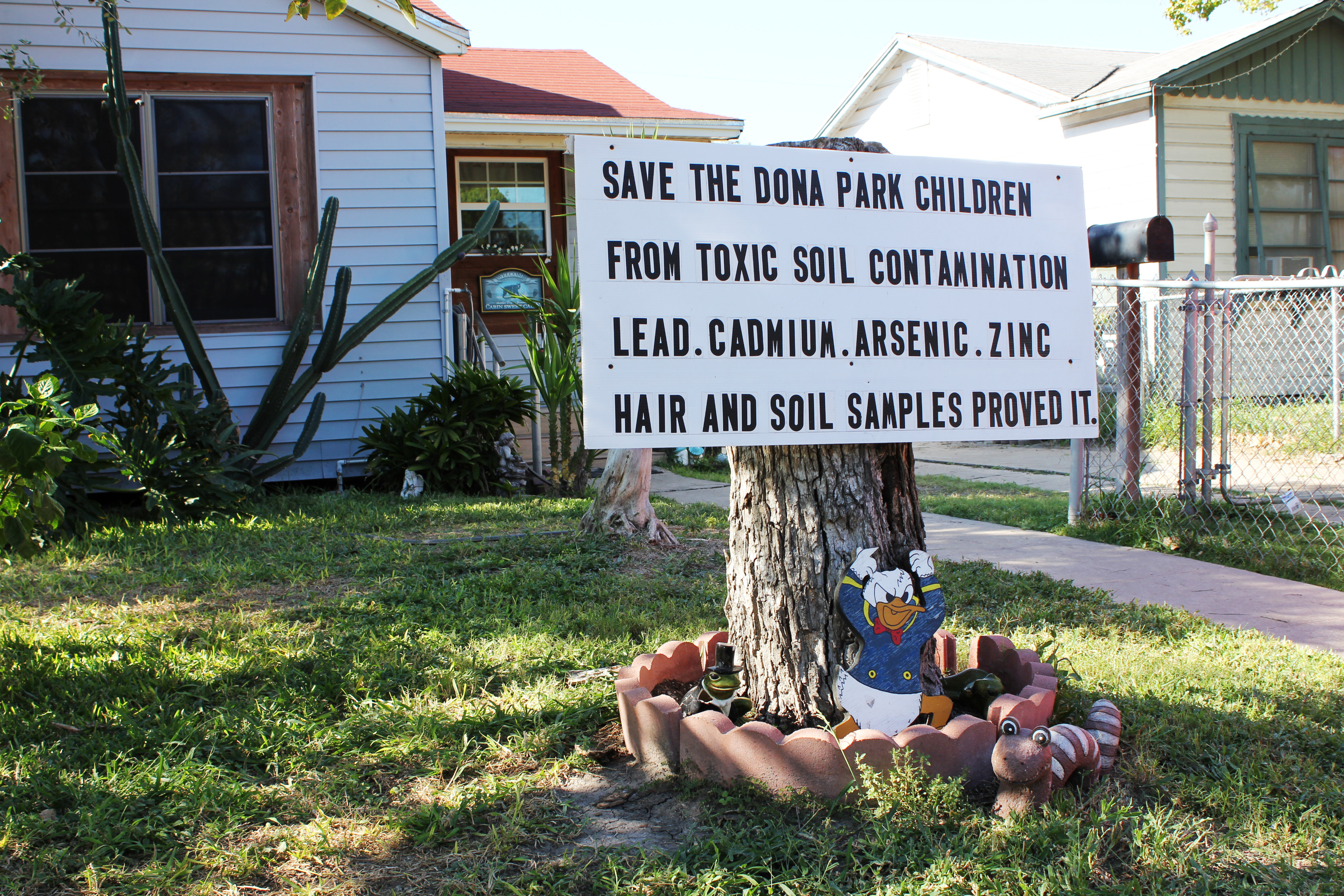
Billy Placker’s Front Yard in Refinery Row/Photo by Teresa Vieira for KUT News
What do you see when you look out your window at night? If you live in Billy Placker’s neighborhood, it could very well be a giant ball of fire.
“This is what we deal with here a while back,” the former refinery worker says. “My grandson run in the house, he said, Grandpa! Grandpa! The refinery’s fixing to blow up. We run outside, and the refinery back around the corner from us over here, both their flares were going insane.”
You might have seen a flare before, maybe while driving along the highway. It’s the fire on top of stacks at refineries. When things are going according to plan, the flame is small. But here on refinery row, a ten mile stretch of plants, refineries and homes in Corpus Christi, things don’t always go according to plan. Continue Reading →
There were two water-related amendments to the Texas Constitution up for vote yesterday. One, Proposition 2, passed and the other. Proposition 8, was voted down. So what does this mean for the future of water in drought-stricken Texas? Here are five things to know about the votes:
What is Proposition 2 exactly? It’s an amendment that will let the Texas Water Development Board issue bonds to different companies engaged in water development and infrastructure projects. The companies then pay back the bonds, with interest. It passed with 52 percent of the vote.
How much is the state issuing in bonds? The total amount of the bonds issued cannot exceed $6 billion at any given point in time. Earlier this year the Texas Water Development Board estimated that $231 billion worth of infrastructure projects would be necessary to keep water supplies at their current level into the future. This bond package should spur development. Continue Reading →
State Climatologist John Nielsen-Gammon (Photo: Texas A&M)
John Nielson-Gammon, the state’s climatologist, has been quite busy as of late. Our record-breaking heat and single-year drought is on the minds of citizens and lawmakers, so Nielson-Gammon’s insight is in high demand. How high? The climatologist penned this brief summary of his hectic day last week briefing the state legislature last week on drought issues:
With the current drought now more or less at the one-year mark and breaking records along the way, many are wondering if it will ever end. Another question is, how unique is this drought to Texas and the surrounding region?
A weed grows out of the dry cracked bed of O.C. Fisher Lake on July 25, 2011 in San Angelo, Texas.
It’s a question on everyone’s mind, one with an elusive answer – when will the drought end? John Nielsen-Gammon, the state’s climatologist, has been busy briefing lawmakers on how we got here, if there’s an end in sight, and whether or not this may be the new normal. Using his report that he presented last week to the Texas State Legislature, The 2011 Drought, below, here are ten things you should know about the Texas drought:
How bad is it? The current drought “has been the most intense one-year drought in Texas since at least 1895 when statewide weather records begin, and… it probably already ranks among the five worst droughts overall.” Continue Reading →
Toxic Air From an Oil Refinery Fire in Long Beach, California
Today NPR, the Center for Public Integrity (CPI) and StateImpact launch a special series examining how air pollution is affecting communities across the nation called Poisoned Places: Toxic Air, Neglected Communities. It has been twenty-one years since Congress amended the Clean Air Act to deal with toxic air, directing the Environmental Protection Agency to enforce regulations and protect the general public from toxic emissions. But as the investigative series discovered, companies are still producing toxic air, and regulators are having a difficult time stopping them. The team found:
State and federal regulators take months and sometimes years to enforce anti-pollution rules. About 400 facilities are on an internal EPA watch list that includes serious or chronic Clean Air Act violators that have not been subject to timely enforcement. The list was obtained by the Center and NPR and is being made public for the first time.
More than 1,600 facilities around the country are classified by the EPA as “high priority violators” of the Clear Air Act sites in need of urgent action by enforcers.
Regulators largely rely on an honor system easily manipulated by polluters, which report their own emissions. Even judging by the self-reported numbers, the scale of pollution is enormous: At least 600 million pounds of toxic chemicals – including arsenic, benzene, formaldehyde and lead – were released into the air in 2009, according to EPA data.
Last week we reported on the top 25 water users in Austin, with a map showing where the biggest consumers are located (shown below). On the list were familiar names like Lance Armstrong, Cedric Benson and Roy Spence. Coming in at number seven was Congressman Michael McCaul, who lives in Westlake. He used 1.4 million gallons of water last year, with a water bill of at least $13,300.
Today the Texas Tribune reports that according to McCaul, it’s just a leak. Mike Rosen, the congressman’s spokesman, explains:
[McCaul] has dealt with a “series of leaks over last two to three years,” and “the leaks for the most part have gone undetected for a long time,” because they were not visible on the surface. He said one leak involved a swimming pool and another, which would have affected the recent numbers, involved a busted pipe related to a contractor’s work for a neighbor’s realtor.
That is a serious leak. But according to Austin Water Utility, that excuse may not hold water. Continue Reading →
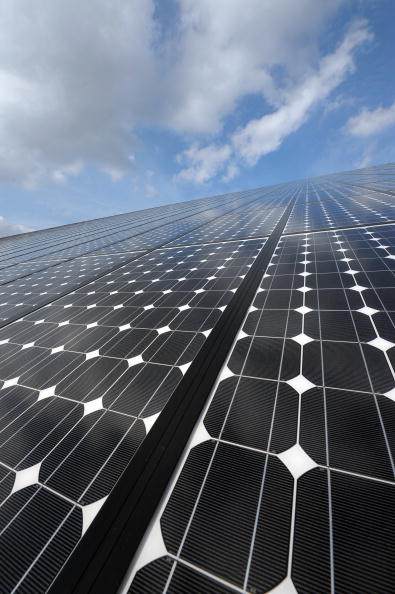
The Obama administration announced last week that 445 square miles of the West — more than 285,000 acres — will be zoned for solar energy development. Across parts of Arizona, California, Colorado, Nevada, New Mexico and Utah, the government is essentially fast-tracking large tracts of land managed by the Bureau of Land Management (BLM) for solar energy development. The BLM has done the research and surveys, now companies can start applying for permits to build solar energy farms. It can shave one to two years off the approval process. The areas are called Solar Energy Zones (SEZs), and they represent an important step forward in the development of solar energy.
But Texas wasn’t on the list. Why? I put the question to Megan Stouffer, the State Planning and Environmental Coordinator for BLM New Mexico, which manages agency projects in that state as well as Texas, Oklahoma and Kansas.
Yesterday we reported on Valero Energy Corporation’s attempts to get a tax exemption from the state of Texas for upgrades it made to its refineries. The money comes in the form of a property tax exemption from local appraisal districts, which could mean money lost from already-short school and city budgets. Looking at the arguments for and against, we examined Valero’s financial earnings and concluded that one of the arguments against is that they might not need the money in the first place.
Today, Valero announced earnings for the third quarter of 2011, and they are having a banner year thus far. Their net income was reported at $1.2 billion, as opposed to $303 million for the same quarter last year. For this year so far, they have a net income of $2.1 billion. These were Valero’s best quarterly results in over four years, according to the company’s CEO and Chairman, Bill Klesse.
StateImpact seeks to inform and engage local communities with broadcast and online news focused on how state government decisions affect your lives. Learn More »