Terrence Henry reports on energy and the environment for StateImpact Texas. His radio, print and television work has appeared in the New York Times, The Washington Post, The Atlantic, NPR, The Texas Tribune, The History Channel and other outlets.
He has previously worked at The Washington Post and The Atlantic. He earned a Bachelor’s Degree in International Relations from Brigham Young University.
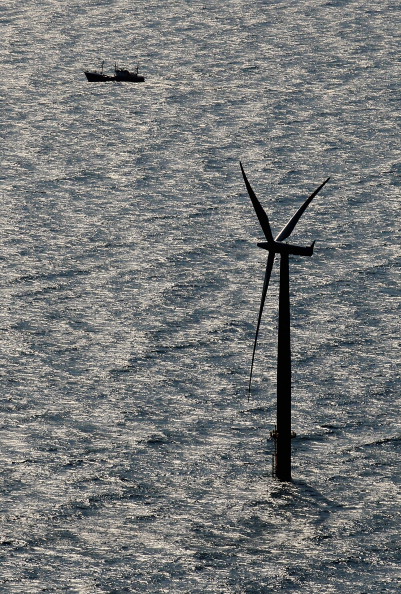
Offshore wind has made its way to the Atlantic. Over 200 miles from the shore of Agucadoura, Portugal, a two-megawatt turbine is currently floating on the sea and will soon generate power. The project is expected to be up and running after a few weeks of testing. The turbine is a joint project between Seattle-based wind developer Principle Power and a Portuguese utility.
The turbine and floating platform were assembled onshore, then towed out to the open Atlantic. So how exactly does a tall wind turbine with a wide wingspan float in the ocean? The company behind the turbine says they have come up with a technology that reduces wave and wind movement on the platform, “which allows a large turbine to be placed in waters with depths of more that 164 feet, where it is able to capture stronger winds,” Renewable Energy World reported today. The company says that any wind turbine can be used with the platform.
Has it always been this hot and dry in Texas? Wildfires, drought, and record heat don’t seem to have stopped folks from moving to the state, but you’d have to forgive them if they arrived in August and turned right around.
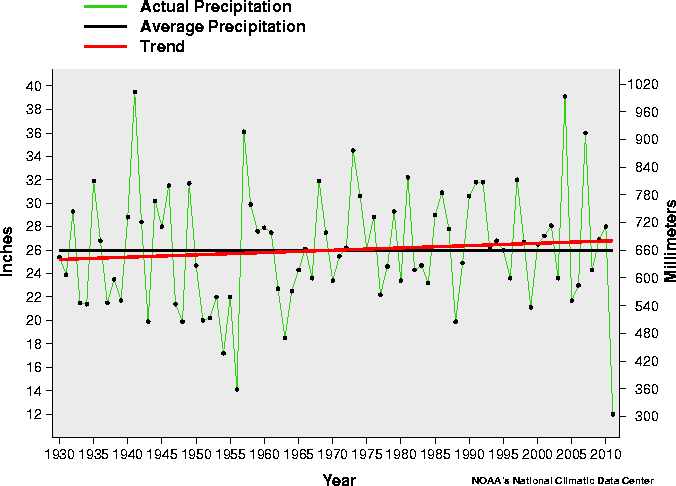
But the historical record offers some context. First, this year has been, without a doubt, the worst. So it could be that there’s nowhere to go but up (we won’t know until next spring, though). Look at this graph of rainfall over the last seventy years in Texas from the National Oceanic and Atmospheric Administration (NOAA):
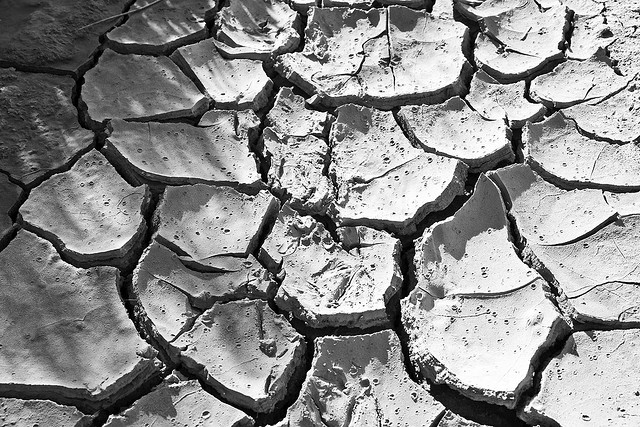
Photo by Flickr user Bert Kaufmann/Creative Commons
It has been one of the worst year's of weather in Texas on record.
Texas has seen a week of rains, freezes and even snow. It’s strange to think back to this summer and the record heat and drought when it feels like we’re living in Illinois right now. (In fact, as of Tuesday, Texas had more snow than Chicago so far this winter.) Some new numbers out this week show just how bad this year has been for weather in Texas and the rest of the country:
1 Million+: That’s how many acres of land burned in Texas this year, a record for wildfires. The number made the National Oceanic and Atmospheric Administration’s (NOAA) list of “Extreme Weather 2011.”
86.7: That’s the average temperature for Texas this summer, from June through August. While it sounds pretty nice, it’s the average temperature. That means all of the lows in the dead of night while you were sleeping in air-conditioning averaged out with the record highs during the afternoon while you were foolishly trying to plant tomatoes for the fall.
Brioche Mini-burgers. Due to the drought, beef prices are expected to rise.
The drought has wreaked havoc on many facets of Texas life: farming, pecan trees, even hunting. It’s also been hell for the state’s cattle industry: 600,000 cows were sold off as grazing land dried up and feed prices soared. Today, the Texas Agrilife Extension released its forecast for cattle prices in 2012, and not surprisingly, they are going to be high.
Because there are fewer cows in Texas, there are fewer calves, which means a tighter market and higher prices. The Agrilife Extension reports a twelve percent decline this year in beef cattle nationally, “the second largest decline in history since 1934-1935 (eighteen percent), as 550,000 head of cows were sold off during that time.” Another bad year was 1996, when 400,000 cows were sold off or died during a drought. For next year, beef production is predicted to be down four percent. Continue Reading →
Today the Texas Commission on Environmental Quality is holding their monthly commissioners’ meeting, where they vote on enforcement and regulations. Some important items are on the agenda today, from new regulations to water restrictions. We’ll be live-blogging the meeting below:
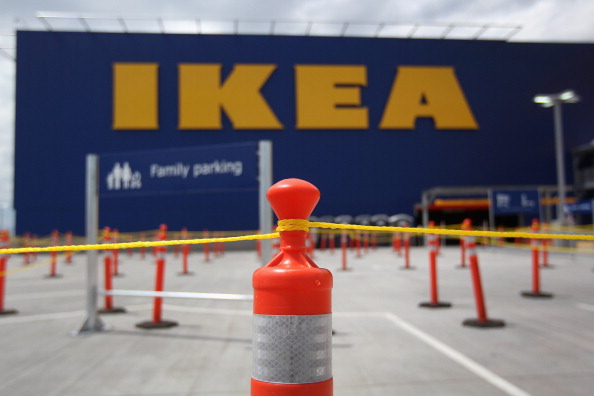
Rope lines await shoppers ahead of the grand opening of the new Ikea this summer in Denver, which uses a geothermal heating system.
The blue-and-yellow Swedish furniture giant is going green. IKEA announced today plans to install solar panels on all of its stores in the South, including three in Texas.
The panels are expected to be installed by next summer, and combined will generate 10.7 megawatts, with the three Texas stores generating about half of that, or enough to power 434 homes for a year. The company also has solar installed at twelve other locations, with eleven others underway. Once these next ten stores have solar panels, the company will have a solar generating capacity of over twenty-six megawatts, which double the amount produced by the Blue Wing solar farm in San Antonio, the largest photovoltaic energy plant in the Texas. Continue Reading →
The carcass of a cow that became mired in the mud in a dry stock tank in Knox County during the drought
The Texas Parks & Wildlife Department is asking for millions of dollars to cover money lost during the drought. “A ‘triple whammy’ of record heat and drought, devastating wildfires and a corresponding decline in visitation and revenue has created a critical need for Texas State Parks,” said Carter Smith, the department’s executive director, in a statement today. “So, we are reaching out for help.”
Will Parks & Wildlife seek additional funds from the state? “This is an effort to solicit donations now and get people aware,” says Mike Cox with the department. “A legislative appeal won’t begin until the next session.” Continue Reading →
This map shows rainfall declines during the Mayan civilization as a result of converting forest to farmland.
New research by NASA of early droughts in Central America shows that deforestation can lead to droughts. A climatologist at the agency found that ancient civilizations like the Mayans and Aztecs made droughts worse “by clearing rainforests to make room for pastures and farmland.” Continue Reading →
The Nest thermostat aims to change home energy use
A few weeks ago a new home thermostat was announced. While this would normally be news to yawn over, efficiency enthusiasts and techies alike were enthralled. Wired said that the thermostat would “make home heating sexy.”
Why the enthusiasm over a mundane household product? It was likely because the thermostat was an iPod.
Or at least it was designed by the same people that designed the iPod, and is intended to be a similar innovative leap forward. What the iPod did for music, the Nest hopes to do for home thermostats.
An empty rain gauge is strapped to a fence post on the edge of a pasture this summer near Canadian, Texas
Rains fell across much of Texas the past few days. The Dallas-Fort Worth area received between three and four inches of rain, Houston got under an inch, and Austin got a good soaking of two inches.
So what effect have these rains had on the drought?
“It’s really not a big change at all,” says Bob Rose, Chief Meteorologist with the Lower Colorado Authority, which oversees water in Central Texas. Continue Reading →
About StateImpact
StateImpact seeks to inform and engage local communities with broadcast and online news focused on how state government decisions affect your lives. Learn More »