Terrence Henry reports on energy and the environment for StateImpact Texas. His radio, print and television work has appeared in the New York Times, The Washington Post, The Atlantic, NPR, The Texas Tribune, The History Channel and other outlets.
He has previously worked at The Washington Post and The Atlantic. He earned a Bachelor’s Degree in International Relations from Brigham Young University.
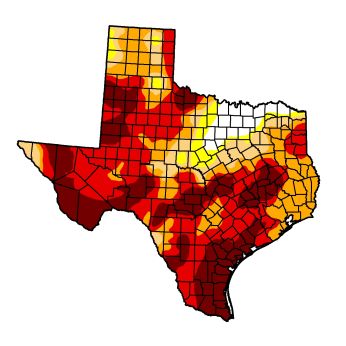
The latest National Drought Monitor report was released today, and you can see a large band of white (that’s the drought-free portion of the state) elbowing its way into Texas, taking over most of Dallas and Tarrant Counties.
Spicewood Beach was placed under stage 4 water restrictions last week, meaning residents can only use water for cooking, cleaning and drinking. Now they are being advised to boil their water.
Just how much water was sold from Spicewood Beach, the place with the dubious honor of being the first Texas town to run out of water during the current drought? We now have an idea. The paradox is clear: just weeks before water had to be trucked in to the dry wells of Spicewood Beach, water haulers were trucking it out to sell elsewhere. To make matters worse, the community is now under a boil water notice.
The Spicewood Beach water system is owned and operated by the Lower Colorado River Authority (LCRA), which manages water for much of Central Texas.
In 2011, the LCRA allowed two water haulers, Larry Ogden and Hank Cantu, to buy water from the Spicewood Beach water system and truck it out to others, according to an email from the LCRA to StateImpact Texas received late Wednesday evening. The LCRA says that they “have no way of tracking when the commercial customers took the water they purchased from the system.” But they do know how much water was taken out. And the numbers may surprise you.
At least 1.3 million gallons — and maybe more — were sold from the Spicewood Beach water system to those two customers. The LCRA says tonight in an email to StateImpact Texas that in 2011, 1.3 million gallons alone were sold from the Spicewood Beach water system to Hank Cantu’s operation, Hills of Texas Bulk Water. Another 3.5 million gallons were sold to Larry Ogden, who owns Wildcat Bulk Water Services and Hamilton Pool H20. The LCRA says they think most of Ogden’s water purchases were from the nearby West Travis County Water System and not from Spicewood Beach. However, they “don’t have exact amounts for each system because this customer uses a portable meter on his truck,” the LCRA said in the email.
Even if the total is little more than 1.3 million gallons — and it could be far more than that — it’s difficult to gauge at this point how much of an impact those water sales had on the wells in Spicewood Beach.
When news first broke last week that the community of Spicewood Beach, about 40 miles outside of Austin, was going to run out of water within days, the blame was placed squarely on the drought by the Lower Colorado River Authority (LCRA). They’re the ones that own and manage the water system, as well as much of the water in Central Texas. “It is all a function of the drought,” LCRA spokesperson Clara Tuma told StateImpact Texas at the time.
But there may be another culprit: Spicewood Beach’s water was for sale, as we reported earlier in the week. Today the LCRA confirmed to StateImpact Texas what residents told us earlier: that over the last year and all the way up until a few weeks ago, water was being sold from the Spicewood Beach water system to contractors and trucked out of the community.
So before water had to be trucked in, it was being trucked out.
The LCRA says that it had authorized two water haulers to purchase and truck out the water. On January 4th, the day the system was moved to Stage 3 water restrictions, they were notified by the LCRA that they could no longer truck water out of Spicewood Beach. “Since then the water levels have fallen substantially,” LCRA’s Tuma says. Continue Reading →
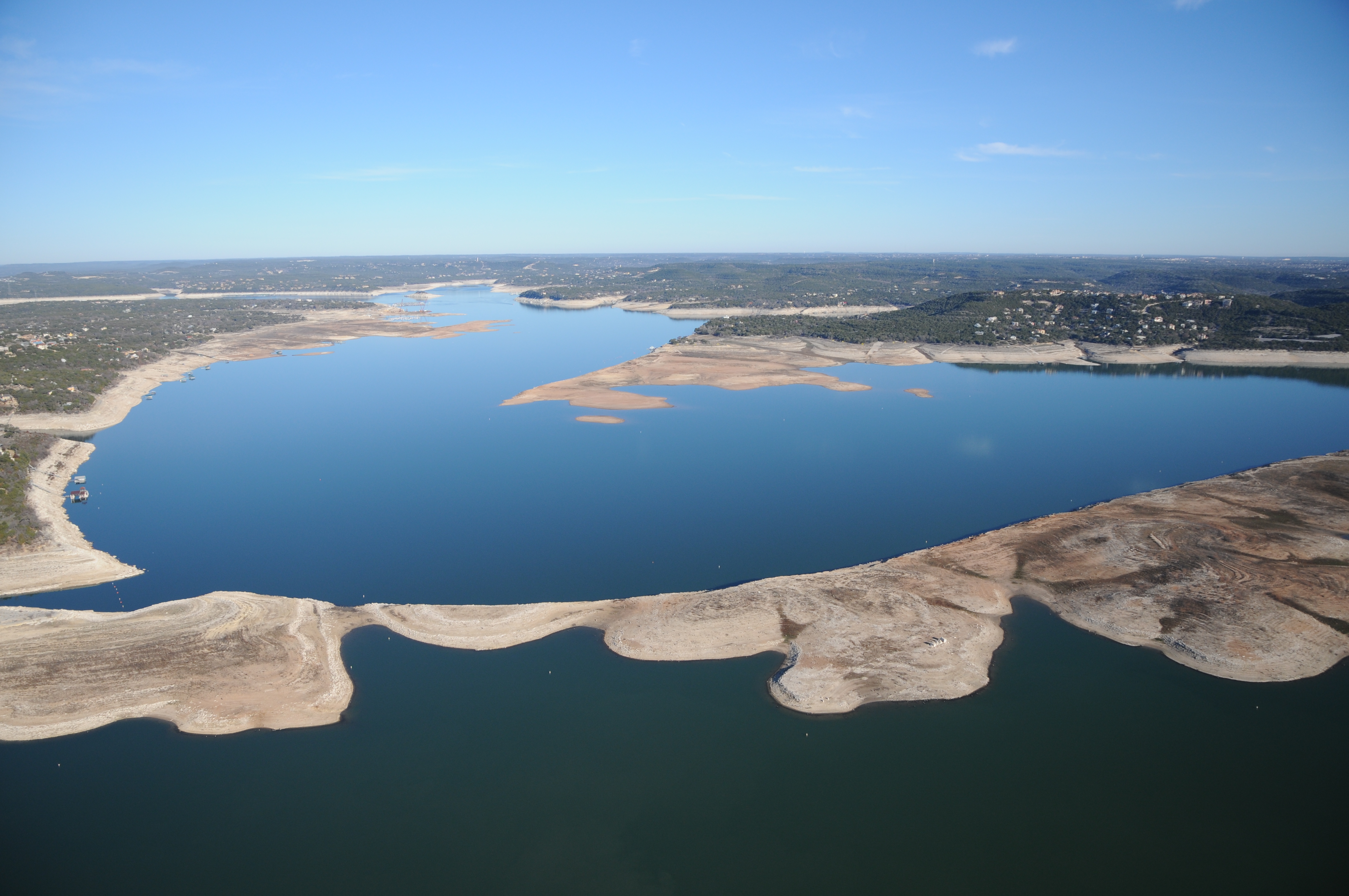
The extreme drought has lowered levels in Lake Travis, exposing formations not seen for some time.
As rains fall at above-average levels in much of the state in recent months, people are starting to ask the question: “Is the drought over?” (In fact it’s a search term that often leads to this site.)
And that worries people like Tom Mason, an environmental lawyer and former head of the Lower Colorado River Authority, which manages water for much of Central Texas. He says that Texas goes through cycles of comfort with water, then panic during drought, and finally forgetfulness once it has abated. Mason worries that once the current drought ends, we could soon forget how bad it was and fail to act now to plan for potentially even worse droughts in the future.
Photo by the LCRA
Tom Mason is concerned that once the drought is over, we'll forget it.
Mason spoke yesterday at the Driskill Hotel in Austin on the new water plan currently being considered for the state, and how Texas can handle more people and less water. Here are five things he noted about the water plan, which has a price tag of $53 billion and would provide Texas enough water until 2060, even through another drought of record:
Conserve, Conserve, Conserve. Nearly a quarter of the new water for Texas will come from saving the water we already have in the new plan. “It’s the fastest and cheapest way to make more water,” Mason says. And there’s little opposition to conservation, except for one: bad habits. “We Texans love long showers and green St. Augustine lawns in August,” Mason notes. But if Texas is to have water security, he says, our ways will have to change. San Antonio, he points out, has reduced its water usage by 42 percent over the last few decades, despite one of the fastest-growing populations in the country. Most of that conservation comes from new “the more you use, the more you pay” water pricing, repair of leaky pipes, and giving away water-efficient toilets. More regular, stringent water restrictions also helped the city conserve. Continue Reading →
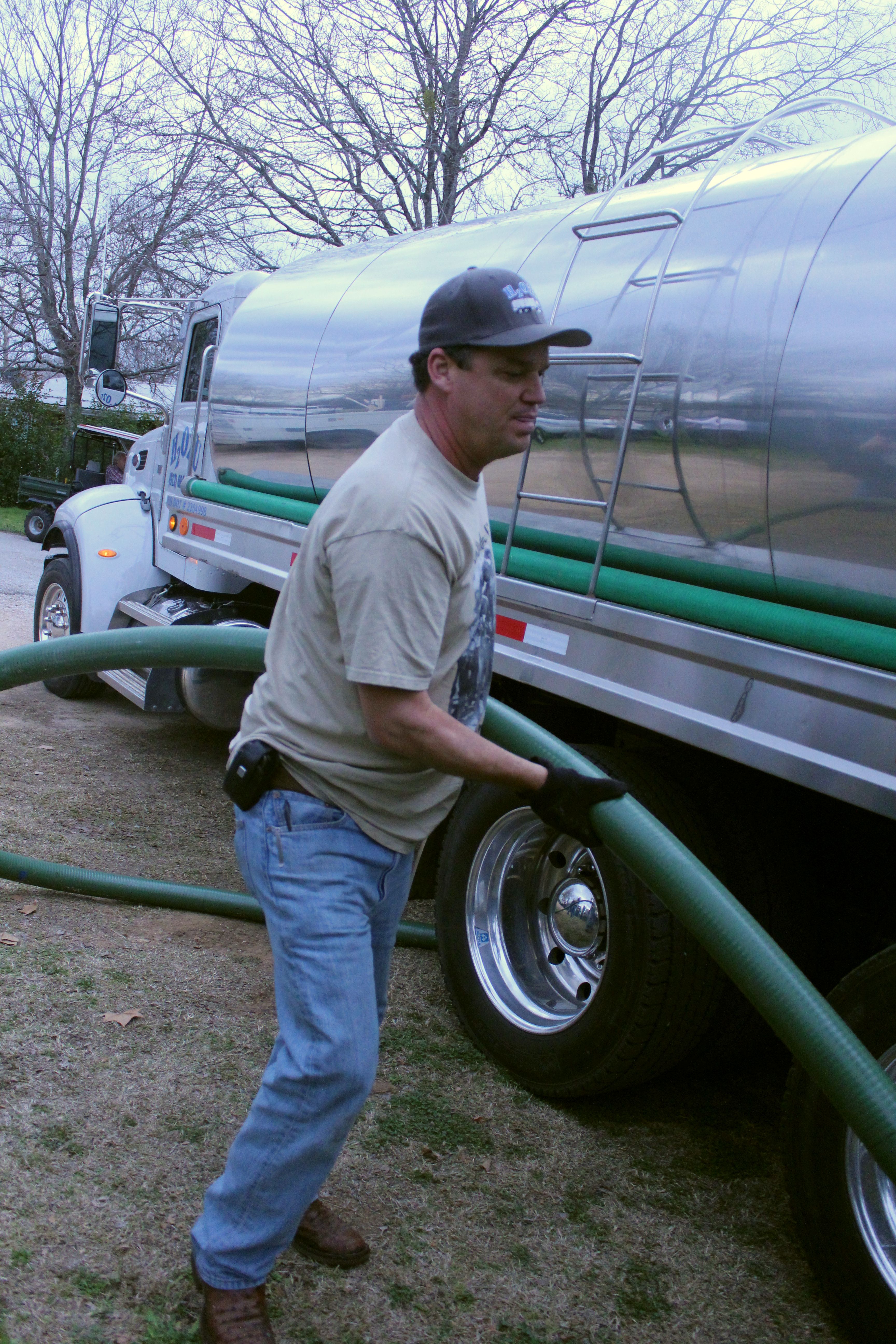
A contractor trucks in water to a storage tank in Spicewood Beach, Monday, January 30.
Another milestone in the ongoing drought was reached yesterday when Spicewood Beach, a small community of about 1,100 people outside of Austin, ran out of water. As trucks began rolling in to replenish the town’s water tank, questions inevitably arose. It’s still not clear how things ended up here (the agency that owns the system blames the drought; locals say the wells running dry is due to mismanagement), and it’s unknown how long it will take for a real solution to be found.
For answers on some of those questions we turned to Barney Austin, Director of Surface Water Resources Division at Intera, a water resources and environmental consulting firm out of Austin. He typically consults for water systems on how to best avoid situations like the one Spicewood Beach currently finds itself in.
He spoke recently with Andy Uhler of KUT News, who has been co-reporting on Spicewood Beach with StateImpact Texas.
Q: Who’s going to pay for the trucking in of water?
A: You know, I really don’t know. Someone’s going to have to pay for it, clearly. And someone is going to have to pay for the development of new water management strategies. Ultimately, the rate-payer will have to lift that burden.
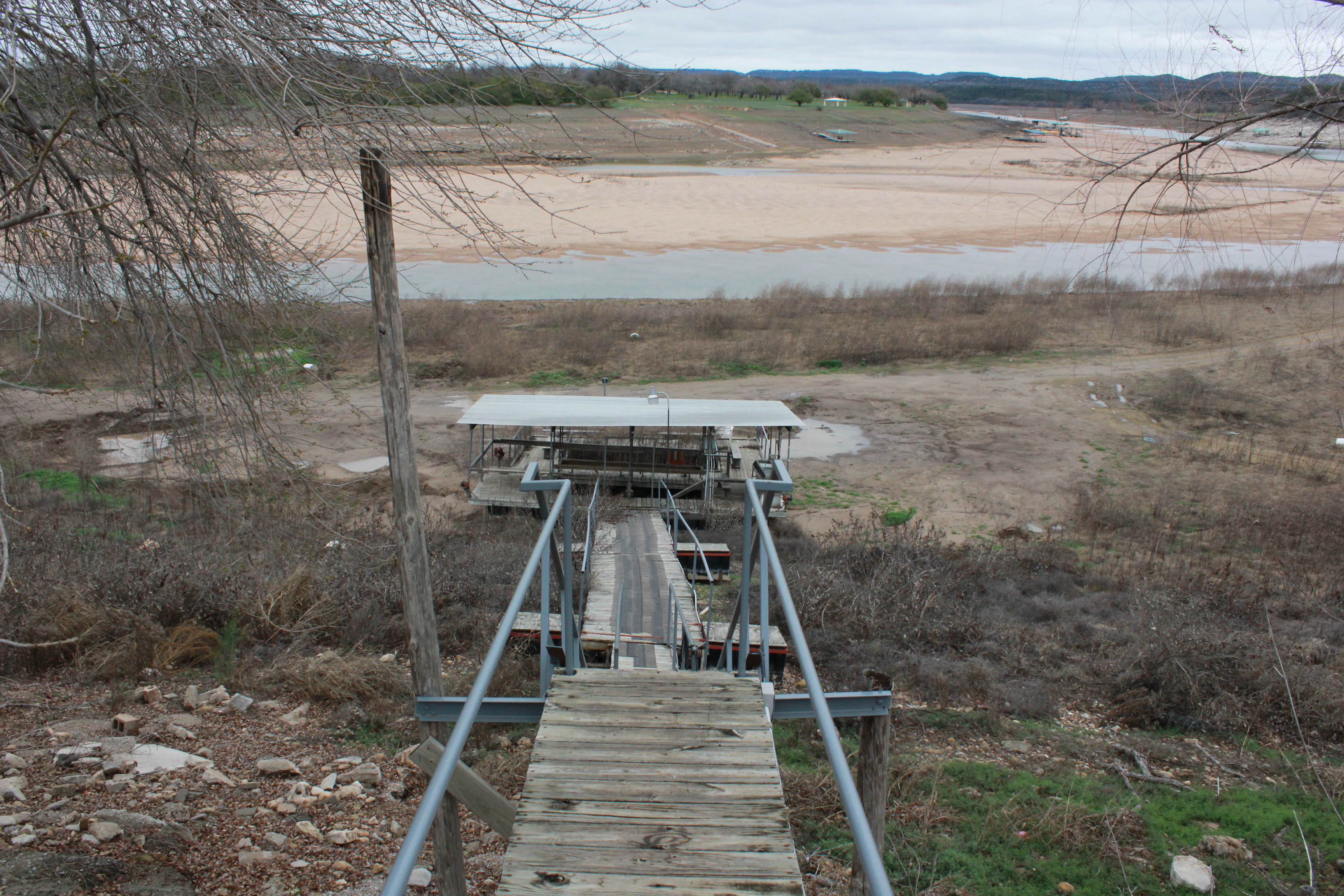
A beached boat dock on upper Lake Travis near Spicewood Beach sits dozens of feet from the water's edge.
Andy Uhler of KUT News contributed reporting to this article.
The community of Spicewood Beach isn’t the kind of place that goes looking for attention. There’s no “World’s Largest Pecan,” no grand entrance, no annual heritage festival. It’s just a place where people of modest means choose to settle in for retirement. But now it’s making headlines for a lamentable first: Spicewood Beach is the first Texas town to run dry during the current drought.
The problem is simple: there’s no more water. The wells serving the community of some 1,100 people have reached a level where they’re not reliable. So late Monday afternoon, a tanker truck pulled up to a water storage tank in Spicewood Beach and started pumping out 4,000 gallons of water that came from a fire hydrant some ten miles away.
The truck belongs to a water delivery service called H202U that the Lower Colorado River Authority (LCRA) has contracted for the time being. It is the first of many, as some three to four trucks are expected to pump out water for the town each day, which sits about 40 miles northwest of Austin.
Locals watched from their golf carts across the street as half a dozen cameras recorded the first opening of the first valve of the first tank. It was the opposite of a ribbon-cutting, more an official shrugging of the shoulders. “Just get water! Just get water!” resident Connie Heller exclaimed before the pumping began. “We don’t care where. Just. Get. Water.” Continue Reading →
After almost losing the entire season to drought, gulf oysters are back on the menu in Texas.
Texas Gulf oysters are back on the menu. In what could be the latest start ever for Texas oyster season, the bays of San Antonio and Espiritu Santu opened on midnight Thursday to oyster harvesting. Carol Huntsberger, who owns Quality Seafood Market in Central Austin with her husband, says the oysters should start showing up in markets within a week or two.
“Typically the oyster season opens in September,” says Huntsberger. “In the last couple years, due to the drought and red tide, you know, it was pushed back. Last year I think it didn’t open until November. So this is the latest I’ve ever seen it open.”
“It appears that, as of the end of last week, the Red Tide in Galveston Bay has officially dissipated, BUT this DOES NOT mean that waters are open, yet. Continue Reading →
A beached boat dock on upper Lake Travis near Spicewood Beach sits dozens of feet from the water's edge.
A Texas town came within days of running out of water, a mysterious accident at a coal power plant fell under investigation, and an oil boom in South Texas has locals grinning (when they’re not getting whiplash from potholes). In case you missed it, here’s our top five new stories from the last week:
What Happened at the Sandy Creek Power Plant? An accident at the plant means one thing for its operators, who might prefer that the information stays secret. But what does it mean for the state of Texas?
How Fracking is Changing the Face of South Texas: Drilling is creating a gusher of jobs in South Texas, but trucks are ripping up roads and large amounts of water are being used. A look at the ups and downs of the fracking boom.
Electric Deregulation Turns Ten in Texas: Anniversaries are horrible things to forget, so here’s one that you might have let slip by: This month marks ten years of deregulation in the Texas electricity market. But it hasn’t all been smooth sailing for rate payers since then.
How do you come back from a drought like this, especially one that’s still not over? While rains have eased conditions in parts of the state, there is still a very long way to go before we can say we’ve fully recovered from the worst single-year drought in Texas history.
Doris Steubing ranches cattle in Maxwell, Texas, about 30 miles south of Austin. Freelance videographer Jeff Heimsath visited her recently to see how the drought has affected her and other ranchers in the state. You can watch his video above, part of StateImpact Texas partner KUT’s “First Person” series.
Photo courtesy of Pearsall Volunteer Fire Department
An explosion and fire rocked an oil fracking site in South Texas last week. Three were injured.
What happened last week at a disposal well outside of Pearsall, Texas? An explosion rocked the site early Thursday evening – about 50 miles southwest of San Antonio in the Eagle Ford Shale – blowing the lid off a storage tank and injuring three. A fire burned for over an hour as the all-volunteer Pearsall Fire Department (and three other nearby departments) battled the flames with twelve trucks and 33 firefighters.
The explosion likely started when workers there were welding near storage tanks, a decision that has many in the industry scratching their heads. The accident is now under federal investigation.
But there’s still much we don’t know.
Who Owns the Well?
First, we don’t know who owns the disposal well, which is used for taking wastewater from fracking and drilling and injecting it deep underground. That water contains highly flammable oil and natural gas.
While the well is operated by a company called High Roller Wells (which doesn’t appear to have a website), it’s unclear who actually owns it. When asked, the Railroad Commission would only say that it does not “have information on investors or owners of oil and gas facilities.”
A call to the only available number online for High Roller Wells leads to the office of Terry Bailey, listed as a manager of the company. A woman who answered the phone at his office declined to answer any questions about the company or the accident. She directed all inquiries to the Occupational Safety and Health Administration (OSHA), then abruptly hung up. Continue Reading →
About StateImpact
StateImpact seeks to inform and engage local communities with broadcast and online news focused on how state government decisions affect your lives. Learn More »