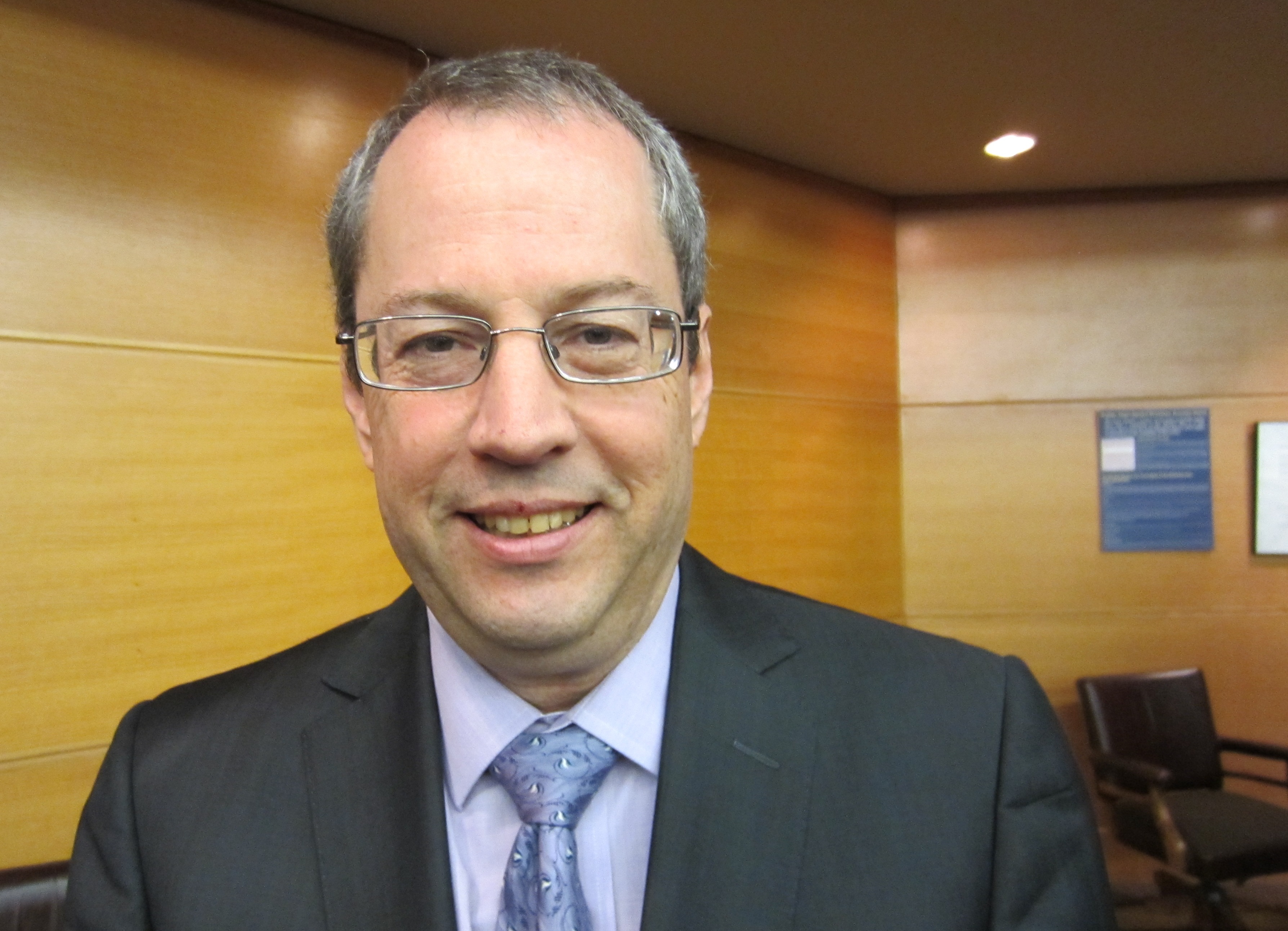
Mose Buchele is the Austin-based broadcast reporter for StateImpact. He has been on staff at KUT 90.5 in Austin since 2009, covering local and state issues. Mose has also worked as a blogger on politics and an education reporter at his hometown paper in Western Massachusetts. He holds masters degrees in Latin American Studies and Journalism from UT Austin.
But at the end of the year, a scientist in Austin has brought a little sun into the forecast. Meet Xiaoyang Zhu, a chemistry professor at the University of Texas, and director of the Energy Frontier Research Center.
For the last few years Zhu and his team have been working on a way to dramatically increase the amount of energy harvested from Solar technology. Now, they think they’ve done it. Continue Reading →
J.D. Hancock via Flickr http://www.flickr.com/photos/jdhancock/
Jump into your time machine and take a trip to post-drought Texas.
Years from now, when Texans talk about 2011 they’ll probably remember one thing above everything else: the weather.
The drought , the extreme heat and the fires that came with it have made this an historic year for Texas. And it will leave a mark that will be felt long after the drought is over.
How will it be felt? Let’s take a hypothetical ride to the grocery store. Continue Reading →
UT Professor Tad Patzek has co-written a new book on the BP Deepwater Horizon oil spill.
Courtroom wrangling continues over who is legally culpable for the Deepwater Horizon disaster, but history is already making its own judgments. In the new book “Drilling Down, the Gulf Oil Debacle and Our Energy Dilemma,” co-written by Dr. Tad Patzek, the disaster is examined through the lens of a culture that seeks out oil from ever more remote locations. Patzek is Chair of the University of Texas at Austin’s department of Petroleum and Geosystems engineering.
He recently spoke with StateImpact Texas’s Mose Buchele about his book and the deepwater horizon oil spill. Continue Reading →
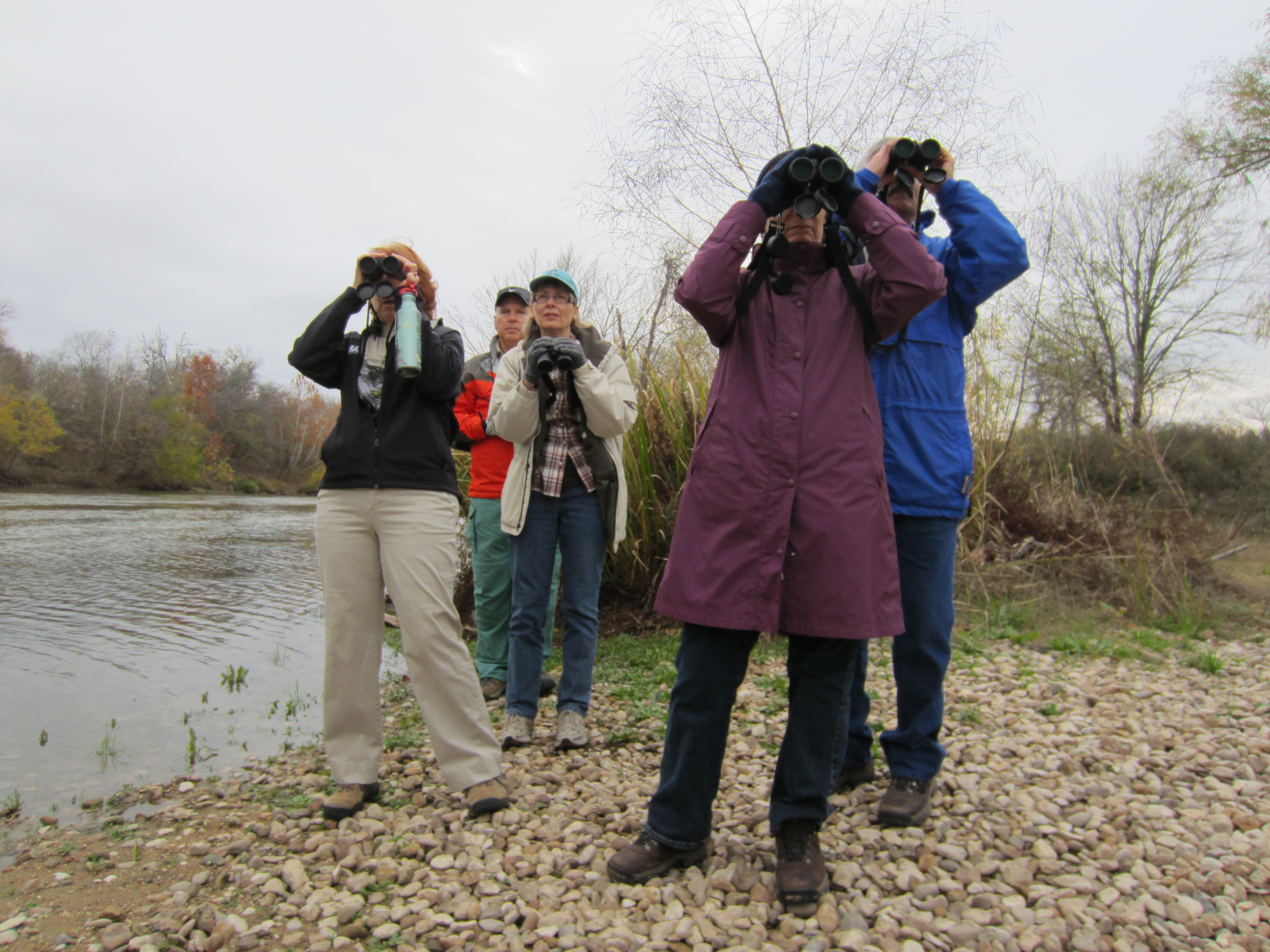
Birdwatchers at a recent trip at the Hyatt Lost Pines Resort.
Tens of thousands of birdwatchers across the country are participating in the Audubon Society’s annual Christmas Bird Count this month. But in Central Texas, the tradition has a special importance. During a year of exceptional drought, heat and wildfires, conservationists across Texas are paying close attention to the welfare of local bird populations.
This is the 112th year of the count, which helps Audubon and other groups to do a wildlife census of birds. Houston birdwatcher Michael Jewell didn’t know what to expect from the outing this year. When he drove to Austin last weekend to do the count, it was his first opportunity to see the devastation wrought by the Bastrop wildfires. “Although the fire to us may be big, maybe from a birds-eye-view, maybe it’s not as large as we think it is,” he said.
A draft report from the Environmental Protection Agency sent shockwaves through the industry this week. The report showed that the technique of oil and gas drilling called hydraulic fracturing lead to water contamination in Pavillion, Wyoming.
Railroad Comissioner David J. Porter believes the report is flawed, but says more research should be done.
The EPA continues to research the impacts of fracking. But this study came at the request of residents of Pavillion, Wyoming. They asked the agency to investigate drinking water they suspected was tainted from nearby wells. It took three years, but this month, the EPA announced it had found chemicals associated with Hydraulic fracturing in the water.
The news comes at a time of growing acrimony between Texas’ overwhelmingly Republican state government and the Obama administration’s Environmental Protection Agency. So it came as little surprise when the results came under fire from some state policymakers.
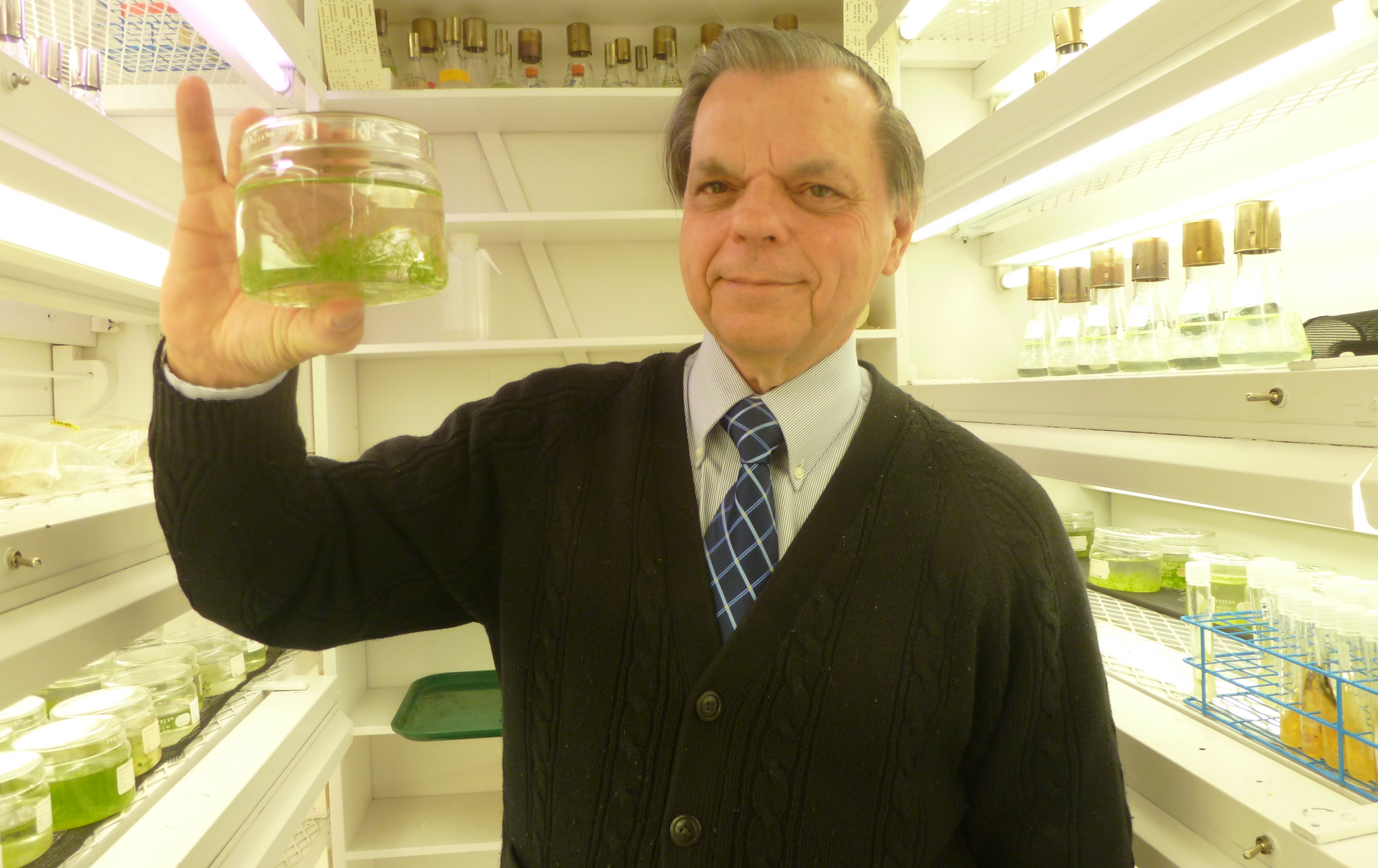
Dr. Jerry Brand direct UT’s Algae Culture Center. Photo by Mose Buchele
The Biology Building at the University of Texas at Austin houses one of the University’s most exceptional collections. Not books or art or dinosaurs. This is the Algae Culture Collection.
Think of it as a living library. Shelves line the walls stacked with beakers, each a different shade of green. The hallways are lined with green jars, each of them containing a different strain of algae, around 3,000 in all. Continue Reading →
The Electric Reliability Council of Texas, which oversees much of the state’s power, released projections this week for grid reliability over the coming years. ERCOT says rolling blackouts like the ones we had last winter remain a possibility. The report includes a list of energy projects that it expected to be online by now but are still on hold, adding to the state’s power crunch.
A coal plant that was supposed to come online east of Waco will not be generating power, according to the council. An accident at the Sandy Creek coal plant during a commissioning test has caused damage to equipment that will keep the plant offline until the spring of 2013, says ERCOT CEO Trip Doggett. “We just learned of that in the past few weeks,” he says, “that was a significant surprise.” What exactly happened at the plant? “I don’t have intimate details there,” Doggett says, noting that they had been told about it during the past few weeks. Continue Reading →
A few years ago, when US natural gas production was kicking into high gear, gas promoters like T. Boone Pickens sold it as something close to a panacea. It was a plentiful source of energy that could create jobs at home. It could wean the US off of foreign oil. Perhaps most importantly, it was a “bridge fuel” — it could serve as a cleaner source of electricity while America’s renewable energy industry came into its own.
It’s hard to conceive just how fast the industry has grown since then. In 2010, the US surpassed Russia as the world leader in gas production on the strength of domestic shale reserves. Estimates show production more than doubling by 2020 to over 40 billion cubic feet of gas produced per day. This success can be viewed as a vindication of early gas investors. But abundant and cheap natural gas has also brought its own set of challenges.
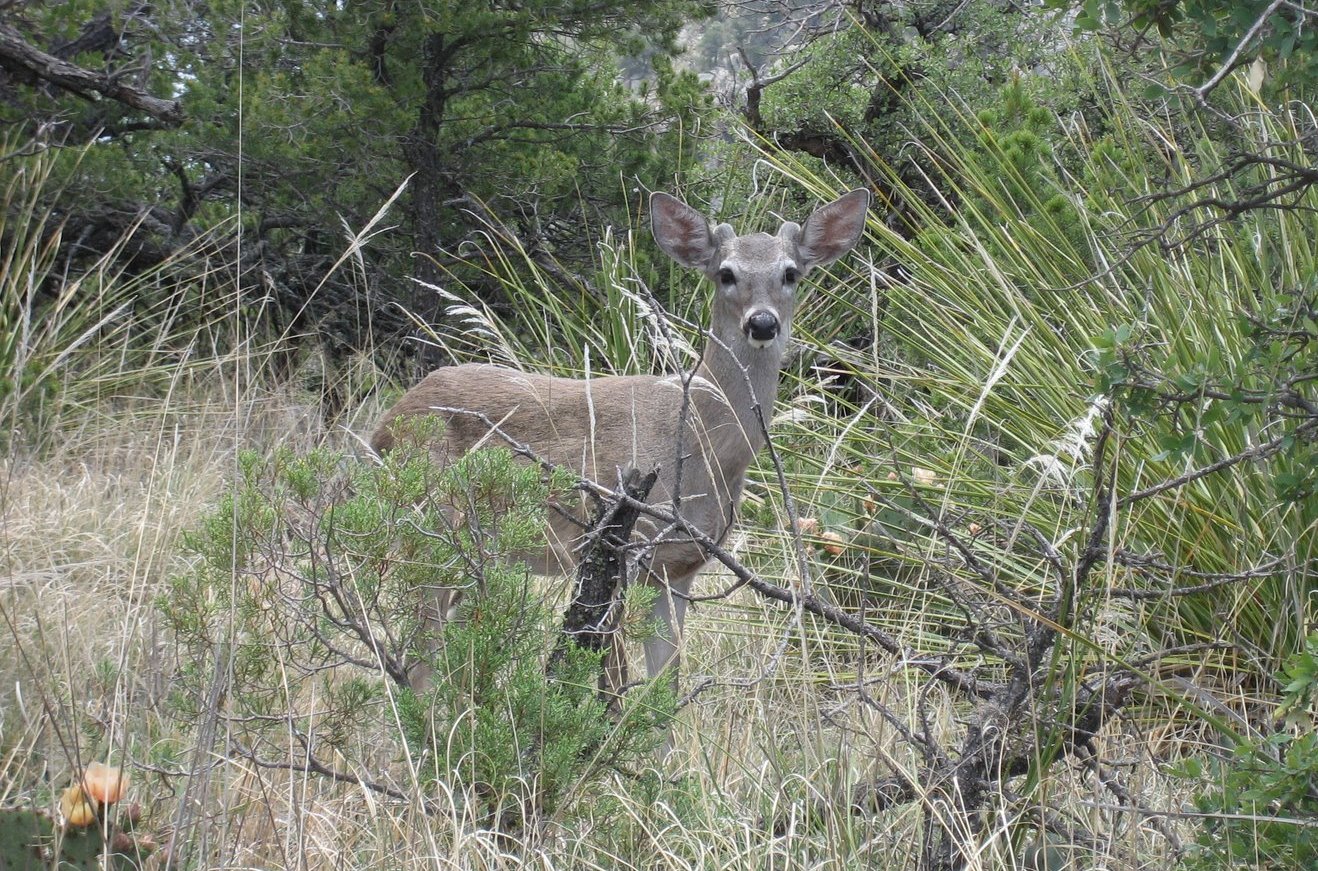
The worst single-year drought in Texas history has left deer undernourished and, in some cases, dying in greater numbers than before. Many of the deer hunters are bringing home are skinnier than normal and the population of fawns surviving through the summer took a nosedive in many parts of the state.
Mose Buchele / StateImpact Texas
This deer may be hungier than usual in the drought.
At McBrides Gun’s in Austin, Thomas Hunt is looking for the perfect rifle to take his son Mathew out hunting. The appropriately-named Hunt has already bagged two deer this year. He says the impact of the drought was noticeable right away.
“The same deer that we saw last year has had bigger horns last year than they had this year,” he said. “I’ve had one that was a very large — probably 14 point — that was a 10 point this year. So we’ve seen that much reduction in the horn size.”
Allen Cain, deer program leader with the Texas Parks and Wildlife Department, said the legacy of the drought could be with us for years. Continue Reading →
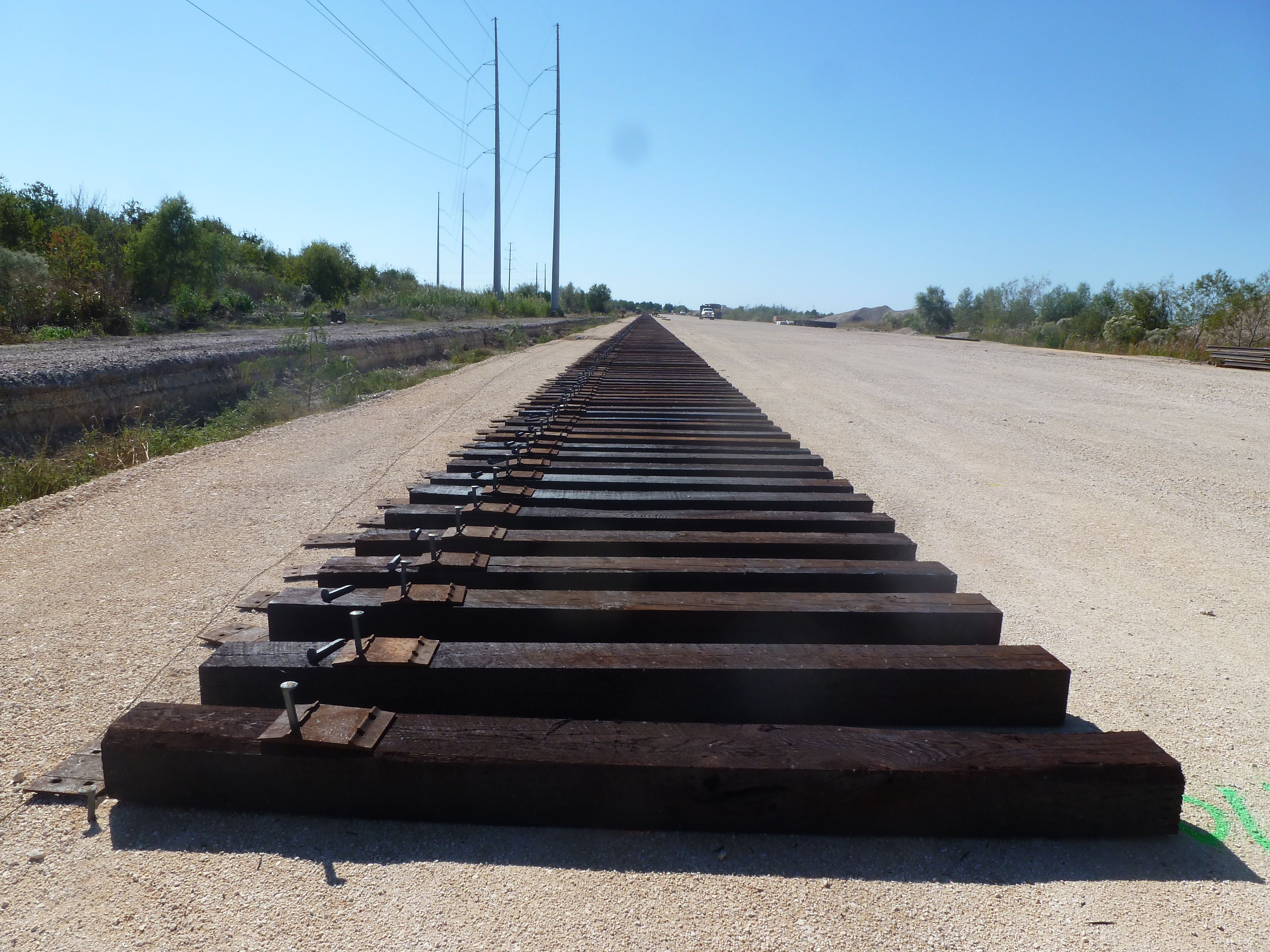
Rail is being laid to bring oil in an out of the planned GT Omni Port in Port Arthur, Texas.
After the White House’s announcement that it would delay a decision on the construction of the Keystone XL pipeline from Alberta, Canada to Texas, the airwaves filled with competing voices.
Actor Robert Redford lauded President Obama. Alberta Premier Alison Redford toured Washington D.C. expressing confidence in the project, and the group that’s building the pipeline announced plans to find an alternate route through Nebraska.
But on the Gulf Coast of Texas, there was a sound that may be even louder than the media din: the sound of a pile driving hammer, slamming 85 foot concrete pilings into the earth. Continue Reading →
About StateImpact
StateImpact seeks to inform and engage local communities with broadcast and online news focused on how state government decisions affect your lives. Learn More »