Mose Buchele is the Austin-based broadcast reporter for StateImpact. He has been on staff at KUT 90.5 in Austin since 2009, covering local and state issues. Mose has also worked as a blogger on politics and an education reporter at his hometown paper in Western Massachusetts. He holds masters degrees in Latin American Studies and Journalism from UT Austin.
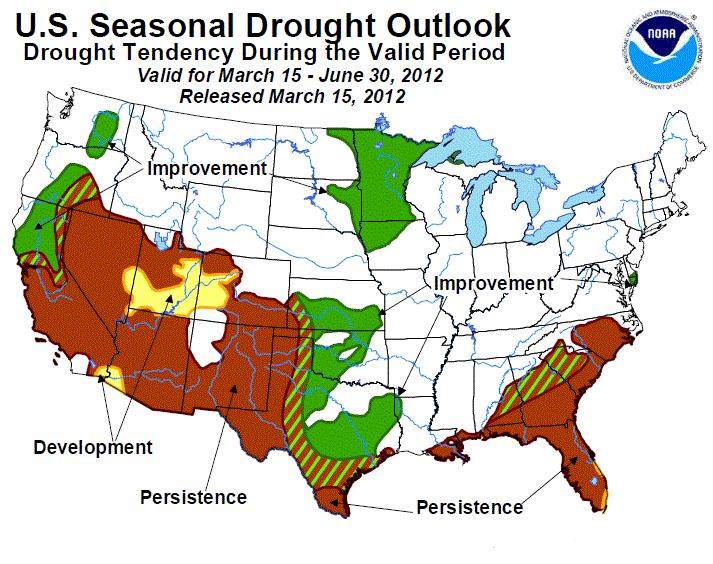
Photo courtesy of the National Weather Service. This photo has been edited to only depict the continental U.S.
Seasonal drought forcast from the national weatehr service.
Today the National Weather Service offered a glimmer of hope to Texans bracing for another hot and dry summer.
In its three month seasonal drought outlook the service has moved much of Central Texas out of the area where the service is predicting “persistent drought.”
Instead that portion of Texas is now bathed in glorious green on the service’s map, indicating that the region may actually see drought improvement.
“I’ve never seen this on the maps in a long time,” said LCRA meteorologist Bob Rose.
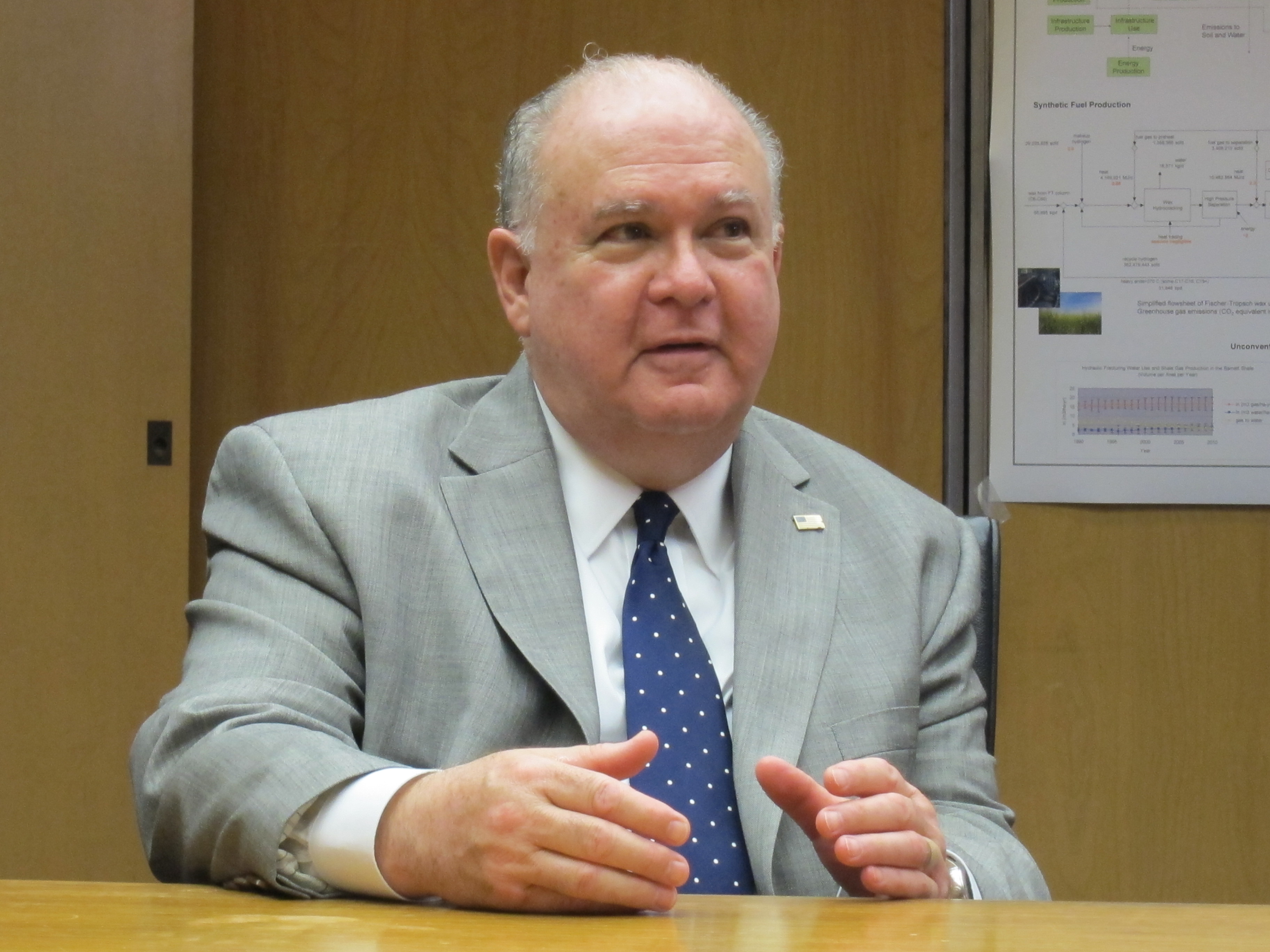
Arthur Berman is the head of Labryth Consulting, a Geological consulting firm.
People see a lot of different things when they look at the American natural gas industry. Some see potential environmental dangers. Others see it as a bridge to renewable energy. President Obama envisions more than 600 thousand new jobs from it. But when Arthur Berman looks at the natural gas industry, he sees an iceberg on the open sea.
“We gotta turn to miss that iceburg, but we sure better start turning ten or 15 miles away from it or else we’re gonna hit it,” Berman, a geologist who consults for energy companies, told StateImpact Texas.
So it’s no surprise that lately Berman’s developed a reputation as the “Debbie Downer” of the natural gas industry. For one thing, he doesn’t think the U.S. has as much of it as has been estimated (up to a hundred years). Berman estimates that reserves could only meet demand for the next 23 years.
For another, he believes that all the cheerleading for gas has left U.S. financial markets in danger. Here’s how: the rush to extract has brought down natural gas prices. That’s meant less profit for drillers and gas companies. But some of those companies continue to drill. Berman says you’ve got to leave the shale fields of South Texas, and pay a visit to Wall Street to figure it out.
Under Secretary of the Army, Dr. Joseph W. Westphal, toured UT Austin last week.
If you happened to see an entourage of uniformed military personnel touring the University of Texas at Austin earlier this month, it might have been a visit by Dr. Joseph Westphal, the Under Secretary of the U.S. Army.
Westphal was on campus touring research facilities and talking about military-academic research partnerships. With President Obama recently touting the Department of Defense’s progress in “clean energy” in his State of the Union address, it seemed like a good time to ask the Under Secretary some questions about what the Army’s doing when it comes to renewable research.
StateImpact Texas’ Mose Buchele got the chance to speak with him after the tour.
StateImpact Texas: What role do you think the Army could play in research into renewable energy?
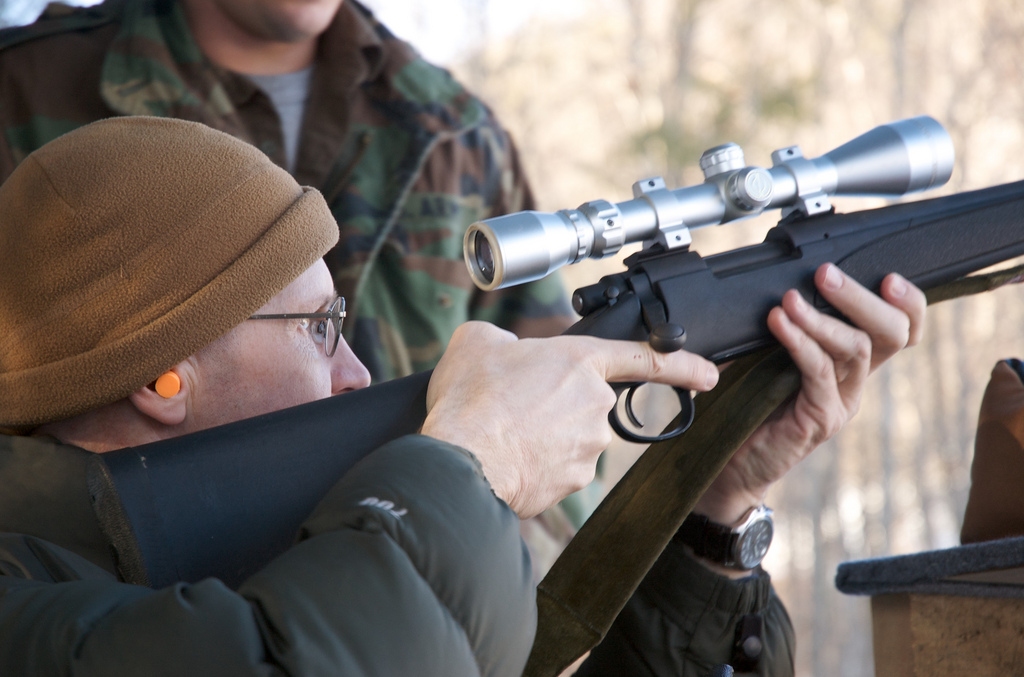
Photo Courtesy of boboroshi via flickr creative commons. www.flickr.com/photos/boboroshi/4379040397/
Silencers make hunting easier on the ears, but some control control groups worry about safety.
StateImpact Texas intern Dave Barer contributed research and reporting to this article.
UPDATE: On March 30, the Texas Parks and Wildlife Department approved the use of silencers while hunting in Texas. Read about the new rule here.
Without making much noise, a new proposal is headed to the Texas Parks and Wildlife Commission. If it passes, hunters in the state will be able to use a silencer when hunting deer, birds, and even alligators.
The Parks and Wildlife Department says the rule change is primarily about protecting hunters’ hearing and maintaining the tranquility of the outdoors.
“Some neighbors don’t want to hear gunshots, and they’re less likely to hear or be disturbed by gunshots through a firearm with a suppressor or silencer attached,” Scott Vaca, TPWD Assistant Chief of Wildlife Enforcement, told StateImpact Texas.
Just how quiet is a firearm with a silencer or suppressor attached? Well, if you don’t happen to have the equipment at home, you can watch this video to hear the difference a silencer can make. Continue Reading →
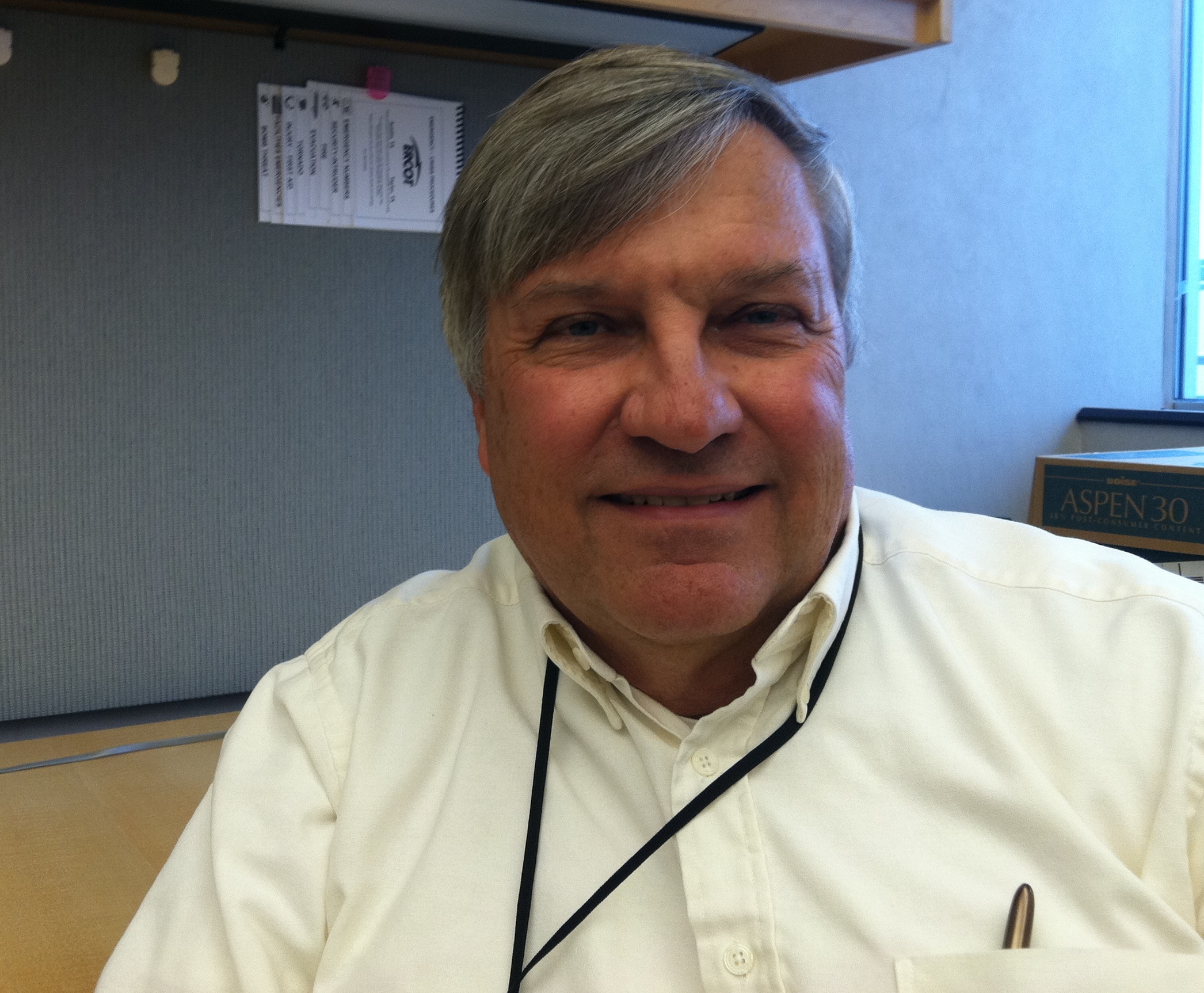
Kent Saathoff works on grid planning and operations for the Electric Reliability Council of Texas.
Remember last year’s threats of rolling blackouts? This year might not be any better.
In a new report the Electric Reliability Council of Texas, or ERCOT, predicts another summer of above-average heat. That will put strain on an electrical grid that hasn’t added much more power generation. And that means Texans can expect another summer of close calls.
Kent Saathoff’s manages the grid for ERCOT. He says Texas could squeak by without blackouts if conservation efforts are effective. But the state should expect energy emergency declarations in order to spur conservation, and that might be a best case scenario.
“If we have another summer like last summer, which was an all-time hottest summer we had, or if we have a significant number of generator outages, which are higher than normal, then we could be into a situation of rolling outages,” Saathoff said in a telephone press conference today.
After two years of nail-biting and speculation by land owners, conservationists, policy experts and a small army of lawyers, the ruling came down Friday afternoon. Andrew Sansom, director of the River Systems Institute, was attending a water law conference in San Antonio at the time. “It was like a bomb went off in the middle of the conference,” he says. All those carefully-prepared presentations suddenly seemed pretty out-of-date.
Exactly how it will change the game is what everyone is trying to figure out. The case clearly established two things. First, that landowners legally own the groundwater underneath their land, and second, that landowners may be owed compensation if state or local regulations go too far in limiting the amount of groundwater landowners can pull.
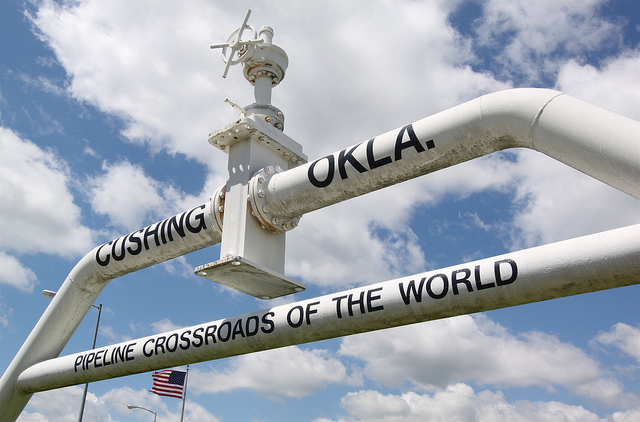
The company behind the Keystone XL pipeline says they will go ahead and build the portion from Cushing, Oklahoma to refineries in Texas.
David Barer of StateImpact Texas contributed reporting and research for this article.
Today’s announcement that Canadian pipeline company TransCanada would start construction on a section of its Keystone XL pipeline from Cushing, Oklahoma to Texas didn’t come as a great surprise to those who have been watching the pipeline.
Ever since the Obama administration rejected TransCanada’s original request for a presidential permit to pipe tar sands crude from Alberta, Canada to the Gulf Coast of Texas, TransCanada officials have been talking about building out the project incrementally.
“Quite frankly we need a presidential permit for about 50 feet of pipe. If we weren’t crossing that border than we wouldn’t be having this conversation,” TransCanada Public Relations representative Jim Prescott told StateImpact Texas earlier this year. “We’re ready to start putting pipe in the ground.”
The company says completing this part of the pipeline will help it move a bottleneck of crude oil from Oklahoma to refineries on the Gulf Coast. The full pipeline project – which would move crude from Alberta, Canada to Texas – is being re-submitted for approval at the federal level.
Opponents of the pipeline greeted today’s news with weary resignation. Continue Reading →
Photo courtesy hsld at http://www.flickr.com/photos/26555823@N08/
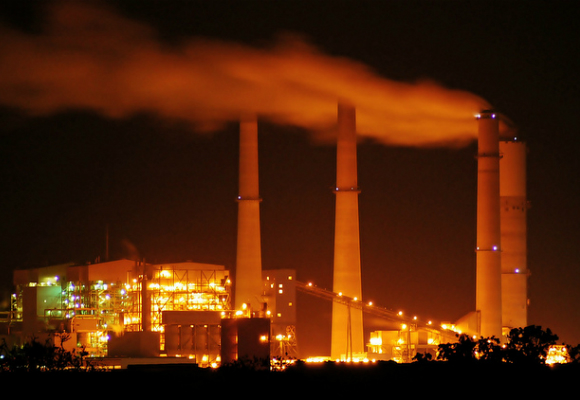
Texas power generation struggles to keep up with growing demand.
As Texans start packing away their winter clothes and looking ahead to months of heat, here are a couple of sobering facts: Texas has a booming population, and a strained electrical grid.
After last summer’s record breaking heat, the threat of rolling blackouts has become almost commonplace in the minds of many. The easy solution is building more power plants, but that’s not happening.
People point to all sorts of reasons for the dearth of new electrical projects coming online. Some blame EPA regulations; others say advances in renewable energy are coming too quickly to justify the investment. But the main cause is the low cost of natural gas. The same thing that’s driving down electric bills appears to be driving away investment in power plants.
“It affects the incentive to build new generation,” Kent Saathoff, Vice President of system operations with the Electric Reliability Council of Texas [ERCOT], told StateImpact Texas. Continue Reading →
Reaction came fast and furious to Friday’s announcement that the Texas Supreme Court had reached a decision in The Edwards Aquifer Authority V. Burrell Day and Joel McDaniel. The case has far-reaching implications for how local water authorities can regulate the amount of groundwater a private property owner pulls from their land. It’s a decision made all the more important by the fact that much of Texas is still suffering the effects of an historic drought.
Photo Courtesy of the Lower Colorado River Authority
Tom Mason, former head of the LCRA, currently works as an attorney with Graves Dougherty Hearon and Moody.
The ruling found that the Edwards Aquifer Authority could compensate Ranchers Burrell Day and Joel McDaniel for groundwater regulations that limited the amount of groundwater the two landowners pulled from their land. The Authority had argued that allowing compensation could open the floodgates to a wave of litigation from other landowners in similar cases. After Friday’s decision that assessment may bear out, said former LCRA director Tom Mason. Continue Reading →
The new ruling favors landowners over water authorities.
The Texas Supreme Court has reached a ruling in a case that will have widesweeping implications for the way groundwater is regulated across the state. The Edwards Aquifer Authority and the State of Texas, V Burrell Day and Joel McDaniel, centered on whether property owners could be compensated if a water authority limited the amount of groundwater they could pull from their land.
The decision found that Ranchers Burrell Day and Joel McDaniel could be compensated by groundwater regulations from the Edwards Aquifer Authority. This means that other landowners in Texas could seek compensation in similar cases. Under Texas law, groundwater has traditionally been considered the property of the owner of the land it sits on top of.
StateImpact seeks to inform and engage local communities with broadcast and online news focused on how state government decisions affect your lives. Learn More »