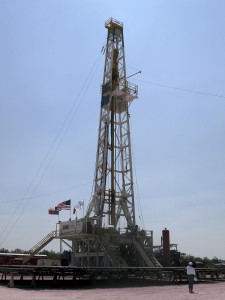
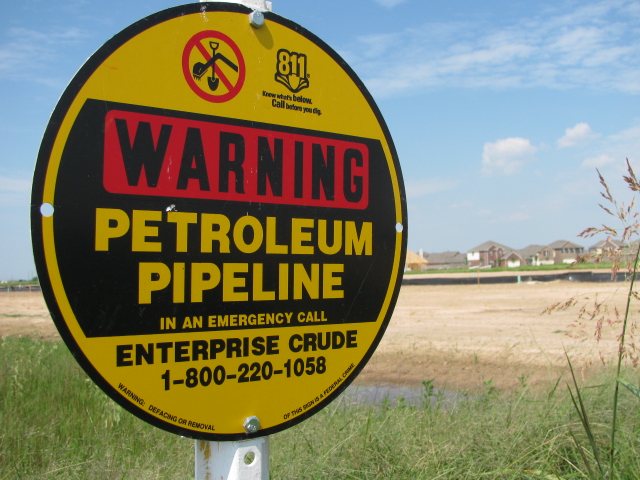
While it's called the Railroad Commission of Texas, it actually deals with regulating oil and gas in the state. And a name change isn't likely to happen this session.
A name change and several ethics reforms on the table this legislative session for the Railroad Commission of Texas, which oversees oil and gas drilling in the state, have died.
The Texas Energy Report was the first with the news, tweeting this afternoon: “RAILROAD COMMISSION SUNSET DEAD FOR THIS SESSION.”
After a lengthy review of the agency, required by state law under the Sunset review process, the Railroad Commission will continue instead with the same name and without any reforms. So what happened?
For one, there were conflicting ideas on how to reform the commission. A more industry-friendly plan in the House, HB 2166 by state Rep. Dennis Bonnen, R-Angleton, which ended up being stripped of many of its reforms (and ultimately a name change) didn’t ever make it out of the House.
A plan from the Texas Senate would take big decisions about funding for water and roads and put them in the hands of voters.
There’s a new push at the State Capital to pull $2 Billion dollars from Texas’ Rainy Day Fund and put it towards water projects. After a recent move in the House died on the floor in dramatic fashion two weeks ago, there were real questions on whether the water plan would get funded this legislative session. Today, backers of that plan got a glimmer of hope, while opponents are concerned the state could end up spending more than it should.
The new idea is to use a resolution already passed in the state Senate, SJR 1, where lawmakers would vote to set aside two billion dollars from the rainy day fund for water. But it would put the decision to create a dedicated account for water projects to voters statewide.
“The $2 billion dollars doesn’t go into the fund unless the fund is created by the voters,” says House Appropriations Chairman Jim Pitts.
Why so complicated? Doing it like this, lawmakers may see a way to fund water projects without voting to break the state-mandated spending cap. That was something many Republicans were loathe to do. Continue Reading →
It’s been a good month or two for the luxury electric car manufacturer Tesla: the company just posted its first profitable quarter; it’s stock is soaring and Consumer Reports just rated the Tesla S the best car it’s ever tested. But one item on the company’s wishlist increasingly looks like it won’t be coming true: owning and operating its own dealerships in Texas.
In Texas, as in many other states, cars can only be sold through the franchise dealership system: manufacturers are not allowed to own their own dealerships. In Texas, Tesla can’t legally have dealerships, only “stores” where you can’t take a test drive, can’t find out the price of the car, and can’t purchase a Tesla. It’s a system that’s been on the books for decades, but Tesla argued before state lawmakers this session that they’re different and should be exempted from the existing rules. Because they would only sell a small number of cars, they argued, and because they don’t have the service operations of a typical dealership (tiny motor with many fewer parts = less maintenance), Tesla argued before the state legislature that state law should be changed in their favor. (Meanwhile, North Carolina’s legislature is considering banning Tesla sales — even online — entirely.)
But that appears difficult at this point in the session. With just thirteen days to go, several deadlines have come and gone without a victory for Tesla. Continue Reading →
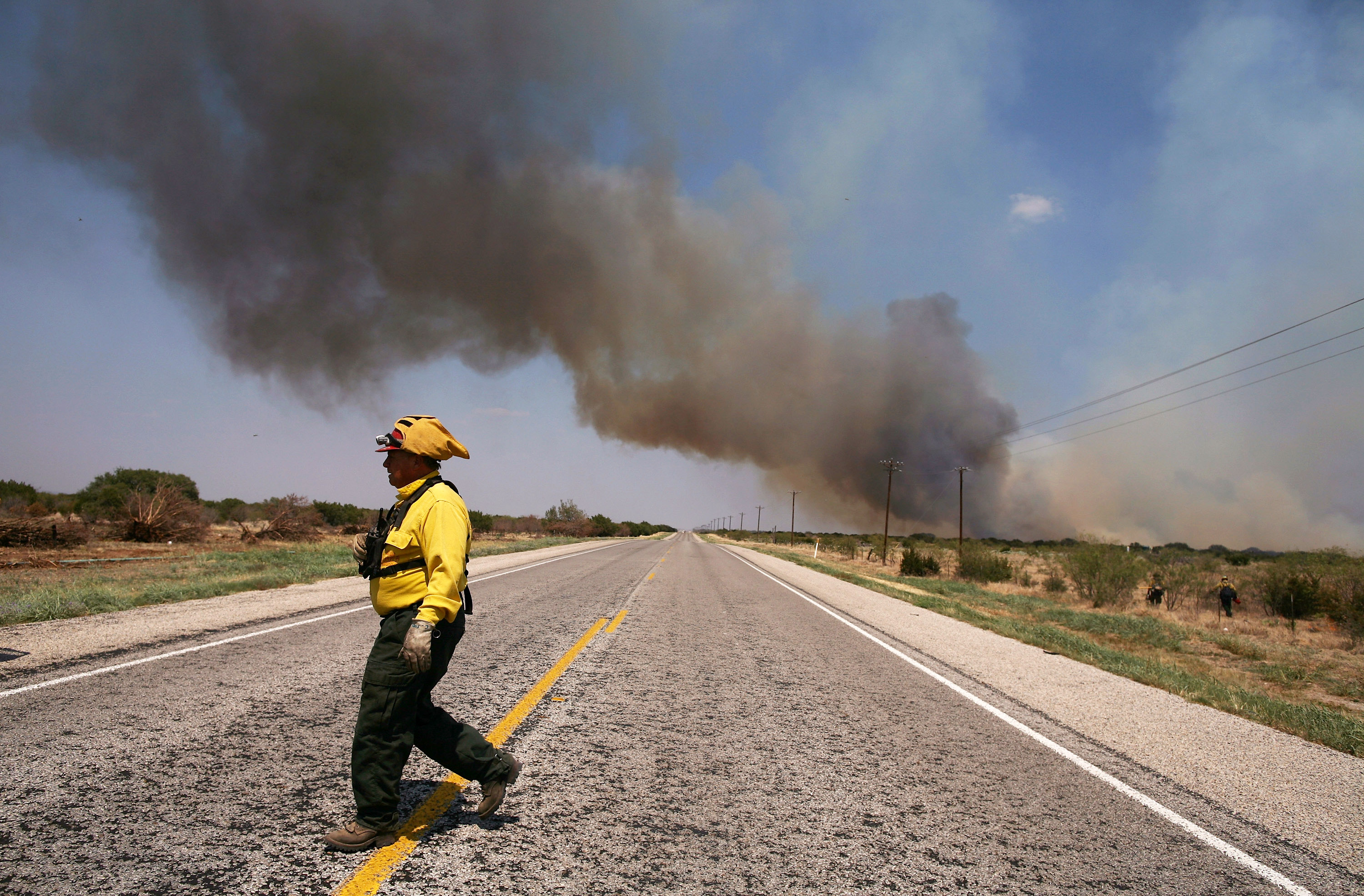
Lone Camp Volunteer Fire Department chief Charlie Sims leads his crew while fighting a wildfire on September 1, 2011 in Graford, Texas.
First, the good news for Texas.
Most of the state is not expected to be at an “above average” risk for wildfires this summer, according to the National Interagency Fire Center. The reason for that might depress you: in parts of the state with less vegetation, like West Texas, years of drought and fire mean there’s little left to burn.
“That was part of the reason why some of the fire activity this past winter spring was down from last year,” Tom Spencer head of predictive services with the Texas Forest Service, tells StateImpact Texas.
Spencer said wooded parts of the state like the Hill Country and the Piney Woods are at greater risk of fire. Continue Reading →
Matt Stamey Staff photographer, Gainesville Sun /Landov
Several bills pertaining to water, the environment and public policy will be discussed at the Texas Capitol this week.
In the gauntlet that is the Texas Legislature, the bills that have made it this far are looking at the final few obstacles in the way of becoming law.
StateImpact Texas has compiled a short list of bills pertaining to water, the environment and energy that could be heard by House and Senate this week.
HB 788 by Rep. Wayne Smith, R-Baytown, would put the job of permitting greenhouse gas emissions into the hands of the Texas Commission on Environmental Quality (TCEQ). Permitting is currently done by the Environmental Protection Agency (EPA). Proponents of the bill, namely oil and gas interests, say the TCEQ could issue permits more quickly and alleviate the bottleneck of projects. Opponents the bill, like the Sierra Club and Public Citizen, say the legislation takes out contested case hearings that allow regular citizens to voice their opposition to certain projects. The bill has already passed the House, and was placed on the Senate calendar Monday for a second reading. Continue Reading →
Plants handling dangerous chemicals work with communities through Local Emergency Planning Committees
The fertilizer explosion last month that killed 14 people — mostly firefighters — in the town of West is an example of the danger of using or storing large quantities of chemicals close to communities.
Another example came just last week when hydrogen chloride gas used for processing cottonseed leaked and caused the evacuation of residents in Lubbock.
For yet another example, you can look back 38 years to what happened in another small town in Texas.
A Cloud that Killed
In Denver City, a town of 4,500 south of Lubbock, Jack Watkins is now retired. But in 1975, he was working in the oil and gas drilling industry. He was also a volunteer firefighter.
Just before dawn on a Sunday morning in February that year, the fire department was called out to investigate reports of a gas cloud just outside town. What they found left Watkins with memories still vivid to this day. Continue Reading →
The Texas House passed several bills this week that could affect Texas' water and how it is used.
The flow of water legislation continued this week as the House passed several bills that could affect one of Texas’ dearest natural resources. Thursday was the deadline for most bills originating in the House to come to floor for a vote. (The Senate has some more time, however.)
StateImpact Texas compiled a short list of some notable water bills that were passed out of the House and now head to the Senate for consideration.
However, one bill that would have put big money towards water projects in Texas is notably absent from the list. HB 11, by state Rep. Allan Ritter, R-Nederland, a landmark piece of water legislation that would have used $2 billion from the state’s Rainy Day Fund to finance water projects across Texas, was sunk last week.
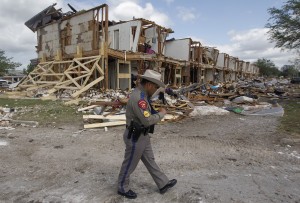
Texas Department of Public Safety Sergeant Jason Reyes walks past the site of an apartment complex destroyed by the deadly fertilizer plant explosion in West.
Update: The State Fire Marshal’s Office says that there are now two investigations, one into the origin and cause of the fire, led by their office and the Federal Bureau of Alcohol, Tobacco and Firearms (ATF); and one into any potential criminal activity, spurred by the arrest of West paramedic Bryce Reed for possession of a “destructive device” earlier this morning, which state officials say is not related to the West fertilizer plant fire and explosion.
In a statement, the Fire Marshal’s office says the following:
“Due to an unrelated investigation and the recent arrest of Bryce Reed by ATF on a charge unrelated to the West Fertilizer Plant fire and explosion, the State Fire Marshal’s Office will be partnering with the McLennan County Sheriff’s Office, Department of Public Safety (DPS), and ATF to ensure that all potential facts and leads related to the incidents in West are investigated to the fullest extent.”
Original story: While an official investigation by state and federal agencies into the cause of the April 17 fire and explosion at the West fertilizer plant in Central Texas continues, a criminal investigation was announced today by the state Department of Public Safety (DPS). The West fertilizer plant explosion and its aftermath killed 15 and has destroyed nearly 150 homes in the small community north of Waco.
DPS Director Steven McCraw announced today that his agency is directing the Texas Rangers to work with the McLennan County Sheriff to conduct a criminal investigation into the explosion. Continue Reading →
The big questions about the future of pipelines in Texas this legislative session revolve around how companies should be able to use eminent domain to build them. Those questions remain unanswered.
But while Texas lawmakers have been unable to agree on reforms to pipeline companies common carrier status, they have voted some other bills out that overhaul the regulation of pipelines in Texas. As we reported earlier, a bill that would allow fracking wastewater to be transported by pipeline was recently voted out of the State Senate.
Another Bill, SB 901, is headed to Conference Committee. That bill would update “inconsistent and outdated” parts of the Texas Natural Resources Code having to do with pipeline safety that are out of whack with federal code. Read more here.
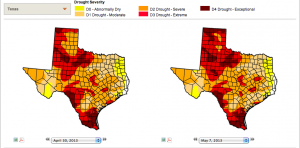
Some of the Texas panhandle drought conditions worsened in the past week, according to maps from the U.S. Drought Monitor.
More than two percent of Texas worsened to exceptional drought from last week. The U.S. Drought Monitor maps released today show more of the panhandle in the most serious drought category. Last week, just over 10 percent of the state was considered to be in exceptional drought- now it’s pushing 13 percent.
The second most severe level of drought also saw an increase in the percentage of Texas afflicted. This increase, too, was seen predominately in and around the panhandle.
And recent weather may have brought an uninvited guest: bees.
StateImpact seeks to inform and engage local communities with broadcast and online news focused on how state government decisions affect your lives. Learn More »