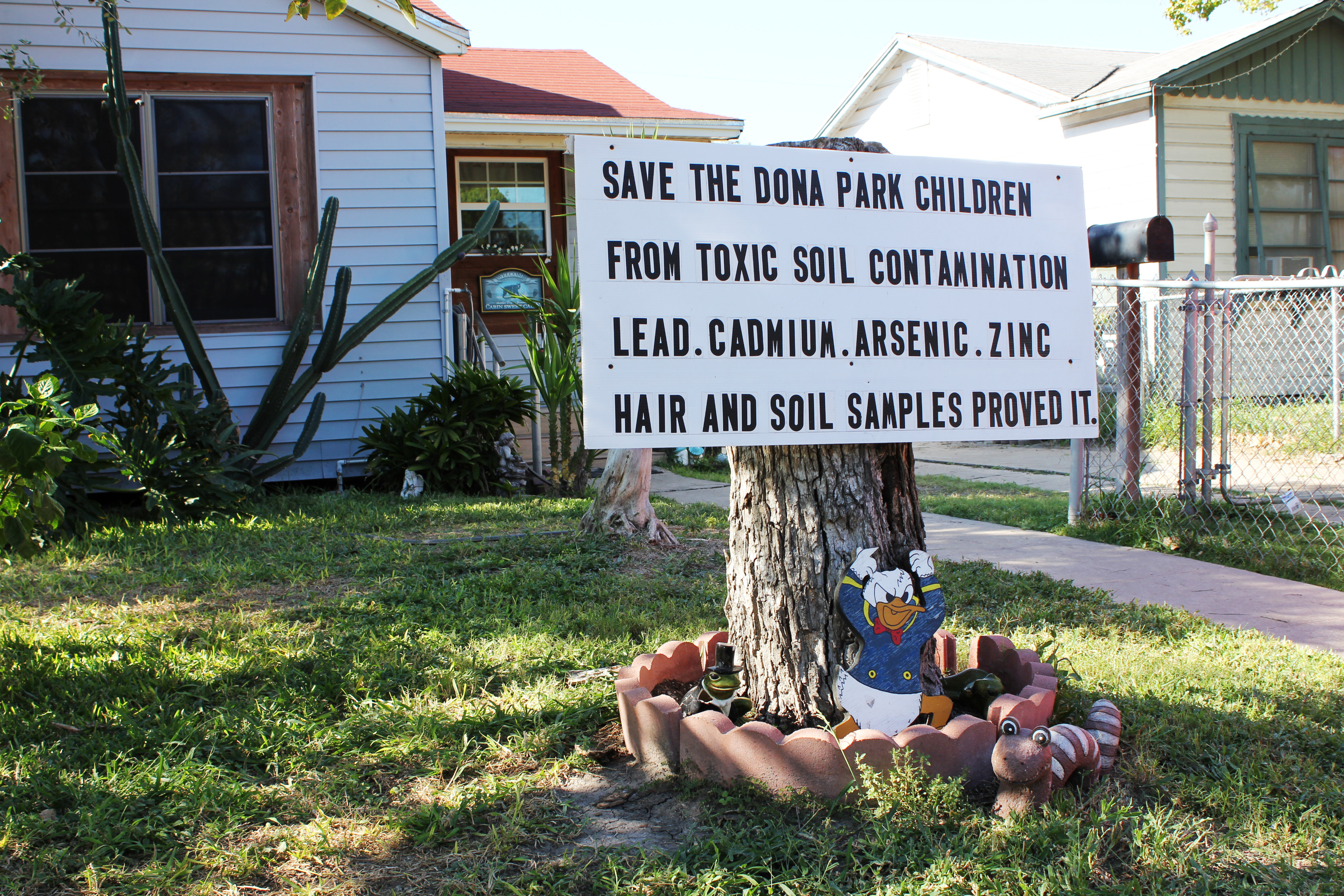
Billy Placker’s Front Yard in Refinery Row/Photo by Teresa Vieira for KUT News
What do you see when you look out your window at night? If you live in Billy Placker’s neighborhood, it could very well be a giant ball of fire.
“This is what we deal with here a while back,” the former refinery worker says. “My grandson run in the house, he said, Grandpa! Grandpa! The refinery’s fixing to blow up. We run outside, and the refinery back around the corner from us over here, both their flares were going insane.”
You might have seen a flare before, maybe while driving along the highway. It’s the fire on top of stacks at refineries. When things are going according to plan, the flame is small. But here on refinery row, a ten mile stretch of plants, refineries and homes in Corpus Christi, things don’t always go according to plan. Continue Reading →
There were two water-related amendments to the Texas Constitution up for vote yesterday. One, Proposition 2, passed and the other. Proposition 8, was voted down. So what does this mean for the future of water in drought-stricken Texas? Here are five things to know about the votes:
What is Proposition 2 exactly? It’s an amendment that will let the Texas Water Development Board issue bonds to different companies engaged in water development and infrastructure projects. The companies then pay back the bonds, with interest. It passed with 52 percent of the vote.
How much is the state issuing in bonds? The total amount of the bonds issued cannot exceed $6 billion at any given point in time. Earlier this year the Texas Water Development Board estimated that $231 billion worth of infrastructure projects would be necessary to keep water supplies at their current level into the future. This bond package should spur development. Continue Reading →
With about 2,760 employees, 16 regional offices, and an operating budget of $354 million this year, the Texas Commission on Environmental Quality is the second largest state environmental regulation agency in the U.S.
The man in charge of Compliance and Enforcement at TCEQ is Richard Hyde.
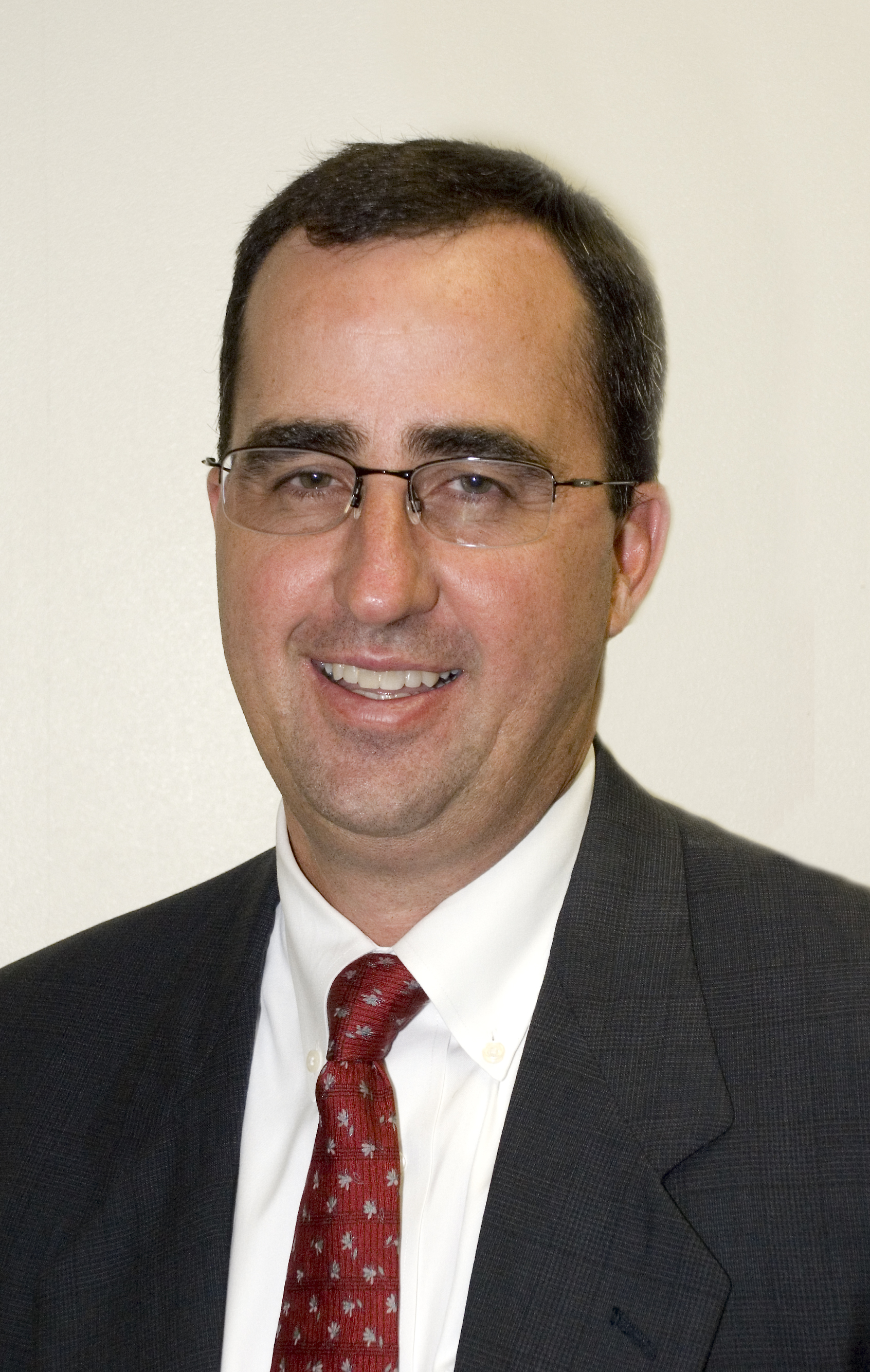
Richard Hyde is Deputy Director of TCEQ's Office of Compliance and Enforcement. Photo courtesy of TCEQ.
Hyde sat down with reporter Mose Buchele as part of StateImpact Texas’ coverage of recently released EPA watch lists of Clean Air Act violators. Those lists showed many repeat polluters are located in Texas.
While the TCEQ said it wouldn’t comment on EPA data, Hyde and spokesperson Terry Clawson did field questions about a range of other subjects. Below are some excerpts from that 20 minute interview touching on TCEQ’s defense of its enforcement record, the Sunset Committee recommended reforms at the Agency, and the impact of state budget cuts on enforcement.
Enforcement and Flexibility
Mose Buchele: Alright, could I open up with a general question about the Commission’s approach towards enforcement?
Richard Hyde: Sure, the Commission takes enforcement very seriously. It’s one of the tools in the toolbox we use. We want all companies to comply with their permits and the rules — that’s our genuine goal — and we’ll use all the tools in the toolbox to make that happen. If we have to use enforcement we use it, and it’s swift and just. Continue Reading →
A refinery along the Texas Coast. Photo by Teresa Vierira.
NPR reporters, working with the Center for Public Integrity, reviewed never-before published lists compiled by the U.S. Environmental Protection Agency to track polluters. Roughly one in 10 factories on the most recent list is in Texas. Some of those facilities have been on the watch list for years.
Kelly Haragan runs the Environmental Law Clinic at the University of Texas Austin. She is a great source, but interviews with her are likely to be interrupted. You see, Haragan gets a notification on her phone every time factories emit more pollution than normal. Continue Reading →
State Climatologist John Nielsen-Gammon (Photo: Texas A&M)
John Nielson-Gammon, the state’s climatologist, has been quite busy as of late. Our record-breaking heat and single-year drought is on the minds of citizens and lawmakers, so Nielson-Gammon’s insight is in high demand. How high? The climatologist penned this brief summary of his hectic day last week briefing the state legislature last week on drought issues:
School's Out: Kids at the End of The Day at Kruse Elementary in Pasadena, Texas
The way one lawyer working for the Harris County government sees it, his office is enforcing pollution laws because the state of Texas isn’t.
“Sadly, the history of the State of Texas in protecting people, especially people here on the Gulf Coast from environmental contamination, is pitiful,” said Terry O’Rourke, First Assistant Harris County Attorney. “It is a history of neglect.”
With the current drought now more or less at the one-year mark and breaking records along the way, many are wondering if it will ever end. Another question is, how unique is this drought to Texas and the surrounding region?
A weed grows out of the dry cracked bed of O.C. Fisher Lake on July 25, 2011 in San Angelo, Texas.
It’s a question on everyone’s mind, one with an elusive answer – when will the drought end? John Nielsen-Gammon, the state’s climatologist, has been busy briefing lawmakers on how we got here, if there’s an end in sight, and whether or not this may be the new normal. Using his report that he presented last week to the Texas State Legislature, The 2011 Drought, below, here are ten things you should know about the Texas drought:
How bad is it? The current drought “has been the most intense one-year drought in Texas since at least 1895 when statewide weather records begin, and… it probably already ranks among the five worst droughts overall.” Continue Reading →
Toxic Air From an Oil Refinery Fire in Long Beach, California
Today NPR, the Center for Public Integrity (CPI) and StateImpact launch a special series examining how air pollution is affecting communities across the nation called Poisoned Places: Toxic Air, Neglected Communities. It has been twenty-one years since Congress amended the Clean Air Act to deal with toxic air, directing the Environmental Protection Agency to enforce regulations and protect the general public from toxic emissions. But as the investigative series discovered, companies are still producing toxic air, and regulators are having a difficult time stopping them. The team found:
State and federal regulators take months and sometimes years to enforce anti-pollution rules. About 400 facilities are on an internal EPA watch list that includes serious or chronic Clean Air Act violators that have not been subject to timely enforcement. The list was obtained by the Center and NPR and is being made public for the first time.
More than 1,600 facilities around the country are classified by the EPA as “high priority violators” of the Clear Air Act sites in need of urgent action by enforcers.
Regulators largely rely on an honor system easily manipulated by polluters, which report their own emissions. Even judging by the self-reported numbers, the scale of pollution is enormous: At least 600 million pounds of toxic chemicals – including arsenic, benzene, formaldehyde and lead – were released into the air in 2009, according to EPA data.
To begin exploring how air pollution may affect your community, use NPR's interactive map of more than 1,000 Texas facilities that have emitted hazardous chemicals into the air. Continue reading →
About StateImpact
StateImpact seeks to inform and engage local communities with broadcast and online news focused on how state government decisions affect your lives. Learn More »