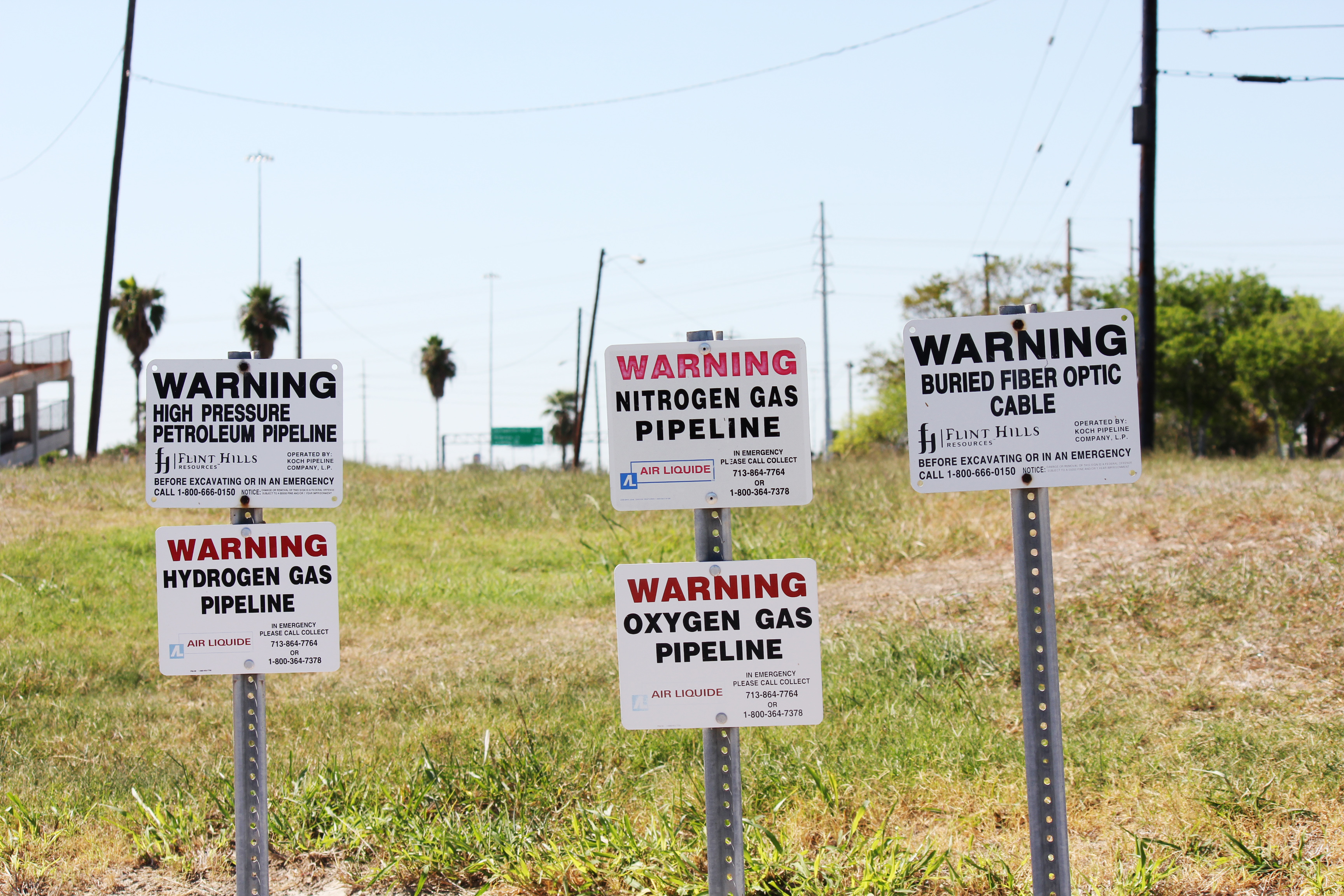
Several pipelines run underneath the Dona Park neighborhood in Corpus Christi
The Center for Public Integrity’s iwatch News has put together a “by the numbers” look at toxic air emissions. The data comes from a once-secret EPA ‘watch list’ that shows repeated violators of environmental laws in the country, with many of them in Texas. StateImpact Texas, NPR and the Center for Public Integrity reported on the list and people affected by pollution earlier this month.
The list showed that even though many facilities were violating the law, the EPA and state agencies aren’t enforcing those laws in a timely manner. Only twenty percent of air pollution leaks are actually investigated by the EPA, and around one-third of those end up being prosecuted. The EPA publicly released the list on its website earlier this week.
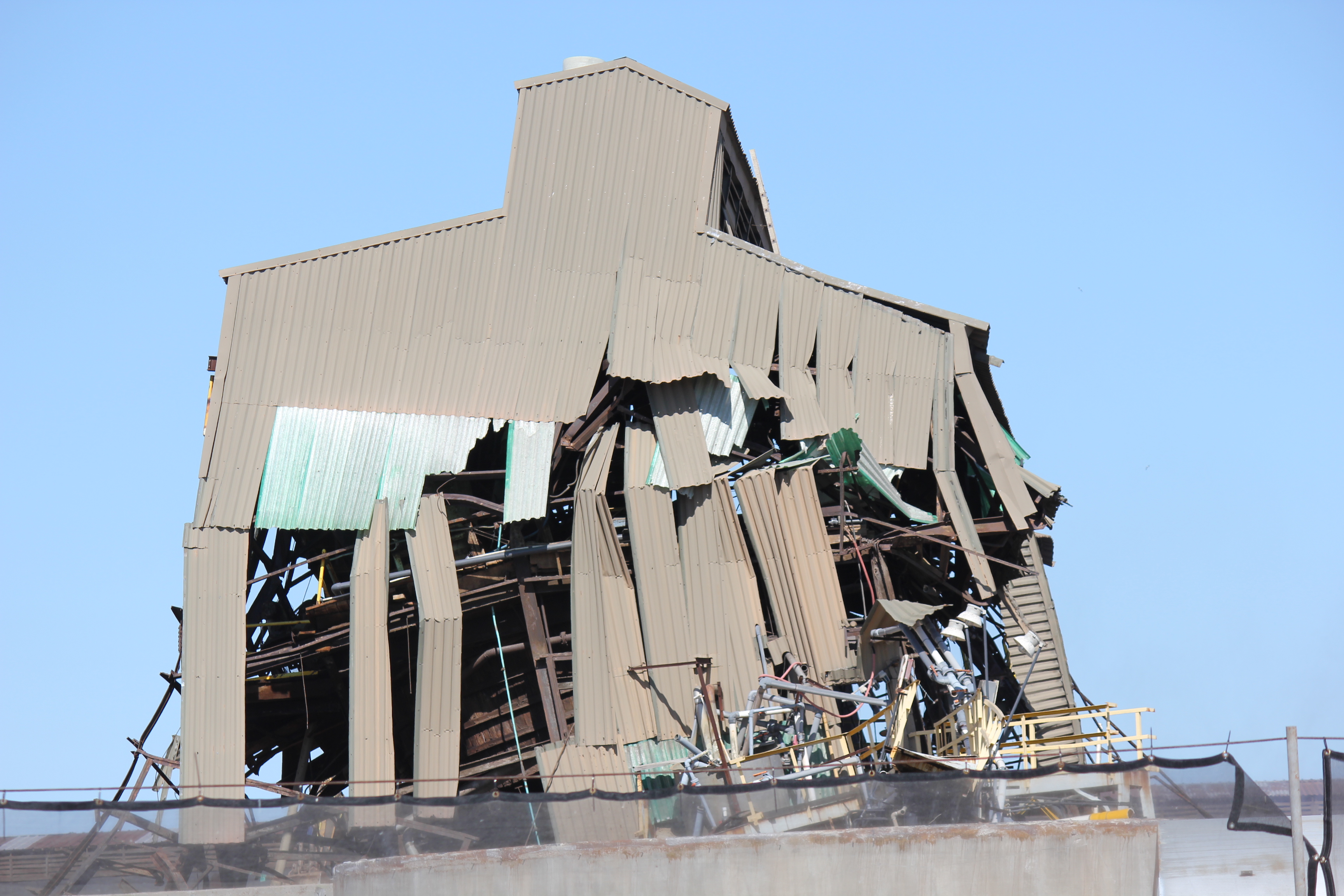
A falling building at the former ASARCO/Encycle plant
Last week StateImpact Texas reported on a former hazardous waste plant that sits at the edge of a residential neighborhood in Corpus Christi. The Encycle facility, which opened as a hazardous waste plant in 1989, was ultimately shut down for pollution violations. Encycle and its parent company ASARCO filed for bankruptcy after agreeing to $1.7 billion in settlements for polluting.
You can now read what an insider at the plant told the EPA about how the facility ran their operations and endangered the local community. The document was released last year by the EPA, and as the waste plant is finally coming down, it makes for relevant reading. Continue Reading →
The town of Groesbeck’s water issues have been making news for over a week now. The town is running out of water, and while estimates vary as to exactly when that will happen, everyone seems to agree it’s a real enough possibility in the near future to be worried.
The town approved a stopgap measure last week to pipe in water from a quarry a few miles away, which should hold them over until March. And on Monday evening, the town got about two inches of much-needed rain.
Now the story is making national news, bringing more attention to the drought in Texas. CBS News aired the report above Tuesday evening.
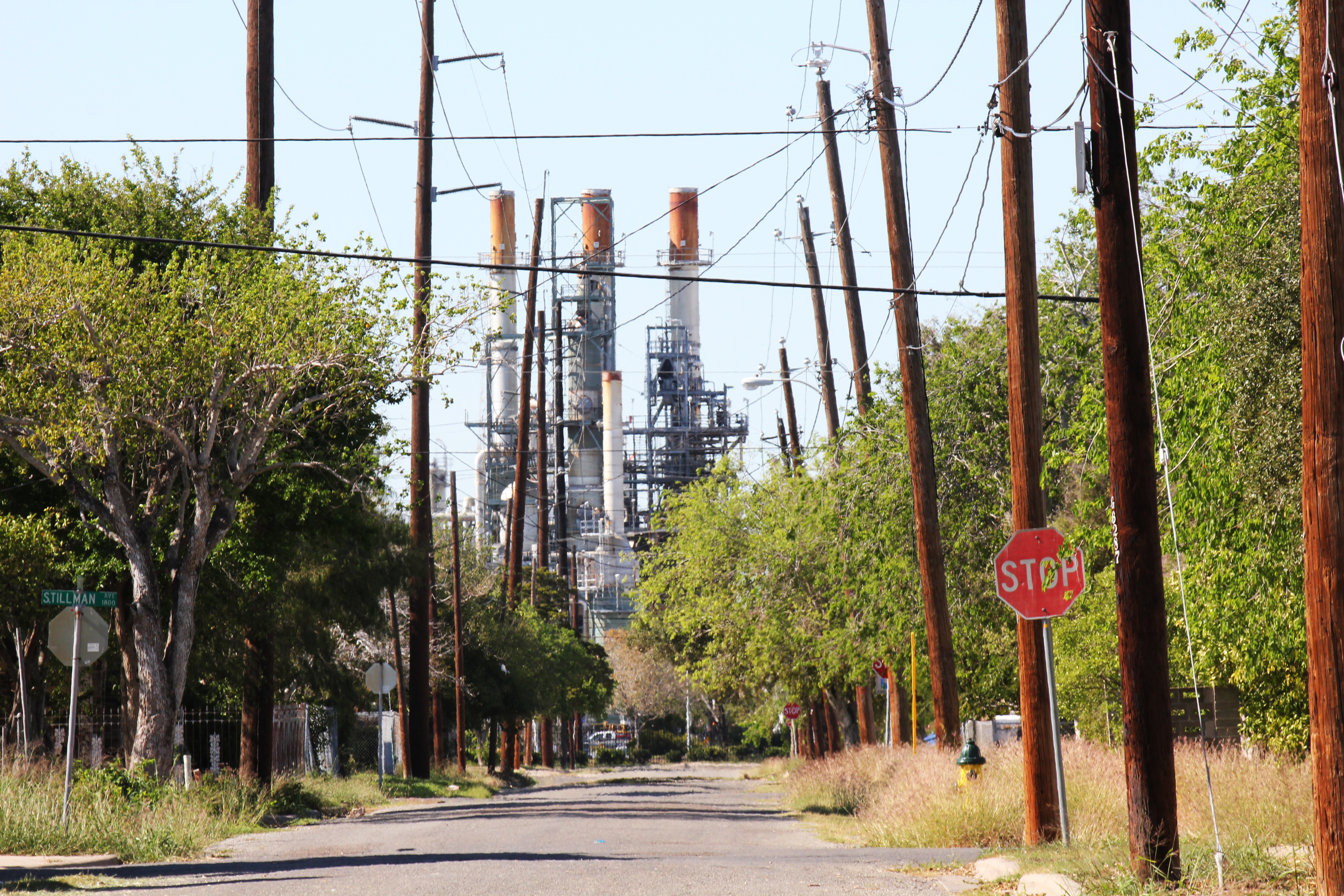
A view of the Flint Hills East Refinery from the Hillcrest Neighborhood in Corpus Christi
Last week the EPA and City of Corpus Christi hosted an environmental summit on pollution and refinery row, a ten-mile stretch of oil refineries at the city’s edge. Surrounded by these refineries are several “fence line” communities, where over a thousand residents live.
Families in these neighborhoods say the refineries are making them sick, and some have formed a group asking the oil companies to buy them out entirely, close down the neighborhood for good, and create a “buffer zone” between the plants and residential neighborhoods. The summit was the first dialogue between residents, government and industry on how to deal with the problems of refinery row. Continue Reading →
Oil and gas exploration are hot topics in Texas these days, but on the other side of continent, a debate is still brewing on whether or not to drill for oil in the Arctic National Wildlife Refuge.
Historian Douglas Brinkley of Rice University in Houston has written a book about the Alaskan wilderness, and went to Washington Friday to give testimony before the House National Resources Committee.
Brinkley made some remarks about how the arctic regions of Alaska are “a very significant landscape in the psyche of the American people,” and that the areas deserve protection and conservation.
Then Representative Don Young, a vocal proponent of drilling in the refuge, chimed in. Continue Reading →
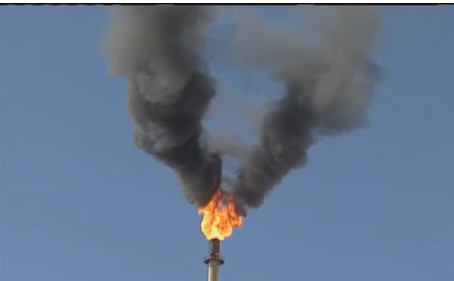
A flaring event at the Javelina processing plant in Corpus Christi
Earlier this month, StateImpact Texas, NPR and the Center for Public Integrity reported on a secret EPA ‘watch list’ that shows repeated violations of environmental laws in the country by industry. The list showed that even though many facilities throughout the country were violating the law, the EPA and state agencies weren’t enforcing those laws in a timely manner.
Now the EPA has officially released the list on its website. As the Center for Public Integrity reports, the EPA has gone one step further and published other watch lists including “serious or chronic violators of the Clean Water Act, governing the release of pollutants in waterways, and Resource Conservation and Recovery Act, involving hazardous waste disposal.”
What does this mean for environmental regulation and enforcement? Will the new information lead to more lawsuits and litigation against polluters? Continue Reading →
Elizabeth Ames Jones, Chairman of the Railroad Commission of Texas
New rules with a big impact for many Texans came up at a meeting of the Railroad Commission of Texas today. They would require oil and gas companies to disclose what chemicals they use when “fracking.”
Residents near some drilling sites in Fort Worth are concerned about the fracking fluids possibly contaminating their water supply. A recent study by the University of Texas found no direct link between the practice and contaminated water underground. Continue Reading →
The University of Texas and Texas A&M football teams compete November 25, 2010 in Austin, Texas.
It was supposed to burn tonight, a stack of wood over thirty feet high, with an outhouse painted burnt orange on top. In a tradition dating back to 1909, Texas A&M University students and alumni gather together to light a massive bonfire before the annual rivalry football game with the University of Texas at Austin.
This year could well be the last meeting of the two teams, as A&M has left for another conference. And it could be the last bonfire for students, families and alumni at A&M wanting to ignite their passions against UT.
In Houston, where the business boosters count 3,600 local companies doing energy-related work, the title “World’s Energy Capital” is taken very seriously. And not just because of pride or profit.
“If you begin to lose the concentration in Houston as the Energy Capital, you start getting into, in my opinion, national security issues,” said Lane Sloan,a former long-time top executive with Shell. Continue Reading →
Good news for the many Texans living through the drought who are letting their grass die.
A new campaign by the Central Texas Water Efficiency Network (a group of water providers and conservation advocates) allows you to show off your dying grass as a model for conservation. Free signs are now available to residents to show their pride in a thirsty lawn:
The signs “provide a great explanation for why brown is the new “green” for Central Texas lawns during the drought,” says the group’s website. You can pick up your own at several locations in Austin, San Marcos and Round Rock. More information is available on the group’s website.
About StateImpact
StateImpact seeks to inform and engage local communities with broadcast and online news focused on how state government decisions affect your lives. Learn More »