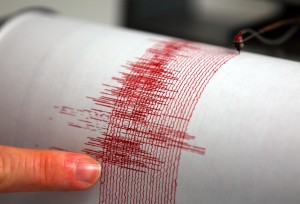
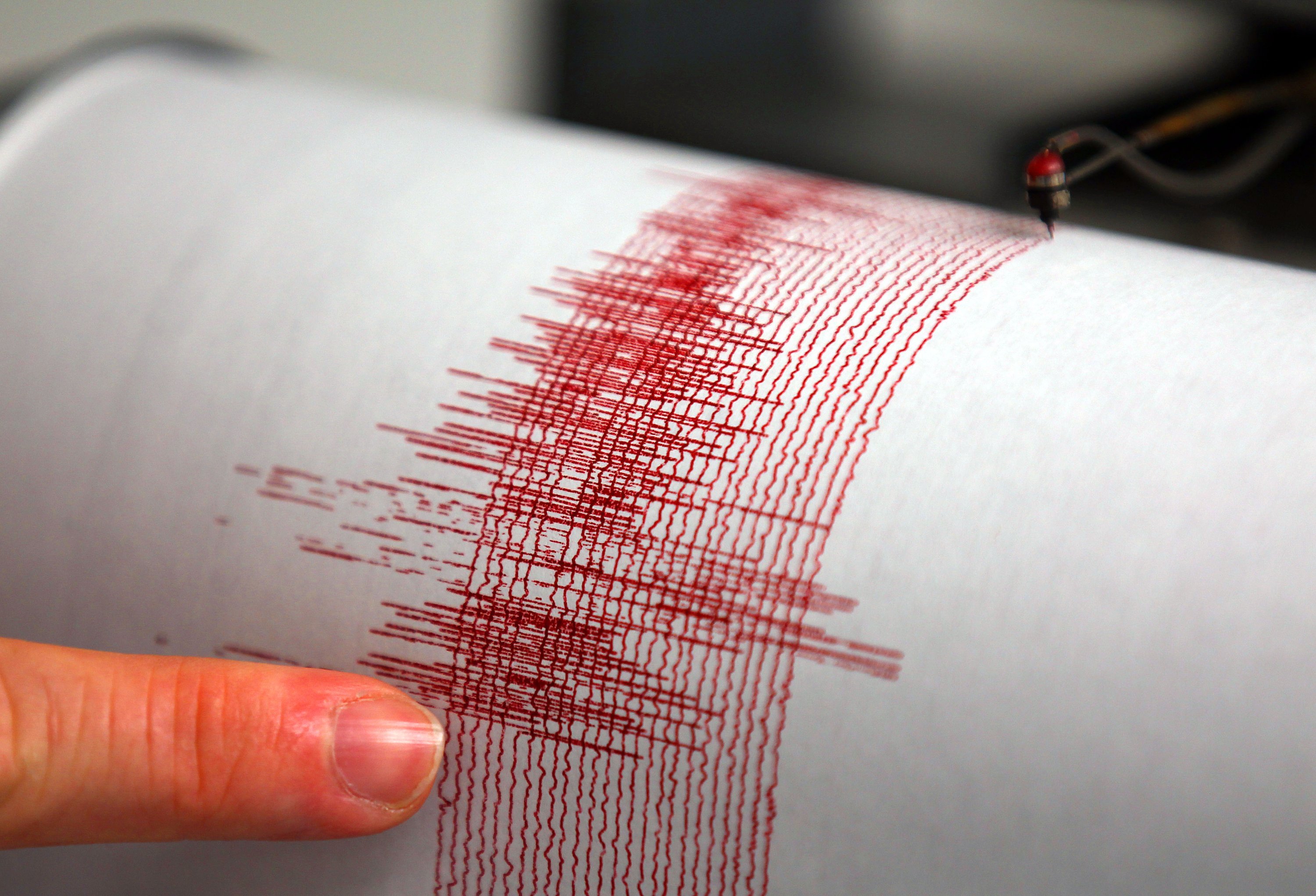
A dozen smaller earthquakes have struck Dallas this week.
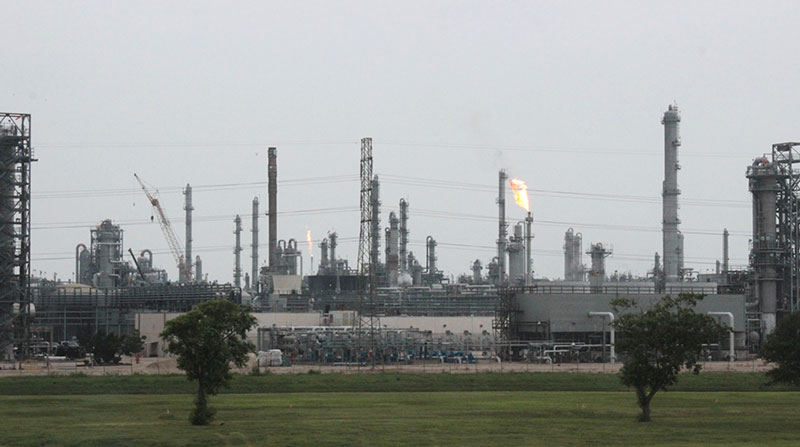
An inquiry by the agency that regulates the oil and gas industry in Texas has found that oil and gas activity did not likely cause a swarm of earthquakes around the north Texas towns of Azle and Reno starting in 2013. The finding, however, flies in the face of a peer-reviewed scientific study of the quakes.
The Texas Railroad Commission is the strangely named agency that regulates the state’s oil and gas activity. The agency held a hearing in June looking at whether ExxonMobil subsidiary XTO Energy contributed to the earthquakes by pumping millions of gallons of drilling and fracking wastewater into the ground.
A peer-reviewed study out of Southern Methodist University had already found that that was “most likely” the cause, adding that industry data would be vital in widening the scope of future studies. But at the hearing, agency examiners weighed that study against the evidence put on the record. XTO was the only party that offered direct evidence, and examiners found in favor of an XTO well located near Azle and Reno.
A box at the Alice Food Pantry accepts prayer requests. Many people in Alice have lost jobs since the price of oil dropped.
Even before oil prices plummeted last year, the town of Alice, Texas was feeling the paincaused by a restless oil industry. Some oilfield service companies had moved operations from Alice, located near Corpus Christi, to places deeper in the Eagle Ford Shale. That cost the town jobs and tax revenue. Then, starting around Thanksgiving, the value of Texas crude dropped by more than half. More layoffs came, the real trouble started.
“A lot of people are in depression right now. And in denial,” says Bonnie Whitley, volunteer coordinator at the Alice Food Pantry. “They just can’t come to grips with what’s happened. So there’s depression and we really need some good counselors down here. Which we don’t have…”
ERCOT is asking Texans to conserve power until noon Friday.
We first reported in June about some so-called “fake profits” in the Texas energy industry that led to a multi-million dollar windfall for some companies. We have been following up to see what can be done to reimburse consumers for what some experts call a serious mistake in pricing electricity.
In June, News 88.7 reported how a data error may have caused a very big mistake. It was in the computer system that’s used to set the minute by minute price for electricity sold on the wholesale market in Texas.
One investor and energy trader, Adam Sinn, told us the mistake resulted in what he called “fake profits.”
“We calculated this mistake was somewhere in the ballpark of $50-plus million,” Sinn said.
With temperatures near 100 degrees, this is the time of year when we spend the most money to run our air conditioners. But are you spending more than you have to because you used the state’s Power to Choose website to pick your electricity provider?
Frank St. Claire knows numbers and contracts. He graduated from MIT and became a lawyer and did big real estate deals. He’s now retired. Which is all good to know as you consider what now is challenging his analytical abilities. He’s been spending hours reviewing complicated contracts and pricing formulas.
“This is labor intensive. I had to do a spreadsheet in order to make any sense of it,” St. Claire told News 88.7.
What’s taking up so much of this retiree’s time? It’s his electricity bill.
This week, oil prices dropped below $50 for the first time since February, a development that could upend the state’s predictions of oil revenue for this year.
Estimates from the Comptroller of Public Accounts put oil prices at an average of just over $64 per barrel in 2015 and 2016. And, as of now, those predictions are rosier than the reality of the market, meaning the state’s loss in oil and gas tax revenue could impact the Texas budget going forward.
Small town Cotulla depends on the oil industry to bring people to fill its many hotel rooms.Jorge Sanhueza-LyonJose Rodriguez is recently laid off from his oil industry job.
Cotulla, Texas, is a small town deep in the oil fields of the South Texas Eagle Ford Shale.
It’s a town that bet big on the oil boom.
Five years ago the census put the population at less than 4,000 people. There were three or four motels then. Now in Cotulla there are around 25 motels, hotels and inns. It’s earned the town a nickname: “The ‘Hotel Capital of the Eagle Shale,’” says City Administrator Larry Dovalina.
He says for years Cotulla was like a lot of places in rural Texas: “Dying on the vine. Kind of forgotten.”
First responders pull flood victims from a flooded South East Austin neighborhood.
Back on May 26th, Houston woke up to flooded freeways and neighborhoods as bayous overflowed their banks. In the Texas Hill Country, homes and bridges washed away and levees broke.
But super-heavy rainfall is nothing new in Texas and in fact, it was years earlier that experts had warned that the state was doing dangerously little to minimize flood damage.
“We gave flood control the grade of D,” said Curtis Beitel, president of the Texas chapter of the American Society of Civil Engineers.
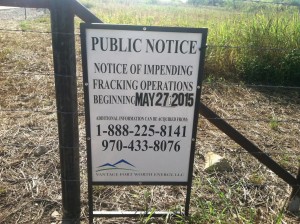
A signed announced the resumption of fracking in Denton last May, after lawmakers passed HB40.
This year state lawmakers severely restricted the ability of Texas towns to regulate local oil and gas drilling.
A law known as House Bill 40 was a reaction to a fracking ban passed by voters in the North Texas city of Denton.
Denton has come to represent local fracking bans and clashes between local governments and the oil and gas industry. But while Denton was the first city in Texas to ban fracking, it wasn’t the first city to ban drilling within city limits.
That practice goes back years, according to a survey by the Texas Municipal League.
The Texas Municipal League’s survey shows that about 30 Texas towns have more general bans on drilling.
If you lived in Houston in the 1980s, you might have noticed that something has changed about the air you breathe: back then, it was a lot dirtier. But whether it needs to be “cleaner” than it is today is at the heart of debate heating up as new federal regulations are being written.
In the past several decades, the air in Houston and other big cities has improved dramatically. One reason is that car engines emit far less pollution. And the same can be said for big industries.
A dozen smaller earthquakes have struck Dallas this week.
There have been earthquakes in almost every corner of Texas since the start of the state’s most recent oil and gas boom. One “swarm” that really captured people’s attention started in the town of Azle in 2013. When oil and gas regulators at the Railroad Commission of Texas visited the town, local people suggested ways to handle the waste water disposal wells thought to be causing the quakes. One idea came up over and over again.
“Why is it we can’t shut the wells down around here for a period of time?” asked resident Gale Wood. “If nothing happens after a while, that would be one way to determine what’s going on.”
The Railroad Commission has a different approach. In the case of Azle, it waited over a year while a team of seismologists at Southern Methodist University undertook a study. The results came back this month, confirming that disposal wells likely caused the quakes. That has some residents in Texas’ quake country hoping the simple notion put forth at that public meeting -shut down disposal wells if there’s a chance they’re related to earthquakes- may get another hearing.
StateImpact seeks to inform and engage local communities with broadcast and online news focused on how state government decisions affect your lives. Learn More »