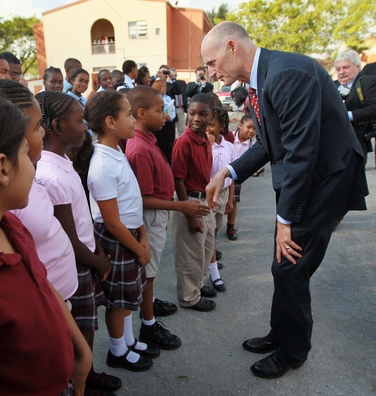
Gov. Rick Scott sees a brighter future for Floridians through higher education. In a letter to newspaper editorial boards around the state, Scott said education pays off through “higher earnings and lower unemployment rates.” Then he addressed the money issue.
For the school year beginning next fall, he wrote that Florida’s student population is expected to climb by at least 30,000. If funding levels stay the same, Scott says that’s an automatic increase in education spending of $191 million. But local revenues continue to slide, leaving districts with $200 million less than they currently have to spend. Then there’s the loss of $780 million in federal funding. It’s ugly, and the result, says Scott, is an expected budget hole of $1.2 billion dollars just for the state’s schools.
That 25.1 percent gap put Florida among states with a “severe” difference in funding charter and district schools Most of that Most of the difference comes from the roughly $2,000 additional dollars district schools receive in local tax dollars.
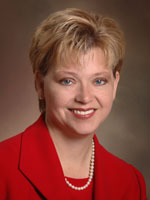
So the group is getting behind HB 903, sponsored by Fernandina Beach Republican Rep. Janet Adkins. Adkins sits on a number of education committees, and is vice-chairman of the PreK-12 Appropriations subcommittee.
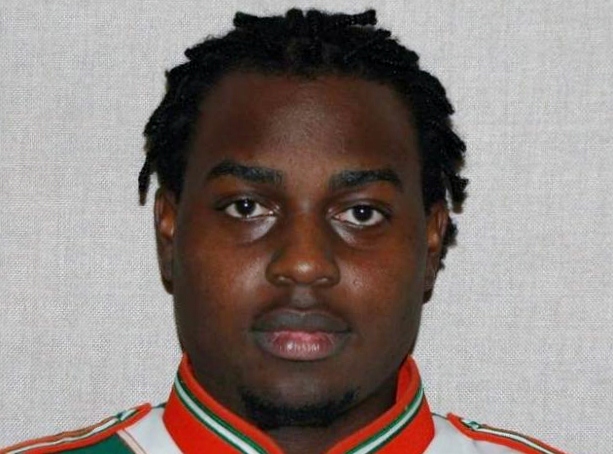
The Florida Department of Law Enforcement is now investigating the death of a Florida A&M University (FAMU) student who had reportedly been hazed by his fellow band mates. 26-year-old Robert Champion died shortly after he collapsed on a bus in Orlando, where he and other members of FAMU’s famed Marching 100 were performing.
Governor Rick Scott decided the state should be involved in the death investigation. In a meeting with reporters last week, he said, “I think it’s very important that we do a thorough investigation, and I think it’s also important that we review our hazing policies…When things like this happen, you’ve got to make sure in your organization, our universities in this case, that people feel comfortable coming forward, you know, if they see something like this because I don’t want this to ever happen again.”
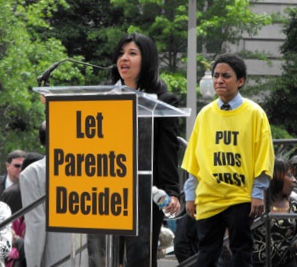
We’ve heard about Governor Rick Scott’s proposed “parent trigger law,” which would give parents the power to shut down low performing schools and transform them into charter schools. Now we’re hearing from some of the people who would be impacted by the change.
Maria Mendoza’s daughter attends an underperforming elementary school in Ft. Myers. She told the Fort Myers News-Pressthe school and the teachers could be better. Her daughter took it a step further, saying she likes the school, “but they could teach the subjects better.”
Most districts offer some sort of school choice program, and many are mulling how to make those programs work for more kids. The parent trigger bill hasn’t been filed with the Florida Legislature yet, but the kind of reform it would bring has long been part of Gov. Scott’s agenda.
The DeLand school offered Arielle, 15, and Austin Metzger, 13, full scholarships. School president Wendy Libby told the Orlando Sentinel the school community demanded to help after seeing Arielle in a Stetson t-shirt,
The scholarships are just part of what the Metzger family said has been an avalanche of support. Seminole County schools said they have also been overwhelmed with offers to support the district’s homeless students program.
A survey that tracks the way states use data to improve the quality of education finds progress across the board. The data could be anything from individual standardized test scores to the performance of whole school districts.
The Data Quality Campaign is in its seventh year. More than fifty organizations around the country are now part of the effort to get state leaders focused on improving the use of education data. The idea is to quickly and easily get mounds of information to as many people as possible. The hope is that easily accessible data will lead to more informed decision-making by teachers, students, parents, and even lawmakers. Ultimately, the campaign sees better student outcomes as a result.
The index focuses on the concept of school choice, which has been popular with Florida Gov. Rick Scott and the Republican-controlled Florida Legislature. Lawmakers passed a series of bills last spring to broaden school choice options. The result is easier expansion of virtual and charter schools, and more opportunities for kids to transfer to better performing public schools or into private schools using vouchers.
A study in Education Week makes the case for districts to get rid of middle schools in favor of K-8 schools. Harvard University researchers Guido Schwerdt and Martin R. West looked at public schools in Florida. They used statewide data to track kids in grades 3 through 10 from 2000 to 2009.
The study found “that students moving from elementary to middle school in grade 6 or 7 suffer a sharp drop in student achievement in the transition year.” The achievement drops continue through grade 10, “by which time most students have transitioned into high school. We also find that middle school entry increases student absences and is associated with higher grade 10 dropout rates.” By comparison, the data show the transition into high school in the ninth grade typically brings a brief and small drop in achievement.
When Governor Rick Scott asked the state’s 11 public universities to prove their worth to him, the universities responded to the challenge.
The Governor asked the schools to answer 17 questions that he says will help him craft higher education reform. And those schools have been turning in their answers.
The Sun Sentinel reports the University of Florida turned in a 750-page report. And according to the Sentinel, Florida State University answered those questions in “a 38-megabyte file, roughly the size of an encyclopedia volume.”
The Governor is testing public universities to see how well their goals match up to his job-creation plan, which includes graduating more science, technology, engineering and math majors, or STEM fields.
The latest kerfuffle involving religion in schools comes to us from Clay County in a suburb of Jacksonville. A school principal is being sued by an assistant principal over what the plaintiff refers to as state-sponsored religion.
Linda Turner is the principal at Bannerman Learning Center in Green Cove Springs. She is being sued, along with the school district, for sending religious and political notes from her school email account. The plaintiff, Patrick Capriola, says that while he is religious, it’s not proper for people in public employment to promote such issues.
StateImpact seeks to inform and engage local communities with broadcast and online news focused on how state government decisions affect your lives. Learn More »