Background
Texas is home to 14 major rivers, over 100 lakes, and 23 aquifers that underlie about three-fourths of the state. Texas also borders the Gulf of Mexico. These bodies of water supply much of the state’s drinking water. Some lakes and rivers are also used for energy production, though hydroelectric power is still a limited resource in the state.
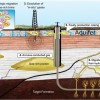
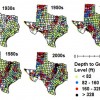
More than half of the usable and potentially usable freshwater in Texas comes from groundwater. This water is used for domestic, municipal, industrial, and agricultural purposes. Nearly 55% of Texans rely on groundwater for their drinking water, and 96% of Texans are provided with water that meets or exceeds the primary drinking water standards.
The Edwards Aquifer produces drinking water for more than 2 million people in Central Texas. Demand for water in Texas has increased with the state’s rapid population growth. Austin, the state capital, saw its water use triple between 1970 and 2010. Texas’ mostly dry, hot weather and frequent droughts further stress the water supply.
The Texas Commission on Environmental Quality (TCEQ) and the Texas Water Development Board are in charge of regulating water quality. Contamination in groundwater from human waste is tracked by the Texas Groundwater Protection Committee. Gasoline, diesel, and petroleum products are the most common contaminants.
Lake Travis and Lake Buchanan are the main water sources for many cities, farmers and power plants in Central Texas. Droughts are a major concern in this part of the state where cities, like Austin, use lake water for drinking and recreation. Texas saw some of its driest months on record since 1895 during the eight-month period from October 2010 to May 2011. The water level in both Lake Travis and Lake Buchanan fell to 1.4 million acre-feet, 28 percent less than the average, causing the Central Texas region to begin stage 1 drought restrictions. As lake levels continued to fall, several Central Texas cities entered stage 2 drought restrictions, including Austin. As of June 20, 2011, nearly two-thirds of the state had entered into “exceptional drought,” the Lower Colorado River Authority’s (LCRA) most severe category. The LCRA is a powerful state organization that controls the water in the two lakes and much of the Colorado River.
Rice farmers along the Gulf Coast are also highly susceptible to the hazards of drought. Rice farming requires large quantities of water to produce crops. The 2011 drought has constrained water supplies to the point that rice farmers may face water restrictions in the coming year. In 2010, Texas’ agricultural industry used 57% of the water from the six Highland Lakes in Central Texas.
To ease water supply problems in Texas, the LCRA is looking for alternative water sources. State environmental regulators have approved the LCRA’s request to store more water downstream from Lake Travis and Lake Buchanan. State representatives are currently working on regulation of groundwater. New legislation for rain water harvesting in Texas passed in the 82nd legislative session and is effective September 1, 2011.