Topics

A nutria nibbling on an aquatic plant.

What You Need to Know About Invasive Species in Texas

Background

What’s an Invasive Species?

Courtesy of Dave Irving via Flickr Creative Commons

A feral hog wandering through a field of grass

Invasive species have arrived in Texas, and they’re making their presence known.

Over the past decade, Texas has seen a large swath of non-native land and aquatic species settle into its lakes, plains, and forests, and the impact on native wildlife and state industry has been drastic. (Executive Order 13112 on Invasive Species defines an invasive species as an alien species whose introduction does or is likely to cause economic or environmental harm or harm to human health.)

Nutria, red fire ants, giant salvinia, and hydrilla are just some of the invaders that residents have become acquainted with in recent years, and some have proved more dangerous than others.

Courtesy of NOAA Great Lakes Environmental Research Laboratory via Flickr Creative Commons

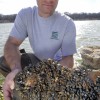
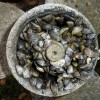
Zebra mussels

The zebra mussel has provoked the most alarm among scientists and aquatic industry representatives. Zebra mussels, for example, have caused alarming declines in fish, birds, and native mussel populations by feeding on phytoplankton, an essential food source for many aquatic species. Originally from the Black and Caspian Seas, these quick-breeding mollusks have recently invaded several Texas lakes, most profoundly Lake Texaoma, and they threaten to take over the Trinity River Basin next. Zebra mussels have caused alarming declines in fish, birds, and native mussels by over-absorbing phytoplankton, an essential food source for many aquatic species. Its high rate of filtration also leads to increased sunlight penetration, raising water temperatures and the depth at which that light penetrates the water.

Zebra mussels have also negatively impacted the aquatic industry. They can adhere to just about any surface, including pipes, boats, boat trailers, buoys and dinghys, and once they do, they’re permanently secured. In several instances, they’ve been reported to have sunk entire buoys and destroyed fishing equipment.

So What Do We Do?

All hope is not lost. Texasinvasives.org, a web-partnership between several state and federal agencies, conservation organizations, green industry, academics, and other private and public stakeholders, has a list of steps residents can take to stop invasive species from spreading. These include ___

Food industry spokespersons have offered their own tips for controlling Texas’ growing invasive species population. Andrew Zimmerm, the host of Bizzare Foods on the Travel Channel, has proposed ”eat[ing] invasives away.” Texas, he argues, should take note from other countries that have begun serving non-native animals and fish on a plate. Jamaica, for example, has created a whole new culinary market for the Lion Fish, a small, bothersome, but rather tasty invasive fish that’s been known to feed on the babies of native fish. Hunting feral hogs, fishing for Asian carp, and making tiger prawn cocktails are just some homegrown-solutions to Texas’ invasive species problems.
Latest Posts

Quarantine in South Texas as Mexican Fruit Fly Invades, Again

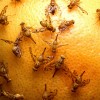
Recently larval Mexican fruit flies were spotted in Texas.

Don’t let its size fool you, the Mexican Fruit Fly is a serious threat to Texas’ agriculture. Authorities spotted larval Mexican Fruit Flies in South Texas and quarantined an 85 square mile area to contain the dangerous pest and its insidious larvae, according to the Texas Register. The quarantine is one of many used over [...]

Who Opposes Native Seed Bills? Native Seed Sellers

A man shows stevia plant seeds, known as "sweet herb" in Paraguay. In Texas, a couple new bills could ramp-up production and use of native seeds across the state.

A few individuals from around Texas took the opportunity to travel to the Capitol and speak out against two native seed bills at the House Livestock and Agriculture Committee meeting Wednesday. And those who kindly opposed the legislation were native seed distributors themselves. While the distributors were glad the state government is championing the native [...]

As Mexico Shares Less Water With Texas, Lawmakers Watch and Worry

A footprint in the soft mud of the Rio Grande in Ciudad Juarez, Mexico.

State lawmakers and agency heads discussed Mexico’s lack of water contribution to the Rio Grande River, the state of the State Water Plan and invasive species at the House Natural Resources committee meeting at the Capitol yesterday. Carlos Rubinstein, Commissioner of the Texas Commission on Environmental Quality (TCEQ), said Mexico hasn’t been allowing its fair [...]

How Hill Country Grazing Led to Cedar Fever in Texas

Looking for someone to blame for cedar fever? Try your ancestors.

Your Grandpa’s Cheeseburger Might Be Making You Sneeze For many Texans, ‘Cedar Fever’ has its own place in the region’s pantheon of demons, alongside the likes of the Chupacabra, Yolanda Saldivar, and chili with beans. If you’re one of those Texans, the onset of winter, when male mountain cedar plants release their pollen and set [...]

Is It Legal to Kill Bigfoot in Texas?

Yes, it's legal to hunt and kill Bigfoot in Texas.

We’ve been talking a lot about invasive species in Texas as of late, paying special attention to the issue of feral hogs, which are growing in number and cause widespread damage (but taste delicious). Texas has responded by making it very, very easy to kill feral hogs. You can hunt them with a handgun. You can hunt them [...]

What We Learned About Invasive Species While Drinking Beer

A feral hog wandering through a field of grass

Monday night StateImpact Texas hosted an event called Invasive Species and Why We Love Them With Salt, part of KUT Austin’s regular Views and Brews: Conversations at the Cactus Cafe series. We took a look at the issues of invasive species in Texas (over beer) and examined some of the solutions on the table. And [...]

Live! Tonight in Austin! Invasive Species with Beer

Tiger prawns have recently invaded the Gulf of Mexico.

Tonight at the Cactus Cafe at the University of Texas at Austin, StateImpact Texas will host a discussion of invasive species in Texas. We’re calling it Invasive Species and Why We Love Them With Salt. Our very own Mose Buchele will lead a panel discussion as part of KUT’s Views and Brews: Conversations at the [...]

How We Can Eat Invasive Species Away: A Special Event Monday in Austin

A feral hog wandering through a field of grass

StateImpact Texas will be invading a special session of KUT Radio Austin’s Views and Brews this Monday at the Cactus Cafe. It’s a regular panel hosted by KUT where we discuss the issues and art of our time, over beer (hence the “Brews” with the “Views”). Our very own Mose Buchele will lead a discussion [...]

About StateImpact

StateImpact seeks to inform and engage local communities with broadcast and online news focused on how state government decisions affect your lives.
Learn More »

Education