Pennsylvania

Energy. Environment. Economy.

Topics

The impact fee's final 174-page draft

What The New Impact Fee Law, Act 13, Means For Pennsylvania

Background

Scott Detrow / StateImpact Pennsylvania

The impact fee's final 174-page draft

After years of deliberation on the issue, Pennsylvania legislators passed a bill overhauling the state’s natural gas drilling laws on February 8, 2012.

While most of the legislation has already gone into effect, Commonwealth Court has thrown out a section restricting local governments’ ability to zone and regulate natural gas drilling. The Corbett Administration has appealed the decision to the Supreme Court of Pennsylvania.

The Fee

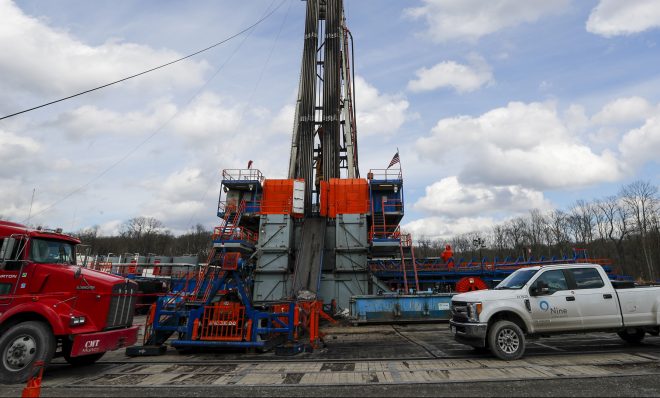
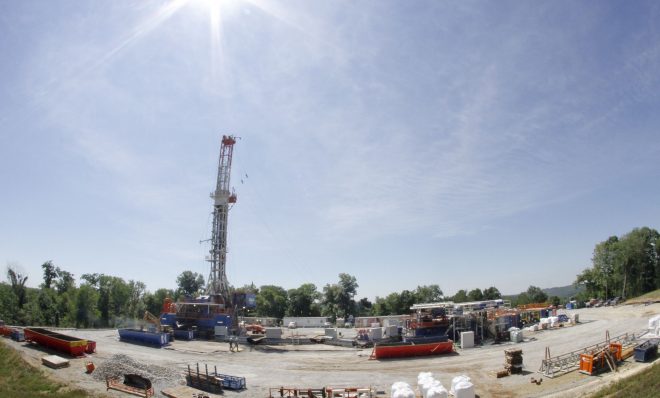
The legislation places an impact fee on every well drilling for gas in the Marcellus Shale formation. The levy will change from year to year based on natural gas prices and the Consumer Price Index, but in 2012, drillers will pay $50,000 per-well. (Smaller, vertical wells will pay $10,000 this year.)

The bill’s authors estimate the fee will generate around $180 million, when payments are turned in on September 1. Sixty percent of the revenue will stay at the local level, going to counties and municipalities hosting wells. The rest will go to various state agencies.

While the fee is administered and collected on the state level, counties will decide whether or not to enact it. County commissioners have until mid-April to enact a fee. If any county chooses not to collect the money, its municipalities will have a 60 day window to override the decision. When more than half of the county’s townships and boroughs pass a resolution calling for a fee, the levy will automatically be adopted.

How much fee revenue will each county receive this year? Click on our map to find out.

Click on the image to view StateImpact Pennsylvania's interactive map

Restricting Local Power

In addition to setting a fee, the legislation restricts municipal zoning of drilling operations. Townships and municipalities are required to allow drill rigs in all types of zones, except for densely-populated residential areas. It sets state standards for the minimum distance between wells and streams, schools, buildings and water sources. If a local government passes ordinances and regulations that go beyond the new state standards, the Public Utility Commission will have the power to bar the municipality from receiving any impact fee money.

On July 26, Commonwealth Court declared this section of the law null and void, arguing it violates local governments’ constitutional due process rights. The Corbett Administration has appealed this decision to the state Supreme Court, and asked the panel for an expedited ruling.

Other Changes

Other notable aspects of the legislation:

  • The bill autho­rizes the annual trans­fer of mil­lions of dol­lars from the Oil and Gas Lease Fund to the Envi­ron­men­tal Stew­ard­ship Fund and Haz­ardous Sites Cleanup Fund.
  • Drillers’ zone of presumed liability will expand from 1,000 to 2,500 feet. That means if a water source within this area is contaminated, the assumption will be that drilling messed it up.
  • The Depart­ment of Envi­ron­men­tal Pro­tec­tion can “enter into con­tracts” with pri­vate well con­trol teams, who would be given lim­ited immu­nity from civil lawsuits.
  • Com­pa­nies would be required to sub­mit reports to DEP detail­ing chem­i­cals used dur­ing the hydraulic frac­tur­ing process. This infor­ma­tion would be pub­lished on FracFocus.org, which is becom­ing a national clear­ing­house for frack­ing dis­clo­sure information.
  • Civil penal­ties against drillers who vio­late reg­u­la­tions would be increased to $75,000.
  • The bill sets new bond lev­els for drillers, based on the length of well bores and the amount of wells each com­pany operates.

(For more details about what’s in the new law, read our annotated version of the impact fee.)

Latest Posts

AP: Shale Gas Impact Fee Misses Billions in Potential Revenue

The Associated Press has resurrected the debate over whether Pennsylvania’s year-old Act 13 impact fee is causing the state to miss out on billions of dollars in revenue, which could be brought in through a tax. The AP says its review comes to the same conclusion as an analysis by the Pennsylvania Budget and Policy Center, a [...]

DEP: State Is Getting ‘Serious’ About Promoting Natural Gas Vehicles

At the same time a package of bills promoting compressed natural gas (CNG) vehicles is making its way through the House, the state Department of Environmental Protection is promoting a grant program to encourage more CNG use as well. The DEP will soon begin taking applications for its Alternative Fuels Incentive Grant (AFIG) program, which [...]

Pennsylvania Will Get 3 Percent Less This Year In Shale Drilling Impact Fees

Despite a slowdown in natural gas drilling, Pennsylvania will only see a small drop in the amount of impact fees it’s collecting, according to new data released this week by the Pennsylvania Public Utility Commission (PUC). A year-old law, known as Act 13, places an impact fee on every gas well in the Marcellus Shale formation. [...]

Corbett Praises Krancer, Says He Will Be A Talent To Private Sector

In the wake of his Department of Environmental Protection Secretary’s resignation, Governor Tom Corbett says he’s not concerned about Michael Krancer’s decision to go work for the energy industry he has been charged with regulating. The governor doesn’t believe Krancer’s resignation is an example of the “revolving door” between government and industry. “If you look at [...]

State Funds Available to Build More Affordable Housing in Drilling Regions

The Pennsylvania Housing Finance Agency (PHFA) is looking to improve the availability of affordable housing options in regions of the state impacted by Marcellus Shale drilling. The agency put a call out this week for proposals to develop housing for people with incomes below 50 percent of the median area income. “We had tremendous success [...]

Pa. Lawmaker Wants to Spend Impact Fee Money on Fracking Health Study

Suburban Philadelphia Republican State Sen. Stewart Greenleaf is working on a bill that would allocate $2 million from the state’s impact fee fund to study the public health impacts of Marcellus Shale drilling. Greenleaf has circulated a memo about the bill, which would amend Act 13, the state’s new drilling law. Despite attempts by the [...]

DePasquale Prepares To Audit PA’s Department of Environmental Protection

Pennsylvania’s Department of Environmental Protection may want to start getting its ledgers in order. Following through on a campaign promise, newly-installed Auditor General Eugene DePasquale has already taken the first steps towards conducting a performance audit of DEP’s Marcellus Shale regulation. Speaking during his swearing-in ceremony Tuesday, the Democrat made it clear he’s not against [...]

Shell’s Ethane Cracker Could Hinge On Act 13 Decision

shell1-300x207

Back in March, 2012 Shell Oil Co. announced that it was interested in building an ethane cracker at a site near Monaca, Beaver County. The processing plant would break up oil and natural gas into smaller molecules to create ethylene, which is a compound used to manufacture plastics. The project has been hailed by Governor Corbett as [...]

Impact Fee Sends $2.5 Million To Housing Efforts

Pennsylvania’s Marcellus Shale boom has brought a lot of economic growth to rural regions sitting on top of gas deposits, but it has also increased the cost of housing. Take Towanda, Bradford County, where the monthly rent for two-bedroom apartments has shot up from under $300 to more than $1,000 over the last five years, [...]

How Local Zoning Works In Texas, Oklahoma And Other Drilling States

As Pennsylvania’s Supreme Court weighs whether or not to throw out language in Act 13 restricting municipalities’ ability to regulate natural gas extraction, EnergyWire examines how local zoning works in other drilling-heavy states: The administration of Colorado Gov. John Hickenlooper (D) is suing the city of Longmont, suburban community north of Denver, to overturn its [...]

About StateImpact

StateImpact seeks to inform and engage local communities with broadcast and online news focused on how state government decisions affect your lives.
Learn More »

Education