StateImpact wants to know: Is New Hampshire really an anti-tax state?
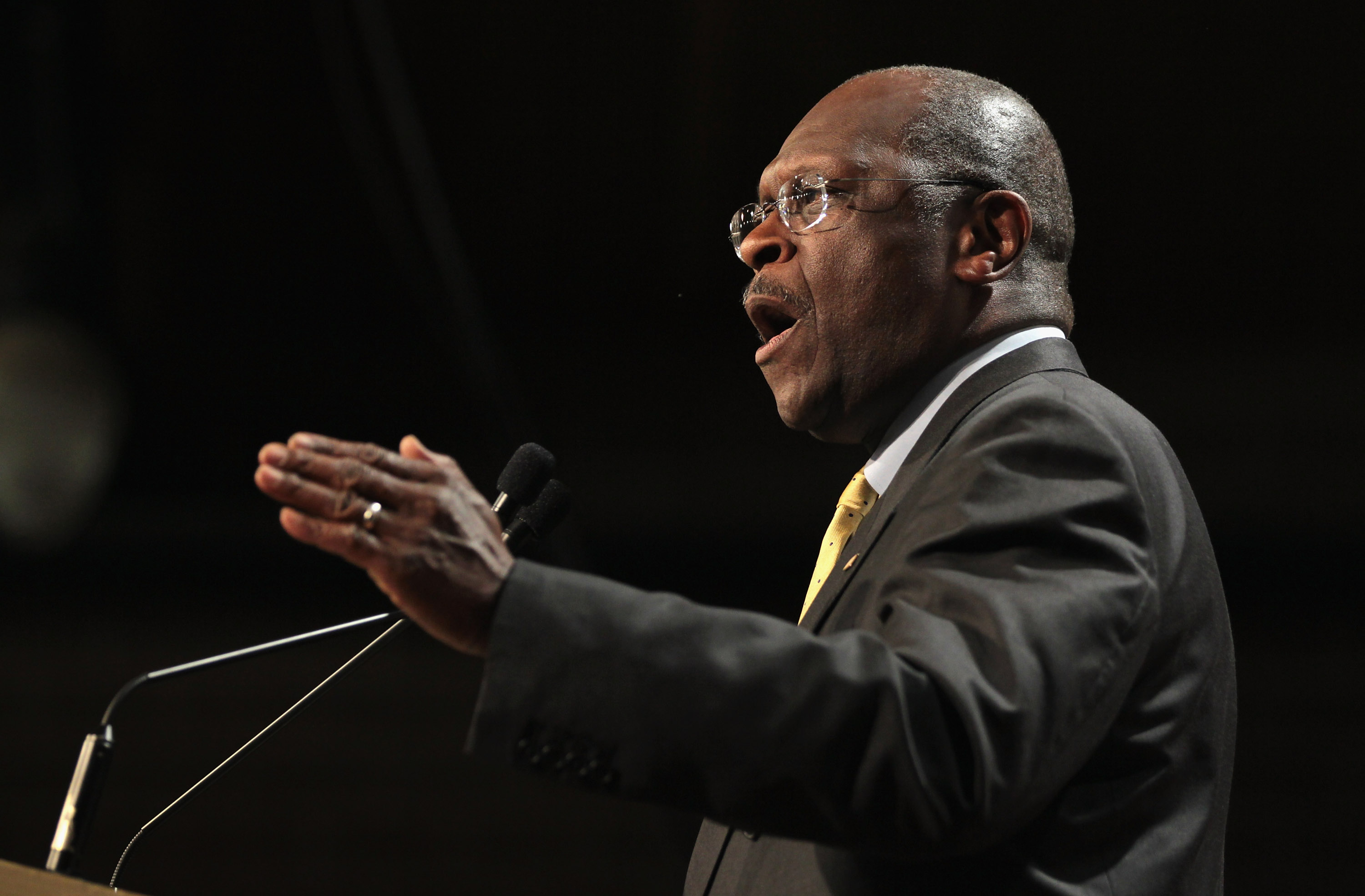
I’ve written a few posts recently about Republican presidential candidate Herman Cain’s 9-9-9 plan. (You can read the first post here.) The second post, “Cain’s 9-9-9 Touches Third Rail of New Hampshire Tax Policy,” generated a number of comments from StateImpact readers, but this one, part of a larger comment from Anonymous, stood out:
“…As for the whole notion Granite Staters — unlike any other around the nation — don’t like paying taxes, have you met a lot of people who don’t live in NH who LIKE paying taxes? Come on, we are not some exotic breed. We need to stop swallowing our own marketing about “tax-free NH.” Paid your property taxes lately?”
Anonymous’ comment leads to an interesting question — how anti-tax is New Hampshire, anyway? Continue Reading →
These are the five StateImpact posts that drew the most traffic, so we think you probably liked them the best.
As we promised last Friday, we’ve been keeping track of which posts got the most clicks this week. So without further ado…here’s our inaugural Essential StateImpact post for the week: Continue Reading →
Herman Cain's 9-9-9 plan has made him an unforeseen contender for the presidency. But how does the plan play in New Hampshire, a state known for its libertarian values and unorthodox tax structure?
The attractiveness and simplicity, of Herman Cain’s 9-9-9 plan — a nine percent federal income, corporate and sales tax — has catapulted the Georgia businessman to the head of the Republican presidential field. But for some states, 9-9-9 wouldn’t be simple at all. A handful of states—including the first-in-the-nation primary state of New Hampshire—don’t have a sales tax. So what would a federal sales tax do to the New Hampshire economy? Continue Reading →
Democrat Maggie Hassan, 53, who recently announced her candidacy for governor, said one of her major goals is to focus on creating jobs in New Hampshire, and suggested that gambling in the state ought to be expanded in order to boost state revenue.
The former Democratic Senate majority leader spoke to the Portsmouth Press Herald:
“We will be developing more policy proposals as the campaign proceeds, but what we do know is that the best way to attract businesses to a state is to have a work force that is well-educated and ready with the skill sets that businesses need,” she said. “What we need to do is create jobs and to be innovative, both in terms of job creation and in terms of how we run state government and the best way to approach that is to come together with people and find out what they need to create jobs.”
Yesterday, along with a group of business folks from across New Hampshire, I learned about the difference between “soft” and “hard” infrastructure. “Hard” is the obvious: roads, bridges etc. “Soft” infrastructure is human capital and institutions that cultivate it, such as community colleges and universities. Apparently, the state has deficits in both areas. Continue Reading →
The New Hampshire Lottery has struggled with declining revenues over the past few years.
As we reported yesterday, New Hampshire’s lottery revenues have been steadily declining over the past five fiscal years. Since the lotto funds the state’s education system, lower sales translate into less money for schools. (You can read our first post here.)
Still, the lottery isn’t exactly generating chump change. In FY 2011, the education system raked in $62.2 million. It’s big money. Just not as big as it could be.
So we wanted to know, what’s driving lotto sales?
(If you’ve ever worked at a gas station, grocery store, or other lottery retailer, you probably already know the answer…) Continue Reading →
Businesses in the North Country are joining forces with other area groups to oppose the Northern Pass transmission proposal. The project is a joint venture of Northeast Utilities and NStar and seeks to build 40 miles of power lines through Northern and Central New Hampshire. The company has already purchased thousands of acres of land -a move that has angered environmentalists and many area businesses as reported by Kathleen Callahan for the New Hampshire Business Review:
“This would absolutely destroy the tourism business up here, without a doubt,” said Wayne Charron, who owns a gift shop and mini-mart in Campton, among other businesses. “People don’t want to float down the river looking at high-tension wires and towers.”
The owners- Northern Pass LLC- are fighting back with a major public relations campaign, writes Callahan:.
Among its claims — of which it also has many — it contends Northern Pass would beef up New England’s long-term energy portfolio with a steady source of renewable, low-cost power, create up to 1,200 construction jobs for New Hampshire workers and bring in millions in tax revenue for towns and the state.
Opponents of the project say they intend to use their campaign as an issue for the race for Governor.
Callahan writes:
“I invite other people in office to come out against Northern Pass,” said longtime North Country Executive Councilor Ray Burton, who last December announced his opposition to the project, which he equated to “an extension cord dragged over the top” of the region. “It’s an economic issue.”
Washington DC and 43 states use lottery games as a way to boost revenues.
Traditionally, New Hampshire hasn’t looked kindly on taxes. Overall, there’s a sense in the state that people like their government lean and their taxes low. But even without a large social safety net, the government has to fund basic services somehow. Higher property taxes help make up for having no sales or income tax. Other taxes, like the Room and Meals, shift some of the burden to out-of-state visitors.
But StateImpact is interested in an alternative slice of the revenue pie–we want to know how the state uses gambling, liquor and cigarette sales to fill its coffers. How much do these sources rake in? And how–if at all–can the state get even more money from them? In short, we want to know:
What does the Economy of Vice look like in New Hampshire?
So starting this week, we’re launching a series of short, data-driven posts focusing on the New Hampshire Lottery. Once we’ve introduced you to the basics of how the lottery works, and how it stacks up compared to the rest of the region, we’ll wrap-up with a longer, in-depth post next week.
For today, we’re focusing on what the state lottery funds. Continue Reading →
StateImpact's got a lot of vittles in the news frier.
It’s been a couple of months since we first launched StateImpact New Hampshire, and now…we’re turning up the heat. Here’s just a taste of what we’ve got cooking:
We’ve got another Herman Cain post that’s just about ready to come out of the frier. We briefly mentioned it in a post about his 9-9-9 plan here.
Starting next week, we’ll launch a series of posts focusing on the New Hampshire Lottery: Where it’s strong, where it’s weak, and why.
We’re also interested in state taxes: What gets taxed, what doesn’t, what they fund, and where the holes in tax policy are. Periodically, over the course of the year, we’ll be dropping in with this occasional series. Some will be more like beginner’s guides, while others will dig into the wilds of tax policy wonk-dom.
Starting next week, we’ll be keeping track of which posts draw the most clicks. And on Friday, we’ll clue you in to the Essential StateImpact New Hampshire–the five posts that get the most traffic or the most comments.
We’ll also be doing more of this: Telling you what you can expect from StateImpact in the near future.
Republican presidential front-runner Herman Cain's 9-9-9 plan is generating a lot of buzz, but what will it do to New Hampshire and other states without sales taxes?
New Hampshire is one of a small minority of states without a sales tax.* So when Republican presidential candidate Herman Cain announced his 9-9-9 Plan — 9 percent corporate tax, 9 percent income tax, and a 9 percent national sales tax — residents of New Hampshire started feeling a bit nervous. While the Cain plan is a federal tax overhaul that he claims is low impact for most Americans, it would essentially force residents of New Hampshire to pay a brand-new tax.
So we wondered how the Cain plan could affect businesses and individuals in the Granite State. As the only New England state without a sales tax, New Hampshire is a major force in regional retail sales. So could 9-9-9, a plan designed to spur business and job growth, actually have a negative effect on businesses in New Hampshire? Continue Reading →
About StateImpact
StateImpact seeks to inform and engage local communities with broadcast and online news focused on how state government decisions affect your lives. Learn More »