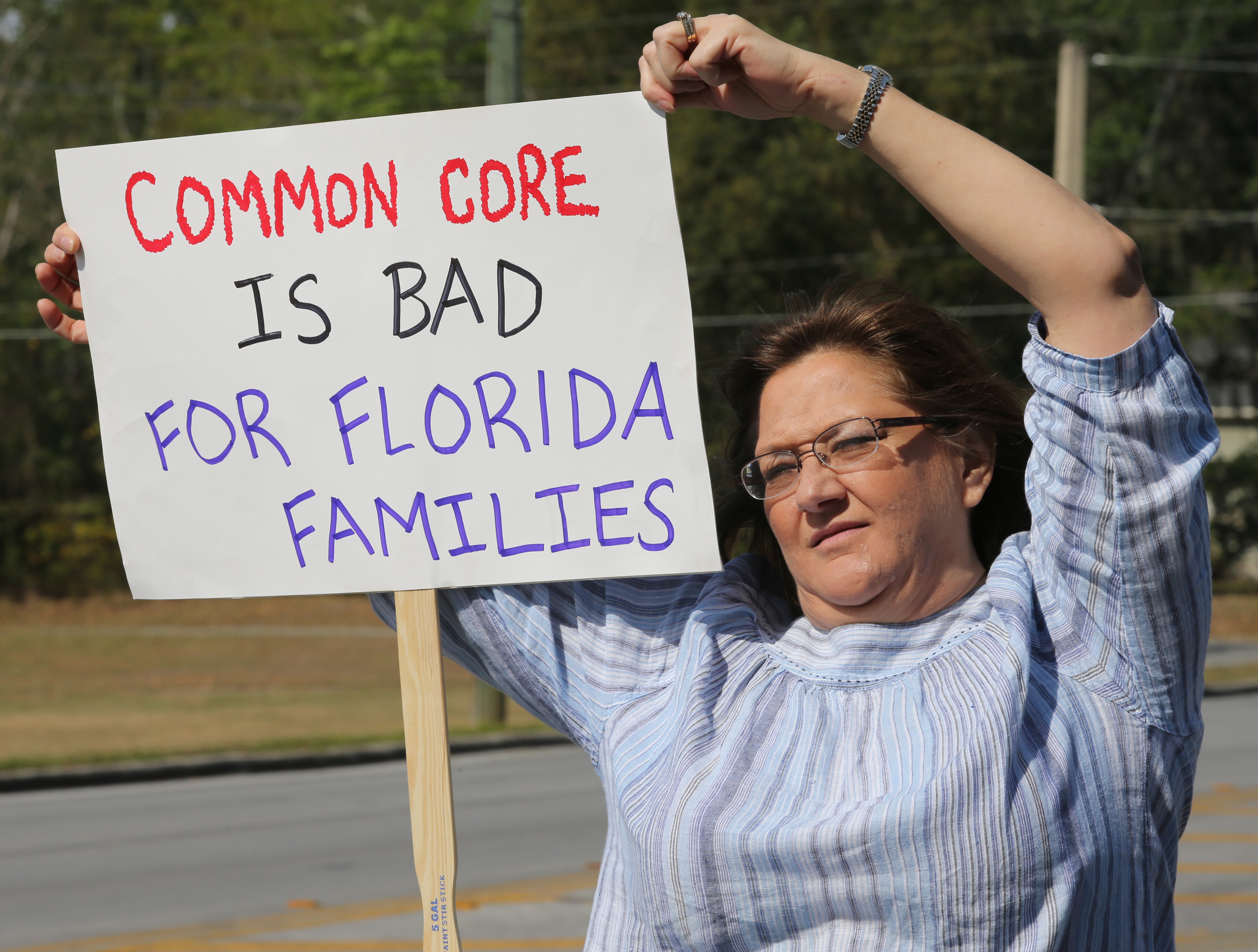
P.G. Schafer, a Tea Party member, holds a sign to protest Common Core across the street from Marion Technical Institute where school administrators were meeting on Southeast Fort King Street in Ocala, Fla. on Wednesday, April 3, 2013.
Laura Zorc, an organizer with the group, says the goal is to convince the legislature to approve a bill which would delay Common Core implementation so it can be studied. Zorc also wants a study to determine whether the standards violate the state constitution or U.S. Constitution.
The hotel is hosting a national two-day training session on the Common Core State Standards.
Florida is one of 45 states which have adopted the English, literacy and math standards. They are scheduled to be fully implemented in Florida schools in the fall of 2014.
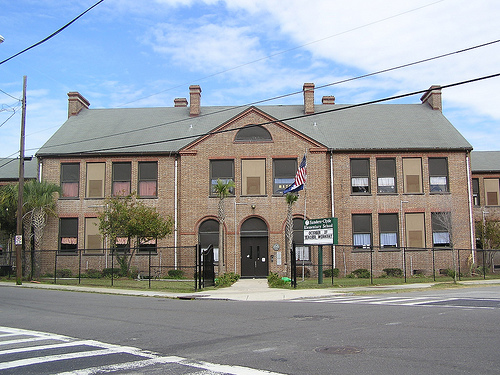
Sanders-Clyde Elementary School in Charleston, S.C.
Editor’s note: Names of teachers and students have been changed.
There are some real perils to systems which try to reduce teacher performance to a single number, such as many of our new “value-added” formulas.
The first is that whatever you decide to measure — and, implicitly or explicitly reward — is what you are going to get.
Take a look back a few years at our mortgage crisis. One of the precipitating structural problems was that the system evolved so that there was an incentive to write more mortgages. No longer were people rewarded for responsible lending. They were rewarded for the amount of loans they produced. We all know what happened. More mortgages!
It didn’t matter that many properties and property owners were bad risks. The measurement drove the production. So you have to be very careful in deciding what to measure.
When we narrowly define increased test scores as the “value” teachers add to students, then that is what schools will work towards.
Progress Florida says ALEC has too much influence inside state houses. ALEC defended its work.
Two groups named yesterday in a report which criticizes ALEC – the American Legislative Exchange Council – for its “damaging influence” on public education policy have responded.
The organization has a series of task forces comprised of legislators that “develop model policies to use across the country.” Subjects range from Civil Justice to Communications and Technology.
The report claims ALEC’s task forces are under the influence of corporate interests.
“The policies of ALEC’s Education Task Force prioritize profit over results, secrecy over accountability, and cuts over kids,” the report states.
Lindsay Russell, director of ALEC’s Task Force on Education, sent StateImpact Florida this statement: Continue Reading →
A new study finds Florida district school students learn more in reading than charter school students.
Seven days learning.
That’s how much more Florida’s traditional public school students learned in reading compared to students in charter schools, according to a new national study of charter school performance.
In math, Florida charter school students were even with their traditional public school peers.
The study updates a landmark 2009 review of charter school performance which concluded district schools outperformed charter schools.
This time, the average charter school students gained eight additional days of reading reading than district school students while math gains were even.
The American Legislative Exchange Council – better known as ALEC – describes itself as a non-profit, non-partisan organization that focuses on policy relating to “free markets, limited government and constitutional division of powers between the federal and state governments.”
Miami-Dade high school advanced calculus teacher Orlando Sarduy writes out the formula that will grade and help determine the pay of Florida teachers.
Editor’s note: Names of teachers and students have been changed.
The new term of art within the educational conversation about how we sort the good teachers from the bad is “value added.”
We stole the phrase from economics. But in the educational context, it brings to mind the great George Orwell quote: “The slovenliness of our language makes it easier for us to have foolish thoughts.”
We now throw this term around a lot. The mathematical formulas designed to identify the effect an individual teacher is having on an individual student are called “value-added” models. Administrators, researchers and policy-makers speak of the “value added” by a particular teacher — the difference in a student’s learning between excellent, good and poor teachers.
And, Orwell was right. It sure is making us foolish.
The transition to Common Core may be a challenge that some teachers choose not to take.
Before she retires, Shara Holt is getting teachers around the state ready to use Common Core standards. Holt is a literacy coach in St. Johns County who’s spent 41 years as an educator.
It’s a new way of teaching that focuses heavily on fewer subjects, sets benchmarks for students at each grade level, and forces students to explain their answers.
“Gone are the days when a teacher can go to the filing cabinet and pull out a lesson plan from five years ago, blow the dust off and use the same lesson plan,” said Holt. “Now we have to look at the needs of the students…instead of just teaching what’s there and (saying) ‘If they get it, fine – if they don’t get it, too bad.'”
It’s a change that Holt thinks could lead to an exodus from the classroom.
“I’ve seen teachers already who have left the system,” Holt said, “not only because of the change coming with Common Core but also with the teacher evaluation system.”
Florida State University physics professor Paul Cottle said Florida can't overlook science standards.
State leaders should not overlook improving science lessons while schools prepare for new English, literacy and math standards, according to a Florida State University physics professor.
Paul Cottle said the state is unlikely to bolster science standards if schools are struggling with the Common Core State Standards scheduled to take effect in the fall of 2014. Florida is one of 45 states which have fully adopted the standards. The standards ask students to know fewer topics, but have a deeper knowledge of those topics.
States are weighing whether to adopt a similar, but separate, cooperative effort to draw up new science guidelines known as the Next Generation Science Standards.
Florida science educators are rounding up support for NGSS. So far, 26 states have said they will consider adopting or have adopted the standards, but Florida is not yet among those states. The Florida Department of Education is accepting public comment on the standards now.
The Common Core standards and accompanying standardized test will be more difficult for students. If schools are already worried about students struggling in reading or math, Cottle said, they’re unlikely to raise science standards as well.
“So they’re going to do what human being do,” Cottle said. “They’re going to double-down on the Common Core. They’re going to try to focus their resources on improving students’ performance – especially the lower-tier students’ performance – in reading and mathematics.”
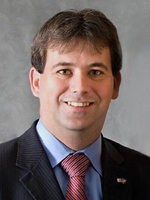
Sen. John Legg, R-Port Richey, says some Florida schools might not be ready for a fall 2014 deadline for new education standards and testing.
Port Richey Republican Sen. John Legg has founded a charter school and is chairman of the Senate Education committee.
So people listened when Legg raised some of the first warnings about whether Florida would be ready for new English, literacy and math standards — and the accompanying tests — by the start of the 2014 school year. Legg recently sat down with StateImpact Florida to discuss state progress on the new standards.
Florida is one of 45 states which have fully adopted the Common Core State Standards. The standards require students know fewer topics, but have a deeper understanding. The new standards will also come with new standardized tests.
A teacher says test scores often don't reveal much about how well he does his job.
Editor’s note: Names of teachers and students have been changed.
Let’s take a moment to look closely at test scores, which are the basis of our new “teacher accountability” system.
I just got back the test results for the students at the magnet school where I taught this year, and I honestly don’t think they tell you much of anything about my teaching.
This isn’t sour grapes; my students did well on the test. But that doesn’t surprise me because they are at a wonderfully designed small school full of the arts — an experience I think would benefit all students. So, of course their scores were high as a whole.
But when I looked closely at individual scores, I saw some results that made me wonder exactly what was being tested.
One student who did absolutely no homework and very little classwork, not only passed the FCAT, but his scores went up from last year. I’ll get credit for teaching him well even though he failed my class.
His foil, a student who did all her assignments while continuing to improve her writing and analytical skills, saw her test scores go down this year. She still earned the highest rating on the FCAT — a five — but her actual numerical score was slightly lower than last year.
StateImpact seeks to inform and engage local communities with broadcast and online news focused on how state government decisions affect your lives. Learn More »