Back in August I profiled Caroline Roa, a recent high school graduate ready to start school at Miami Dade College with what she thought would be a full-scholarship.
But weeks before the start of classes, Roa, who was born in Miami, learned her tuition would be three-times higher than she planned for—because Roa’s dad is an undocumented immigrant.
That’s when I got a call from The Southern Poverty Law Center looking to get in touch with Roa and more students like her.
That group has now filed a federal class action lawsuit against the Florida education commissioner and university system chancellor on behalf of Roa and four other students in the same situation.
A cat statue found on Key Marco in Southwest Florida.
It’s been a rough week for anthropologists with Gov. Rick Scott singling out the field as an inefficient use of higher education budgets.
Why should taxpayers foot the education bill for an anthropologist who can’t find a job? Scott asked a business group last week. Colleges should “drive” students into science, technology, engineering or math — known as STEM — programs, he said.
“I got accused of not liking anthropology,” Scott said. “But just think about it: How many more jobs do you think there is for anthropology in this state? Do you want to use your tax dollars to educate more people who can’t get jobs? I want to make sure that we spend our money where people can get jobs when they get out.”
But don’t expect to see anthropologists on street corners holding signs reading “will study social interactions for food” anytime soon.
Orange County tops the nation for growth in charter school enrollment, up 42 percent during the 2010-2011 school year.
Miami-Dade ranked seventh for the total number of students enrolled in charter schools, with 35,380 students. Broward County ranked tenth with 24,150 students in charter schools.
Almost 100 school districts have 10 percent of students enrolled in charters, the report note.
Hat tip to our friends at StateImpact Ohio for noting the report.
We told you this morning that Gov. Rick Scott had sent a letter to state universities asking a series of questions in an effort to gauge their performance.
The letter is part of Scott’s larger push to reevaluate the way state universities operate.
Gov. Rick Scott attends a governors' summit hosted by the U.S. Chamber of Commerce in June.
One of every eight state university employees earns at least $100,000, according to a salary database Gov. Rick Scott posted yesterday.
More than half of state university employees earn less than $50,000.
Scott posted the data to a website Monday, though it was already available online. Scott’s spokesman said the public has a right to know what more than 52,000 higher education workers are paid. A union representing professors believes Scott is “hanging people out to roast” by posting the information.
Gov. Rick Scott listens at a Miami business roundtable meeting in August. Scott has been circulating a Texas plan designed to quantify college and faculty performance.
Gov. Rick Scott added higher education salaries to a website he set up to detail contracts, employee pay and other state spending.
Check out the payroll for Florida’s 11 public universities here.
The data was already posted online, which has university professionals wondering if Scott is trying to turn public opinion against academia. The Sarasota Herald-Tribune quotes Tom Auxter, president of the 5,000-member union representing university employees:
“This is hanging people out to roast,” said Tom Auxter, president of the 5,000-member union that represents university faculty. “The governor is just trying to target faculty and make them uncomfortable.”
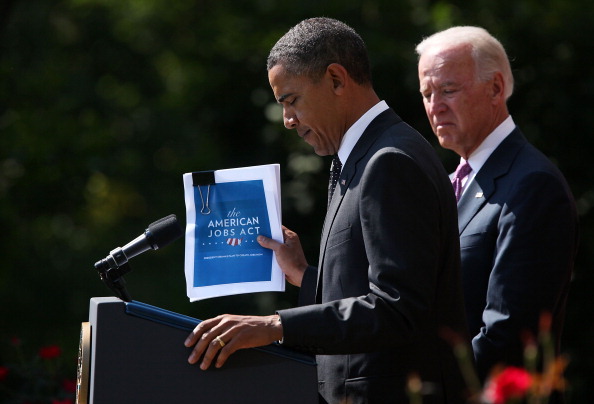
The White House notes that Orange County schools would receive $169.6 million to repair and modernize schools and another $13.2 million to pay for deferred maintenance.
The bill would send a total of $3 billion to Florida, supporting an estimated 16,600 jobs.
The Academy of Arts and Minds in Coconut Grove used to be a shopping mall. But no one was buying space, so the owner of the property founded a charter school and now rents his property to his school. The campus still looks like a shopping mall. There are wrap-around balconies on every floor and the classroom have floor-to-ceiling windows very much like a store front.
Sarah Gonzalez‘ story Wednesday about the business deals of a Miami-area charter school drew strong reader responses.
Intelligentmom came to the school’s defense, arguing students were left without books due to surprising enrollment growth. Academy of Arts and Minds students are prospering:
The Academy of Arts & Minds is an A+ school with a 98 percent graduation rate. Our grads have been accepted to some of the best colleges and universities in the nation. The school’s strong track record of academic success is why we chose to enroll our children at this school and it’s why we stay.
But SickOfLies believes school officials are living off past accomplishments:
The school was a mess until a real principal was hired in 2009 and turned the school around completely. It was because of him that the school earned it’s first-ever “A.” The principal has since left, but the school is still riding on the success of that one “A.” A lot of poor kids were disappointed this year to find that most of the teachers had left
In one case, district officials argued they already offered the online courses proposed by a virtual charter school.
In another, they rejected a plan from a for-profit company to replicate its ‘A’-rated South Florida charter in Seminole County. It’s a direct challenge to a new state law that makes it easier for high-rated charter school to expand.
Schaffner said Seminole County has had to close charter schools in the past and knows how to identify red flags in an application.
“We just felt like the ones that applied did not live up to the expectations of Seminole County,” Schaffner said. “We have to be sure that we improve student learning.”
Florida schools say they are not tracking whether the children of undocumented workers are enrolling.
Our colleagues at WUSF radio have looked into whether Alabama’s anti-illegal immigration laws mean migrant workers are moving to Florida and sending their children to schools:
Are students from Alabama ending up in Florida because of that state’s tough new immigration law? A news service reported that Florida’s educators were trying to answer that question.
But school officials say they’re not keeping count.
There are some anecdotal stories about migrant families from Alabama arriving in Florida’s tomato growing country several weeks early. Many say they’re fleeing the state’s more restrictive immigration law.
StateImpact seeks to inform and engage local communities with broadcast and online news focused on how state government decisions affect your lives. Learn More »