Background

drocpsu / Flickr
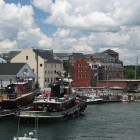
New Hampshire's Seacoast economy is a blend of traditional sectors, like fishing and tourism, and innovative, high-tech start-ups
This page is no longer being updated. For ongoing coverage of this topic, go to New Hampshire Public Radio.
______
At 18 miles long, New Hampshire has the shortest ocean shoreline in America. But for centuries, this small strip of land has been the heart of the state’s Seacoast region.
The Seacoast is home to New Hampshire’s commercial fishing industry, and has been since the establishment of the first fishing colony in 1623. But in recent decades, the area’s fishermen have struggled to maintain their foothold in the sector. In Portsmouth, the Seacoast’s main city, the U.S. Census Bureau found only 0.2 percent of residents work in the “farming, fishing and forestry occupations” category.
Today, a significant portion of the Seacoast’s economy is tourism-based. Portsmouth’s historic buildings and the draw of Hampton Beach, among other attractions, have allowed a number of small business owners to make a living catering to visitors.
In addition to tourism, the Seacoast is home to a thriving professional sector. A number of people are employed in the financial services and high-tech sectors. Compared to New Hampshire as a whole, the Census Bureau reports Portsmouth has a higher percentage of people working in management and professional roles. Statewide, 38 percent of workers have these higher-dollar jobs, compared to 46 percent of Portsmouth residents.
Home values in Portsmouth also skew high. There, 54 percent of owner-occupied homes are valued from $300,000 to $999,999, while statewide, that accounts for only 35 percent of homes. The portion of Portsmouth homes valued at $1 million or more is also double the figure for all of New Hampshire.
Despite this comparative prosperity, the Seacoast has its struggles. Most notably, there are a number of environmental issues surrounding declining water quality in the area’s vital Great Bay Estuary. These problems could prove costly to fix in the short-term, and have the potential to harm the Seacoast’s economy in the long-term.