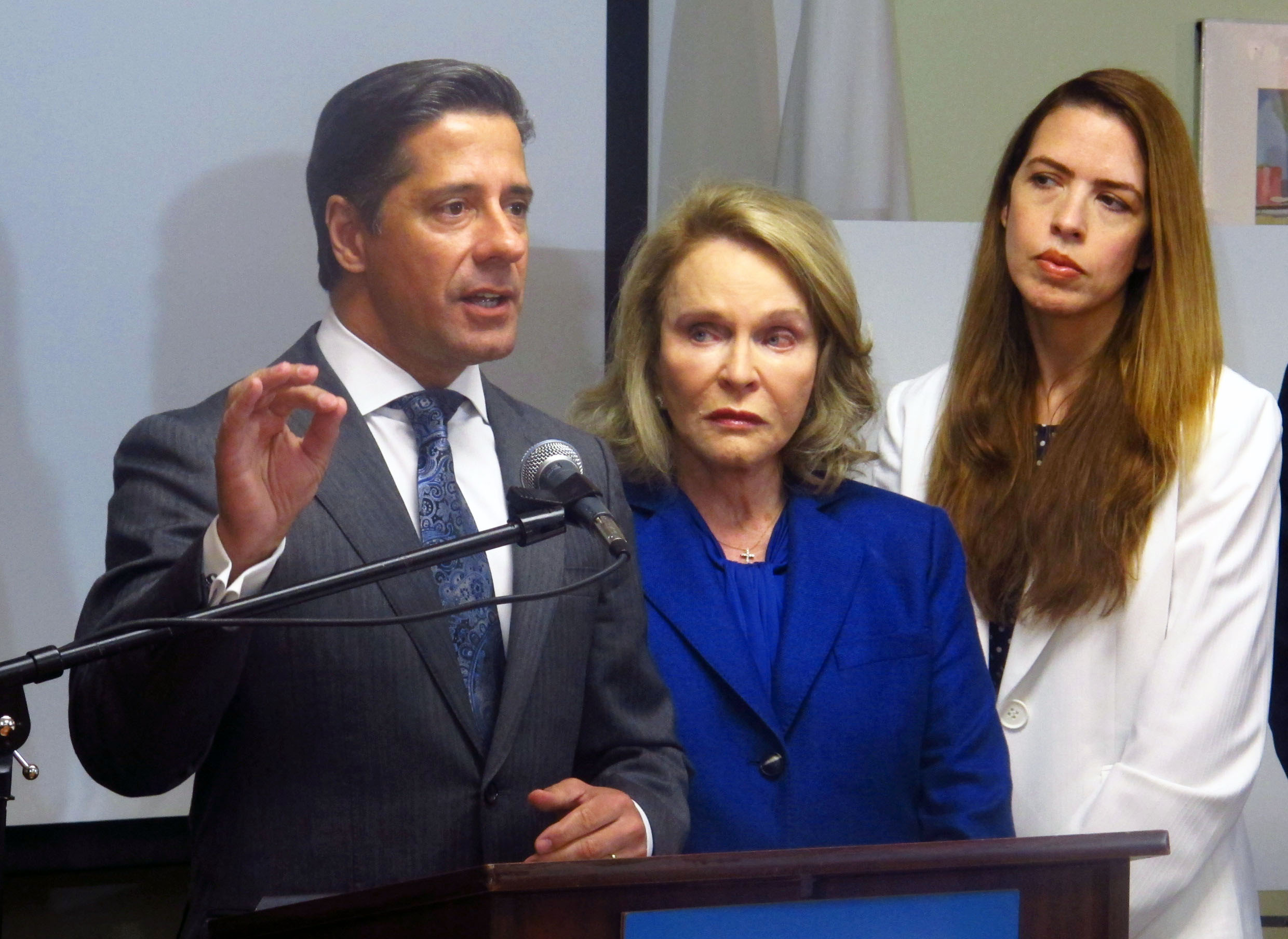
“Today’s announcement should come as welcomed news to everyone who recognizes that too much testing deprives our students of valuable instruction time,” district superintendent Alberto M. Carvalho said in a statement. “In making these decisions, we’ve taken a logical and responsible approach to address the concerns of students, teachers and parents.”
Miami-Dade will give no end-of-course exams to elementary school students this year.
The district will field test 10 middle and high school end-of-course exams, but the results will not have any consequences. Those 10 subjects include five science courses, three history courses and two Spanish courses.
The district will field test new exams each year.
UPDATE: As the Tampa Bay Times‘ Gradebook blog notes, Charlotte and Walton County school districts have also suspended required use of local end-of-course exams.
A storyboard created by Claudia Morell, a student in Broward College's Visual Arts and Design Academy.
A new program at Broward College has just eight students and seeks to train the next generation of South Florida artists and designers.
The school hopes to earn a national certification for the Visual Arts and Design Academy this spring – becoming the first community college in the South to have that.
Florida’s higher education system has put a focus on training workers for health care and other high-demand fields in recent years. And lawmakers have encouraged school districts to start career-training programs.
“People don’t realize the relationship, frequently, between science and art,” said Broward College art professor Leo Stitsky. “If we do away with pure science there would be no computer. If we do away with art there would be no Apple.”
The Florida Council on Economic Education says personal bankruptcies have increased 2200 percent in the last 40 years. That’s one reason why the council is leading a campaign called Require The Money Course.
Bills filed in the Florida House and Senate would require high school students to take a one-semester financial literacy course. But with just three weeks left in the legislative session, the proposals (House bill 29 and Senate bill 92) haven’t been discussed by committees.
Now, there’s another option in the Florida Senate to get the class into high schools if the legislative proposals fail. An alternative is now part of the Senate budget plan for the state starting in July. It would create a required financial literacy pilot project in Broward County schools and a grant program that would enable other districts to participate.
A survey by the National Foundation for Credit Counseling finds about three-quarters of Americans think they would benefit from professional help with their everyday finances.
Criminology major Justin Buis, a junior at Florida State University, has friends who could use the help.
“They have a certain amount of money for a semester and by the time the semester is halfway through, all their money is gone,” Buis says. “They’re living on gas station food or ramen noodles because they don’t know how to manage their money.
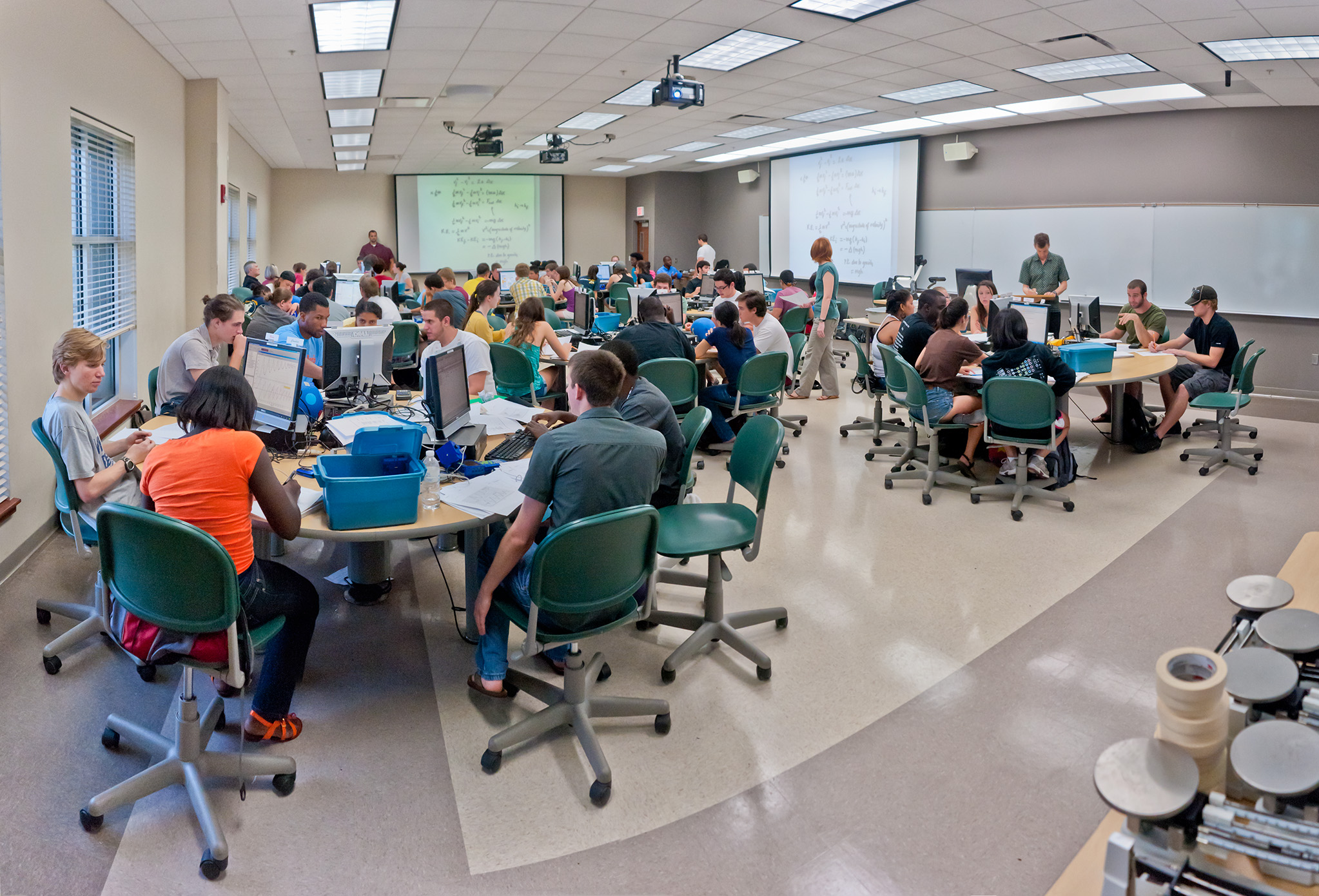
An example of a hands-on science classroom. Paul Cottle says students are more engaged than with a traditional lecture.
As a physics professor at one of Florida’s public universities, I am always looking for ways to encourage students and their parents to take on the challenge of majoring in science or engineering in college.
A few weeks ago, I visited with parents of middle and high school students who attend a science-oriented school near downtown Orlando. The parents wanted to know how to keep their kids on track for science and engineering careers. I told them that their kids should keep taking math and science courses – including calculus and physics – all the way through high school.
And then I shared what I think are the two most important things for future scientists and engineers (and their parents) to look for in a college. One is classroom instruction that actively engages students and is based on studies on how students learn best. The second is the opportunity for students to get involved in cutting-edge scientific research programs early in their undergraduate years.
W. Kent Fuchs is the new president of the University of Florida. During his time at Cornell University, he helped establish a New York City campus.
Three months ago Kent Fuchs became president of the University of Florida, leaving New York’s Cornell University.
Fuchs says Florida universities are adding new faculty, but opposition to higher tuition means more pressure to find private donations.
The University of Florida is also expanding a new online program, with a goal of eventually enrolling 24,000 students.
Fuchs sat down with WLRN’s StateImpact Florida reporter John O’Connor to talk about the issues in higher education.
Q: Tell us a little bit about the state right now. You’ve been here three months. What have you learned so far? Where do you think things are? And where do you think they’re going?
A: When I look at the national landscape, the University of Florida, and indeed the state universities across our state, are in a different place than many of our peers.
Students can pay hundreds of dollars a year in overdraft fees from banks. Often those banks have special partnerships with colleges or universities, but students can likely find as good or better deals on their own.
Those overdraft fees can cost students hundreds of dollars a year — more than books — on accounts often set up to handle financial aid payments.
The review included two schools in Florida with bank partnerships: the University of Central Florida and Miami Dade College. UCF partners with Fairwinds Credit Union, which charges $35 per overdraft while Miami Dade College partners with Higher One. Some Higher One accounts charge a monthly fee but have no overdraft fees, while other accounts charge up to $38 per overdraft.
About 40 percent of young adults said they overdrew their account at least twice per year. The heaviest offenders, 11 percent of young adults surveyed, said they overdrew their account 19 times per year — or $665 in overdraft fees under the terms of a UCF Fairwinds Credit Union account.
Students could avoid those charges if banks declined the debit charges rather than charging overdraft fees, sometimes several in a day before students know their account is overdrawn.
Despite problems with Florida's new exam, testing experts say the state's emphasis on digital lessons mean schools should use computerized testing.
Testing experts say the problems Florida’s has had with its new statewide exam so far are likely not serious enough for the state to consider throwing out this year’s test scores on the Florida Standards Assessments.
Those glitches have led some lawmakers and parents to ask for a return to paper and pencil exams. But those same testing experts say Florida shouldn’t abandon computer-based tests at the same time classroom lessons are becoming more high tech.
“The startup problems that Florida had do not seem to reach a place where you would have to throw out the results,” said Doug McRae, who retired as an executive with curriculum and testing company McGraw-Hill. “I would recommend that you would really need to have upwards of 10 percent of the population affected by problems before you have to seriously consider not using the results.”
Yesterday, a Senate committee appeared to suspend for one year Florida’s requirement that the lowest-performing 3rd graders be held back while the state validates results from its new test.
But Senate Education committee chairman John Legg says it’s not that simple.
What the committee actually did, Legg says, is put the responsibility on school districts whether students stay in 3rd grade or move to 4th grade. So some students with the lowest scores on the state language arts exam could still be retained this year.
“They asked us to trust them,” Legg says of the request from school district leaders.
Florida law requires 3rd grade students earning the lowest score on the state reading test spend another year in 3rd grade to improve their reading. Students can get an exemption from the requirement by submitting a portfolio of their work, through alternative test scores or other methods.
Florida law requires 3rd graders with the lowest scores on state tests to be held back. But a Senate committee wants to suspend that penalty this year.
But this year the state might not hold back any 3rd graders. That’s because a Senate committee voted to suspend those penalties this year.
The bill requires an outside group to make sure the state test results are statistically valid.
Sen. David Simmons says he wants to make sure schools and the state can depend on Florida Standards Assessments results before making big decisions using those results.
“Common sense says that we need to ensure that this test that is being administered is, in fact, psychometrically valid,” Simmons says. “This amendment does that.”
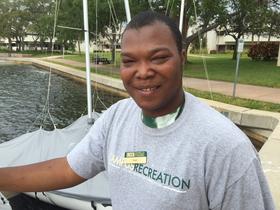
Quan Jones of Project 10 Stingray works at the marina behind USFSP
A college education is generally considered a student’s best shot at getting a good job these days, and it’s often assumed most high schoolers are prepared to attend college.
But there’s one group that has been quietly excluded from that process — students with intellectual disabilities.
A program at the University of South Florida St. Petersburg is giving these students college experience that while it’s not a traditional degree, it’s giving them a head start on their career goals.
It’s a very windy afternoon at the small marina behind the University of South Florida St. Petersburg and Quan Jones is trying to keep busy.
“I work at the waterfront and we help people check out canoes, kayaks and paddle boards. This is something that I want to work at in my future,” said Jones.
StateImpact seeks to inform and engage local communities with broadcast and online news focused on how state government decisions affect your lives. Learn More »