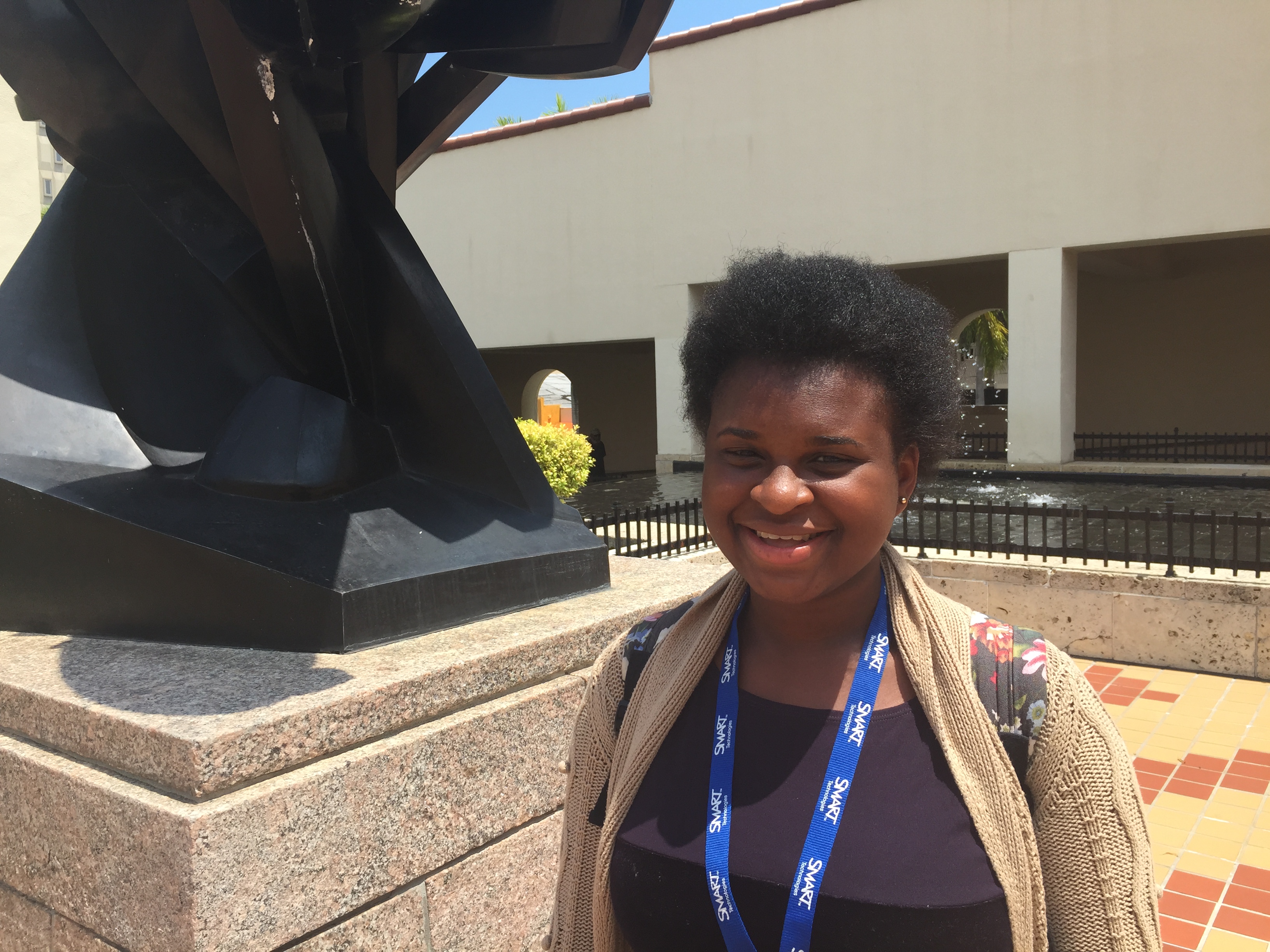
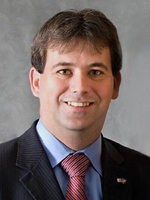
Ashley Jean has enrolled in a global studies program at Long Island University. Now she's trying to raise money to help pay for travel costs.
Ashley Jean is graduating from Miami’s iPrep Academy this week. And then she’s planning to travel the world.
Jean will start a global studies program through Long Island University that will eventually take her to places like Costa Rica, Australia, Bali and Spain.
That’s a lot of plane tickets.
“I don’t want money to be a reason why I can’t change my life,” Jean says, “so I have to work hard to do what I can to get this program.”
Like a growing number of college students, Jean is turning to crowdfunding sites to help her raise money for college. The sites let users search by location or topic and donate directly to causes they like.
It’s just a fraction of the total cost of the program – but every bit helps. She says gofundme lets her make the pitch her way.
“I put orange because that’s my favorite color,” she says of her page. “Usually the photo or video it usually enhances — they require you to have a photo because it makes it [easier] for you to get more money and stuff.”
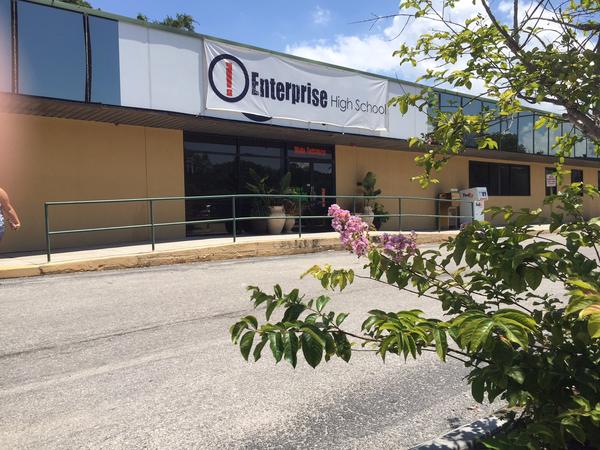
The entrance to Enterprise High School, a charter school in Pinellas County for students at risk for not completing their educations.
Of the more than 600 charter schools in Florida. Some focus on the arts, some on sciences. Others are high schools that help students who are at risk for not finishing or dropping out completely.
At the crossroads of busy four lane highway in Clearwater, students have to make their way through the noise and exhaust of heavy traffic to get to their high school classes.
Tucked in the back of of a strip mall is Enterprise High School. The 5-year-old charter school focuses on just one kind of student, those at risk for not finishing high school at all.
You may have one a lot like it very close by and not even know it.
Donna Hulbert, Director of the school says Enterprise gives its student free bus passes, eliminating one obstacle to getting here on time.
“We are located here, really, for one purpose only. We have four bus stops on the corners of our intersection.”
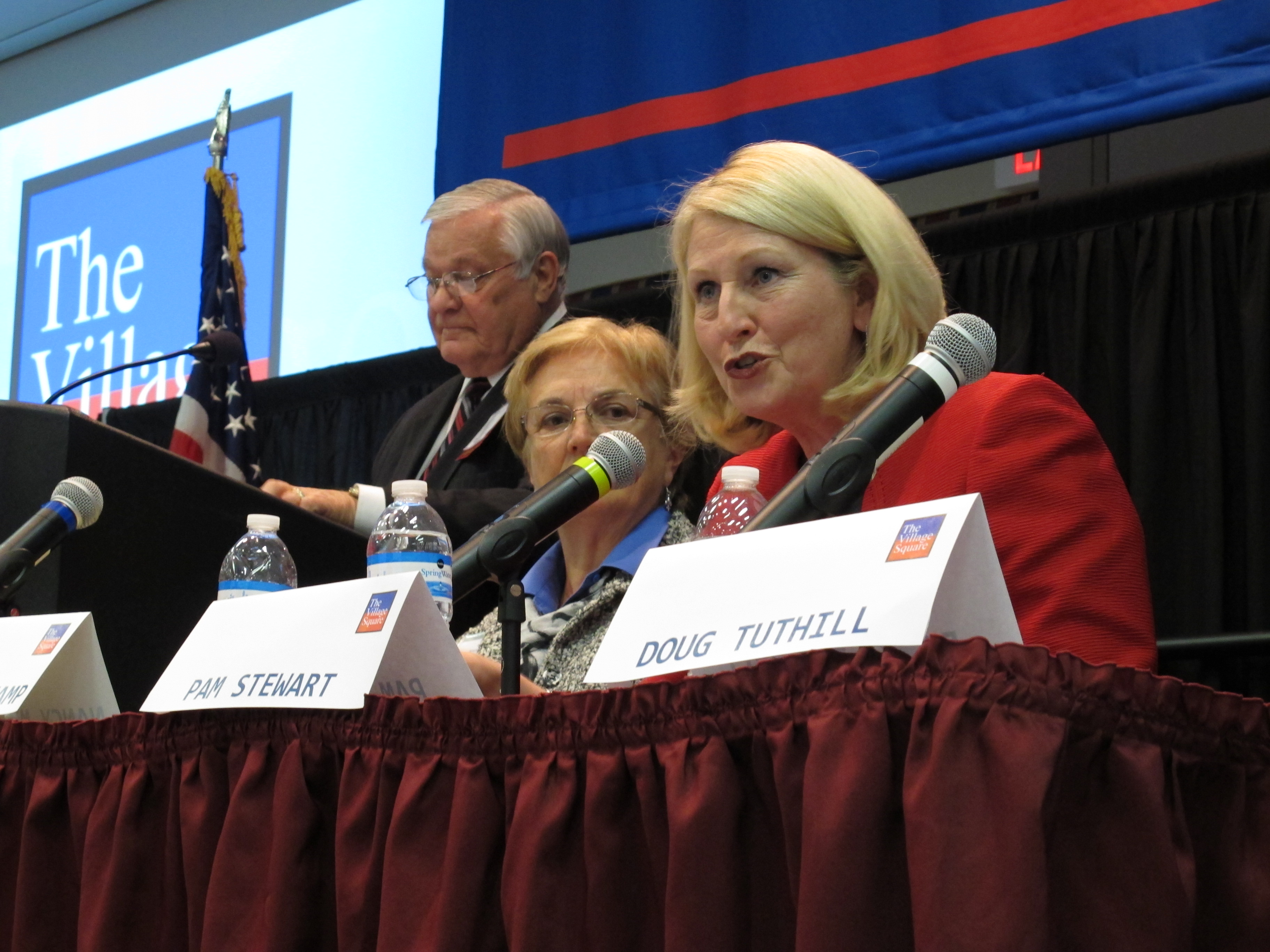
Stewart says she has met the top three goals set out for her by the State Board of Education:
Improve rates of learning and students achievement.
Improve graduation and completion rates.
Complete a positive transition to new K-12 standards and assessments and to improved K-16 accountability systems.
The evaluation cites a list of achievements to prove Stewart’s case: The state’s top-10 ranking for academic efforts in Education Week’s annual report card; rising high school graduation rates; improved performance of Florida’s black and Hispanic students on national exams, particularly compared to white classmates; the number and rate of students taking and passing Advanced Placement exams.
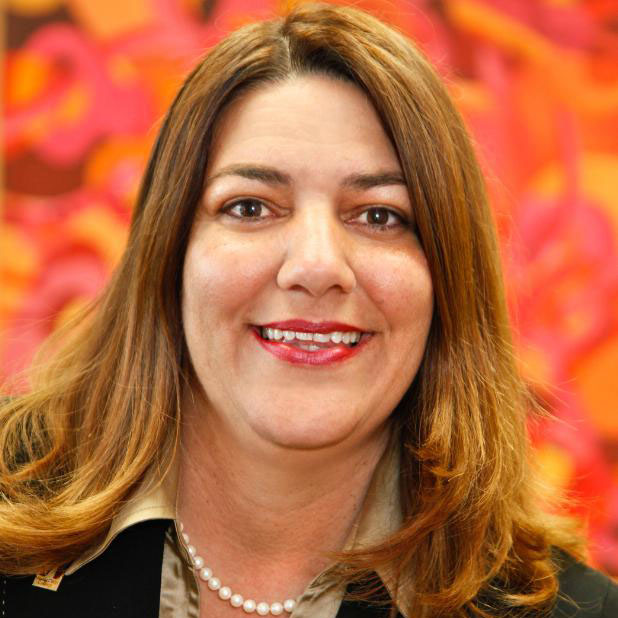
Former Miami Dade College dean Madeline Pumariega will lead the Florida College System.
A former dean at Miami Dade College has been selected to lead the Florida College System.
Florida Education Commissioner Pam Stewart chose Madeline Pumariega to be chancellor of the state’s system of community colleges.
Pumariega worked for more than a decade at Miami Dade College, including serving as Dean of Students at the Wolfson Campus. She has been the president and CEO of Take Stock in Children since 2013.
The statewide non-profit takes students at risk of dropping out of high school and helps them complete college.
Stewart says Pumariega will maintain the progress Florida’s college system has made.
“With Madeline’s extensive background in higher education and commitment to helping Florida’s students thrive,” Stewart said in a statement, “she is the right choice to ensure we continue our positive direction.”
Pumareiga follows Randy Hanna, who announced he was leaving the post last year.
The Florida College System enrolls more than 800,000 students at 28 schools across Florida. At many campuses, students can earn two-year or four-year degrees.
Broward Teachers Union president Sharon Glickman, with Broward County schools superintendent Robert Runcie, calling for changes to the teacher evaluation system in October.
Florida lawmakers’ decision to end mandatory final exams for every class will mean that more teachers’ performance will be judged on subjects they don’t teach.
Concerned about the amount of testing in schools — and pressured by activists and educators — this year lawmakers rescinded a state law that requires school districts to have a standard final assessment in any class that doesn’t already have a statewide exam. In most cases that’s a test, but it could be a final project or compilation of a student’s work.
Many districts jumped on the chance to get rid of the tests, which are also known as end-of-course exams.
But eliminating end-of-course exams means confronting an old problem again: Florida law requires teachers are evaluated based on whether students miss, meet or exceed expected results on state standardized tests. So how do you rate teachers if there’s no test?
Several large Florida schools districts say they will use state test scores to evaluate those teachers. That means some art, music or gym teachers will be judged based on their students’ scores on the state reading test.
“In some cases teachers are definitely not happy with it,” said Sharon Glickman, president of Broward Teachers Union. “And to a certain extent we’re not either. But it’s the best of, I hate to say it, two evils.”
John Oliver spent 18 minutes taking on standardized testing, teacher evaluations and all things “accountability” related on his show, “Last Week Tonight.”
And, of course, Florida plays a starring role.
Warning: Salty language, off-color jokes and test monkeys ahead.
Twice this year contractor American Institutes for Research made changes to their system which prevented students and administrators from accessing the exam. Some students were even booted in the middle of completing the test.
But Sen. John Legg, a Pasco County Republican, says there’s little support for that.
“Quite frankly the Legislature is not heading in that direction,” Legg says, “nor are senators and House members even talking about that. To cancel a contract in the middle would be very costly.”
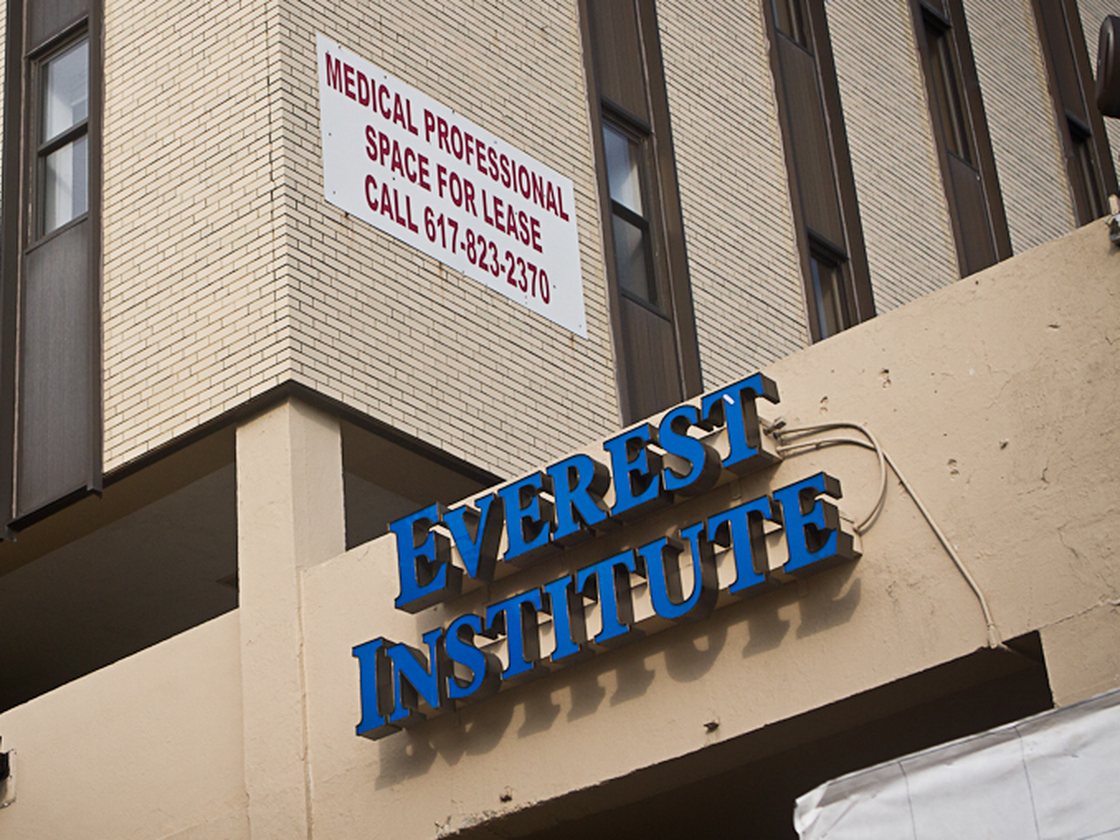
Corinthian Colleges, the parent company of Everest University, agreed to sell or close all its campuses. This campus in Boston has closed. Florida campuses were sold.
About 300,000 Florida students attend a for-profit college, which often specialize in training low-skill workers for a new career.
But students often find their degree doesn’t qualify for the career they were seeking, and they graduate withe tens of thousands of dollars in debt.
Vasquez spoke with StateImpact Florida about what he discovered:
Q: Michael, you have spent a year looking at how for-profit colleges, career colleges, operate in Florida. Why don’t you kind of sum up what you’ve found?
A: Sometimes career colleges, which are mostly for-profit, sometimes they do a good job with students. They take students who are typically non-traditional older students. Maybe, if they’re younger, they probably weren’t the best students in high school.
StateImpact seeks to inform and engage local communities with broadcast and online news focused on how state government decisions affect your lives. Learn More »