Brown v. Board of Education—the Supreme Court decision declaring segregated schools are inherently unequal—turns 60 years old this weekend.
Earlier this week, we brought you memories from students and teachers who were there in the early days of desegregation.
And now, with decades of perspective, here are some of their reflections on the legacy of Brown:
Mamie Pinder
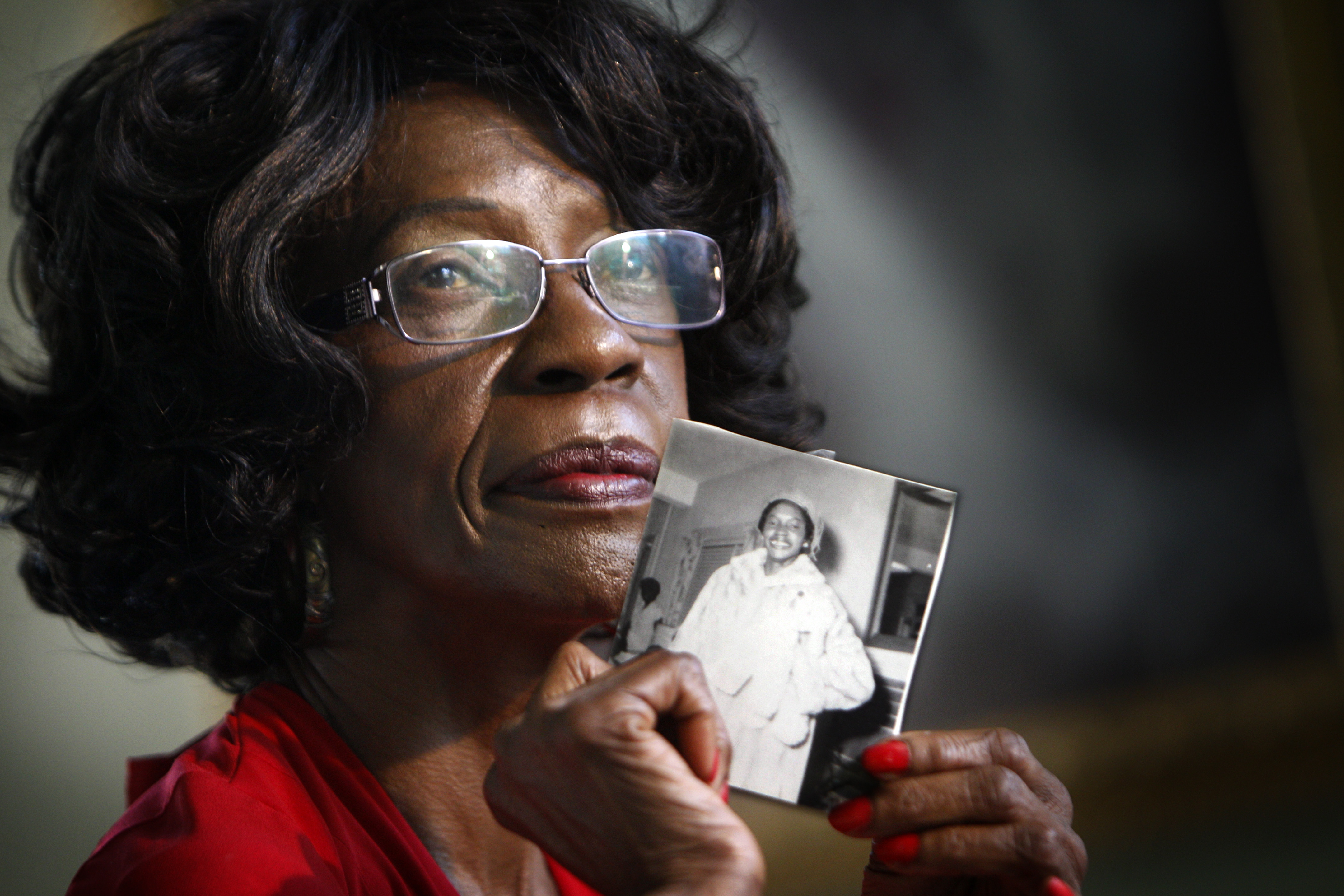
In 1963, Mamie Pinder was a first-time classroom teacher in the previously all-white Allapattah Elementary School. She taught fourth grade. Eventually, Pinder went on to be the first black woman to run for mayor of Miami.
“One day I spent the time asking each of my kids—who were black and white now—‘What color are you? What color are you?’ You get pink, brown, blue. Any color. You don’t get black or white from kids. Continue Reading →
Florida's education goals in math and reading currently vary by race.
Students and civil rights activists have asked Gov. Rick Scott to hold black and Hispanic students to a higher standard. The Southern Poverty Law Center and Dream Defenders were in Tallahassee this week to deliver a petition—with 5,800 signatures—protesting Florida’s race-based academic goals.
By the 2017/18 school year, the Florida Department of Education expects 92 percent of Asian students will pass their math tests at grade level. For Hispanic students, the goal is 80 percent. For black students, it’s 74 percent.
“We’re sending a message that we expect less of certain kids for no reason other than the color of their skin,” said Tania Galloni, the managing attorney for the Southern Poverty Law Center’s Florida office. She went to Tallahassee with students and other activists to bring the petition against the unequal standards.
“We know from decades of research that when you lower expectations for a group of people, people internalize that information,” said Galloni.
Two new national studies raise questions about the how accurate modern teacher evaluations are.
The first study, from the University of Southern California’s Morgan Polikoff and the University of Pennsylvania’s Andrew Porter, finds test-based evaluation scores have little to no link to other teacher quality measures, such as how well instruction matches standards and the content of assessments. Their study included data from Hillsborough County schools in Florida.
The scores are known as a value-added model, and use a statistical formula to predict how well a student should score on standardized tests based on past performance. If the student scores higher or lower than predicted, that difference is attributed to the classroom teacher.
Florida Department of Education
After analyzing the first year of data, the Florida Department of Education believes the state's teacher evaluation formula is sound.
Florida law requires teachers are evaluated based on a combination of how much student test scores improve and in-class observations. Florida is one of a growing number of states which requires school districts to pay teachers based on their evaluations.
Reinaldo Camacho finished his two-year degree from Miami Dade College while he was still in high school. He's the first member of his family to pursue post-secondary education.
Sixty students from the Hialeah area will graduate from high school this month like thousands of others in Florida, but these students have done something especially remarkable.
They’ll receive their high school diplomas almost a month after graduating from Miami Dade College.
The students took advantage of the dual-enrollment programs offered at Mater Academy and Mater Lakes Academy. These are publicly funded charter schools that operate independently of the district.
Both campuses have large immigrant populations.
“They’re located in Hispanic, working-class, low-income neighborhoods in Miami,” says Lynn Norman-Teck with the Florida Consortium of Public Charter Schools. “So the administrators really started pushing dual enrollment more as a cost saving program for these kids because they could get a lot of college credits out of the way.” Continue Reading →
Mamie Pinder, holds a photograph of herself as a young teaching student. Pinder, a retired Miami-Dade school teacher, began teaching in 1963, the year the school district began merging black and white students bodies and faculty.
This weekend marks the 60th anniversary of Brown v. Board of Education—the Supreme Court decision declaring separate schools were inherently unequal.
A recent ProPublica investigation found at least 300 school districts that are still under court-ordered desegregation. Eleven of those districts are in Florida.
Even though Miami-Dade County had those desegregation orders lifted relatively recently in 2001, it was an early state leader in desegregation, putting black and white children and black and white teachers in the same schools.
StateImpact Florida collected memories from some of those students and teachers.
A note to listeners, this story contains strong language: Continue Reading →
Lutz Elementary School teacher Mike Meiczinger uses Twitter to let people know what's happening in his class.
Lutz Elementary School teacher Mike Meiczinger noticed some parents weren’t using the class web site to keep track of what their students were doing.
So Meiczinger signed up for Twitter as another way to keep in touch. He still feels like a novice, but Meiczinger sees it as an instant messaging service for parents.
“I always tell my parents the child can never come home and say ‘Oh, we did nothing today,'” Meiczinger said. “That’s why I use it, so the parents know what’s new and fresh with the kids.”
We sat down with Senate Education Committee Chairman John Legg to talk about the recently completed legislative session.
Legg said it was a good year for schools, with the budget boosting per student funding and lawmakers adding more options for students who want to earn college credit while still in high school.
On the year’s most controversial proposal — expanding the private school tax credit scholarship program — Legg said the Senate gave up on its idea to require those students take the same statewide standardized test as public school students. But the final bill does require more auditing and should provide more data to assess how well the program is working.
Legg also talked about a proposal to make it easier for charter schools to open and what influence, if any, the governor’s race had on lawmaker decisions. Below are excerpts from the interview.
Q: You guys wrapped up the legislative session last week. You’re chairman of the education committee. I’m going to start — just give me a summary of what happened with education during the session?
A: It was a good year for education this year. We took on some big reforms, but what we did was the reforms that we did were based at the district level. We’ve allowed for some stability to take place, but also made adjustments on reforms that we’ve done over the last decade dealing with school grading, dealing with some acceleration. But all in all, it was a year of stability and a year of increased funding.
Just 19 percent of Florida 12th graders were considered “proficient” on the 2013 math exam, according to test results. NAEP defines proficient as students who show solid academic performance for their grade, including competency over challenging subject matter.
Nationally, 26 percent of students achieved proficient or higher on the exam.
Reading scores were a little better. Thirty-six percent of Florida students scored proficient or above on the 2013 exam. The national rate was 38 percent.
Florida students showed no statistical improvement since the last time the exam was administered in 2009.
Hillsborough County teachers Julie Hiltz and Jaraux Washington cooked up the idea to push back against the idea that teachers are glorified baby-sitters and share what the job is really like.
Teachers are posting photos, testimonials, anecdotes and other insights from the classroom. You can listen to three Florida teachers talk about what teaching is below. And here are some of our favorite #TeachingIs tweets, after the jump:
More troubling for the new standards? The more people surveyed said they know about the standards, the less likely they were to support Common Core or believe Common Core would improve schools or produce high school graduates who were ready for college.
Sixty-one percent of those who said they knew “a great deal” about Common Core thought the standards were not good policy. For those who said they knew “only a little” about Common Core, 43 percent said Common Core was good policy.
Overall, half of Democrats thought Common Core was good policy. Just one-third of independents and 30 percent of Republicans thought the standards were good policy.
Non-whites were more likely to support the standards, as were those living in the Midwest and West. Opposition to Common Core was strongest in the South — 60 percent said Common Core is not good policy — and Northeast.
StateImpact seeks to inform and engage local communities with broadcast and online news focused on how state government decisions affect your lives. Learn More »