Students will take the new Common Core assessments online. The assessments are still being developed, and school districts are scrambling to get the necessary equipment.
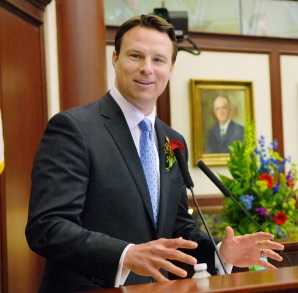
House Speaker Will Weatherford says Florida needs to be ready in case the test accompanying new education standards isn’t ready by a spring 2015 deadline.
The standards are a new way of teaching – students will delve deeply into fewer topics than they do now, and they’ll have to explain their answers. It also means the end of most Florida Comprehensive Assessment Tests.
But the Department of Education is looking at a potential delay in implementing a new, accompanying test.
Speaker Will Weatherford said he hopes Florida won’t need a delay, but it might be necessary.
“There is a possibility that it’s not going to be ready for prime time,” Weatherford said. “So if it’s not, we’re going to have to have a Plan B. So I think it’s prudent of Commissioner Bennett to kind of have a backup plan just in case.
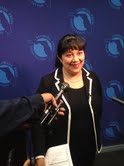
Patricia Levesque runs former Gov. Jeb Bush's Foundation for Florida's Future. She says the parent trigger bill is about giving parents a legal seat at the table when changes are needed at a failing school.
Supporters of the parent trigger bill held a briefing with reporters today near the Capitol.
The briefing was hosted by Patricia Levesque, executive director of the Foundation for Florida’s Future. The foundation was created by former Gov. Jeb Bush.
“It’s a provision that says that schools need to make sure students are assigned to effective or highly effective teachers at least every other year,” Levesque said. “Schools that are low-income tend to have an over representation of teachers who” don’t meet that criteria.
If private schools want to accept McKay Scholarships, Adam Emerson with the Fordham Institute writes, they should also accept some oversight.
Florida’s special education scholarship program needs more accountability, a school choice researcher argues, despite opposition from a coalition of schools which administer the scholarships.
Speaker Will Weatherford says the House budget will likely include $1 billion in additional funding for K-12 education.
Florida House Speaker Will Weatherford is a big proponent of nontraditional education.
Weatherford is pushing for an online state university in Florida, and he encourages families to consider different ways of learning besides district-run brick and mortar public schools.
The Florida Education Association – the teachers union – says of the parent trigger: “We need to invest in the classroom priorities that build a foundation for student learning rather than simply turning our children, our school buildings and our tax dollars over to profit driven corporations and hoping for the best.”
But in an interview with StateImpact Florida last week, Weatherford said he was shocked that anyone would want to defeat the parent trigger bill.
“All it does is give parents a say in making sure their children get a quality education,” Weatherford said.
He says he and his wife haven’t decided yet on schooling for their three daughters. His oldest, not yet in kindergarten, currently attends a private Christian school.
Here’s more from our interview with Speaker Weatherford:
Florida House Speaker Will Weatherford isn’t shy about pushing his non-traditional agenda for public education.
It’s based on his own life experience.
He’s in favor of options that are growing in popularity, like virtual classes and charter schools.
StateImpact reporter Gina Jordan sat down with Weatherford in his office to talk about his educational roots. He tells us why he supports legislation like the parent trigger bill and whether he thinks teachers will get raises next year.
The Coalition sent a survey to the 1,155 participating McKay Scholarship schools in February. It received 474 responses, representing approximately 40 percent of the McKay schools. Results indicate that 1) nearly all of the schools are conducting norm-referenced assessments of their students; 2) these education professionals do not believe the FCAT is an appropriate measure for their students with disabilities; and 3) 61 percent of the schools responding reported they would no longer participate in the McKay Scholarship Program if required to give the FCAT to their students.
The McKay Scholarship Program was designed so parents of children with disabilities would be able to identify and participate in programs that would meet the needs of their children. Many parents choose to participate in the McKay program because they do not believe the FCAT and a one-size-fits-all approach to education are in the best interest of their children who have disabilities and do not fit the “norms.” The McKay Scholarship Program has been very successful and popular with parents because it provides them with the ability to choose a school that best meets the unique needs of their children.
House Speaker Will Weatherford says he supports Gov. Rick Scott's proposed teacher raises, but he says local districts ultimately decide how to spend the money.
House Speaker Will Weatherford met with reporters at the Capitol late Thursday.
He answered a variety of questions, including one that has been plaguing him about proposed teacher raises.
Weatherford told reporters Thursday that most of the billion or so dollars being added to the House education budget next year will go toward teacher salaries.
But he said the law doesn’t allow state government to dictate how local school districts spend money.
“We basically write a lump sum to each school district, and then that money is collectively bargained between the union and the school board and the superintendent,” Weatherford said. “So we can’t really micromanage that process.”
The Blarney Stone at Blarney Castle, near Cork, Ireland. The stone imparts "the ability to deceive without offending" -- flattery would be a form -- to those who kiss it.
University of South Florida education professor Sherman Dorn parses some of the language — what he calls “blarney” in a St. Pat’s Day theme — surrounding new education standards adopted by Florida, 44 other states and the District of Columbia.
The standards, known as Common Core, ask students to know fewer topics, but to have a deeper understanding of those topics. The goal is that students will be ready for college-level work or a job upon graduating high school.
Dorn’s list has 10 items, but we’ll focus on two: Whether Common Core means the end of local control of education and the differences whether common standards will mean a common curriculum.
State Board of Education member Kathleen Shanahan.
A Florida Senate budget proposal includes money for teacher raises, but the State Board of Education is worried the spending plan does not set aside enough money to expand Internet access at state schools.
The Florida Department of Education says 263 schools lack broadband access while 1,600 schools don’t have the high-speed wireless Internet needed for digital classrooms.
The agency asked for $390.1 million in its budget request to offer schools grants to upgrade their wireless Internet access. The agency requested another $51.7 million to obtain 304,000 computers, tablets or other devices needed for testing.
Board members are worried they haven’t adequately explained why the money is needed — and that they are running out of time as lawmakers begin debating the budget. Legislators are working on a spending plan for the last full budget year before new education standards — known as Common Core State Standards — and accompanying test are scheduled to take effect in the fall of 2014.
Internet access will be important as Florida schools switch to Common Core and replace the Florida Comprehensive Assessment Test with online exams. In addition, a state law requires Florida schools deliver half of their instruction digitally beginning in the fall of 2015.
“They’re not there at all,” board member Kathleen Shanahan said at Tuesday’s meeting. “We have our responsibilities to be ready for Common Core…we haven’t made our case.
StateImpact seeks to inform and engage local communities with broadcast and online news focused on how state government decisions affect your lives. Learn More »