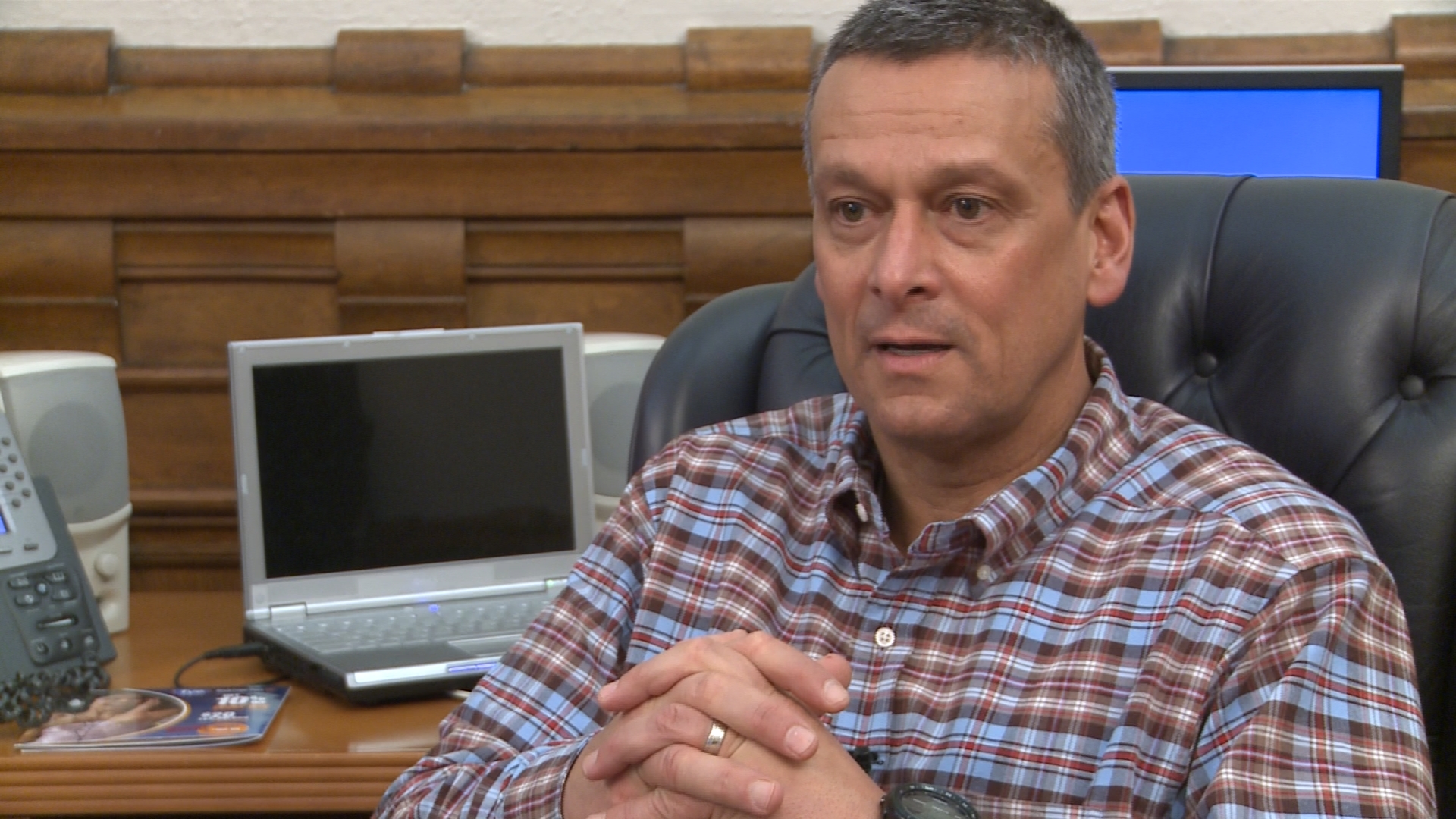
Board member John Colon said he wanted the continuity Stewart brings to the job. Florida has had five education commissioners hold the high-profile and high-pressure post since March of 2011. Board members praised Stewart’s experience.
Stewart steps in at a challenging time. Florida is trying to implement new math and English standards, known as Common Core, as opposition to the standards is on the rise. The state must also choose a new standardized test tied to Common Core to (mostly) replace the FCAT.
Gov. Rick Scott's leadership was criticized by State Board of Education members with ties to former Gov. Jeb Bush.
Two State Board of Education members criticized Gov. Rick Scott’s leadership on education issues Tuesday, highlighting a rift between Scott and former Gov. Jeb Bush.
Board members Kathleen Shanahan and Sally Bradshaw — who served as former Bush chiefs of staff — said Scott needed to show more leadership on Common Core State Standards and other education issues.
The board is meeting in Palm Beach County today.
Shanahan said Scott did not attend a recent three-day education summit held in Clearwater and did not take any policy positions following the summit. Shanahan said she heard rumors that Scott would issue an education-related executive order and the board had not been consulted.
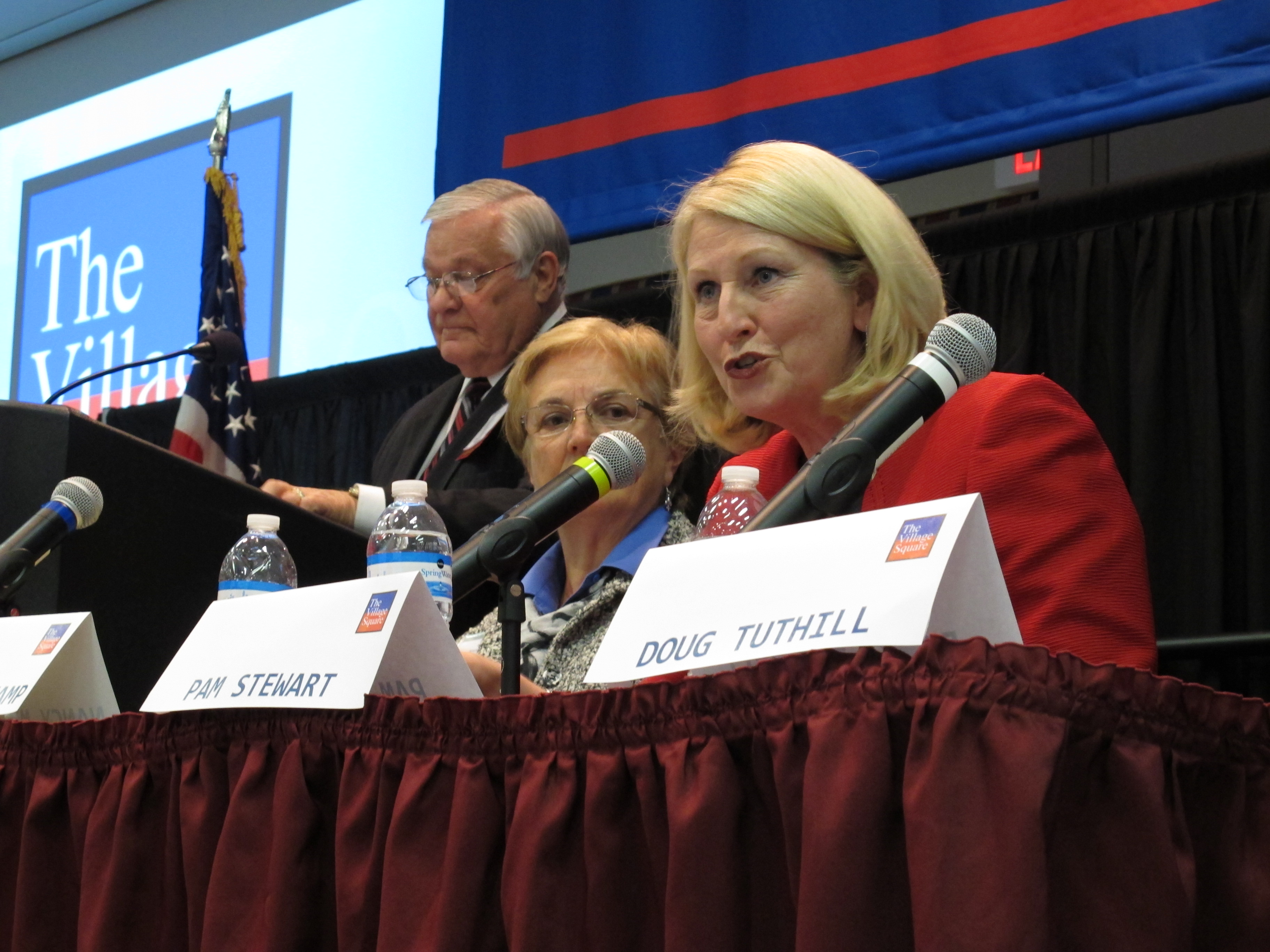
“It’s embarrassing for him that he’s disrespecting the statutory integrity of this board,” she said. Shanahan said Florida education was in a “crisis,” which drew disagreement from board chairman Gary Chartrand — a Scott appointee — and interim Education Commissioner Pam Stewart.
But opponents of the standards, known as Common Core, have turned up the heat throughout the spring and summer. The opposition hails from the political right and the political left, and their concerns range from whether local school districts and the state are ceding control over education, the quality of the standards and the amount of testing associated with Common Core.
That’s what lawmakers face as the return to Tallahassee next week for the first week of committee meetings to prepare for the 2014 legislative session.
Florida is in the midst of transitioning to the new standards, which outline what students should know at the end of each grade. The standards are scheduled to be used in every grade by the time classes start next fall.
The draft budget is one item on a busy State Board of Education agenda tomorrow. The board will also discuss what’s next in hiring a new education commissioner and a new rule for determining residency for in-state tuition.
In total, the agency’s $15.1 billion request for the budget year beginning July 1 is $65.3 million less than the current spending plan.
The plan calls for every school district to receive at least $75,000 for technology projects (pg. 139), with the remainder of the $40 million distributed according to student enrollment. The first priority for the money is improving computer networks, but districts which meet state benchmarks could use the money for devices.
But Florida still spends 3.9 percent less — $157 per student — on education now than it did in 2008 prior to the Great Recession. At least 34 states still spend less on education now than in 2008, with 13 states cutting spending by 10 percent or more over the period.
House Speaker Will Weatherford, a Republican, takes questions from the Suncoast Tiger Bay civic club.
We caught up with House Speaker Will Weatherford at yesterday’s meeting of the Suncoast Tiger Bay civic club.
Weatherford, a Wesley Chapel Republican, took questions about Obamacare, Stand Your Ground and requiring power customers to pay the cost of new nuclear plants up front.
Weatherford said he expects Common Core to be a big topic as lawmakers return to Tallahassee for committee meetings next week. Weatherford said he supports high academic standards, but admitted critics raised some legitimate concerns about Common Core.
Q: We’ve got the first bill introduced that would put a hold to [Common Core]…What kind of debate do you expect next year and what’s the plan up until next year to educate people about it and get the discussion going?
A: I think having a debate about standards is always a good thing to have.
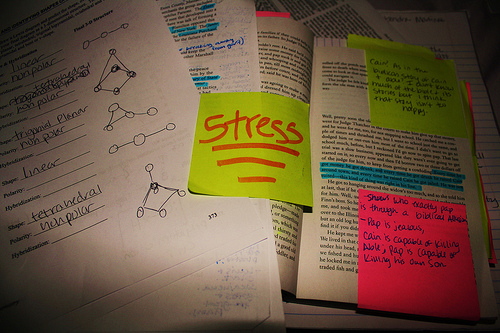
A former Miami-Dade teacher says she got little help dealing with the stress of teaching.
Editor’s note: Names of teachers and students have been changed.
Marie Roberts is the kind of person most education policy-makers dream of attracting to the teaching profession. She intelligent, sensitive and able to handle a classroom full of teenagers. She is herself a public school graduate and an Ivy League-educated woman of color.
She’s also the teacher highlighted in an earlier post about adding value — the teacher whose students demanded “small books.” She responded by securing a class set of novels to help them experience an authentic reading experience.
But despite her commitment to children and to education, she left the classroom after three years.
“I left teaching because I didn’t know how to make it sustainable,” she told me. “I didn’t have the resources or the tools professionally or emotionally [to deal with] all the demands of the students that weren’t just academic or even just social. There was always more work to be done—I never felt a task was complete. There was always more.”
Many new teachers often feel overwhelmed because, like Roberts, they are often assigned to the most difficult schools. Her first year was in a large high school in a high-poverty neighborhood in Miami-Dade County.
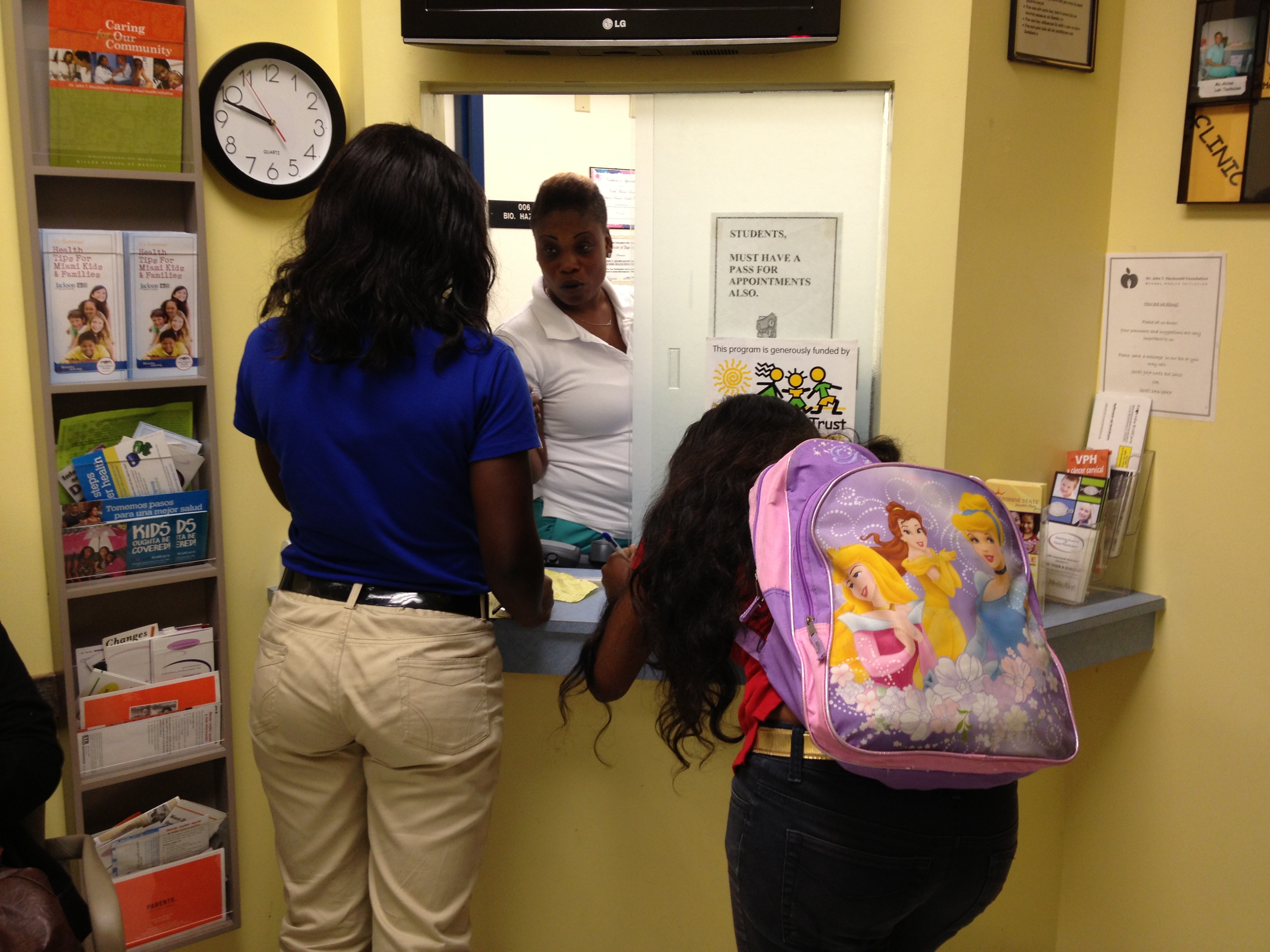
It’s a Wednesday morning and the waiting room is already starting to fill up at the North Miami Beach Senior High School clinic.
Sammy Mack / StateImpact Florida
The school-based health clinic at North Miami Beach Senior High School is a full-service clinic.
A 16-year-old girl with an enormous red bow pinned above her ear approaches the appointment window. A beveled glass pane slides open. The woman behind the desk doesn’t ask for insurance information — she asks to see a hall pass.
“Go ahead and have a seat.”
Red Bow takes her place in a waiting room chair next to classmates who, between hushed exchanges of gossip, occasionally erupt in giggles.
This school clinic at North Miami Beach is part of the Dr. John T. Macdonald Foundation School Health Initiative—a network of school-based health clinics in Miami, operated by the University of Miami M Miller School of Medicine. Connected to larger teaching hospitals and an array of specialists by electronic health records and telemedicine, clinics like this are re-imagining the role of the school nurse. And there’s evidence that what’s good for students’ health is good for their grades.
A new report says changes former Florida Education Commissioner Tony Bennett made to Indiana's school grading formula were "plausible."
An Indiana report has found that school grading formula changes former Florida Education Commissioner Tony Bennett made in 2012 while the elected superintendent of Hoosier State schools were “plausible” and “consistently applied” to all schools.
Indiana lawmakers requested the review after the Associated Press published emails showing Bennett and his staff discussing how to change the school grading formula. The emails showed Bennett was concerned about the formula after a prominent charter school, Christel House Academy, initially earned a ‘C’ grade. The school earned an ‘A’ grade after the changes.
The Indiana report backs his claims, though does note the Indiana Department of Education needed to be more transparent and work more closely with lawmakers and the governor. In addition, the report found the departure of key staff members were a factor in a lack of quality control prior to releasing the school grades.
“The two adjustments administered to determine Christel House’s final grade were plausible,” John Grew and William Sheldrake, the report’s authors, wrote, “and the treatment afforded to the school was consistently applied to other schools with similar circumstances.”
Omatayo Richmond started an online petition to change the name of Jacksonville's Nathan Bedford Forrest High School.
More than 72,000 people have signed an online petition to change the name of a Jacksonville high school named after a Civil War general and the first grand wizard of the Ku Klux Klan, according to the Florida Times-Union.
Jacksonville resident Omotayo Richmond told the paper that he’s not an activist, but wants people to be proud of the school they attend. He turned to Change.org for help with his petition:
StateImpact seeks to inform and engage local communities with broadcast and online news focused on how state government decisions affect your lives. Learn More »