Century Tower at the University of Florida. UF Online will open in January.
Last week the Florida State University System Board of Governors approved the business plan for a legislatively-created online university at the University of Florida.
The school, UF Online, will start offering classes in January. Students will be able to earn their baccalaureate degree completely online (though they may need to complete some lab at a state college or other facility). The school will offer degrees in seven majors to begin: Biology; business administration; criminology and law; environmental management in agriculture and natural resources; health education and behavior; psychology; and sports management.
We sat down with Andrew McCollough, associate provost for teaching and technology at the University of Florida, to talk about UF Online
McCollough says he doesn’t yet know who the typical UF Online student is, but expects the school initially will have a stronger appeal to transfer students. He also explains why the University of Florida is emphasizing that the UF Online will be similar to being an student on campus.
In ten years, the school expects to enroll 24,000 students and offer 35 degrees.
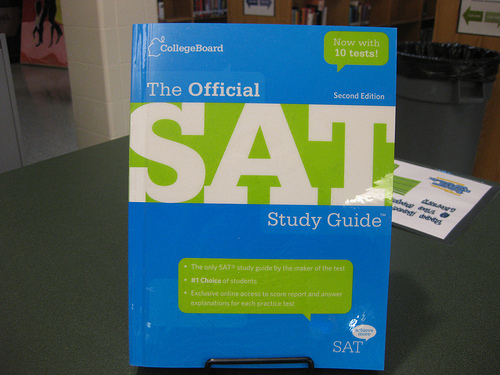
The average Florida graduate isn't ready for college-level work, according to SAT results.
Fewer than half of students who took the SAT last year scored high enough to be considered ready for college-level work — including the average Florida public school student who took the test — according to the test’s creator.
Florida scores did not change much from 2012. The average Florida student earned a 488 on the reading test, 486 on the math test and 469 on the writing test. Scores range from 200 to 800 points for each test.
Lawmakers created the university this spring after studying online options for two years. The online-only university will be part of the University of Florida and is scheduled to start classes in January. Supporters say the school will more access to a flagship Florida university, where 29,000 people apply for 6,400 slots each year.
The school will initially offer baccalaureate degrees in five majors and eventually expand to 35 majors by the fall of 2019.
UF Online will enroll both in-state and out-of-state students. School officials expect a total enrollment of 24,000 students by the school’s 10th year — 57 percent of students will be in-state and 43 percent out-of-state.
Online students will have access to the same support services as resident students, including health and wellness, personal support, mental health counselors and career advice. The business plan recommends online students will pay 75 percent of in-state tuition, or $112 per credit hour.
After the jump, you can read the full business plan.
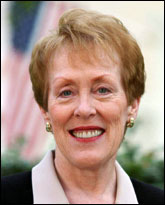
Florida elected education commissioners until 2003, when a state constitutional amendment made the job appointed. Gov. Jeb Bush appointed Jim Horne as commissioner in 2003. Now, the governor appoints members of the State Board of Education, who hire the commissioner.
We asked Horne, a Republican, and former two-term elected commissioner Betty Castor, a Democrat, about the strengths and weakness of both models. Not surprisingly, Horne favored appointed while Castor favored elected.
“One of the advantages of the elected office is that the person in that office can target education and education alone,” Castor said. “And there’s no question of other responsibilities. It worked well when I was there. I don’t think that it was overtly political.”
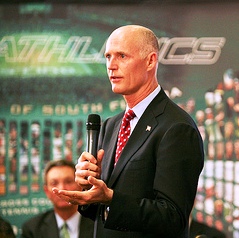
Gov. Rick Scott has asked that Florida give up its duties managing PARCC's money.
Yesterday Gov. Rick Scott issued an executive order stating his desire that Florida ends its role handling the money for a consortium of states developing a new test tied to Common Core State Standards.
Summit participants had a chance to sign off on a version of Scott’s executive order condemning PARCC and declined.
That language appeared the first afternoon as the third of seven “guiding principles” submitted by Scott’s office as a starting point for discussion. It read:
Florida is backing out of its role as a leader on the PARCC (Partnership for Assessment of Readiness for College and Careers) assessment.
jannoon028 / freedigitalphotos.net
Take it back? Gov. Rick Scott wants Florida to sever financial ties with the PARCC assessment
The PARCC consortium is made up of 18 states and the District of Columbia. The states are working together to develop a new, multistate assessment test that would measure students’ achievement in the Common Core.
Florida has been one of those states. When Charlie Crist was governor, the PARCC group won a $186 million federal grant to support its work—and Florida was put in charge of the money.
But now, controversy is churning over the Common Core standards, and Governor Rick Scott has asked to sever those financial ties.
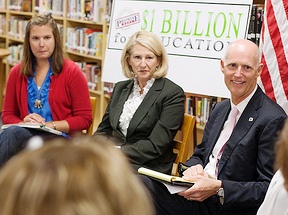
New Education Commissioner Pam Stewart likely will find herself caught in the middle as Florida's schools chief.
The State Board of Education removed the first word from interim Education Commissioner Pam Stewart’s title last week.
But Board member Kathleen Shanahan had a strange question for a job interview: Tell me again who you work for?
“And I just want to make sure from Pam, that she understands – with full clarity – who she reports to?” Shanahan asked.
“Kathleen, I think that we all know that we serve many masters,” Stewart responded. “But, ultimately, this board is the boss of the commissioner of education and I am fully aware of that and understand that.”
Shanahan’s question was prompted by two years education commissioner turnover. Five people have served as Florida’s education commissioner since Gov. Rick Scott took office in 2011.
“PARCC is too expensive and it takes too long,” Scott said Wednesday, indicating he may issue an executive order about the test. House and Senate leadership have also said they oppose using the exam.
It’s difficult to argue that PARCC won’t require students to spend more time testing. Students will spend up to 10 hours a year on testing and some exams are twice as long as the current test. But PARCC includes more complex, open-ended questions designed to measure critical thinking. It’s up to state officials to decide whether that’s worthwhile.
But is it more expensive? Most analyses shows PARCC will cost about the same or less than what the state currently spends on FCAT.
Florida Gov. Rick Scott said Wednesday that PARCC will take too long and is too expensive.
Gov. Rick Scott may join House and Senate leadership in opposing a multi-state test tied to Florida’s new math, English and literacy standards and designed to mostly replace the Florida Comprehensive Assessment Test, according to the Times/Herald Capitol Bureau.
“PARCC is too expensive and it takes too long,” Scott said. “So I’m looking at a variety of things, whether it’s an executive order, some administrative and some legislative, to try to fix that.”
Scott also said he would try to address what he called “too much federal involvement” — an overture to tea party groups who consider the new benchmarks and tests an example of federal overreach.
Scott’s remarks came one day after state Board of Education members blasted him for failing to provide clear direction on the standards and exams, which will replace the Florida Comprehensive Assessment Tests beginning in the 2014-15 school year.
Sen. John Legg, R-Lutz, has posted the Common Core standards to the Senate website and wants to hear questions and complaints before lawmakers return to Tallahassee next year.
“Please contact me directly at legg.john.web@flsenate.gov with your comments, suggestions, or concerns on the specific standards,” Legg wrote in an email. “Because your participation is critical in the continuous improvement of our educational standards, I will be welcoming your comments from now through the upcoming Legislative Session.”
StateImpact seeks to inform and engage local communities with broadcast and online news focused on how state government decisions affect your lives. Learn More »