The Republican Party of Florida is out with a new web ad featuring teachers praising Gov. Rick Scott.
The teachers aren’t identified, but appear to have been recorded at the recent teacher summit Scott hosted in Tallahassee. Most of the teachers thank Scott for investing in education, particularly his push for across-the-board raises.
“I think Gov. Scott is a visionary. He’s a brilliant businessman,” one teacher says in the video. “What he’s done for the business world in Florida, I think he can incorporate that in education.”
Another says she feels teachers have the governor’s ear.
Jeremy Glazer says teacher evaluations miss some of the most important work he does.
Editor’s note: Names of teachers and students have been changed.
One of the things I want to do through this series is to expand the discussion of a teacher’s value. We cannot let the worth of teachers be defined narrowly by the test scores of their students. We need to consider all of the different ways teachers have positive impacts on the lives of their students before we choose the criteria with which we judge who is doing a good job as a teacher and who is not.
One of the best ways to do this is to hear from teachers themselves.
I hope to put these stories in context. I will tell you about teachers I’ve spoken to, and I will share with you their stories. I want to show the breadth of ways teachers affect their students.
I walked into a teacher’s classroom near the end of the year and saw him explaining bank fees and ATM charges to a senior who was about to graduate.
This teacher didn’t have any seniors in his classes. I knew it wasn’t a current student, but rather a past student who saw the teacher as someone he trusted. The interaction I was watching was definitely adding value to the student’s life in a way that has little to do with school curriculum, and definitely isn’t counted in FCAT scores or school grades.
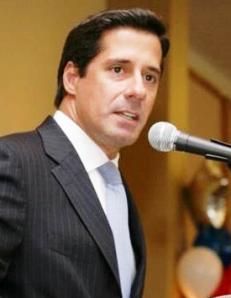
Miami-Dade superintendent Alberto Carvalho pointed to Florida Comprehensive Writing Test results as an example. Miami-Dade students scores rose this year, he said, but schools will get less credit according to the school grading formula. That’s because the state raised the target score from a 3 to a 3.5.
That’s difficult to explain to parents and students, Carvalho said.
“At stake here is the credibility of the accountability system — we have a chance to fix it,” he said. “Number one: Put in place and continue the one letter grade drop provision.”
Nikolai Vitti has been superintendent of Duval County Public Schools since November 2012.
Vitti arrived in North Florida last November, leaving behind a job as chief academic officer for Miami-Dade County Public Schools.
On the surface, Miami-Dade and Duval represent two very different kinds of Florida school districts. There are nearly 350,000 public school students in Miami-Dade—close to two thirds of them are Hispanic, nearly a quarter are black. The Duval school system has about 125,000 students, 44% of whom are black and 39% of whom are white.
Vitti sat down with StateImpact Florida to talk about the transition from South Florida to North Florida—and what he learned during his first school year on the job.
“They’re great standards. They’re higher level standards. They’re common sense,” Ford said. “They allow teachers and students to dive deep into the subject matter as opposed to covering a variety of issues very, very thinly.”
But he’d like more time for students and teachers to make the transition.
“Teachers are going to have to have time to retool absolutely everything they’ve been doing because these standards are so much better,” Ford said, “but they’re higher level and they require different ways of teaching.”
StateImpact seeks to inform and engage local communities with broadcast and online news focused on how state government decisions affect your lives. Learn More »