University of Florida junior received a Bright Futures scholarship despite being an illegal immigrant.
Florida students unable to document citizenship for themselves or their parents may lose their Bright Futures college scholarships because of a new paperwork requirement.
Due to a change in the law, students who qualify for the lottery-funded merit scholarship must now fill out the Free Application for Federal Student Aid, or FAFSA. Most students complete the form online – and a valid social security number is required for it to work.
The change has created a chilling effect among undocumented students and stirred debate over whether colleges and universities should be put in positions to scrutinize immigration status. Even students who are here legally say they’re afraid to fill out the form because it might tell federal authorities that their parents are illegal immigrants.
The single sentence requiring the FAFSA was included in a 71-page bill approved in May. It raises SAT and ACT requirements and community service hours needed to qualify for the scholarship.
Gov. Rick Scott has launched an August Charm Offensive, serving doughnuts to voters and attempting to build a relationship with state media. Scott stopped by WUSF radio in Tampa Friday as part of his three-day visit to the city.
Scott touched on the economy, the state budget and other issues, but was also asked how schools can add state-mandated programs such as teacher pay-for-performance if the state will not fund them? Scott’s answer: Find a way.
“We’ve got to figure out how to do better,” Scott said. “We did the things that should help our kids.
“We spend the money on instruction, not administration. That’s where the focus has to be.”
Isaura Konig (right) watches as her children, Paul Mamondes, 9, and Melanie Mamnodes, 6, test out an Acer laptop after Comcast announced the national Internet Essentials initiative at the Phillis Wheatley Elementary School auditorium in historic Overtown Thursday morning Aug. 4, 2011.
And Florida has one of the highest numbers of eligible students in the U.S., behind Texas, California and New Mexico.
In Miami alone, over 200,000 students are eligible.
David Cohen, executive vice president of Comcast Corporation, says Hispanic and African-American communities are expected to benefit most.
“When we look around the country we see the disparities that exist,” Cohen said. “Quite frankly people in lower-income communities, mostly people of color, have such limited access to broadband than people in wealthier communities.”
The program is open to students from K-through-12. But only to those that live in one of the Comcast service areas in 39 states.
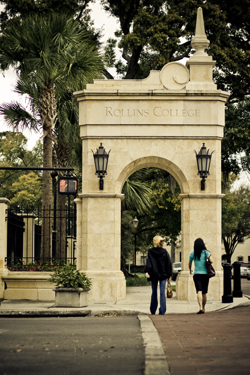
Rollins College and the University of Florida top the list of Florida schools according to Forbes ranking of top colleges and universities, though no state schools crack the top 100.
Rollins ranked #133 while UF came in just behind at #137. Florida State University ranked #193, but finished ahead of noted institution New York University.
Massachusetts students have the best choices: Williams, Amherst, Harvard and MIT all cracked the top 10. The rankings were based on “quality of teaching, great career prospects, graduation rates and low levels of debt,” according to Forbes.
Fear not Florida, state schools still rank near the top of one annual list.
Florida is tempting cheating by basing teacher salaries on the results of the Florida Comprehensive Assessment Test, Fred Grimm opines in the Miami Herald today.
Lawmakers required school districts create pay-for-performance systems where at least half a teacher’s evaluation is determined by an FCAT score. That sets Florida up for the same type of systematic cheating seen in Atlanta and under investigation in Pennsylvania schools, Grimm argues.
“Merit raises (the only raises permissible under the new Florida law) will ratchet up the temptation, warned Arizona State University professor Audrey Amrein-Beardsley, who has spent years studying the unintended consequences of high-stakes student testing. She said Wednesday that “it’s pretty clear” that the more consequences states tie to the outcome of the standardized tests, particularly merit pay or cash bonuses, the more cheating we’re likely to see.
Amrein-Beardsley led a team that surveyed 3,000 Arizona teachers. In her study, published last year, more than half admitted to manipulating the test scores on the Arizona standardized tests.”
Do you agree with Grimm?What other ways might FCAT and merit pay requirements change behavior?
Amanda Moreno at The Huffington Post attempts to peel apart the arguments used by the education reform advocates against those who oppose high-stakes student testing, performance pay and other measures states are adopting across the country.
Moreno’s piece is sure to provoke an argument, but one section seems worthy of discussion. Moreno notes that a teacher’s performance is as likely to be overestimated by a rating system as it is to be underestimated:
“Research has confirmed this caution, showing that a full one-fourth of teacher ratings will be wrong — in either direction. Thus, you might even say that test-based evaluation is “soft on accountability” since it protects many ineffective teachers.
Test-obsessed reformers have my greatest fear exactly wrong. I am not worried that hoards of qualified teachers will be fired, but rather that the uninspired ones will be left alone.”
If a quarter of teacher ratings are wrong, one way or the other, is fair to base a teacher’s pay on that system? Is it responsible? Can you count on those teacher evaluations?
Florida’s legislature approved a state law requiring school districts develop teacher performance pay systems. Hillsborough County schools are using a $100 million Gates Foundation grant to design a merit pay formula.
Feel free to have it out over the rest of Moreno’s piece as well.
Florida education leaders are meeting in Tampa today to discuss school funding, but do not expect the panel to endorse more money for schools.
Roberto Martinez, the state Board of Education member who pushed for the budget discussion, said his goal is to brainstorm ideas that would help schools do more with the resources they have. State revenue forecasts and the political climate mean schools will not see more money next year, Martinez said. Martinez hopes the discussion with school district, charter school, college and other education advocates will focus on policy changes to recommend to lawmakers and help the panel draft budget recommendations by this fall.
“If they are just asking for more money, that’s not very helpful,” Martinez said.
That stance disappoints Colleen Hill with Save Duval Schools, who planned to attend today’s meeting. The amount of school funding is an issue, Hill said, but said the discussion could be valuable if the board totals up the cost of state and federal mandates on schools.
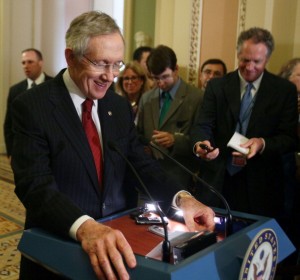
U.S. Senate Majority Leader Harry Reid, D-Nevada, discusses upcoming Congressional debt vote.
The pending federal debt deal would protect a college grant program for low-income students, according to an email from the National College Access Network.
The future of of the federal Pell Grant program has been in doubt as Congress and President Barack Obama negotiated a deal on raising the debt limit. Last week Republicans criticized a plan to add $17 billion in a failed compromise proposal for Pell Grants, which determines eligibility by income and does not require students to repay grants of up to $5,550 per year.
The National College Access Network email notes the next debate is around the corner:
“This deal is a victory for advocates of Pell Grants! Thanks again for your hard work protecting these important dollars for our students.While this is an important victory for our students, the battle over Pell grant and other education funding will continue this fall. Congress must still pass a federal budget for FY12 (Oct 1, 2011 – Sept 30, 2012) which is subject to the spending limit set in this new deal. In addition, the bipartisan panel will be looking for another $1.2 – 1.5 trillion in cuts by November 23.”
Why are Broward County schools cutting 2,400 jobs — mostly teachers — and requiring unpaid leave when other district proposed budgets avoid layoffs? The South Florida Sun-Sentinel has posted a Q&A about Broward’s budget problems. One answer: Broward could not sit on federal stimulus money like Miami-Dade or Palm Beach counties.
“Both those counties set aside at least half of last year’s unexpected infusion of federal stimulus money to prop up budgets this year. Broward used most of its $54 million pot last year to hire teachers in an effort to comply with the state’s class-size law. The rest was folded into this year’s proposed budget to help cover a $171 million shortfall.
The National Center for Education Information released its most recent national teacher survey this morning and it shows some changes among the country’s 3.2 million educators.
Teachers are “slightly more satisfied” with their working conditions and community status than they were in 2005, 1996, 1990 and 1986 surveys.
About 40 percent of teachers hired since 2005 were trained in alternative programs rather than traditional education schools.
Those teachers trained in alternative programs were also more likely to favor pay-for-performance, eliminating tenure and other education reforms now mandated by Florida law and considered in other states.
Teachers are skewing younger, with 22 percent under the age of 30. That’s up from 11 percent of teachers under the age of 30 in 2005.
Younger teachers are also less experienced. More than one-quarter of teachers surveyed in 2011 had five or fewer years of experience, up from 18 percent in 2005.
StateImpact seeks to inform and engage local communities with broadcast and online news focused on how state government decisions affect your lives. Learn More »