Background

Getty Images
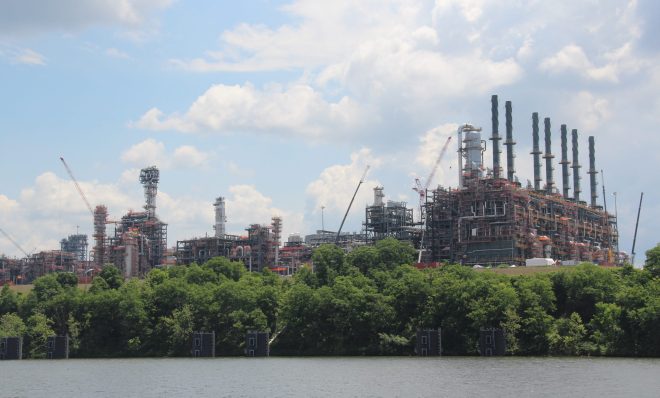
Since Shell Chemical announced in July 2011 that it planned to build an ethane cracker in the northeast, Pennsylvania, Ohio and West Virginia officials all did their best to woo the company to build the multi-billion dollar facility in their state.
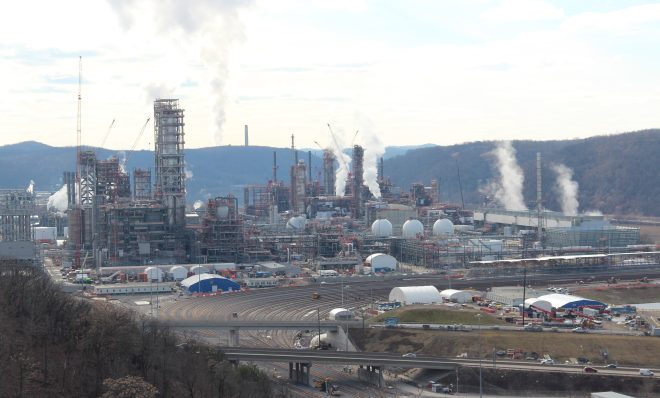
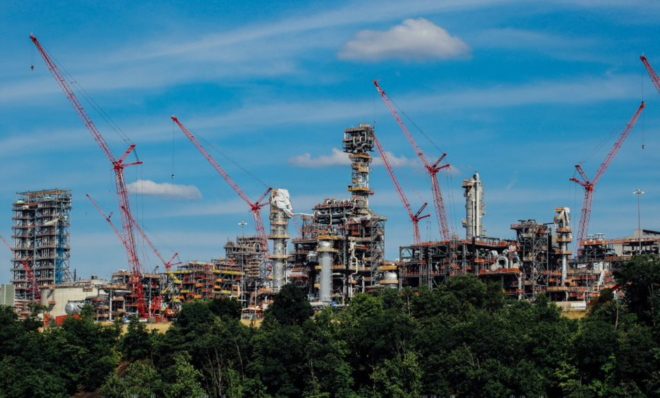
On March 15, 2012, Shell announced Pennsylvania had won the “cracker sweepstakes,” naming a site near Monaca, Beaver County as the possible future location for the chemical plant.
That’s not to say the deal is final. Shell only agreed to consider the Beaver County site, and has not signed any final commitment yet. Pennsylvania wooed Shell by granting the company a fifteen-year tax amnesty window. In June, Governor Corbett successfully pushed for an additional tax break that will grant Shell a $2.10 credit for every gallon of ethane it purchases from Pennsylvania-based natural gas drillers. Over a 25-year window, the credit has been valued at $1.65 billion, making it the largest tax break in state history.
What’s an ethane cracker? As a January NPR report explained:
“Cracker” is industry lingo for a plant that takes oil and gas and breaks them up into smaller molecules. An ethane cracker creates ethylene, a compound used in the manufacture of plastic. There’s much more ethane in Appalachia these days thanks to controversial drilling techniques known colloquially as “fracking.”
Governor Corbett is convinced the petrochemical plant will kick-start a corridor of plastics processing plants in Beaver County, and predicts up to 20,000 new jobs could be generated by the plant. But that figure comes from a chemical industry-funded study, and the majority of those anticipated jobs are “indirect or induced.” The cracker itself would only employ between 400 and 600 people.
The direct jobs are pretty easy to describe: They’re the people who would be employed at the cracker and other plastics manufacturing facilities, according to Smith. The indirect jobs are the “people who supply the valves and motors” and other materials needed during manufacturing, he explained.
[The American Chemistry Council's] model predicts a cracker would create 2,396 “direct” jobs, even though just 400 to 600 people would be employed at the Shell plant itself. The study anticipates 8,194 indirect new jobs. The remaining 6,951 jobs would come from the “ripple effect” of increased economic activity driven by the people who move into the Beaver County area.