
TIME: Sierra Club Took Millions From Gas Drillers
-
Scott Detrow

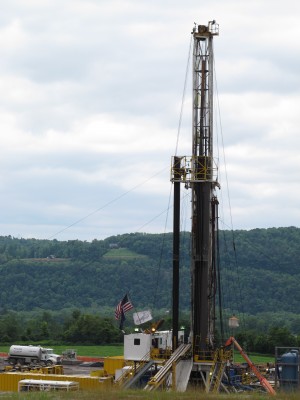
Scott Detrow / StateImpact Pennsylvania
A Bradford County well pad
Here in Pennsylvania, the Sierra Club is one of the fiercest opponents of natural gas drilling. The group has pushed for a moratorium on hydraulic fracturing,opposes additional leasing of state forest land, and wants lawmakers to pass a broad severance tax.
That’s why TIME Magazine’s new report was so surprising:
TIME has learned that between 2007 and 2010 the Sierra Club accepted over $25 million in donations from the gas industry, mostly from Aubrey McClendon, CEO of Chesapeake Energy—one of the biggest gas drilling companies in the U.S. and a firm heavily involved in fracking—to help fund the Club’s Beyond Coal campaign. Though the group ended its relationship with Chesapeake in 2010—and the Club says it turned its back on an additional $30 million in promised donations—the news raises concerns about influence industry may have had on the Sierra Club’s independence and its support of natural gas in the past. It’s also sure to anger ordinary members who’ve been uneasyabout the Club’s relationship with corporations. “The chapter groups and volunteers depend on the Club to have their back as they fight pollution from any industry, and we need to be unrestrained in our advocacy,” Michael Brune, the Sierra Club’s executive director since 2010, told me. “The first rule of advocacy of is that you shouldn’t take money from industries and companies you’re trying to change.”
Sierra Club Executive Director Michael Brune has responded to the story on the group’s website:
By the time I assumed leadership of the Club in March 2010, our view of natural gas had changed — so I made sure our policy did, too. We created a strong natural gas campaign comprised of staff and volunteer leaders. Some chapters sought to establish tough safeguards at the state and federal level to protect their air and water; others sought to suspend fracking completely until those standards were in place. By mid-August 2010, with gas industry practices and our policies increasingly in conflict, I recommended to the Board, and it agreed, to end the funding relationship between the Club and the gas industry, and all fossil fuel companies or executives.
Our position today could not be more clear: We still need to move America beyond coal, as quickly as we can while taking care of the workers in the mines and at coal-burning utilities. And as we retire these coal plants, we’ll need to replace them with as much clean energy as we possibly can. In the process, we’ll use as little gas as possible and work to ensure that the gas that is used is produced as responsibly as possible.
Editor's Picks
PARTNERS



FUNDERS




Climate Solutions partners