
Newly Discovered EPA Report Links Fracking with Contaminated Well Water
-
Susan Phillips

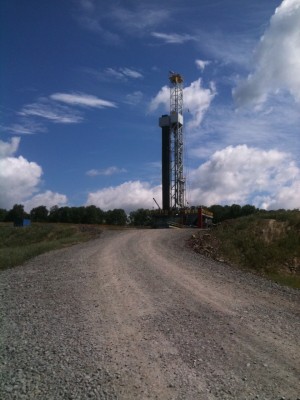
Susan Phillips / StateImpactPA
A natural gas drill rig in Susquehanna County, PA
The natural gas industry says time and again, that hydraulic fracturing, or fracking, has never caused drinking water contamination. But a long lost report conducted 25 years ago by the Environmental Protection Agency traced fracking to pollution found in a Jackson County, West Virginia water well. The Environmental Working Group unearthed the report as part of their own investigation.
“During the fracturing process,” EPA investigators wrote in the 1987 report, which focused on the handling of natural gas, oil and geothermal wastes generally, “fractures can be produced, allowing migration of native brine, fracturing fluid and hydrocarbons from the oil or gas well to a nearby water well. When this happens, the water well can be permanently damaged and a new well must be drilled or an alternative source of drinking water found.”
According to The Environmental Working Group’s release, EPA investigators concluded that fracking fluid leaked into nearby unused wells built in the 1940’s. Those wells had deteriorated enough to allow the frack fluid to migrate into the aquifer. The investigators also cited regulations that restricted their investigation, including the so-called “Halliburton loophole” in the federal Safe Drinking Water Act, which exempts the gas industry from releasing the chemicals used to frack a well.
Editor's Picks
PARTNERS



FUNDERS




Climate Solutions partners