Background
This page is no longer being updated. For ongoing coverage of this topic, go to New Hampshire Public Radio.
______
What Is Northern Pass?
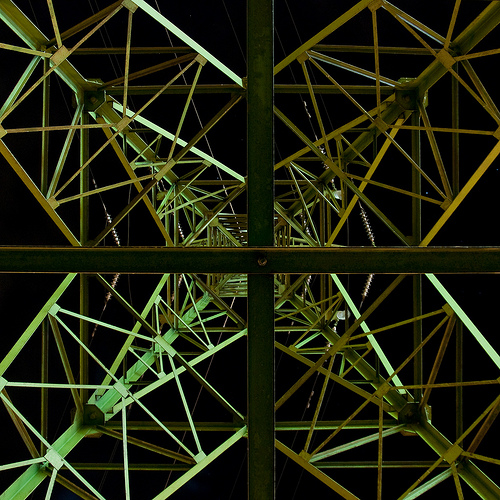
Edgars Strods / Flickr
The Northern Pass project would span across 140 miles of NH to deliver Canadian hydropower to the regional power grid
Northern Pass is a highly controversial proposal to run new 180 miles of new power lines from Canada, through northern New Hampshire, down to Concord, and then eastward to Deerfield. The project was originally a collaboration between three utilities: Northeast Utilities, the parent company of Public Service of New Hampshire, NSTAR, and Hydro-Quebec. (Northeast Utilities later merged with NSTAR.) The utilities say the $1.1 billion Northern Pass project would transport up to 1,200 megawatts of hydropower from Canada to the New England power grid.
What Northern Pass Needs
Northern Pass needs 40 miles of new electrical lines to run across forest land from the Canadian border to Groveton, in northern New Hampshire. In order to run the lines, Northern Pass needs to secure rights-of-way through the 40 mile tract. After that, developers say, PSNH’s existing rights-of-way are enough to continue transmission of power southward. The exception being an eight mile stretch of land spanning Concord, Chichester, and Pembroke. To make this happen, Northern Pass also wants the right-of-way adjacent to the Concord Municipal Airport.
The Controversy
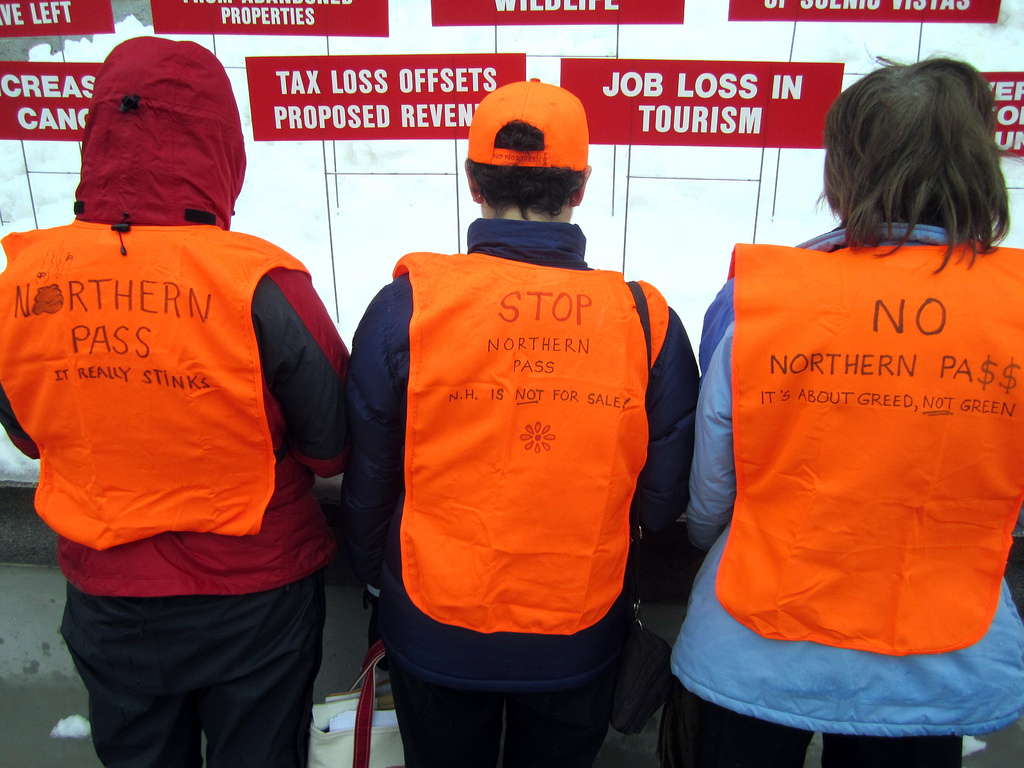
NHPR
Northern Pass has proved an incredibly controversial issue in New Hampshire, especially in the North Country
Despite its statewide impacts, Northern Pass has proved especially controversial–and divisive–in the sparsely-populated and heavily forested North Country. Northern Pass staffers say the new lines would bring much-needed jobs and new tax revenue to a struggling part of the state.
But opponents of the project say it would only offer a few temporary jobs for residents when it’s under construction. They also say it will deface New Hampshire’s famous forests, hurting tourism. And they argue the noise and fractured view will impinge on residents’ quality of life. Depending on the location, developers say the project’s towers will range from 85 to 110 feet tall. Opponents say they could actually be up to 135 feet tall. Some Granite Staters also question whether the state will actually benefit from the hydropower flowing southward into the New England grid.
A popular compromise position is burying the project’s lines. Politicians ranging from Governor Maggie Hassan to GOP presidential candidate Newt Gingrich have floated this move as having the potential to soften opposition.
The Route: Real Estate Chess Plays Out In The North Country
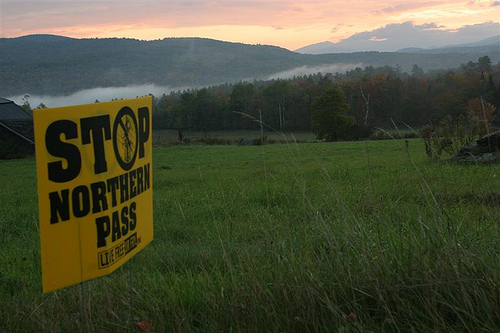
Chris Jensen / NHPR
Northern Pass and its opponents have been fighting over control of land along potential routes
Northern Pass has considered a number of routes for the project, but has publicly announced two. The first, unveiled in 2011, faced major backlash from North Country residents and environmental groups and was quickly dropped. Over the next couple of years, the project and the Society for the Protection of New Hampshire Forests played a prolonged chess match over parcels of North Country land. Northern Pass offered landowners inflated prices for acreage, ultimately spending more than $40 million. Meanwhile, the Society undertook an aggressive fundraising campaign and sought a slew of conservation easements to block potential routes.
This maneuvering narrowed the options for Northern Pass. One lingering possibility was exercising eminent domain. Northern Pass publicly stated it was not interested in pursuing eminent domain. But in 2012, in response to strong statewide opposition, the Legislature closed the option altogether.
By the spring of 2013, Northern Pass opponents believed the project was essentially “cornered” into trying to make it through the Connecticut Lakes Headwaters conservation easement. Governor Hassan said she opposed such a move on the part of Northern Pass.
Second Time Around: Northern Pass Announces Alternative Route
In June of 2013, Northern Pass unveiled its second proposed route. Abandoning its previous strategy (and $40 million in land purchases) altogether, the project proposed building along existing state and local North Country roadways in Clarksville, Stewartstown. As the Concord Monitor reported, that would bring the number of private properties hosting Northern Pass towers from 186 to 31. But, it would also curb interference from private groups. Under the new plan, Northern Pass would be subject to state and federal permitting processes.
In a nod to project opponents, Northern Pass also said it will bury 7.5 miles of line in Stewartstown, Clarksville, and under the Connecticut River. That raises the price tag on the project from $1.2 million to about $1.4 million. While Society for the Protection of New Hampshire Forests has noted this move is progress, its position is that Northern Pass should be able to bury all 180 miles of power lines.